
Who was Joachim von Ribbentrop?
Joachim von Ribbentrop was the Minister of Foreign Affairs of Nazi Germany from 4 February 1938 until the collapse of the Third Reich in May 1945. One of Adolf Hitler’s most trusted political loyalists, he abandoned traditional diplomacy in favour of aggressive expansionism, helping pave the way for the outbreak of the Second World War. His most infamous achievement was negotiating the Molotov–Ribbentrop Pact with the Soviet Union in August 1939, which secretly divided Eastern Europe into German and Soviet spheres of influence and removed the final diplomatic obstacle to the invasion of Poland.
Although never a military commander, Ribbentrop played a central role in Nazi Germany's political and diplomatic leadership. He helped isolate Germany's enemies, secured alliances with Italy and Japan, intimidated neighbouring states into submission and directed the Foreign Office in support of Nazi racial policy. Under his leadership, German diplomats worked closely with the SS and allied governments to facilitate the deportation of hundreds of thousands of Jews to extermination camps across occupied Europe.
Following Germany's defeat in 1945, Ribbentrop became the first of the major Nazi leaders to stand before the gallows after being convicted at the International Military Tribunal in Nuremberg. Found guilty on all four counts of the indictment, including crimes against peace, war crimes and crimes against humanity, he was executed on 16 October 1946.
Today, historians regard him as one of the principal architects of Nazi foreign policy and one of the diplomats most responsible for turning Hitler's ideological ambitions into international reality.
Quick Facts
Full name: Ulrich Friedrich-Wilhelm Joachim von Ribbentrop
Born: 30 April 1893 (Wesel, Rhine Province, Kingdom of Prussia, German Empire)
Died: 16 October 1946 (Nuremberg, Germany)
Position: Minister of Foreign Affairs of Nazi Germany (1938–1945)
Political Party: Nazi Party (NSDAP)
Military Service: Imperial German Army during the First World War
Known for: Molotov–Ribbentrop Pact, Pact of Steel, Tripartite Pact, Nazi foreign policy
Convicted: International Military Tribunal, Nuremberg Trials
Sentence: Death by hanging
Early Life
Ulrich Friedrich-Wilhelm Joachim von Ribbentrop was born on 30 April 1893 in the garrison town of Wesel, situated on the lower Rhine in western Germany. His father, Richard Ulrich Friedrich Joachim Ribbentrop, served as an officer in the Imperial German Army, while his mother, Johanne Sophie Hertwig, came from a respected middle-class family. Frequent military postings meant that Joachim spent much of his childhood moving between different German cities, developing a disciplined but unsettled upbringing.
Unlike many future Nazi leaders, Ribbentrop spent considerable time abroad during his youth. He lived in Switzerland, attended school in France and later travelled extensively through Britain and Canada. These experiences gave him an unusually strong command of both French and English, skills that later impressed Hitler, who regarded foreign languages as rare among senior members of the Nazi Party.
While living in Canada, Ribbentrop worked in a variety of occupations, including banking, commerce and the import-export trade. Although he often portrayed himself as an experienced international businessman, many of his later claims about his commercial success were exaggerated. Nevertheless, his years abroad provided him with valuable contacts and an understanding of foreign customs that distinguished him from most Nazi officials, many of whom had little direct experience outside Germany.
The First World War
When the First World War broke out in August 1914, Ribbentrop returned immediately to Germany and volunteered for military service. He joined the prestigious 2nd Regiment of Life Hussars before transferring to the infantry. During the war he served on both the Eastern Front and the Western Front, where he demonstrated organisational ability rather than outstanding battlefield leadership.
He was commissioned as an officer and received the Iron Cross Second Class followed by the Iron Cross First Class for his service. Towards the end of the war he worked on the staff of the German military mission in Constantinople, gaining valuable experience in diplomacy and international relations. Germany's defeat in 1918 profoundly affected him, reinforcing the widespread belief among many veterans that the country had been humiliated by the Treaty of Versailles.
Marriage and Business Career
Following the war, Ribbentrop entered the wine trade and quickly established himself as a successful importer of champagne and fine wines. His fortunes changed dramatically in 1920 when he married Anna Elisabeth Henkell, the daughter of the wealthy owner of the renowned Henkell sparkling wine company. The marriage provided both financial security and access to influential social circles within Germany's political and business elite.
In 1925, he legally acquired the aristocratic particle "von" after being adopted by an elderly relative, allowing him to present himself as a member of the German nobility. Although perfectly legal, the change later fuelled criticism from political opponents, who accused him of cultivating an image of aristocratic sophistication that exceeded his actual background.
Throughout the 1920s, Ribbentrop entertained diplomats, businessmen and politicians at his fashionable home in the Berlin suburb of Dahlem. His knowledge of foreign affairs and international etiquette earned him a reputation as one of the few prominent Germans comfortable in elite diplomatic circles, a reputation that would eventually bring him to the attention of Adolf Hitler.
Joining the Nazi Party
Joachim von Ribbentrop first met Adolf Hitler during the late 1920s and was immediately captivated by his vision of restoring Germany's international power. Unlike many early members of the Nazi Party, Ribbentrop was not attracted primarily by street politics or ideological activism. Instead, he believed that Hitler possessed the determination necessary to overturn the restrictions imposed by the Treaty of Versailles and return Germany to the status of a great power.
On 1 May 1932, both Joachim von Ribbentrop and his wife, Anna Elisabeth, officially joined the Nazi Party. Thanks to his wealth, international experience and influential contacts, he quickly became useful to Hitler, who increasingly relied on him for advice on foreign affairs. Although experienced diplomats within the German Foreign Office viewed him as an ambitious amateur, his unwavering loyalty ensured his rapid rise through the Nazi hierarchy.
One of Ribbentrop's earliest and most significant contributions came during the political crisis of January 1933. He offered his residence in Dahlem as the venue for confidential discussions between Adolf Hitler, Franz von Papen and other conservative politicians. These negotiations ultimately cleared the final obstacles to Hitler's appointment as Chancellor of Germany on 30 January 1933, marking the beginning of the Third Reich.
Although never popular among the Nazi Party's so-called Alte Kämpfer ("Old Fighters"), who considered him arrogant and opportunistic, Ribbentrop understood one essential truth: complete loyalty to Hitler mattered more than experience or competence. Throughout his political career he consistently reinforced Hitler's ambitions, often proposing even more uncompromising diplomatic solutions than many of his contemporaries. This unwavering devotion secured Hitler's confidence and paved the way for his rapid ascent to the highest levels of the Nazi state.
The Dienststelle Ribbentrop
Having earned Adolf Hitler's confidence, Joachim von Ribbentrop sought to establish himself as Germany's foremost authority on foreign affairs. Frustrated by the cautious and professional diplomats of the traditional Foreign Office (Auswärtiges Amt), he persuaded Hitler that a new organisation was needed to pursue National Socialist objectives without the restrictions of conventional diplomacy.
In August 1934, he founded the Dienststelle Ribbentrop, often referred to simply as the Ribbentrop Bureau. Operating independently of the official Foreign Office, this parallel diplomatic organisation was staffed largely by committed members of the Nazi Party, the SS and young political loyalists rather than experienced career diplomats. Its headquarters stood directly opposite the Foreign Office on Berlin's Wilhelmstrasse, symbolising the growing rivalry between the traditional diplomatic service and Hitler's increasingly radical inner circle.
The Dienststelle Ribbentrop quickly became one of Hitler's preferred diplomatic instruments. Rather than following established diplomatic procedures, its representatives negotiated directly with foreign governments while promoting Nazi ideological goals. The organisation steadily undermined the authority of the Foreign Office and demonstrated Hitler's growing distrust of Germany's conservative civil servants.
Although many senior diplomats regarded Ribbentrop as inexperienced and overly ambitious, the success of his independent bureau significantly strengthened his political influence. It also reinforced his reputation as a man prepared to bypass established institutions whenever it served Hitler's ambitions.
The Anglo-German Naval Agreement
Ribbentrop's first major diplomatic success came with the signing of the Anglo-German Naval Agreement on 18 June 1935. The agreement allowed Germany to expand its navy to 35 percent of the total tonnage of the Royal Navy, while its submarine fleet could eventually reach parity with Britain.
For Hitler, the agreement represented a major political victory. It effectively weakened the military restrictions imposed by the Treaty of Versailles while driving a wedge between Britain and its allies, particularly France. The British government believed it had secured limitations on German naval expansion through negotiation, whereas Hitler viewed the treaty merely as another step towards rearmament.
Ribbentrop regarded the agreement as proof of his diplomatic brilliance. His standing within the Nazi leadership rose considerably, convincing Hitler that unconventional diplomacy could produce greater results than the methods employed by the traditional Foreign Office.
The Anti-Comintern Pact
Building upon this success, Ribbentrop negotiated the Anti-Comintern Pact between Germany and the Empire of Japan, signed on 25 November 1936. Publicly, the agreement pledged cooperation against the Communist International (Comintern), an organisation directed from Moscow that promoted communist revolution across the world.
In reality, the pact represented a strategic warning to the Soviet Union and laid the foundations for closer cooperation between Germany and Japan. Italy joined the agreement in 1937, creating the nucleus of what would later become the Axis Powers. The Anti-Comintern Pact demonstrated Hitler's determination to isolate the Soviet Union diplomatically while strengthening Germany's international position.
Ambassador to Britain
On 11 August 1936, Ribbentrop was appointed German Ambassador to the United Kingdom. Hitler believed his trusted adviser could persuade Britain to accept Germany's growing military power and perhaps even secure a long-term Anglo-German alliance.
The appointment proved to be a serious disappointment. Although Ribbentrop spoke fluent English and considered himself an expert on British society, he fundamentally misunderstood Britain's constitutional system and political culture. He believed that personal meetings with influential individuals could determine British foreign policy, failing to appreciate the importance of Parliament, Cabinet government and public opinion.
His arrogance and frequent breaches of diplomatic etiquette quickly alienated senior British politicians and members of the royal household. He repeatedly insisted that Britain and Germany shared common interests while simultaneously defending Hitler's increasingly aggressive policies. As Germany openly rearmed and challenged the post-war settlement, confidence in Ribbentrop steadily declined within the British government.
Rather than improving Anglo-German relations, his ambassadorship convinced many British leaders that Hitler's assurances could no longer be trusted. The experience also reinforced Ribbentrop's growing belief that Britain lacked the political will to fight another major European war—a dangerous miscalculation that would influence his advice to Hitler in the years ahead.
Minister of Foreign Affairs
On 4 February 1938, Adolf Hitler dismissed the respected Foreign Minister Konstantin von Neurath during a major reorganisation of Germany's military and political leadership. He replaced him with Joachim von Ribbentrop, signalling a decisive shift away from cautious diplomacy towards aggressive expansion.
Unlike his predecessor, Ribbentrop offered virtually no independent advice. Instead, he viewed his primary responsibility as implementing Hitler's wishes with complete loyalty. The Foreign Office increasingly became an instrument for carrying out Hitler's foreign policy rather than shaping it through traditional diplomatic negotiation.
Within weeks of taking office, Ribbentrop found himself overseeing one of Nazi Germany's greatest diplomatic triumphs.
The Anschluss
In March 1938, Germany annexed neighbouring Austria in the event known as the Anschluss. Although the operation was directed primarily by Hitler, Hermann Göring and senior military leaders, Ribbentrop's Foreign Office played an important diplomatic role by attempting to minimise international resistance and presenting the annexation as the voluntary reunification of two German-speaking nations.
Despite clear violations of the Treaty of Versailles and the Treaty of Saint-Germain, Britain and France limited themselves largely to diplomatic protests. The absence of meaningful opposition further convinced Hitler that the Western democracies lacked the determination to stop German expansion.
The Munich Agreement and Czechoslovakia
Later that same year, Ribbentrop became closely involved in the diplomatic crisis surrounding Czechoslovakia. Germany demanded the transfer of the predominantly German-speaking Sudetenland, claiming that its population suffered discrimination under the Czechoslovak government. The crisis culminated in the Munich Agreement of 30 September 1938, signed by Germany, Britain, France and Italy. The agreement allowed Germany to occupy the Sudetenland without Czechoslovakia being represented during the negotiations. British Prime Minister Neville Chamberlain famously returned to London believing he had secured "peace for our time".
Only months later, in March 1939, Hitler abandoned all remaining pretence. Under intense pressure orchestrated by Ribbentrop and other Nazi officials, President Emil Hácha travelled to Berlin, where he was effectively forced to accept the German occupation of the remaining Czech territories. German troops entered Prague on 15 March 1939, establishing the Protectorate of Bohemia and Moravia.
The destruction of Czechoslovakia demonstrated that Hitler's ambitions extended far beyond the unification of German-speaking peoples. It also marked the collapse of the policy of appeasement and persuaded Britain and France that further German expansion would have to be resisted.
The Pact of Steel
On 22 May 1939, Joachim von Ribbentrop signed the Pact of Steel with Italy, formalising the military and political alliance between Nazi Germany and Fascist Italy. Signed alongside Italian Foreign Minister Count Galeazzo Ciano, the agreement committed both nations to mutual military support should either become involved in war.
During the negotiations, Ribbentrop assured Benito Mussolini that Germany would not initiate a major European conflict for at least another three years, allowing Italy sufficient time to strengthen its armed forces. This assurance proved entirely false. Barely three months later, Germany invaded Poland, drawing Italy into an alliance for which it was militarily unprepared. The misleading promises damaged relations between Berlin and Rome and undermined Italy's confidence in German diplomacy.
The Molotov–Ribbentrop Pact
Joachim von Ribbentrop's most significant diplomatic achievement came on 23 August 1939, when he travelled to Moscow to negotiate the German–Soviet Non-Aggression Pact with Soviet Foreign Minister Vyacheslav Molotov. The negotiations took place in the Kremlin and concluded with the personal approval of Soviet leader Joseph Stalin, who even attended the signing ceremony. The agreement, commonly known as the Molotov–Ribbentrop Pact, stunned the world because it united two ideological enemies whose governments had spent years denouncing one another. Publicly, the treaty pledged that Germany and the Soviet Union would refrain from attacking one another and would resolve disputes peacefully. Secretly, however, an additional protocol divided large parts of Eastern Europe into German and Soviet spheres of influence. Poland was to be partitioned, while Finland, Estonia, Latvia and later Lithuania fell within agreed zones of control.
The pact removed Hitler's greatest strategic concern: the possibility of fighting a war on two fronts. Confident that the Soviet Union would remain neutral, Germany invaded Poland on 1 September 1939. Seventeen days later, on 17 September 1939, the Red Army entered eastern Poland in accordance with the secret protocol. The partition of Poland marked the beginning of the Second World War and demonstrated how diplomacy had become an instrument of territorial conquest.
For both Hitler and Stalin, the agreement was a pragmatic arrangement rather than an ideological reconciliation. Each dictator intended to use the treaty to strengthen his own strategic position while preparing for an eventual confrontation with the other.
Diplomacy on the Eve of War
Throughout the summer of 1939, Ribbentrop worked relentlessly to prevent any diplomatic settlement between Germany and Poland. He believed that negotiations would only delay Hitler's plans and repeatedly assured the Führer that Britain and France would never risk another European war over Poland. These assessments proved catastrophically wrong. Following Germany's invasion on 1 September 1939, both Britain and France declared war on Germany on 3 September 1939. According to several eyewitnesses, Hitler briefly turned towards Ribbentrop after receiving the news and demanded, "What now?" The assumption that the Western democracies would again retreat had collapsed.
The Tripartite Pact
As the war expanded across Europe, Ribbentrop sought to strengthen Germany's global position through new alliances. On 27 September 1940, he signed the Tripartite Pact in Berlin together with representatives of Italy and Japan. The treaty formally established the military alliance that became known as the Axis Powers. Additional countries, including Hungary, Romania, Slovakia, Bulgaria and Croatia, later joined the pact. Although presented as a defensive alliance, its true purpose was to consolidate German influence across Europe while discouraging the United States from intervening in the conflict.
Operation Barbarossa
Ironically, Ribbentrop's greatest diplomatic achievement lasted less than two years. On 22 June 1941, Germany launched Operation Barbarossa, invading the Soviet Union in direct violation of the Molotov–Ribbentrop Pact. Although he reportedly expressed reservations about abandoning the agreement he had personally negotiated, Ribbentrop ultimately supported Hitler's decision without public opposition. Once the invasion began, he fully embraced the campaign and attempted to persuade Japan to attack the Soviet Union from the east, hoping to divide Soviet military resources.
The invasion fundamentally transformed the war. It also marked the beginning of the largest campaign of mass murder in European history, as the SS, the Einsatzgruppen, organised under Reinhard Heydrich's RSHA, followed closely behind the advancing German armies. Acting under the overall authority of Heinrich Himmler, these mobile killing units systematically murdered Jews, political commissars, Roma and countless other civilians throughout the occupied Soviet Union.
The Foreign Office and the Holocaust
Although the SS, under Heinrich Himmler, and the Reich Main Security Office (RSHA), led by Reinhard Heydrich until his assassination in 1942 and later by Ernst Kaltenbrunner, directed the implementation of the Final Solution, Ribbentrop's Foreign Office became an active participant in the persecution and deportation of Europe's Jewish population to extermination camps. Under Ribbentrop's authority, a special department dealing with what the regime called "Jewish Affairs" coordinated diplomatic pressure on Germany's allies and satellite governments. German ambassadors and diplomats urged governments in countries such as Vichy France, Slovakia, Hungary, Croatia, Romania and Bulgaria to introduce anti-Jewish legislation, confiscate Jewish property and deport Jewish communities into German custody.
The Foreign Office frequently worked alongside the SS, Adolf Eichmann's department and local authorities to overcome resistance to deportations. Although individual governments sometimes delayed or resisted German demands, diplomatic pressure from Berlin played a significant role in extending the Holocaust beyond Germany's own borders.
Evidence presented after the war demonstrated that Ribbentrop was aware that deported Jews were not simply being resettled but were being transported to extermination camps in occupied Poland. His ministry continued to facilitate these deportations throughout much of the war.
Declining Influence
As Germany's military position deteriorated after 1943, Ribbentrop's influence within Hitler's inner circle steadily declined. The dictator increasingly bypassed the Foreign Minister, preferring to deal directly with military commanders or trusted political associates such as Martin Bormann. Germany's diplomatic isolation grew ever more complete as Allied victories eliminated one Axis partner after another.
The failed 20 July Plot against Hitler in 1944 further weakened the Foreign Office. Several diplomats were implicated in the conspiracy, increasing Hitler's distrust of the ministry and further reducing Ribbentrop's standing.
Capture and the Nuremberg Trials
Following Hitler's suicide on 30 April 1945, Ribbentrop briefly remained a member of the government formed by Grand Admiral Karl Dönitz. However, he was quickly dismissed and attempted to evade capture by travelling under a false identity. On 14 June 1945, British forces arrested him near Hamburg. During his interrogation he maintained that he had merely carried out Hitler's instructions and denied responsibility for Germany's crimes.
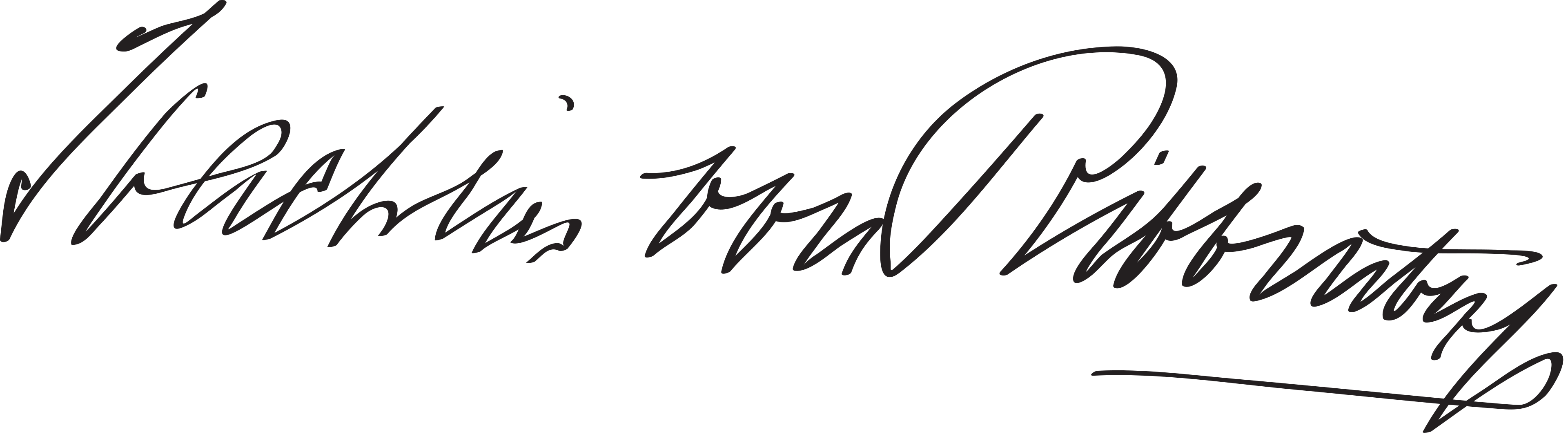
At the International Military Tribunal in Nuremberg, prosecutors presented extensive documentary evidence demonstrating his role in planning aggressive war, negotiating treaties that enabled territorial conquest and directing the Foreign Office's participation in Nazi persecution. His own signatures appeared on numerous diplomatic agreements and official correspondence introduced before the court.
On 1 October 1946, Joachim von Ribbentrop was convicted on all four counts of the indictment: Conspiracy to commit crimes against peace, crimes against peace, war crimes and crimes against humanity. The Tribunal concluded that he had played a decisive role in preparing Germany's wars of aggression and had knowingly supported policies that resulted in mass persecution and murder across occupied Europe.
In the early hours of 16 October 1946, Joachim von Ribbentrop became the first of the condemned Nazi leaders to be executed by hanging at Nuremberg Prison. His reported final words were, "God protect Germany. My last wish is that Germany should recover her unity and that there should be understanding between East and West for peace in the world."
Historical Legacy
Joachim von Ribbentrop transformed Germany's diplomatic service into an instrument of ideological warfare. Rather than preserving peace or protecting national interests through negotiation, he used diplomacy to advance territorial expansion, deceive foreign governments and support the racial policies of the Nazi regime. His treaties reshaped Europe, his diplomacy helped create the international conditions that made the German invasion of Poland and therefore the outbreak of the Second World War possible. His ministry actively facilitated the persecution and deportation of Europe's Jews.
Today, historians regard Ribbentrop as one of the principal architects of Hitler's foreign policy. His career illustrates how diplomacy, when placed entirely at the service of a criminal dictatorship, can become a powerful weapon in the planning and execution of aggressive war and crimes against humanity.
Key Dates
30 April 1893: Born in Wesel, Rhine Province, Germany.
1 May 1932: Joined the Nazi Party.
22 January 1933: Hosted the political meeting that helped secure Hitler's appointment as Chancellor.
August 1934: Founded the Dienststelle Ribbentrop.
18 June 1935: Signed the Anglo-German Naval Agreement.
25 November 1936: Signed the Anti-Comintern Pact with Japan.
4 February 1938: Appointed Minister of Foreign Affairs.
22 May 1939: Signed the Pact of Steel with Italy.
23 August 1939: Signed the Molotov–Ribbentrop Pact in Moscow.
27 September 1940: Signed the Tripartite Pact.
11 December 1941: Delivered Germany's declaration of war to the United States.
14 June 1945: Captured by British forces near Hamburg.
1 October 1946: Convicted on all four counts at the International Military Tribunal.
16 October 1946: Executed by hanging at Nuremberg Prison.



Cite this historical page
