
Who was Karl Dönitz?
Karl Dönitz was a German naval officer who rose to become Großadmiral of the Kriegsmarine during the Second World War. Best known as the architect of Germany’s U-boat campaign in the Battle of the Atlantic, he transformed submarine warfare through the development of coordinated attack formations known as the Wolfpack tactic (Rudeltaktik). A veteran of both world wars, Dönitz spent decades refining submarine strategy and became one of the most influential naval commanders in modern history.
His U-boats came close to severing Britain’s maritime lifelines, making the Atlantic campaign one of the longest and most critical struggles of the war. A loyal supporter of Adolf Hitler, Dönitz was appointed as Hitler’s successor in the dictator’s final political testament on 30 April 1945. For just over three weeks he served as President of Germany and Supreme Commander of the Armed Forces, overseeing Germany’s final surrender before being arrested by Allied forces.
After the war, Dönitz was tried at the Nuremberg Trials and sentenced to ten years imprisonment. His legacy remains controversial. While recognised as a highly capable naval strategist, he was also a committed servant of the Nazi regime and played a significant role in Germany’s aggressive war effort.
Quick Facts
Full name: Karl Dönitz
Born: 16 September 1891, Grünau, Berlin, German Empire
Died: 24 December 1980, Aumühle, West Germany
Nationality: German
Service: Imperial German Navy, Reichsmarine, Kriegsmarine
Highest rank: Großadmiral
Commands: U-boat Force (BdU), Kriegsmarine
Known for: Development of the Wolfpack tactic and leadership of the German U-boat campaign during the Battle of the Atlantic
Political role: President of Germany (30 April – 23 May 1945)
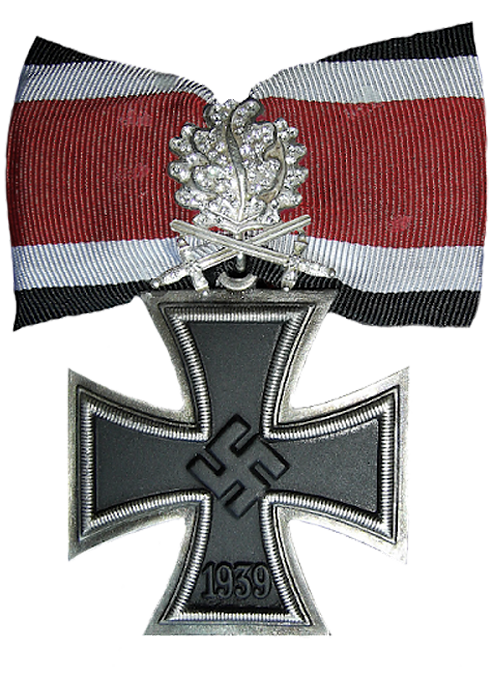
Awards: Knight's Cross of the Iron Cross with Oak Leaves
Early Life
Karl Dönitz was born on 16 September 1891 in Grünau, near Berlin, into the family of engineer Emil Dönitz. He received a traditional middle-class education and developed an early interest in the sea and military service. In 1910, he joined the Imperial German Navy as an officer cadet and was commissioned as a Leutnant zur See three years later. During the opening years of the First World War, Dönitz served aboard the light cruiser SMS Breslau. Following the outbreak of war, Breslau and the battlecruiser Goeben escaped to the Ottoman Empire, where they were formally transferred to the Ottoman Navy while remaining under German command. Seeking a more active combat role, Dönitz volunteered for submarine service in October 1916.
After completing training at Flensburg-Mürwik, he served as a watch officer aboard U-39 before receiving command of UC-25. In July 1918, he was appointed commander of UB-68, operating in the Mediterranean. On 4 October 1918, while attacking an Allied convoy near Malta, technical failures forced UB-68 to surface. The submarine was scuttled and Dönitz was captured by British forces. Held as a prisoner of war at the Redmires Camp near Sheffield until 1919, he spent much of his captivity analysing submarine operations and developing ideas that would later shape German naval doctrine.
Interwar Period and the Birth of the Wolfpack
Returning to Germany after the war, Dönitz remained in naval service despite the severe restrictions imposed by the Treaty of Versailles. The greatly reduced Reichsmarine offered limited opportunities, but he steadily advanced through the ranks while commanding torpedo boats and serving in various staff positions. The signing of the Anglo-German Naval Agreement in 1935 allowed Germany to openly rebuild its submarine fleet. Promoted to Kapitän zur See, Dönitz was placed in command of the newly created U-boat flotilla Weddigen. He immediately began shaping the future of Germany’s submarine force. Dönitz believed that submarines should not operate independently but rather as coordinated groups capable of overwhelming convoy escorts. He refined his wartime theories into the Wolfpack tactic (Rudeltaktik), whereby multiple submarines would be directed against a single convoy using radio communications and centralized command. He also strongly advocated mass production of the dependable Type VII U-boat, which would become the backbone of the German submarine fleet.
In January 1939, he published many of his ideas in a booklet titled Die U-Bootwaffe. Although largely ignored abroad, the publication outlined concepts that would soon challenge Allied control of the Atlantic.
The Battle of the Atlantic and the Cost of Total War
When Germany invaded Poland on 1 September 1939, Dönitz entered the war with only 57 U-boats, of which just 27 were suitable for Atlantic operations. He had previously calculated that approximately 300 submarines would be required to wage an effective campaign against Britain. On the first day of hostilities, the passenger liner Athenia was mistakenly sunk by a German submarine. Dönitz ordered references to the incident removed from official records in an attempt to avoid diplomatic repercussions and international criticism.
Promoted to Konteradmiral and appointed Befehlshaber der U-Boote (BdU), Dönitz aggressively expanded submarine operations. The fall of France in 1940 provided valuable Atlantic bases at Lorient, Brest, and Saint-Nazaire, allowing German submarines direct access to Atlantic shipping lanes. Under commanders such as Otto Kretschmer, Joachim Schepke, and Günther Prien, the U-boat arm achieved remarkable successes. Prien’s penetration of the British naval base at Scapa Flow became one of the most celebrated operations of the war. During what German submariners called the First Happy Time, Allied shipping losses reached alarming levels.
In January 1943, Dönitz succeeded Erich Raeder as Commander-in-Chief of the Kriegsmarine and was promoted to Großadmiral. However, the strategic situation was already changing. The capture of Enigma materials from vessels such as U-110, combined with breakthroughs achieved at Bletchley Park, enabled Allied intelligence to read large portions of German naval communications during significant periods of the war. At the same time, Allied advances in radar, long-range maritime patrol aircraft, escort carriers and hunter-killer groups steadily reduced the effectiveness of the U-boat campaign. In May 1943, often referred to as Black May, German submarine losses reached unsustainable levels and the initiative passed permanently to the Allies.
Despite mounting losses, Dönitz continued to commit his submarines to combat until the final months of the war. The human cost was devastating. Of approximately 40,000 men who served in the U-boat arm, nearly 30,000 lost their lives. Germany also lost 648 U-boats, including hundreds destroyed with all hands. The war struck Dönitz personally as well, as both of his sons, Peter and Klaus Dönitz, were killed during the conflict.
Relationship with Hitler
Unlike many senior German military leaders who became increasingly critical of Hitler as the war progressed, Dönitz remained loyal to the Nazi leader until the very end. He admired Hitler’s determination and believed that unwavering obedience was essential during wartime. Hitler, in turn, regarded Dönitz as one of the few senior officers who remained politically reliable and personally loyal. Throughout the war, Dönitz generally avoided involvement in military conspiracies and showed no support for efforts to remove Hitler from power. Following the failed 20 July Plot in 1944, he publicly condemned the conspirators and reaffirmed his allegiance to the regime.
This loyalty would ultimately prove decisive in Hitler’s final decision regarding the leadership of Germany. As the Third Reich collapsed in April 1945, Hitler chose Dönitz rather than leading Nazi Party figures to succeed him.
The Flensburg Government, Surrender and Judgment
On 30 April 1945, Adolf Hitler committed suicide in Berlin. In his final political testament, he appointed Dönitz as President of Germany and Supreme Commander of the Armed Forces. From the northern German town of Flensburg, Dönitz formed a caretaker administration that became known as the Flensburg Government. Recognising that Germany's military position was hopeless, Dönitz sought to surrender to the Western Allies while allowing as many German soldiers and civilians as possible to escape advancing Soviet forces. Acting on his authority, General Alfred Jodl signed the German Instrument of Surrender at Reims on 7 May 1945. A second signing ceremony followed in Berlin on 8 May 1945, bringing the war in Europe to an end.
The Flensburg Government survived for only a few weeks. On 23 May 1945, Allied forces dissolved the administration and arrested its members. Dönitz was subsequently transferred to Nuremberg to stand trial alongside other leading figures of the Third Reich.
At the Nuremberg Trials, Dönitz faced charges relating to conspiracy, crimes against peace and war crimes. Although acquitted of crimes against humanity, he was convicted for his role in planning and conducting Germany’s aggressive wars. The tribunal acknowledged that unrestricted submarine warfare had also been employed by Allied navies, but nevertheless sentenced him to ten years imprisonment.
Dönitz served his full sentence in Spandau Prison and was released on 1 October 1956.
Legacy
Following his release, Dönitz settled in Aumühle near Hamburg and largely withdrew from public life. He wrote several memoirs defending his wartime actions and remained convinced that he had acted honourably as a naval officer. He never publicly repudiated his loyalty to Hitler or the regime he had served. Historians continue to debate Dönitz’s place in history. Militarily, he is recognised as one of the most influential submarine commanders of the twentieth century. His development of coordinated submarine tactics shaped naval warfare long after the Second World War. At the same time, his close association with the Nazi regime and his willingness to prosecute a ruthless maritime campaign ensure that his legacy remains deeply controversial.
Karl Dönitz died on 24 December 1980 at the age of eighty-nine. As the last head of state of Nazi Germany and the architect of the U-boat war, he remains one of the most significant and debated figures in modern naval history.
Key Dates
16 September 1891: Born in Grünau, near Berlin, German Empire.
1 April 1910: Entered the Imperial German Navy as an officer cadet.
27 September 1913: Commissioned as a Leutnant zur See.
October 1916: Transferred to the German submarine service.
July 1918: Assumed command of the submarine UB-68.
4 October 1918: Captured by British forces after UB-68 was scuttled in the Mediterranean.
1919: Released from British captivity and returned to Germany.
1935: Appointed commander of the newly established U-boat flotilla Weddigen.
28 January 1939: Published Die U-Bootwaffe, outlining his submarine warfare doctrine.
1 September 1939: Germany invaded Poland, marking the beginning of the Second World War.
1 October 1939: Appointed Befehlshaber der U-Boote (Commander of the U-boat Force).
21 April 1940: Awarded the Knight's Cross of the Iron Cross.
30 January 1943: Promoted to Großadmiral and succeeded Erich Raeder as Commander-in-Chief of the Kriegsmarine.
May 1943: The Battle of the Atlantic turned decisively in favour of the Allies during "Black May".
7 April 1943: Awarded the Oak Leaves to the Knight's Cross of the Iron Cross.
20 July 1944: Publicly condemned the failed assassination attempt against Adolf Hitler.
30 April 1945: Appointed President of Germany and Supreme Commander of the Armed Forces following Hitler's suicide.
7 May 1945: Authorized General Alfred Jodl to sign Germany's surrender at Reims, France.
23 May 1945: Arrested by Allied forces after the dissolution of the Flensburg Government.
1 October 1946: Sentenced to ten years imprisonment by the International Military Tribunal at Nuremberg.
1 October 1956: Released from Spandau Prison after serving his full sentence.
24 December 1980: Died in Aumühle, West Germany, aged 89.


Cite this historical page
