
Who was Hermann Göring?
Hermann Göring was one of the most powerful and controversial figures in Nazi Germany. A decorated fighter pilot during the First World War, he later became one of Adolf Hitler’s closest associates and played a central role in the establishment and operation of the Nazi regime. Göring served as Commander-in-Chief of the Luftwaffe, helped create the Gestapo and was designated as Hitler’s successor for much of the Second World War. His influence extended across military, political and economic affairs, making him one of the most prominent leaders of the Third Reich. Following Germany’s defeat in 1945, Göring was captured by Allied forces, convicted of war crimes at the Nuremberg Trials and sentenced to death.
Quick Facts
Full name: Hermann Wilhelm Göring
Born: 12 January 1893, Rosenheim, Bavaria, German Empire
Died: 15 October 1946, Nuremberg, Germany
Age at death: 53
Rank: Reichsmarschall of the Greater German Reich
Organization: German Army (First World War), Luftwaffe, Nazi Party (NSDAP)
Known for: Commander-in-Chief of the Luftwaffe and one of Adolf Hitler's closest associates
Awards: Pour le Mérite, Iron Cross 1st Class, Iron Cross 2nd Class
Historical significance: One of the most powerful leaders of Nazi Germany, responsible for major military, political and economic policies of the Third Reich
Early Life and First World War
Hermann Wilhelm Göring (often spelled Goering) was born on 12 January 1893 in Rosenheim, Bavaria. The son of a former diplomat and colonial official, he grew up in a family with strong military traditions and developed an interest in soldiering from an early age. After attending military schools, he entered the German Army as an officer cadet and began a career that would eventually take him into the rapidly developing field of military aviation.
When the First World War broke out in 1914, Göring initially served as an infantry officer before transferring to the German Air Service. He quickly proved himself to be a skilled and courageous pilot. For his early service, he was awarded the Iron Cross 2nd Class on 15 September 1914 and the Iron Cross 1st Class on 22 March 1915.
As the war progressed, Göring established himself as one of Germany's leading fighter aces. In 1918, he succeeded Manfred von Richthofen, the famous "Red Baron", as commander of Jagdgeschwader 1, the legendary "Flying Circus". By the end of the war, he had been credited with 22 aerial victories.
In recognition of his achievements, Göring received the Pour le Mérite on 2 June 1918, Germany's highest military decoration for bravery and leadership. His wartime reputation as a celebrated fighter ace provided him with national recognition and prestige, which later helped him establish a prominent role in German politics during the turbulent years that followed the war.
Personal life
Hermann Göring married Carin von Kantzow in 1923, a Swedish noblewoman who remained an important influence during his early political career. She died in 1931 and Göring later named his estate, Carinhall, in her memory. In 1935, he married Emmy Sonnemann, a German actress. The marriage was widely publicized and reflected Göring’s growing status within Nazi Germany. The couple had one daughter, Edda Göring, born on 2 June 1938. Adolf Hitler served as her godfather.
Extravagant lifestyle
Göring was known for his extravagant lifestyle, amassing vast collections of art, uniforms and luxury items during his years of power in the Third Reich. He built a lavish country estate known as Carinhall, where many of these artworks were displayed, including pieces seized from occupied territories.
He frequently appeared in elaborate, custom-designed uniforms and surrounded himself with symbols of wealth and status, reflecting both his personal taste and his position within the Nazi leadership.
Rise within the Nazi Party
After the war, Göring struggled to adapt to civilian life and became involved in nationalist politics. In 1922, he joined the National Socialist German Workers’ Party (NSDAP) after meeting Adolf Hitler and quickly became one of his early supporters.
During the failed Beer Hall Putsch in November 1923, Göring was shot in the groin and leg, suffering serious injuries. During his recovery, he was treated with morphine and developed a long-term addiction. For his participation in the putsch, he later received the Blood Order.
Following the failed coup, he fled Germany and lived in exile until returning in 1927. As an early member of the Nazi Party, he was also awarded the Golden Party Badge.
Power in Nazi Germany
Back in Germany, Göring resumed his political career and rose rapidly within the Nazi Party, becoming President of the Reichstag in 1932. After Hitler came to power in 1933, he became one of the most powerful figures in Nazi Germany, often regarded as second only to Hitler.
He held a number of key positions, including Minister-President of Prussia, founder of the Gestapo, commander-in-chief of the Luftwaffe and head of the Four-Year Plan, overseeing Germany’s economic and military expansion.
Role in Nazi crimes
In these roles, Göring played a central part in consolidating Nazi power and was directly involved in the persecution and dispossession of Jews, particularly following Kristallnacht in 1938.
In 1941, he authorized Reinhard Heydrich to prepare plans for the “Final Solution,” linking him directly to the wider system of Nazi genocide.
Second World War
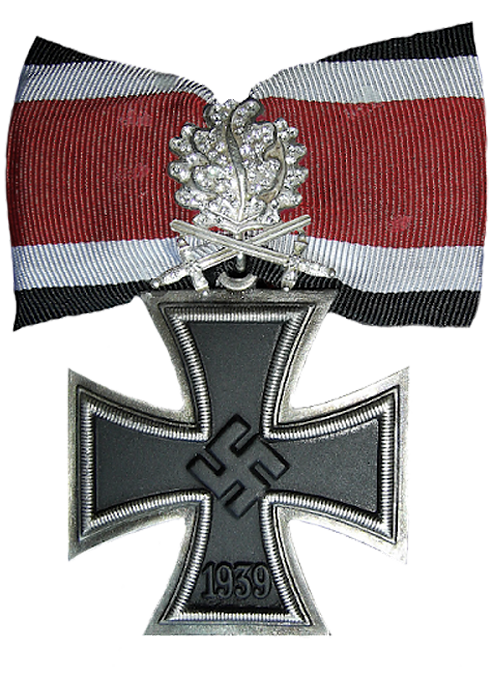
At the outbreak of the Second World War in 1939, Göring commanded the Luftwaffe, which contributed to Germany’s early victories in Poland, the Low Countries and France. For his role in these campaigns, he was awarded the Knight’s Cross of the Iron Cross on 30 September 1939, along with the 1939 clasps to both the Iron Cross 1st and 2nd Class.
Following the defeat of France, Göring reached the height of his power. On 19 July 1940, he was promoted to Reichsmarschall, a unique rank created by Hitler that made him the highest-ranking officer in the German armed forces. On the same date, he received the Grand Cross of the Iron Cross, the only award of this decoration during the Second World War.
However, his influence declined as the war progressed. The Luftwaffe failed to defeat the Royal Air Force during the Battle of Britain and Göring later proved unable to supply German forces at Stalingrad. Increasing Allied bombing of German cities further weakened his position within the Nazi leadership.
The Luftwaffe on D-Day
On D-Day, 6 June 1944, the German Luftwaffe played only a limited role in opposing the Allied landings in Normandy. Due to overwhelming Allied air superiority, fuel shortages and the dispersal of German air units, only a small number of sorties were flown over the invasion area.
Allied air forces dominated the skies, conducting continuous bombing and strafing missions that disrupted German movements and reinforcements. As a result, the Luftwaffe was largely unable to influence the outcome of the landings, marking a significant decline in German air power in Western Europe.
Fall from power
By 1945, Göring had largely fallen out of favor with Hitler. On 23 April 1945, as Germany faced defeat, he attempted to assume leadership of the Reich based on earlier decrees, but Hitler interpreted this as treason and ordered his arrest, stripping him of all positions.
Trial and death
Göring was captured by United States forces on 7 May 1945 and became the most prominent defendant at the Nuremberg Trials. He was found guilty of war crimes, crimes against humanity and conspiracy to wage aggressive war.
On 1 October 1946, he was sentenced to death by hanging. However, on 15 October 1946, the night before his execution, Göring committed suicide by taking cyanide.
Historical significance
Hermann Göring remains one of the central figures of Nazi Germany. As a military leader, political figure and administrator, he played a major role in the expansion of the Third Reich and in the implementation of its policies of repression and genocide.
Key Dates
12 January 1893: Born in Rosenheim, Kingdom of Bavaria, German Empire.
1912: Graduated from the Prussian Military Academy at Berlin-Lichterfelde and was commissioned as a Second Lieutenant.
August 1914: Served in the German Army at the outbreak of the First World War.
1915: Transferred to the German Air Service (Luftstreitkräfte) as an observer before becoming a fighter pilot.
7 July 1918: Succeeded Manfred von Richthofen as commander of Jagdgeschwader 1 (the "Flying Circus").
1922: Joined the National Socialist German Workers' Party (NSDAP).
8–9 November 1923: Participated in the Beer Hall Putsch and was seriously wounded.
30 January 1933: Appointed Minister without Portfolio following Adolf Hitler's appointment as Chancellor.
30 August 1933: Founded the Gestapo in Prussia before control was later transferred to Heinrich Himmler and the SS.
1 March 1935: Announced the existence of the Luftwaffe and became its Commander-in-Chief.
31 July 1941: Signed the directive authorising Reinhard Heydrich to prepare the Final Solution of the Jewish Question.
23 April 1945: Sent a telegram to Adolf Hitler requesting permission to assume leadership of Germany, resulting in his dismissal and arrest on Hitler's orders.
9 May 1945: Surrendered to American forces in Bavaria.
1 October 1946: Sentenced to death by hanging at the International Military Tribunal in Nuremberg.
15 October 1946: Committed suicide by cyanide the night before his scheduled execution.




Cite this historical page
