
Commanders of the Operation Barbarossa


What was Operation Barbarossa?
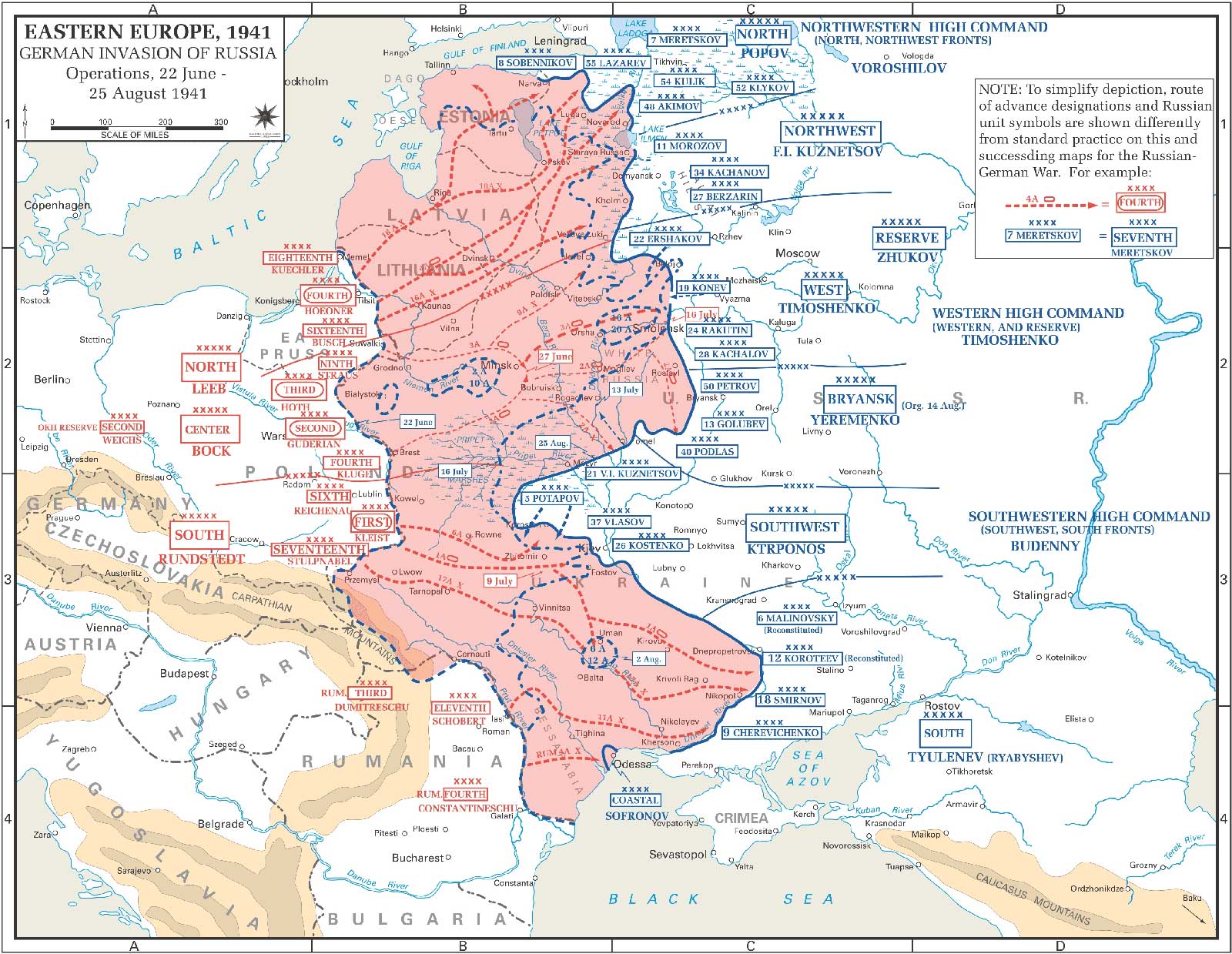
Operation Barbarossa was the codename for Nazi Germany's invasion of the Soviet Union, launched on 22 June 1941 during the Second World War. Named after the medieval Holy Roman Emperor Frederick Barbarossa, the operation marked the opening of the Eastern Front and became the largest military invasion in history. More than 3,8 million Axis troops, supported by almost 3,800 tanks, over 4,300 aircraft and approximately 23,500 artillery pieces, advanced across a front stretching nearly 2,900 kilometres from the Baltic Sea to the Black Sea.
The invasion represented the culmination of Adolf Hitler's long-held ambition to destroy the Soviet Union and establish German domination over Eastern Europe. German planners expected the campaign to be completed within a matter of months through a series of vast encirclement battles that would destroy the Red Army west of the Dvina and Dnieper rivers. Once Soviet resistance had collapsed, German forces intended to advance to the so-called A-A Line, stretching from Arkhangelsk in the north to Astrakhan on the Caspian Sea.
Unlike Germany's earlier campaigns in Poland, France and the Balkans, Operation Barbarossa was conceived not only as a military invasion but also as an ideological war of conquest and racial extermination. Behind the advancing Wehrmacht followed the SS Einsatzgruppen, whose task was to murder Jews, Communist officials, political commissars and other groups regarded by the Nazi regime as enemies. The invasion therefore marked both the beginning of the largest land campaign in history and a decisive escalation of the Holocaust.
Fighting on the Eastern Front continued until Germany's unconditional surrender in May 1945. It became the largest and bloodiest theatre of the Second World War, accounting for the majority of military and civilian casualties in Europe and ultimately determining the fate of Nazi Germany.
Origins of the invasion
The origins of Operation Barbarossa stretched back long before the outbreak of the Second World War. In Mein Kampf, published in 1925, Adolf Hitler argued that Germany's future depended on acquiring Lebensraum ("living space") in Eastern Europe. He believed that Germany required vast agricultural territories to support its growing population and that these lands should be conquered from peoples whom Nazi ideology falsely regarded as racially inferior. At the same time, Hitler viewed Bolshevism as Germany's greatest ideological enemy and falsely portrayed the Soviet Union as being controlled by an international Jewish conspiracy. Although these beliefs remained central to his worldview, Germany temporarily set them aside after signing the Molotov-Ribbentrop Pact on 23 August 1939. The agreement enabled Nazi Germany and the Soviet Union to divide Poland into separate spheres of influence while avoiding direct conflict.
During the following year, the Soviet Union supplied Germany with vital raw materials, including oil, grain and metals, helping sustain the German war economy during its campaigns in Western Europe. The relationship, however, was one of convenience rather than trust. After the defeat of France in June 1940, Hitler increasingly turned his attention eastward. He became convinced that defeating the Soviet Union would remove Britain's last potential continental ally while providing Germany with enormous agricultural, industrial and economic resources.
On 18 December 1940, Hitler signed Directive No. 21, formally ordering preparations for the invasion of the Soviet Union under the codename Operation Barbarossa. Planning immediately began under the supervision of the Oberkommando des Heeres (OKH). German military leaders expected a rapid campaign in which the Red Army would be destroyed before the Soviet state could fully mobilise its vast reserves of manpower and industry.
Their confidence was based on the spectacular successes already achieved in Poland, Norway, the Low Countries, France and the Balkans, but they fundamentally underestimated the size, resilience and industrial capacity of the Soviet Union.
Planning Operation Barbarossa
The planning for Operation Barbarossa began while Nazi Germany was still at war with Britain. After the defeat of France in June 1940, Adolf Hitler increasingly turned his attention eastward. He believed that the destruction of the Soviet Union would remove Britain's last major hope of continuing the war, provide Germany with vast agricultural and industrial resources and fulfil his ideological goal of conquering Lebensraum in Eastern Europe.
On 18 December 1940, Hitler issued Directive No. 21, formally ordering preparations for the invasion. The directive stated that the German armed forces must be prepared to crush Soviet Russia in a rapid campaign before the end of the war against Britain. The expectation was clear: the Soviet Union would be defeated quickly through a series of massive encirclement battles near the frontier.
German planners believed the Red Army could be destroyed west of the Dvina and Dnieper rivers before it had time to withdraw into the depths of the Soviet Union. Once this had been achieved, German forces would advance towards the so-called A-A Line, running from Arkhangelsk in the north to Astrakhan on the Caspian Sea. This vast line represented the planned eastern limit of German military occupation.
The invasion plan was shaped mainly by the Oberkommando des Heeres (OKH), the German Army High Command. Senior officers such as Franz Halder and Walther von Brauchitsch expected a campaign similar in style to the victories in Poland and France: rapid armoured breakthroughs, deep penetrations and the encirclement of large enemy formations.
They underestimated the size of the Soviet Union, the resilience of its state system and the ability of the Soviet leadership to raise new armies after catastrophic losses.
Ideological objectives
Although Operation Barbarossa was planned as a military offensive, its objectives extended far beyond defeating the Red Army. Adolf Hitler regarded the invasion as a struggle between opposing ideologies and races rather than a conventional war between states. The destruction of the Soviet Union formed only one part of a broader programme that sought to reshape Eastern Europe according to Nazi racial ideology. German occupation policy aimed to establish permanent control over vast areas of Soviet territory while exploiting its agricultural and industrial resources. Military operations therefore became closely linked with persecution, forced labour and mass murder. Before the invasion, special directives authorised the summary execution of Communist political commissars and removed many of the legal protections normally afforded to civilians during wartime. These measures reflected Hitler's determination to wage what he described as a Vernichtungskrieg, or war of annihilation.
The invasion was therefore intended not simply to conquer territory, but to destroy an ideological enemy, seize resources for the Third Reich and establish long-term German domination over Eastern Europe. These objectives would shape both the military campaign and the occupation policies that followed.
German preparations
During the winter and spring of 1940-1941, German divisions were gradually transferred eastward. These movements were disguised as training exercises, redeployments or defensive precautions. In reality, they formed part of the largest military build-up in history. By June 1941, Germany and its allies had assembled more than 3,8 million Axis troops along the Soviet frontier.
The invasion force included approximately 153 German divisions, supported by Finnish, Romanian, Hungarian, Slovak and Italian formations. It was equipped with nearly 3,800 tanks, more than 4,300 aircraft and around 23,500 artillery pieces. Despite its reputation for modern mechanised warfare, the German Army remained heavily dependent upon horses. Almost 700,000 horses were used to move artillery, supplies and equipment across the vast distances of the Eastern Front.
The German plan divided the invasion into three main army groups. Army Group North, commanded by Field Marshal Wilhelm Ritter von Leeb, would advance through the Baltic States toward Leningrad. Army Group Centre, commanded by Field Marshal Fedor von Bock, would drive through Belarus toward Smolensk and ultimately Moscow. Army Group South, commanded by Field Marshal Gerd von Rundstedt, would advance into Ukraine toward Kiev and the rich agricultural and industrial regions of the south.
Air support was provided by the Luftwaffe, which prepared a massive opening strike against Soviet airfields, command centres and communications. German air commanders hoped to destroy the Soviet air force on the ground during the first hours of the invasion, giving the Wehrmacht freedom to operate across the battlefield.
The SS and the Einsatzgruppen
One of the defining features of Operation Barbarossa was the deployment of four SS Einsatzgruppen, mobile killing units organised under the authority of Reinhard Heydrich and ultimately Heinrich Himmler. Closely following the advancing Wehrmacht, their mission was not conventional warfare but the systematic murder of those whom the Nazi regime regarded as political and racial enemies.
The Einsatzgruppen were ordered to eliminate Jews, Communist officials, political commissars, members of the Soviet intelligentsia and other groups considered a threat to German occupation. Working alongside Order Police battalions, Waffen-SS units and local collaborators, they carried out mass shootings across the occupied territories of the Soviet Union. Their deployment demonstrated that Operation Barbarossa was far more than a military invasion. It combined conventional warfare with ideological persecution and marked a decisive escalation of the Holocaust.
During the months that followed, hundreds of thousands of civilians were murdered in what became known as the Holocaust by Bullets, foreshadowing the wider programme of genocide that would later culminate in the Final Solution.
Pre-war German-Soviet relations
Although Nazi Germany and the Soviet Union became bitter enemies in June 1941, the two dictatorships had maintained a brief period of political and economic cooperation before the invasion. On 23 August 1939, German Foreign Minister Joachim von Ribbentrop and Soviet Foreign Minister Vyacheslav Molotov signed the Molotov-Ribbentrop Pact, a non-aggression treaty that stunned the international community. Secret protocols attached to the agreement divided Eastern Europe into German and Soviet spheres of influence, allowing both powers to pursue their territorial ambitions without fear of conflict with one another. The consequences of the agreement quickly became apparent. Germany invaded Poland on 1 September 1939, while the Soviet Union occupied eastern Poland on 17 September 1939. During the following months, the Baltic States fell under Soviet control, while both governments continued to cooperate economically.
The Soviet Union supplied Germany with large quantities of grain, oil, timber and other raw materials, helping sustain the German war economy despite the British naval blockade.
Despite this cooperation, the relationship was built on mutual distrust. Adolf Hitler never abandoned his ambition to conquer the Soviet Union, while Joseph Stalin believed Germany would not risk a two-front war before defeating Britain. Even as diplomatic relations continued, both sides quietly prepared for the conflict they increasingly regarded as inevitable.
Soviet Red Army

German Wehrmacht

Battle specifications
Date of the battle
Duration of the battle
Reason for the battle
Location
Battle result
Allied casualties
Axis casualties


Opposing forces
Operation Barbarossa assembled the largest invasion force ever committed to a single military operation. Germany deployed approximately 3,3 million soldiers, supported by almost 500,000 troops from Romania, Finland, Hungary, Slovakia and other Axis allies. The invasion force consisted of 153 German divisions, supported by nearly 3,800 tanks, more than 4,300 aircraft, approximately 23,500 artillery pieces, over 600,000 motor vehicles and almost 700,000 horses.
The offensive was organised into three major army groups.
- Army Group North, commanded by Field Marshal Wilhelm Ritter von Leeb, was tasked with capturing Leningrad.
- Army Group Centre, commanded by Field Marshal Fedor von Bock, formed the main striking force and was ordered to advance towards Moscow.
- Army Group South, commanded by Field Marshal Gerd von Rundstedt, advanced into Ukraine with the objectives of capturing Kiev and securing the region's valuable agricultural and industrial resources.
Opposing them stood the Red Army, which possessed overwhelming numerical superiority in tanks and aircraft but suffered from serious organisational weaknesses. Joseph Stalin's Great Purge had removed thousands of experienced officers during the late 1930s, while the rapid expansion of the Soviet armed forces left many newly formed divisions poorly trained and inadequately equipped. Although the Soviet Union possessed approximately 23,000 tanks and nearly 20,000 aircraft, many were obsolete, lacked spare parts or had inexperienced crews.
German planners believed these weaknesses would allow the Wehrmacht to destroy the Red Army within a few months. They underestimated the Soviet Union's vast industrial capacity, its ability to mobilise millions of additional soldiers and the determination of its people to continue fighting.
Soviet warnings and Stalin's miscalculation
Despite German efforts to conceal the preparations, the Soviet Union received repeated warnings of an impending invasion. Intelligence reports came from British sources, American diplomatic channels, Soviet agents and foreign communist networks. One of the most important warnings came from the Soviet spy Richard Sorge in Tokyo, who reported that Germany was preparing to attack. Joseph Stalin distrusted many of these warnings. He believed that Britain was attempting to provoke a war between Germany and the Soviet Union in order to relieve pressure on itself. Stalin also believed Hitler would not risk a two-front war while Britain remained undefeated. As a result, he refused to order full mobilisation and repeatedly instructed Soviet commanders not to respond to German provocations along the border.
This caution had disastrous consequences. Many Soviet aircraft remained parked in exposed formations on airfields close to the frontier. Units lacked clear orders, ammunition stocks were incomplete and commanders were uncertain whether they were permitted to respond to German activity.
When the attack finally began, the Red Army was caught in a dangerous state of partial readiness.
The delay of the invasion
Operation Barbarossa was originally planned to begin on 15 May 1941, but the invasion was postponed until 22 June 1941. Several factors contributed to the delay. The spring thaw had turned roads and rivers in Eastern Europe into mud, making large-scale movement difficult. German planners also needed more time to assemble supplies, fuel, ammunition and transport. The most famous reason for the delay was Germany's campaign in the Balkans. In April 1941, German forces invaded Yugoslavia and Greece after political developments in the region threatened Axis plans. Both campaigns were successful, but they consumed time, fuel, transport capacity and attention that had originally been intended for Barbarossa.
Historians continue to debate how much the Balkan campaign affected the outcome of Operation Barbarossa. The delay alone did not doom the invasion. The deeper problems were logistical, strategic and ideological. Germany underestimated the Soviet Union, overestimated the ability of the Wehrmacht to win a rapid victory and failed to prepare adequately for a long war. Nevertheless, the lost weeks reduced the time available before the arrival of autumn mud and winter conditions.
The final deployment
By mid-June 1941, the German invasion force was in position. Along the frontier, soldiers waited in forests, villages and assembly areas under strict orders to maintain secrecy. Bridges were prepared for capture or rapid construction. Engineers moved forward with assault equipment. Panzer divisions concentrated near key crossing points, ready to break through Soviet defences and advance deep into the rear areas. For many German soldiers, the invasion was presented as a preventive war against Bolshevism. Nazi propaganda described the Soviet Union as a dangerous enemy preparing to attack Europe. In reality, Operation Barbarossa was an unprovoked war of conquest planned months in advance. Its objectives combined military destruction, economic exploitation and racial colonisation.
On the Soviet side, confusion remained widespread. Some commanders recognised the danger and attempted to place their units on alert, but orders from Moscow remained cautious and contradictory. The result was a frontier defence that possessed enormous manpower and equipment on paper but was poorly positioned to resist the opening German blow.
The invasion begins
At approximately 03:15 on the morning of 22 June 1941, German artillery opened fire along the entire frontier, followed almost immediately by massive Luftwaffe air attacks against Soviet airfields, communications centres and military headquarters. Within hours, thousands of German troops crossed the border from East Prussia, occupied Poland and Romania, launching the largest military invasion in history. The opening assault achieved complete surprise. Hundreds of Soviet aircraft were destroyed on the ground, frontier units were overwhelmed and communications between many Red Army formations collapsed. German armoured spearheads advanced rapidly into Soviet territory, surrounding large Soviet armies in a series of massive encirclement battles that became the hallmark of the campaign's opening weeks.
Although the Wehrmacht achieved spectacular early successes, the Soviet Union did not collapse as German planners had expected. As the invasion pushed deeper into Soviet territory, supply lines became increasingly overstretched, resistance stiffened and fresh Soviet formations entered the fighting. The rapid victory envisioned by Adolf Hitler and the German High Command gradually gave way to a prolonged and increasingly costly campaign.
Operation Barbarossa had begun with one of the most powerful military offensives ever launched. It would soon develop into the largest and bloodiest land campaign of the Second World War, reshaping the conflict and determining the future of Europe.
Army Group North
Army Group North, commanded by Field Marshal Wilhelm Ritter von Leeb, was assigned the northern sector of Operation Barbarossa. Its primary objective was to advance rapidly through the Baltic States, destroy Soviet forces stationed there and capture Leningrad, the Soviet Union's second-largest city and the symbolic birthplace of the Bolshevik Revolution. Supporting the offensive were Panzer Group 4, commanded by Colonel General Erich Hoepner and Luftflotte 1 under Colonel General Alfred Keller. Together they sought to overwhelm Soviet border defences before advancing through Lithuania, Latvia and Estonia.
The opening days of the campaign brought rapid success. German armoured formations broke through Soviet frontier positions and advanced at remarkable speed. Cities including Kaunas, Daugavpils and Riga fell within weeks as Soviet forces struggled to organise an effective defence. Despite determined local resistance, the Red Army suffered heavy losses and was repeatedly forced into retreat. By early September 1941, Army Group North had reached the outskirts of Leningrad. Rather than launching a costly assault on the city itself, Hitler ordered it to be surrounded and starved into submission. On 8 September 1941, German forces severed the last land connection to the city, beginning the infamous Siege of Leningrad. Lasting nearly 900 days, the siege became one of the longest and deadliest in military history, costing the lives of well over one million civilians through starvation, bombardment and disease.
Army Group Centre
Army Group Centre, commanded by Field Marshal Fedor von Bock, formed the main striking force of Operation Barbarossa. It possessed the greatest concentration of German armour and was expected to deliver the decisive blow against the Soviet Union by advancing through Belarus, capturing Smolensk and ultimately seizing Moscow. The army group included two powerful armoured formations: Panzer Group 2 under Colonel General Heinz Guderian and Panzer Group 3 commanded by Colonel General Hermann Hoth. Together they pioneered the rapid armoured tactics that had already brought victory in Poland and France.
Within days of the invasion, German panzer divisions executed enormous encirclement operations around Białystok and Minsk. Soviet armies were trapped in vast pockets while German infantry closed the encirclements from behind. By early July, approximately 320,000 Soviet prisoners had been captured, together with thousands of tanks, artillery pieces and vehicles.
Despite these spectacular victories, Soviet resistance did not collapse. Fresh formations continued to arrive from the interior, forcing the Germans to fight repeated battles rather than simply pursue a retreating enemy. This pattern would become increasingly common throughout the campaign.
The Battle of Smolensk
After the capture of Minsk, Army Group Centre advanced towards Smolensk, an important communications hub approximately 400 kilometres west of Moscow. Between 10 July and 10 September 1941, fierce fighting developed as German armoured spearheads attempted another large encirclement. Although German forces ultimately captured Smolensk and surrounded large numbers of Soviet troops, the battle exposed a growing problem. The Red Army repeatedly launched counterattacks against the German flanks, forcing the Wehrmacht to commit additional troops to defensive operations. Soviet commanders also proved increasingly willing to sacrifice entire armies in order to delay the German advance.
The battle cost the Soviet Union hundreds of thousands of casualties but also bought valuable time. Reinforcements were mobilised, defensive positions strengthened and industrial production accelerated east of the Ural Mountains. The rapid campaign envisioned by German planners was already beginning to lose momentum. Following Smolensk, disagreement emerged within the German High Command. Fedor von Bock, Heinz Guderian and many senior generals favoured an immediate advance towards Moscow, believing the Soviet capital represented the key to victory. Hitler disagreed. He regarded the economic resources of Ukraine and the capture of Leningrad as more important than the immediate seizure of Moscow. This strategic dispute would significantly influence the remainder of the campaign.
Army Group South
Army Group South, commanded by Field Marshal Gerd von Rundstedt, operated across the broad plains of southern Poland and Ukraine. It faced the strongest concentration of Soviet forces and therefore advanced more slowly than the other army groups. Its objectives included capturing Kiev, securing Ukraine's agricultural production and eventually advancing towards the industrial Donbas region and the oil fields of the Caucasus. Unlike the northern and central sectors, the southern front featured extensive Soviet defensive preparations and larger concentrations of armoured forces. German and Romanian troops encountered determined resistance during the opening weeks of the invasion, particularly around Brody, Dubno and Lutsk, where one of the largest tank battles of the Second World War took place.
Although Soviet counterattacks temporarily disrupted German operations, superior German coordination, tactical flexibility and air superiority gradually turned the battle in Germany's favour. As Soviet formations became increasingly disorganised, Army Group South resumed its advance into Ukraine. The greatest success came during the Battle of Kiev. Acting on Hitler's orders, Heinz Guderian's Panzer Group 2 turned south from Army Group Centre while forces under Gerd von Rundstedt advanced northward. Together they completed one of the largest encirclements in military history.
When the battle ended in late September 1941, approximately 665,000 Soviet prisoners had been captured. The victory eliminated much of the Soviet Southwestern Front and secured Ukraine for the time being. However, the operation also delayed the planned advance on Moscow by several critical weeks, allowing the Soviet Union additional time to strengthen its defences around the capital.
The first months of the campaign
By the end of September 1941, German forces had achieved victories on a scale never before witnessed in modern warfare. Vast areas of the Soviet Union had been occupied, millions of prisoners captured and enormous quantities of military equipment destroyed. The Wehrmacht appeared unstoppable. Yet beneath these impressive successes, serious difficulties were becoming apparent. German supply lines stretched hundreds of kilometres across poor roads and incompatible railway networks. Fuel, ammunition and spare parts increasingly struggled to keep pace with the rapidly advancing armoured formations. The Red Army, although repeatedly defeated, continued to field fresh armies from the Soviet interior.
Operation Barbarossa had entered a new phase. The spectacular frontier victories of June and July were giving way to a longer and more demanding campaign in which logistics, industrial capacity and endurance would become just as important as battlefield tactics.
The Battle of Kiev
Following the capture of Smolensk, a major strategic disagreement developed within the German High Command. Many senior commanders, including Field Marshal Fedor von Bock and Colonel General Heinz Guderian, argued that the Wehrmacht should continue its advance directly towards Moscow. Adolf Hitler, however, believed that securing the economic resources of Ukraine and eliminating Soviet forces in the south were more important than an immediate assault on the Soviet capital. Hitler therefore ordered Guderian's Panzer Group 2 to turn south and cooperate with Army Group South. The resulting operation produced one of the greatest encirclement battles in military history. German armoured forces advancing from the north and south met east of Kiev during September 1941, trapping the majority of the Soviet Southwestern Front.
When organised resistance finally ended on 26 September 1941, the Germans claimed the capture of approximately 665,000 Soviet prisoners, together with thousands of tanks, artillery pieces and vehicles. Although historians continue to debate the exact numbers, there is little doubt that Kiev represented one of the most devastating defeats ever suffered by the Red Army. The victory secured Ukraine for the time being and opened the road towards Kharkov, the Donbas and eventually the Caucasus. At the same time, however, the diversion south delayed the planned offensive against Moscow by several critical weeks. This decision remains one of the most debated strategic choices of the Second World War.
The Siege of Leningrad
While the fighting around Kiev dominated the southern sector, Army Group North continued its advance towards Leningrad. By early September 1941, German forces had reached the city's southern outskirts, while Finnish troops advanced from the north following Finland's entry into the war. Rather than storming the city, Hitler decided that Leningrad should be isolated and destroyed through siege. On 8 September 1941, the final land route into the city was cut, beginning one of the longest and most tragic sieges in military history. German artillery and aircraft subjected the city to continuous bombardment while food supplies rapidly diminished.
During the winter of 1941-1942, starvation became the greatest enemy of Leningrad's civilian population. Thousands died each week from hunger, cold and disease. Despite unimaginable suffering, the city never surrendered. Supplies continued to reach the defenders across the frozen surface of Lake Ladoga along the famous Road of Life, allowing Leningrad to survive until the siege was finally lifted in January 1944.
War behind the front lines
Operation Barbarossa was unlike any previous military campaign fought by Germany. While the Wehrmacht advanced eastward, a second and far darker war unfolded behind the front. Occupied territories were immediately subjected to racial policies designed to eliminate those whom the Nazi regime regarded as political and biological enemies. Following closely behind the German armies were four Einsatzgruppen commanded by the SS. Their task was not conventional military security but the systematic murder of Jewish communities, Communist officials, political commissars, members of the Soviet intelligentsia and many other civilians. Working alongside German police units, local collaborators and, in many cases, receiving logistical assistance from Wehrmacht formations, the Einsatzgruppen carried out mass shootings across the occupied territories.
One of the best-known massacres occurred at Babi Yar near Kiev, where around 33,771 Jews were murdered over two days in September 1941. Similar atrocities took place at Ponary, Rumbula and hundreds of smaller locations throughout the occupied Soviet Union. By the end of 1941, more than 500,0000 Jews had already been murdered during these operations.
The Einsatzgruppen represented only one element of Nazi occupation policy. Civilians suspected of resistance were executed, villages were destroyed during anti-partisan operations and millions of Soviet prisoners of war were deliberately denied adequate food, shelter and medical care. These actions reflected the ideological objectives that had accompanied Operation Barbarossa from its earliest planning stages.
For a detailed history of the Einsatzgruppen, their organisation, commanders and crimes, please see our dedicated article on the Einsatzgruppen.
The Hunger Plan
Military conquest formed only part of Germany's objectives in the Soviet Union. Nazi leaders also intended to exploit the occupied territories economically to sustain the German war effort. Under the authority of Reichsmarschall Hermann Göring, German officials developed the so-called Hunger Plan, a policy that redirected agricultural production away from Soviet cities and towards Germany and the Wehrmacht.
The consequences were catastrophic. Food shortages became widespread throughout the occupied territories as grain, livestock and other agricultural products were requisitioned for German use. Millions of civilians faced starvation, while Soviet prisoners of war suffered especially appalling conditions. During the winter of 1941-1942, hundreds of thousands of prisoners died from hunger, exposure and disease in overcrowded camps.
The Hunger Plan demonstrated that economic exploitation and military operations were inseparable aspects of Operation Barbarossa. The campaign was intended not only to defeat the Soviet Union militarily but also to transform its economy in support of the Third Reich, regardless of the human cost.
The campaign begins to slow
By the autumn of 1941, the Wehrmacht had achieved extraordinary successes. Millions of Soviet prisoners had been captured, enormous territories occupied and several of the Soviet Union's largest cities threatened. Yet the campaign had not produced the decisive victory anticipated by German planners. German supply lines were becoming dangerously overstretched. Roads deteriorated rapidly under constant military traffic, railway networks had to be converted from the Soviet broad gauge to the European standard gauge and increasing shortages of fuel, spare parts and replacement vehicles reduced the mobility of German formations. Every kilometre gained brought new logistical challenges.
At the same time, the Soviet Union continued to raise fresh armies. Factories beyond the Ural Mountains resumed production after being dismantled and transported east, while newly mobilised formations entered the front in growing numbers. Instead of collapsing, the Soviet war effort adapted with remarkable speed. The spectacular victories of the summer had given Germany control of vast areas of Soviet territory, but they had failed to destroy the Red Army. As autumn approached, the Wehrmacht prepared for one final offensive that it hoped would end the campaign before winter. That objective was the capture of Moscow.
Operation Typhoon
After the victories at Minsk, Smolensk and Kiev, Hitler finally authorised the long-awaited advance on Moscow. Codenamed Operation Typhoon, the offensive began on 2 October 1941 and represented Germany's final attempt to defeat the Soviet Union before the onset of winter. Capturing the Soviet capital was expected to cripple the country's political leadership, communications network and transportation system while delivering what many German commanders believed would be the decisive blow of the campaign. Army Group Centre, under Field Marshal Fedor von Bock, spearheaded the attack with the support of Panzer Group 2 commanded by Heinz Guderian, Panzer Group 3 under Hermann Hoth and Panzer Group 4 commanded by Erich Hoepner. Once again, German armoured formations achieved spectacular success during the opening stages of the offensive.
Large Soviet forces were surrounded near Vyazma and Bryansk, resulting in another enormous encirclement. Hundreds of thousands of Soviet soldiers were killed, wounded or captured. To many German commanders, victory appeared close. Moscow lay less than 300 kilometres ahead and numerous intelligence reports suggested that Soviet resistance was nearing collapse.
The advance on Moscow
Despite the impressive early gains, the advance towards Moscow gradually lost momentum. German supply columns struggled to keep pace with the rapidly moving panzer divisions, while exhausted infantry formations marched hundreds of kilometres behind the armoured spearheads. Fuel shortages became increasingly common, replacement vehicles were scarce and maintenance crews struggled to keep worn equipment operational. Meanwhile, the Soviet leadership refused to abandon the capital. Joseph Stalin chose to remain in Moscow, while General Georgy Zhukov organised the city's defence. Defensive lines were strengthened, civilians helped construct anti-tank obstacles and fresh reserve formations were rushed to the front.
One of Germany's greatest intelligence failures soon became apparent. German planners had assumed that the Soviet Union had exhausted most of its strategic reserves during the summer campaigns. Instead, newly raised formations continued to arrive from the Soviet interior, while experienced divisions were transferred from Siberia after intelligence confirmed that Japan would not attack the Soviet Far East.
Logistics and the Rasputitsa
The greatest enemy of the German advance was no longer the Red Army alone. The vast distances of the Soviet Union created enormous logistical problems that German planners had underestimated from the beginning of the campaign. Every kilometre gained increased the distance between frontline units and their supply depots in occupied Poland and Germany. German railways faced an immediate obstacle because Soviet railroads used a broader gauge than those in Western Europe. Thousands of kilometres of track had to be converted before trains carrying fuel, ammunition and food could reach the advancing armies. Until then, supplies depended largely upon trucks and horse-drawn wagons travelling along roads that rapidly deteriorated under constant military traffic.
During October, heavy autumn rains transformed many unpaved roads into deep mud, a phenomenon known in Russia as the Rasputitsa. Tanks, trucks and artillery frequently became immobilised, while supply convoys required days to travel distances that previously took only hours. German soldiers often had to push vehicles by hand or rely upon horses to move equipment through the mud. The logistical situation steadily worsened. Fuel shortages limited the mobility of armoured formations, spare parts became increasingly difficult to obtain and the constant strain placed enormous pressure upon both men and machines.
The rapid campaign envisioned by German planners was evolving into a prolonged struggle for which the Wehrmacht had made only limited preparations.
The arrival of winter
By November 1941, German forces resumed their advance as freezing temperatures temporarily hardened the roads. Some forward units came within sight of the outer suburbs of Moscow and could reportedly distinguish the city's skyline through binoculars. Yet the offensive had reached its limits. The German Army had not been equipped for a lengthy winter campaign. Many soldiers still wore lightweight summer uniforms, while winter clothing, lubricants and specialised equipment remained far behind the front. Vehicles suffered increasing mechanical failures, weapons froze in the extreme cold and medical services struggled to treat growing numbers of frostbite casualties.
Contrary to popular belief, winter itself did not defeat Operation Barbarossa. Both German and Soviet forces endured the same harsh weather conditions. The cold merely exposed deeper weaknesses that had developed throughout the campaign, overextended supply lines, inadequate logistical planning, exhausted troops and the failure to achieve Germany's strategic objectives before winter arrived.
The Soviet counteroffensive
On 5 December 1941, the Red Army launched a massive counteroffensive along the Moscow front. Fresh Soviet divisions, many of them transferred from Siberia, struck exhausted German formations that had already reached the limits of their offensive capability. The attack surprised the German High Command, which had underestimated the Soviet Union's remaining reserves. German forces were gradually pushed back from the outskirts of Moscow. Although the Wehrmacht avoided complete collapse, the offensive capability of Army Group Centre had been exhausted. Hitler responded by dismissing several senior commanders and issuing strict orders forbidding any further withdrawals without his personal approval, a policy that would increasingly shape German military operations during the remainder of the war.
The failure to capture Moscow represented the first major strategic defeat suffered by the Wehrmacht during the Second World War. For the first time, Germany had failed to destroy its principal opponent in a rapid campaign.
Related insignias
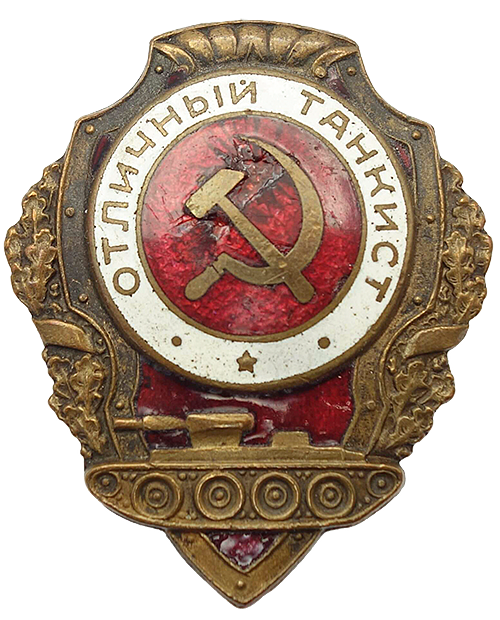
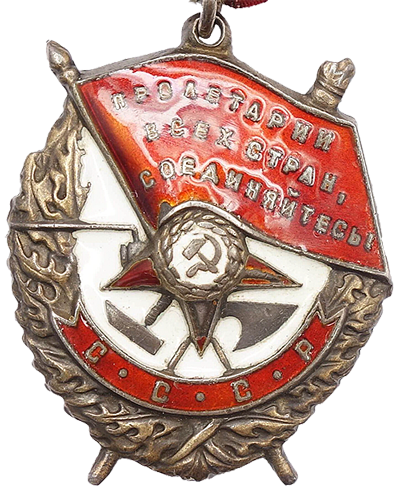
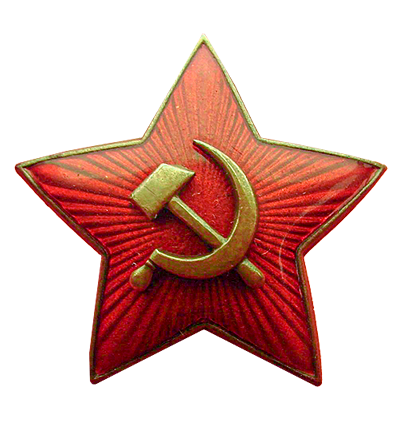
Photographs of Operation Barbarossa


More epic battles of the Second Wold War


Cite this historical page
