The Night of the Long Knives, which took place between 30 June and 2 July 1934, was a bloody political purge that fundamentally reshaped the power structure of the Third Reich. Codenamed Operation Hummingbird (Aktion Kolibri), the operation saw Adolf Hitler, heavily urged on by Hermann Göring and Heinrich Himmler, order a wave of extrajudicial executions across Germany. The primary objective was to consolidate Hitler's personal authority and remove the growing threat posed by Ernst Röhm and the Sturmabteilung (SA), the Nazi Party's millions-strong paramilitary organisation known as the Brownshirts.
To justify the murders, Nazi propaganda claimed that Röhm was preparing an armed coup against Hitler. This alleged conspiracy became known as the "Röhm Putsch", although no credible evidence has ever shown that such a plot existed. Instead, the purge had been carefully prepared by the Nazi leadership. The principal instruments of the killings were Himmler's Schutzstaffel (SS), the Sicherheitsdienst (SD) under Reinhard Heydrich, the Gestapo, and police units loyal to Göring.
The purge rapidly expanded beyond the SA leadership. Hitler exploited the opportunity to eliminate former political rivals, conservative critics, anti-Nazi intellectuals and anyone considered a potential threat to his authority.
Officially, the regime admitted to only 85 executions, but modern historians estimate that between 700 and more than 1,000 people were murdered, while over 1,000 others were arrested. The Night of the Long Knives marked the collapse of judicial independence in Nazi Germany and established Hitler as the supreme authority over both the Nazi Party and the German state.
Quick Facts
Event: Night of the Long Knives (Operation Hummingbird)
Date: 30 June – 2 July 1934
Location: Germany, centred on Munich, Bad Wiessee and Berlin
Principal figure: Adolf Hitler
Main target: Ernst Röhm and the SA leadership
Perpetrators: SS, SD, Gestapo and police units loyal to Hitler
Victims: SA leaders, political opponents, conservatives and former rivals
Estimated deaths: 700–1,000+
Historical significance: Destroyed the power of the SA, elevated the SS and secured Hitler's dictatorship.
Hitler and the Sturmabteilung (SA)
When President Paul von Hindenburg appointed Adolf Hitler as Chancellor on 30 January 1933, the Nazi Party had not yet achieved complete control over Germany. Although Hitler rapidly used the process of Gleichschaltung (coordination) to dismantle parliamentary democracy, outlaw rival political parties and establish a one-party state, one institution remained beyond his direct control: the Reichswehr, Germany's professional army.
The officer corps remained fiercely loyal to President Hindenburg and guarded its independence. Although many senior officers supported Hitler's promises of military expansion, the reintroduction of conscription and the revision of the Treaty of Versailles, they strongly opposed any attempt to replace the professional army with a political militia.
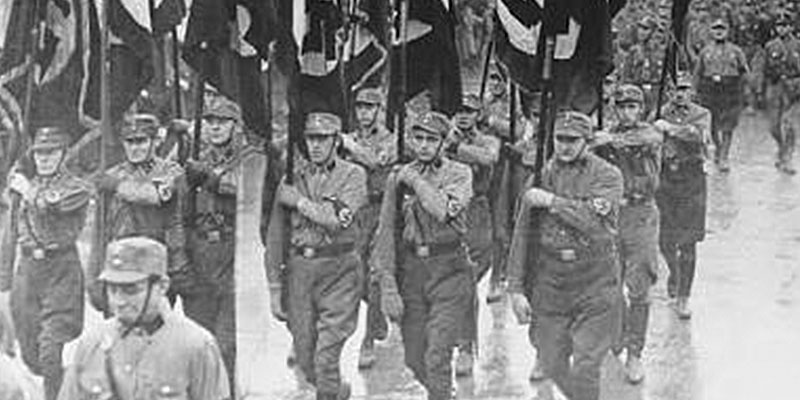
At the same time, the Sturmabteilung (SA) had grown into a massive organisation of more than three million members. Originating from the nationalist Freikorps that emerged after the First World War, many SA members believed Germany had been betrayed by the civilian politicians who signed the Armistice in 1918. They embraced the "stab-in-the-back" myth and viewed themselves as the revolutionary force that would complete Germany's national rebirth.
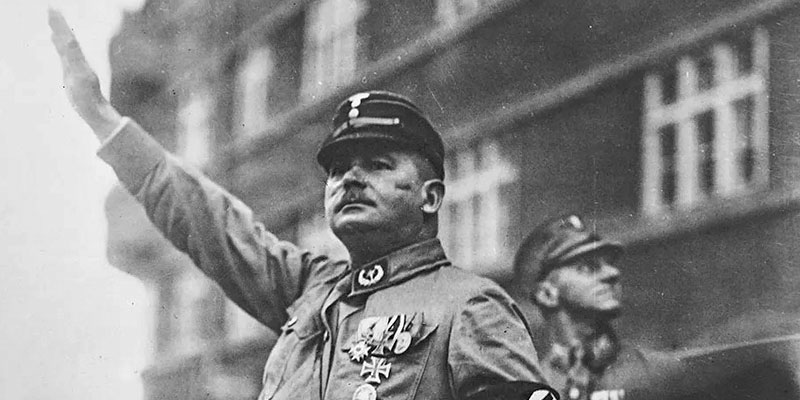
Ernst Röhm, one of Hitler's earliest political allies, had transformed the SA into the Nazi Party's principal paramilitary organisation. Throughout the 1920s and early 1930s, the Brownshirts protected Nazi meetings, intimidated political opponents and fought violent street battles against communist and social democratic organisations. Their activities played a significant role in destabilising the Weimar Republic and contributed to Hitler's rise to power.
However, political violence did not end after Hitler became Chancellor. Deprived of organised political opponents, many SA members increasingly terrorised civilians, clashed with local police and attacked anyone they considered hostile to National Socialism. Public complaints about the Brownshirts became widespread, while even Germany's Foreign Office expressed concern after foreign diplomats were assaulted by SA members.
On 6 July 1933, Hitler attempted to calm the increasingly radical elements within his own movement by declaring before senior Nazi officials:
"The stream of revolution has been undammed, but it must be channelled into the secure bed of evolution."
Many SA members rejected this message. Having endured years of economic hardship during the Great Depression, they expected the Nazi revolution to continue through sweeping social and economic reforms. Instead of restoring order, they demanded a "Second Revolution" that would challenge Germany's traditional elites and fundamentally reshape the country's political and economic system.
Conflict Between the Army and the SA
No one advocated this revolutionary programme more forcefully than Ernst Röhm. He openly called for a second phase of the National Socialist revolution and repeatedly demanded that the SA replace the Reichswehr as Germany's principal military force. Röhm even sought appointment as Minister of Defence, directly challenging General Werner von Blomberg, who represented the interests of the professional officer corps.
The Army regarded these ambitions as intolerable. While the Reichswehr was restricted by the Treaty of Versailles to just 100,000 soldiers, the SA numbered more than three million men. Röhm envisioned merging the Army into this revolutionary mass organisation, effectively ending centuries of Prussian military tradition. Senior officers viewed the Brownshirts as an undisciplined political mob rather than a professional fighting force.
The hostility was mutual. Many SA leaders openly mocked the conservative officer corps as aristocratic elitists who lacked commitment to the National Socialist revolution. SA commander Max Heydebreck even declared that once President Hindenburg died, the SA would march against the Army itself.
Attempting to resolve the crisis, Hitler convened a meeting on 28 February 1934 between Army leaders, the SA and the SS. Under considerable pressure, Röhm reluctantly accepted the supremacy of the Reichswehr and formally recognised it as Germany's national army. Yet almost immediately after the meeting ended, he privately dismissed Hitler as "the ridiculous corporal" and made it clear that he had no intention of abandoning his revolutionary ambitions.
Reports of Röhm's defiance quickly reached Hitler. Combined with growing pressure from the Army, conservative politicians and senior Nazi officials, they convinced the Chancellor that the conflict between the SA and the established institutions of the German state could no longer be ignored.
Growing Pressure Against the SA
By early 1934, Röhm's insistence that the SA should become Germany's dominant military force brought him into direct conflict with Hitler's broader political strategy. While Hitler sought stability and the support of Germany's traditional elites, Röhm continued to demand a "Second Revolution" that would redistribute wealth and fundamentally reshape German society. His increasingly radical rhetoric alarmed not only the Army but also many of Hitler's closest associates.
A powerful coalition within the Nazi leadership gradually formed against Röhm. Hermann Göring, Joseph Goebbels, Heinrich Himmler and Deputy Führer Rudolf Hess increasingly viewed Röhm's control over a three-million-man paramilitary organisation as a direct threat to both Hitler's leadership and their own political influence. Unlike Göring or Hess, Röhm possessed an independent power base and frequently ignored Party discipline.
The political situation became even more unstable when former Chancellor Kurt von Schleicher quietly returned to political manoeuvring. Together with General Ferdinand von Bredow and Werner von Alvensleben, Schleicher explored the possibility of forming a new government that would include Röhm as Minister of Defence and Gregor Strasser as Minister of Economics. Whether these plans ever progressed beyond discussion remains uncertain, but rumours of such a coalition spread rapidly and reinforced fears that Röhm and the SA were preparing to challenge Hitler's authority.
The Rise of the SS
To counter the growing influence of the SA, Göring took a decisive step on 20 April 1934 by transferring administrative control of the Prussian Gestapo to Heinrich Himmler. Göring believed Himmler could be relied upon to oppose Röhm's ambitions and strengthen Hitler's personal position.
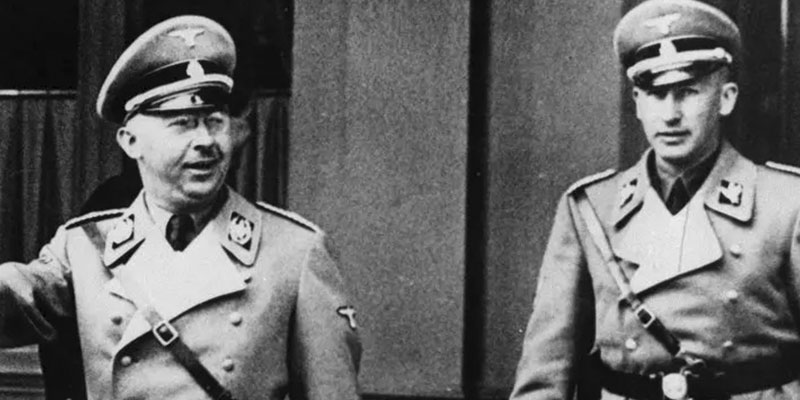
Himmler immediately appointed Reinhard Heydrich to lead the Gestapo. Under Heydrich's direction, the Gestapo and the Sicherheitsdienst (SD) dramatically expanded their surveillance activities. Together they compiled detailed dossiers on Röhm, the SA leadership and numerous political opponents, while simultaneously preparing lists of individuals who would later be arrested or executed during the purge.
Throughout May 1934, secret execution lists circulated between the offices of Göring and Himmler. Political rivals, former enemies and perceived threats to the regime were added to these lists, demonstrating that the coming operation would extend far beyond the SA leadership.
Conservative Opposition Grows
Outside the Nazi Party, pressure on Hitler continued to mount. Conservative politicians, industrialists and senior Army officers increasingly regarded Röhm's revolutionary ambitions as a danger to Germany's stability. Although many conservatives disliked Röhm's homosexuality, they were far more concerned about his repeated calls for social revolution and his determination to replace the professional Army with the SA.
The crisis intensified on 15 June 1934, when Hitler travelled to Venice to meet Italian dictator Benito Mussolini. Before Hitler's arrival, German diplomats had privately encouraged Mussolini to raise the issue of the SA. During their meeting, Mussolini openly criticised the violence, disorder and scandals surrounding Röhm's organisation, warning Hitler that uncontrolled paramilitary forces could ultimately threaten the survival of any dictatorship.
Mussolini reminded Hitler of the political damage he himself had suffered following the 1924 murder of Italian socialist leader Giacomo Matteotti by Fascist extremists. Although Hitler publicly remained non-committal, the warning reinforced concerns already being expressed by Germany's military leadership.
The Marburg Speech
Only two days after Hitler returned from Italy, Vice-Chancellor Franz von Papen delivered one of the most remarkable speeches of the Nazi era. Speaking at Marburg University on 17 June 1934, Papen criticised growing political extremism, censorship and revolutionary violence, warning that Germany required stability rather than permanent revolution.
Although Papen avoided directly attacking Hitler, his speech was widely interpreted as a condemnation of the SA and Röhm's growing influence. Behind the scenes, Papen warned Hitler that conservative ministers might resign unless order was restored. Such a move threatened to expose deep divisions within Hitler's government and undermine his relationship with President Hindenburg.
Hindenburg's Ultimatum
The decisive turning point came on 21 June 1934, when Hitler travelled to Neudeck to meet the ageing President Paul von Hindenburg. Present at the meeting was Defence Minister Werner von Blomberg, who delivered a stark warning. Unless immediate action was taken against Röhm and the SA, Hindenburg was prepared to declare martial law, suspend civilian government and hand executive authority to the Reichswehr.
For Hitler, the message could not have been clearer. If he wished to remain Chancellor, Röhm would have to be sacrificed.
Preparing Operation Hummingbird
Following the meeting at Neudeck, preparations accelerated rapidly. Himmler and Heydrich finalised extensive dossiers claiming that Röhm had accepted millions of Reichsmarks from the French Government to finance an armed coup against Hitler. Although entirely fabricated, these documents were shown to senior SS officers to convince them that extraordinary measures were justified.
At the same time, Nazi propaganda increasingly portrayed Röhm and the SA leadership as morally corrupt, emphasising allegations of homosexuality, drunkenness and personal excess. These accusations were carefully cultivated to ensure that the purge would appear to the German public as both a political necessity and a moral cleansing of the Nazi movement.
Hitler, Göring, Himmler and Viktor Lutze drew up the final arrest and execution lists, while Gestapo officials coordinated the movements of intended victims. On 25 June 1934, General Werner von Fritsch placed the Reichswehr on its highest state of alert, and over the following days Army commanders quietly assured Hitler that they would not interfere if action was taken against the SA.
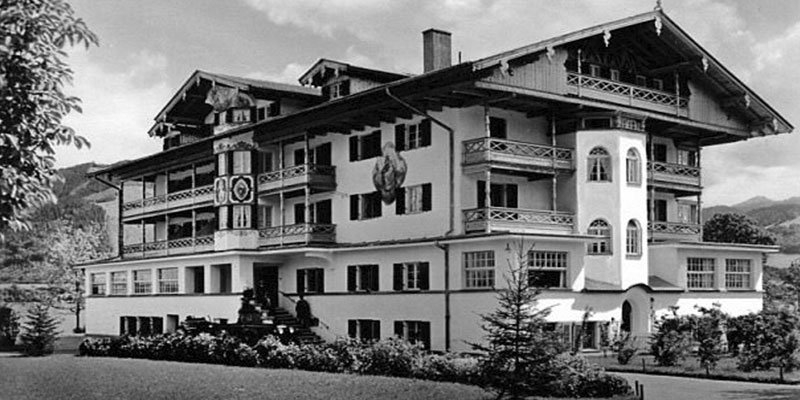
On 28 June 1934, while attending the wedding celebrations of Nazi official Josef Terboven in Essen, Hitler telephoned Röhm's adjutant at the Hanselbauer Hotel in Bad Wiessee. He instructed Röhm and the senior SA leadership to attend a conference with him on the morning of 30 June, giving no indication that a purge had already been planned.
To demonstrate the Army's complete support for Hitler, an article written by Defence Minister Werner von Blomberg appeared in the Völkischer Beobachter on 29 June 1934, reaffirming the Reichswehr's unwavering loyalty to the Chancellor. By then, the fate of Ernst Röhm and the SA leadership had already been sealed.
The Events of 30 June: Bad Wiessee and Munich
At approximately 04:30 on 30 June 1934, Adolf Hitler and his immediate entourage flew from Essen to Munich. Upon landing, they drove directly to the Bavarian Interior Ministry, where Hitler confronted the leaders of a local SA demonstration that had taken place the previous evening. Consumed by rage, Hitler singled out SA-Obergruppenführer August Schneidhuber, Munich's Chief of Police. In front of those assembled, Hitler tore the epaulettes from Schneidhuber's uniform, accusing him of gross incompetence and administrative treachery for failing to maintain order. Schneidhuber was immediately arrested and later executed that same day.
Accompanied by a large contingent of SS personnel and police officers, Hitler then travelled to the Hanselbauer Hotel in Bad Wiessee, arriving between 06:00 and 07:00. Inside the hotel, the senior SA leadership remained asleep, completely unaware that the meeting had been arranged as a trap.
The Raid at the Hanselbauer Hotel
SS units stormed the hotel room by room while Hitler personally participated in the arrests. Ernst Röhm was awakened and placed under arrest without offering resistance. Other senior SA commanders were dragged from their rooms and taken into custody before being transported to Stadelheim Prison in Munich. During the raid, SS personnel discovered Edmund Heines, the SA leader of Breslau, in bed with an eighteen-year-old male SA troop leader. Hitler regarded the discovery as proof of the moral corruption that he claimed had spread throughout the SA leadership. Both men were taken outside the hotel and summarily shot. The incident was later heavily exploited by Joseph Goebbels, who portrayed the purge as a necessary moral cleansing of the Nazi movement.
Meanwhile, additional SA leaders arriving by train for the scheduled conference were intercepted at the railway station by SS detachments and arrested before they could reach the hotel.
The Brown House
After leaving Bad Wiessee, Hitler returned to the Brown House, the Nazi Party headquarters in Munich. Addressing assembled Party members and lower-ranking SA personnel, he denounced what he described as "the worst treachery in world history". Hitler declared that every disobedient, corrupt and disloyal element within the movement would be ruthlessly destroyed. The speech was greeted with enthusiastic applause. Many present accepted the official claim that Röhm had planned an armed coup against Hitler, while others simply welcomed the opportunity to eliminate the increasingly unpopular SA leadership. According to several eyewitnesses, Rudolf Hess even volunteered to personally shoot the alleged traitors.
Operation Hummingbird Begins
At approximately 10:00 a.m., Goebbels telephoned Hermann Göring in Berlin and transmitted the agreed codeword:
Kolibri
The message activated Operation Hummingbird across Germany. Within minutes, execution squads composed of the SS, the Gestapo and police units began arresting and executing individuals whose names had already been placed on prepared lists by Heinrich Himmler and Reinhard Heydrich. In Munich, Theodor Eicke, Commandant of Dachau Concentration Camp, received direct orders from Hitler to organise a firing squad from the Leibstandarte SS Adolf Hitler. The unit proceeded to Stadelheim Prison, where five senior SA generals and one SA colonel were executed in the prison courtyard.
In Berlin, prisoners identified as traitors were transported to the Leibstandarte barracks at Lichterfelde. There they faced summary hearings lasting little more than a minute before being taken outside and shot. Throughout Germany, the machinery of state violence operated with extraordinary speed, eliminating not only the SA leadership but also political opponents, former rivals and individuals who had fallen out of favour with the Nazi regime.
The Liquidation of Conservatives and Old Rivals
The scope of Operation Hummingbird extended far beyond the destruction of the SA leadership. Adolf Hitler used the suspension of the rule of law to eliminate conservative politicians, former rivals and anyone he considered a potential threat to his authority. One of the principal targets was the circle surrounding Vice-Chancellor Franz von Papen. On the orders of Hermann Göring, armed SS detachments stormed the Vice-Chancellery in Berlin. Papen's political secretary, Herbert von Bose, was shot dead at his desk without warning or interrogation.
The Gestapo also arrested Edgar Jung, the principal author of Papen's famous Marburg Speech. He was executed shortly afterwards, and his body was dumped in a roadside ditch. Another close associate of Papen, Erich Klausener, leader of Catholic Action, was murdered inside his office.
Papen himself was placed under house arrest inside the Vice-Chancellery. Although Hitler ordered his release several days later, the Vice-Chancellor had been politically broken. Soon afterwards he was appointed German ambassador to Austria, effectively removing him from the centre of political power.
Settling Old Scores
The purge also allowed Hitler and the Nazi leadership to settle numerous long-standing personal and political grievances. Former Chancellor Kurt von Schleicher, Hitler's immediate predecessor, was shot and killed inside his home together with his wife. Official propaganda claimed that Schleicher had resisted arrest and conspired against the state, although no credible evidence has ever supported these accusations. Another prominent victim was Gregor Strasser, the former organisational leader of the Nazi Party who had broken with Hitler during the political crisis of 1932. Arrested during the purge, Strasser was executed inside his prison cell.
Among the most symbolic murders was that of Gustav Ritter von Kahr, the former Bavarian State Commissioner whose actions had helped crush the Beer Hall Putsch in 1923. More than a decade later, Hitler finally took revenge. Kahr was abducted, brutally murdered and his mutilated body was later discovered in woodland near Dachau.
Tragic Mistakes and Personal Vendettas
The lawless atmosphere created during the purge inevitably resulted in tragic mistakes. One of the best-known victims was Willi Schmid, a respected music critic for the Münchner Neueste Nachrichten. Because his surname resembled that of an intended SA target, Gestapo officers mistakenly arrested and executed him in front of his family. Only afterwards did the authorities realise they had killed the wrong man.
Another victim was Karl von Spreti, Röhm's personal adjutant and a close friend of Karl Wolff, one of Himmler's senior aides. Wolff later recalled that Spreti raised his arm in the Nazi salute moments before his execution, believing to the very end that he was being murdered by an anti-Hitler faction within the SS rather than on Hitler's own orders.
Prominent members of the former Catholic Centre Party, despite having supported the Enabling Act in 1933, were also arrested or executed during the purge. Others, including former Nazi associate Kurt Lüdecke, were imprisoned in concentration camps before eventually escaping Germany.
The Fate of Ernst Röhm
While execution squads operated throughout Germany, Ernst Röhm remained imprisoned in a cell at Stadelheim Prison. Hitler initially hesitated to execute one of his oldest political comrades, but by 1 July 1934 he had reached his decision. On Hitler's direct orders, Theodor Eicke, Commandant of Dachau Concentration Camp, and his adjutant Michael Lippert entered Röhm's prison cell. They placed a loaded Browning pistol containing a single cartridge on the table and informed Röhm that he had ten minutes to take his own life.
Röhm refused. According to later accounts, he declared:
"If I am to be killed, let Adolf do it himself."
When the ten minutes expired without a gunshot, Eicke and Lippert returned to the cell at approximately 14:50. They found Röhm standing defiantly in the centre of the room with his chest exposed. Without further discussion, both men drew their pistols and shot him at point-blank range, killing him instantly.
For more than twenty years, Michael Lippert escaped prosecution for his role in Röhm's execution. It was not until 1957 that he was finally brought before a court in Munich, where he was convicted of murder and sentenced to 18 months' imprisonment.
Legalising the Purge
The sheer number of high-profile victims made it impossible for the Nazi regime to conceal what had taken place. Almost immediately after the killings, Hermann Göring ordered police authorities throughout Germany to destroy teleprinter messages and official documents relating to the events of 30 June and 1 July 1934. At the same time, Joseph Goebbels attempted to prevent newspapers from publishing complete lists of the victims while using national radio broadcasts to claim that Hitler had saved Germany from an imminent civil war.
On 3 July 1934, the Nazi cabinet formally legalised the purge by passing a single-sentence decree entitled the Law Regarding Measures of State Self-Defence. Drafted by Justice Minister Franz Gürtner, the law declared:
"The measures taken on 30 June, 1 July and 2 July to suppress treasonous assaults are legal as acts of self-defence by the State."
With a single sentence, every murder committed during the purge was retrospectively declared lawful. The decree destroyed one of the fundamental principles of the rule of law by allowing the government to legitimise political murder after the event.
The regime's legal justification was further strengthened by the influential constitutional lawyer Carl Schmitt, who published an article entitled Der Führer schützt das Recht (The Führer Protects the Law). Schmitt argued that Hitler's personal actions stood above conventional legal procedures because the Führer embodied the will of the German nation itself. His interpretation provided an intellectual justification for dictatorship and became one of the defining legal doctrines of the Third Reich.
To reduce public criticism, the Nazi government secretly established a compensation fund administered by SS-General Franz Breithaupt. Widows and families of several murdered victims received monthly state pensions, not as an admission of wrongdoing, but to discourage questions and prevent public unrest.
Hitler Becomes the Supreme Judge
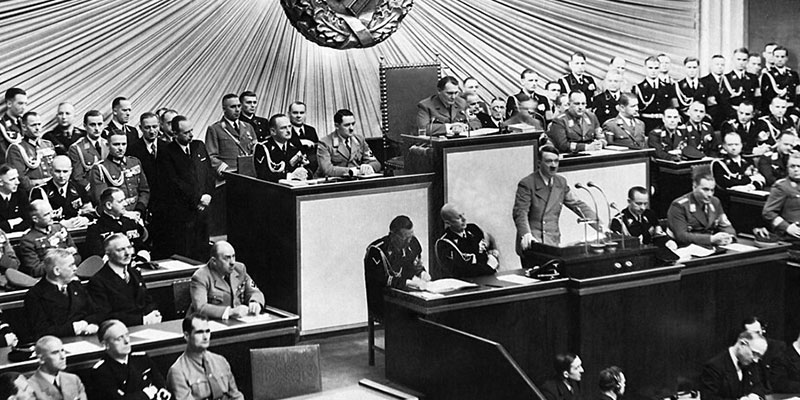
On 13 July 1934, Hitler addressed the Reichstag in a nationally broadcast speech defending the purge. Rather than expressing regret, he openly accepted responsibility for ordering the killings and claimed that extraordinary circumstances had required extraordinary measures.
"If anyone reproaches me and asks why I did not resort to the regular courts of justice, then all I can say is this. In this hour I was responsible for the fate of the German people, and thereby I became the supreme judge of the German people... Let it be known for all time to come that if anyone raises his hand to strike the State, then certain death is his lot."
The speech fundamentally redefined the relationship between law and political power in Nazi Germany. Hitler publicly declared that his personal judgement superseded the courts, effectively placing himself above the legal system. From that moment onward, the Führer's decisions became the highest source of authority within the German state.
Domestic and International Reactions
The Reichswehr leadership overwhelmingly welcomed the destruction of the SA, despite the murders of former Chancellor Kurt von Schleicher and General Ferdinand von Bredow. Senior officers regarded Röhm's ambitions as a far greater danger than Hitler's growing dictatorship and therefore accepted the purge as a necessary step towards restoring military discipline. The regime also announced that the ageing President Paul von Hindenburg had congratulated Hitler for having "nipped treason in the bud." During the post-warNuremberg Trials, Göring admitted that this message had been fabricated and that Hindenburg had never personally approved the statement attributed to him.
Many ordinary Germans accepted the official explanation that Hitler had prevented an attempted coup. Influenced by Goebbels' propaganda, numerous citizens believed the purge had restored order and prevented the outbreak of civil war. Schoolteacher Luise Solmitz, writing in her diary, praised Hitler's "personal courage, decisiveness and effectiveness", comparing his actions with those of Frederick the Great.
Others reacted with horror. Jewish scholar Victor Klemperer recorded his disbelief after hearing an ordinary postman calmly remark that Hitler had simply "sentenced them." Klemperer recognised that many Germans no longer distinguished between legal justice and political murder, a development he regarded as one of the most alarming consequences of Nazi rule.
Not everyone within the military accepted the official narrative. General Kurt von Hammerstein-Equord and Field Marshal August von Mackensen privately campaigned to restore the reputations of Schleicher and Bredow. They submitted a memorandum to President Hindenburg detailing the circumstances of the murders and calling for those responsible to be punished. The document was intercepted by State Secretary Otto Meißner, ensuring that Hindenburg never saw it.
Even in exile, former German Emperor Kaiser Wilhelm II expressed his shock at the lawlessness of the purge, writing:
"We have ceased to live under the rule of law and everyone must be prepared for the possibility that the Nazis will push their way in and put them up against the wall!"
Institutional Legacy
Following the purge, Viktor Lutze replaced Ernst Röhm as Chief of Staff of the SA. Hitler instructed him to eradicate what he described as "homosexuality, debauchery, drunkenness and high living" from the organisation and prohibited the use of SA funds for luxury cars, extravagant banquets and lavish lifestyles. Without Röhm's revolutionary leadership, the SA rapidly lost both its influence and political purpose. Membership declined dramatically from approximately 2.9 million men in August 1934 to around 1.2 million by April 1938. Once the dominant paramilitary force within the Nazi movement, the Brownshirts became increasingly irrelevant as the SS expanded its authority.
Röhm himself was systematically erased from official Nazi history. Hitler ordered his name removed from propaganda and public commemorations. Leni Riefenstahl's 1933 film The Victory of Faith, which prominently featured Röhm alongside Hitler, was withdrawn from circulation and effectively disappeared after the purge. A surviving copy was only rediscovered decades later in East German archives.
The greatest beneficiary of the purge was the SS. Under the leadership of Heinrich Himmler, the organisation evolved from a relatively small bodyguard unit into one of the most powerful institutions in Nazi Germany. Assisted by Reinhard Heydrich, the SS gained control over the Gestapo, expanded its intelligence network and assumed responsibility for the growing system of concentration camps. This transformation would later play a central role in implementing the Holocaust.
The purge also had profound consequences for Germany's professional military. By accepting the murder of former colleagues such as Kurt von Schleicher and Ferdinand von Bredow without resistance, the Reichswehr surrendered much of its remaining political independence. The officer corps increasingly tied its future to Hitler, believing he alone could restore Germany's military strength and overturn the restrictions imposed by the Treaty of Versailles.
Retired officer Erwin Planck warned General Werner von Fritsch that by remaining silent the Army would eventually suffer the same fate as those murdered during the purge. His warning proved prophetic. Over the following years, Hitler steadily tightened his control over the armed forces, removing officers who questioned his authority and replacing them with loyal supporters.
When President Paul von Hindenburg died on 2 August 1934, only a month after the purge, Hitler immediately merged the offices of President and Chancellor, assuming the new title of Führer und Reichskanzler. No meaningful opposition remained.
Perhaps the most significant consequence followed immediately afterwards. Every officer and soldier in the German armed forces was required to swear a new oath of loyalty, not to Germany, its constitution or the German people, but personally to Adolf Hitler. This unprecedented oath fundamentally altered the relationship between the military and the Nazi state, binding the armed forces directly to Hitler himself.
The Night of the Long Knives therefore represented far more than an internal Nazi purge. It destroyed the last significant challenge to Hitler's authority, elevated the SS into the dominant security organisation of the Third Reich and removed the final institutional barriers preventing Hitler from establishing a personal dictatorship. Within weeks, Germany had ceased to function as a constitutional state and had become a regime in which the Führer's will stood above the law.
Principal Figure

in-depth information.