A childhood in Unna
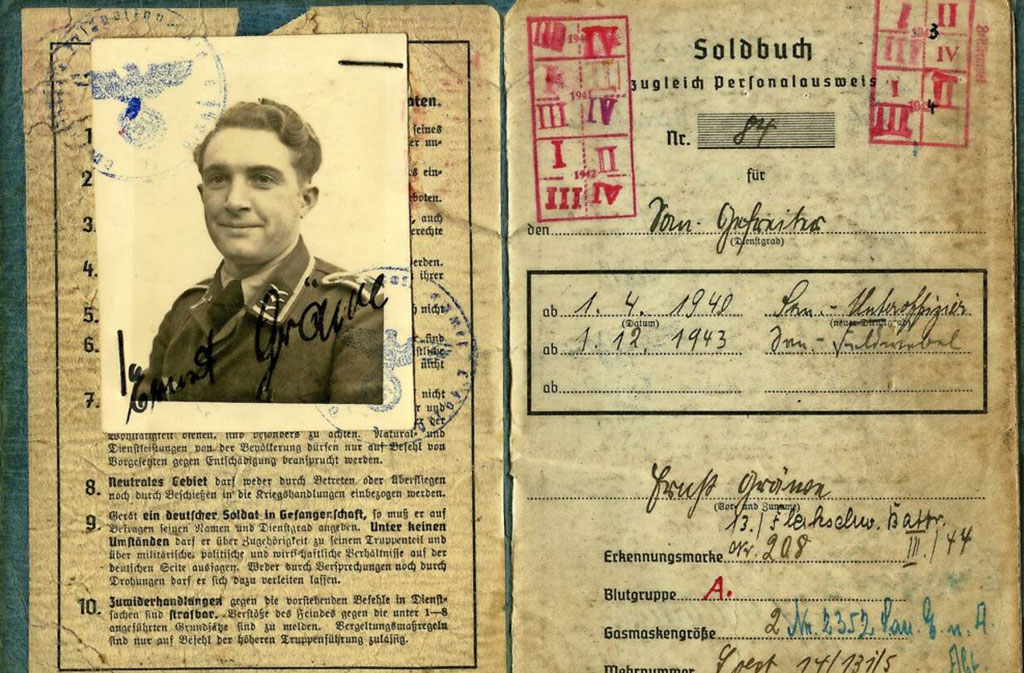
Ernst Wilhelm Johannes Gräwe was born on October 1, 1914, in the German town of Unna. He was the eldest son of Ernst and Maria Elisabeth Gräwe (born Witte). His childhood was shaped by a stable and loving family life. Ernst grew up alongside his younger brother Erich and sister Anna, in a home where music and education were deeply valued. His parents ran a small fur trading business and Ernst, bright and talented, became known for his skill on the accordion, a reflection of the warmth and culture that surrounded him.
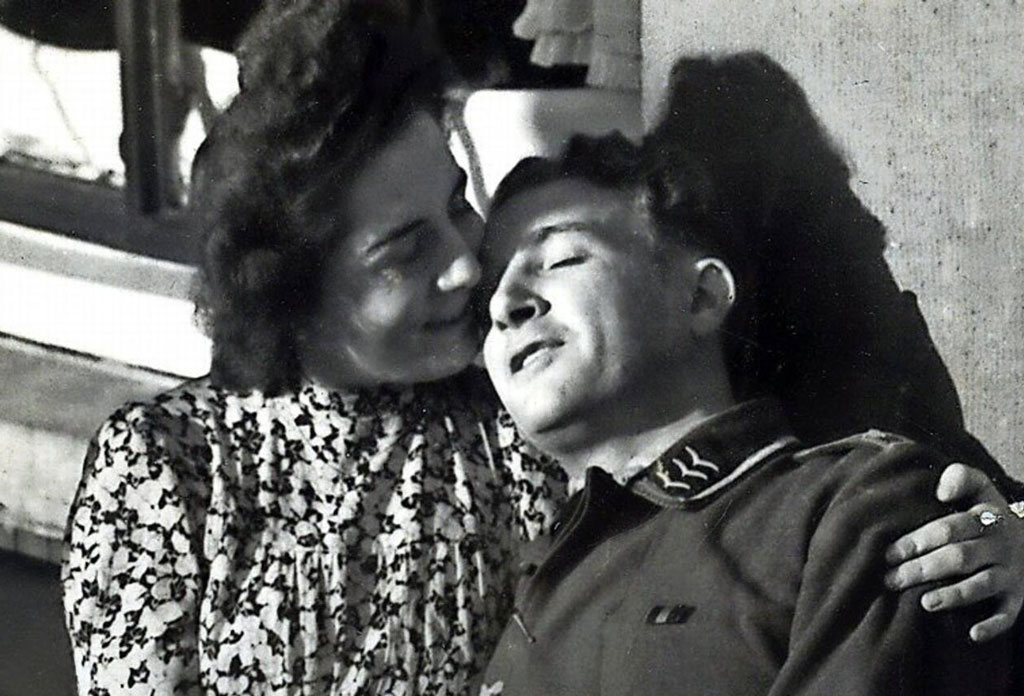
In time, he married Hildegard Latta. Together, they welcomed a son, Udo, who became the center of their world. But the war would take everything from them.
Called to war
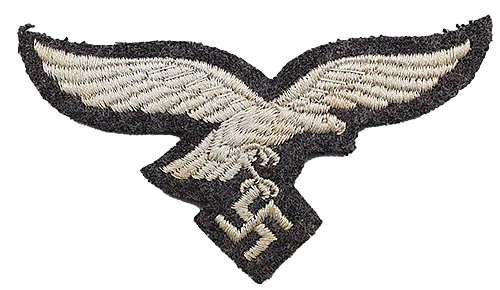
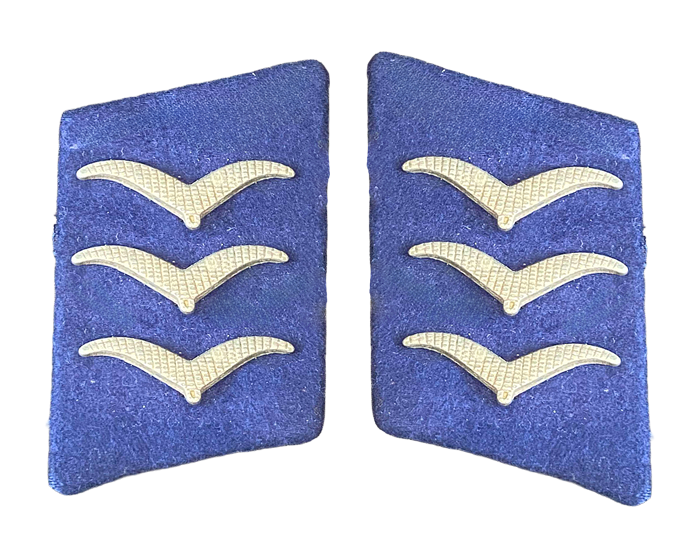
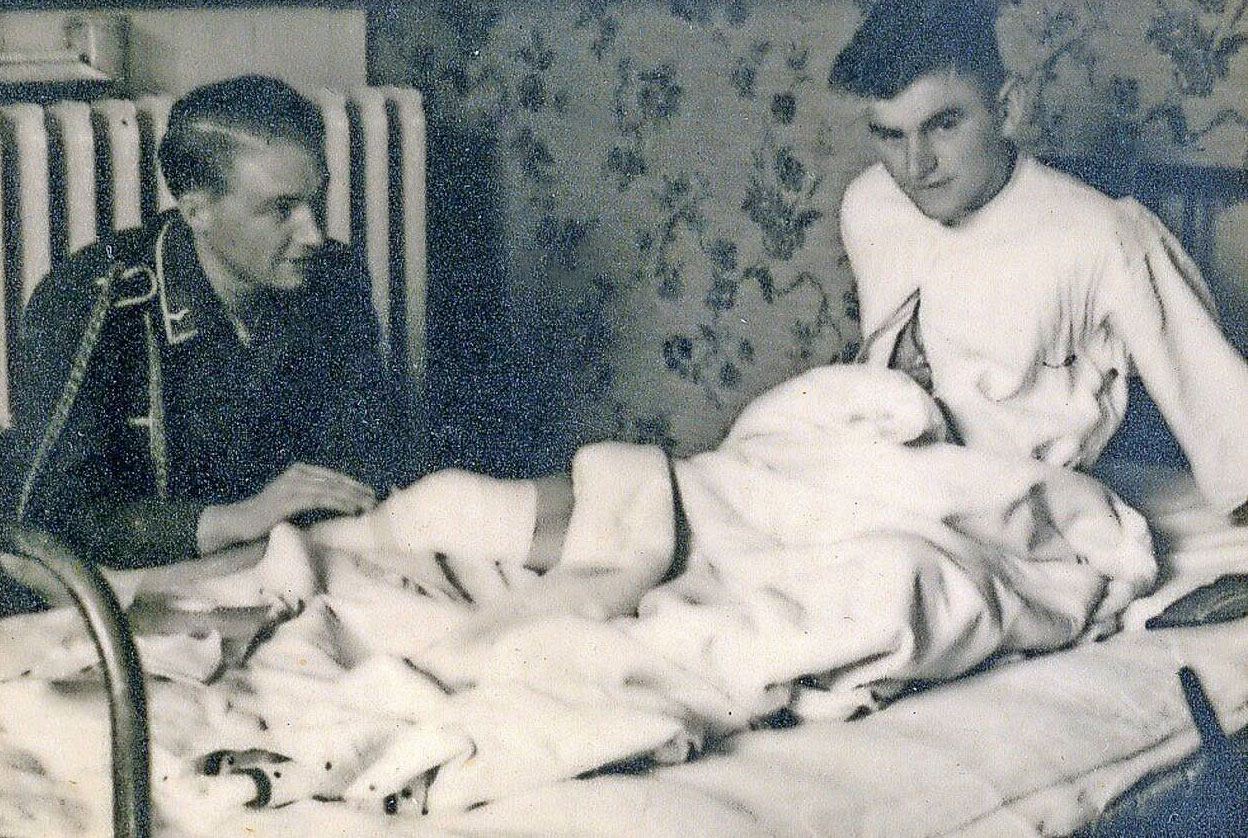
Ernst's military journey began in 1936 when he was drafted into the German armed forces. He served his initial two years in a Flak artillery regiment in Kochstedt, near Dessau and returned to civilian life in 1938. But as tensions in Europe escalated, he was recalled in early 1939 to serve again, this time with Flak Regiment 44 in Lippstadt. His career progressed steadily and in 1943, Ernst volunteered for the Luftwaffe. He later joined the elite 6th Parachute Division's medical unit, the Fallschirm-Sanitäts-Abteilung 6 and was stationed in the Netherlands during the final, desperate months of the war.
Military honors
He received military honors, including the Sudetenland Commemorative Medal and the War Cross 2nd Class with Swords. By rank, he had advanced to Feldwebel. But his true character would not be revealed in medals, it would be revealed in defiance.
Deventer April 10, 1945
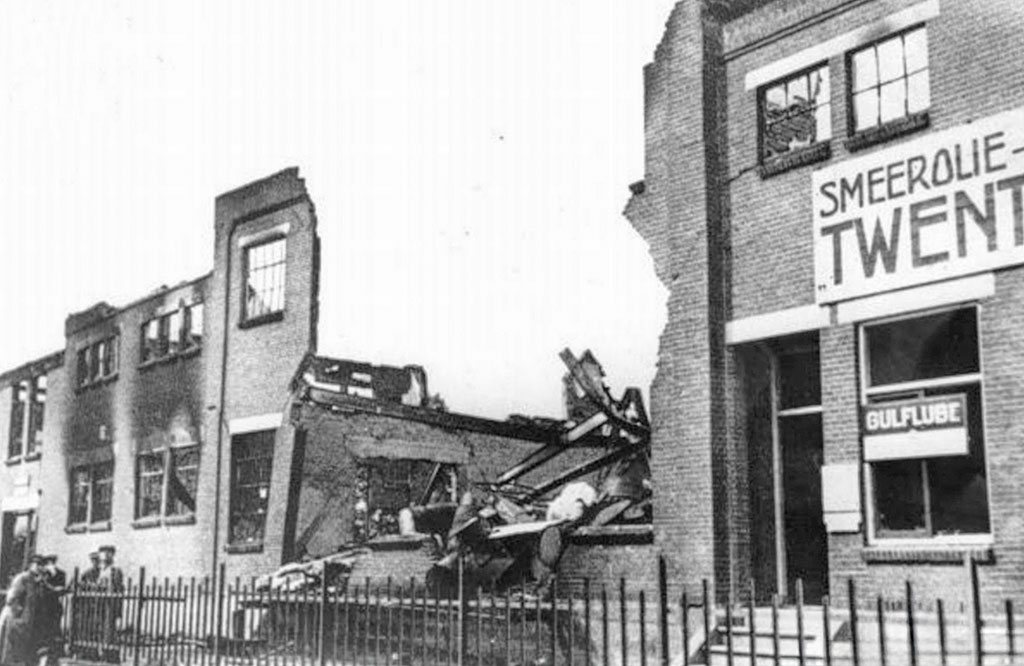
In April 1945, the war was in its final throes. Canadian forces were advancing across the Netherlands and the city of Deventer, still under German occupation, stood on the brink of liberation. Dutch resistance fighters had entrenched themselves inside a tar and oil factory named Twentol, hoping to protect a critical bridge over the Overijssel Canal from demolition. During the night of April 9 to 10, a firefight broke out between the resistance and German troops. Two of the young fighters died in a fire inside the building. The remaining five were captured early that morning.
By dawn on April 10, the war in Deventer was nearly over. Canadian troops were just 45 minutes away. Yet the German command, determined to make one final display of authority, sentenced the five resistance fighters (Cornélia van Baalen Bosch, Joost Wander Westland van Baalen, Jacob Jan Bennebroek Evertsz, Harry E.R.O. Engels and Marinus Woertman) to death by firing squad. Ernst Gräwe, the medic in the company, was selected to participate in the execution. But Ernst refused. He would not raise his weapon against unarmed men. He would not be a part of the killing.
His commanding officer reacted swiftly and mercilessly. For disobeying a direct order, Ernst was shot through the head on the spot, his life ended in the final hour before liberation. On that same day April 10, 1945 about 45 minutes later, Canadian troops entered Deventer. The war was over.
Loss upon loss
The cost of war was not only Ernst’s own life. Just one day earlier, on April 9, his young son Udo had died of pneumonia. The two deaths, so tragically close, left Hildegard, Ernst’s widow, alone in the ruins of war. Years later, in 1952, she would remarry and rebuild her life, but the grief of those spring days in 1945 would never fully fade away.
Burial and remembrance
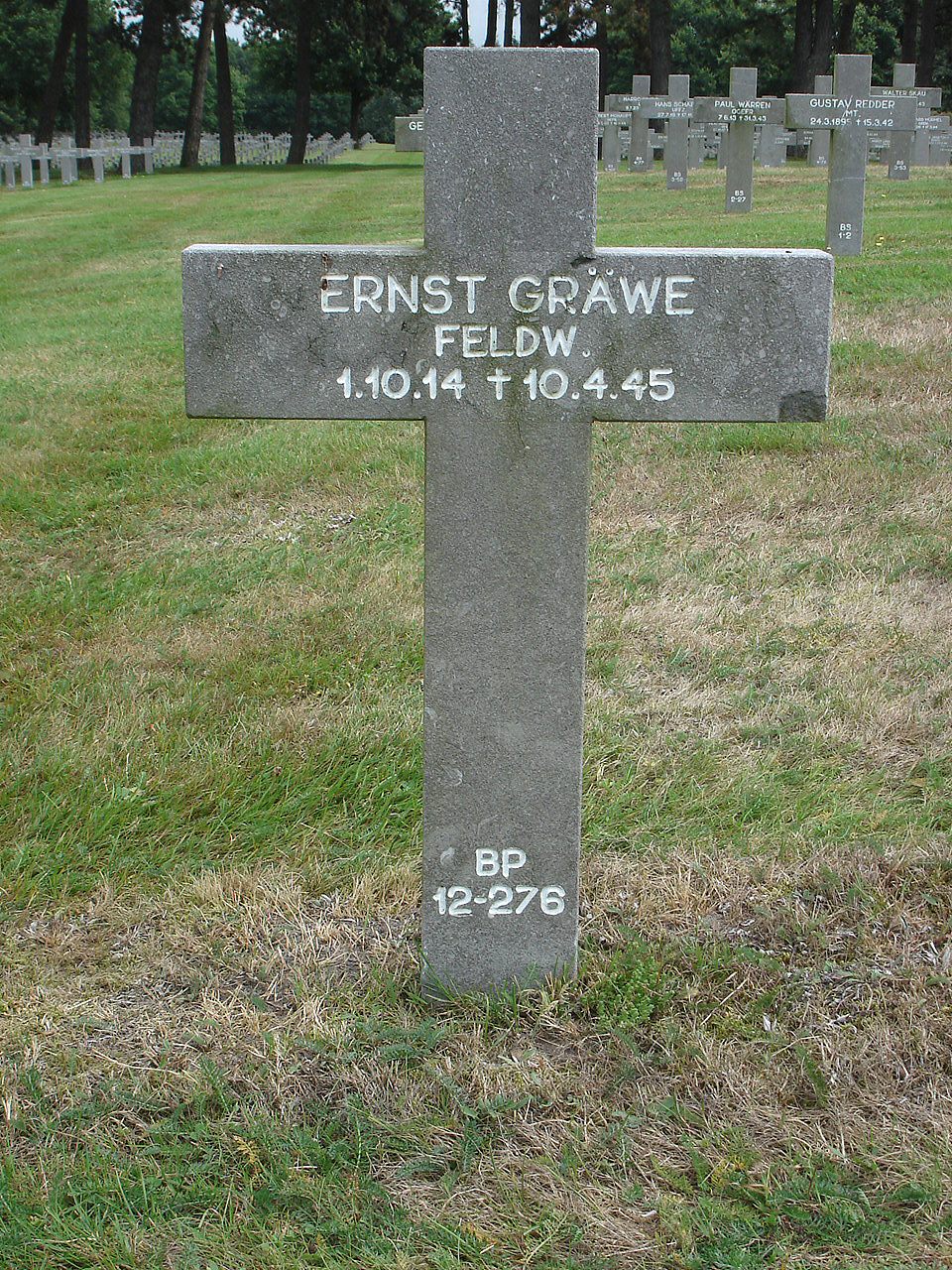
Ernst Gräwe was first buried in the Nieuwe Algemene Begraafplaats in Diepenveen, a district of Deventer. In 1949, his remains were reinterred at the German military cemetery in Ysselsteyn. His grave can still be found there today in block BP 12-276.
After the war, the story of the executions and Ernst’s defiance became known as the “Twentol drama.” In its aftermath, a memorial wall was erected at the site of the slaughterhouse where the executions took place. When the wall was later demolished, the monument was rebuilt at Twentolplein in Deventer. It stands today as a place of quiet reflection. Among the names of the seven Dutch resistance fighters, a separate black plaque bears a different kind of tribute. It honors Ernst Gräwe, the German soldier who refused to kill.
“The German Ernst Gräwe, who refused to take part in the execution and whose life came to a violent end here, also deserves respect.” Beside the memorial stands a weeping willow, a living symbol of sorrow and peace and of the moral stand taken by one man in the face of cruelty.
A legacy of courage
In war, countless lives are reduced to statistics. But Ernst Wilhelm Johannes Gräwe reminds us that within those numbers are individuals who made impossible choices. He could have followed orders. He could have fired. But he didn’t.
And because of that choice, he is remembered, not for the medals on his uniform, but for the humanity he held onto in his final moments. His name now stands in stone, not as a symbol of power, but as a beacon of principle. In refusing to kill, Ernst Gräwe laid down his life to preserve something even more sacred than survival: his soul.
Ernst's grandson Jens Junkersdorf is the owner of the images on this page. They are used with permission.