
Life and death of Barnes Wallis
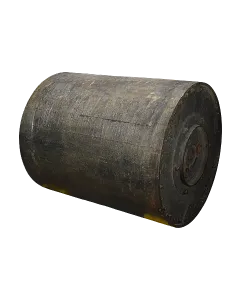
Sir Barnes Neville Wallis was a British engineer, inventor and aircraft designer whose innovative ideas played a crucial role in the Allied war effort during the Second World War. He is best known for developing the revolutionary Upkeep bouncing bomb used during Operation Chastise against Germany's Ruhr dams in May 1943. Wallis also designed the powerful Tallboy and Grand Slam earthquake bombs, which were used to destroy heavily fortified German targets, including submarine pens, viaducts and the battleship Tirpitz. In addition to his wartime innovations, he pioneered the geodetic airframe construction of the Vickers Wellington bomber, one of Britain's most successful aircraft of the war. His visionary engineering and willingness to challenge conventional thinking established him as one of the most influential British engineers of the twentieth century.
Quick Facts
Full name: Sir Barnes Neville Wallis
Born: 26 September 1887, Ripley, Derbyshire, England
Died: 30 October 1979 (aged 92), Effingham, Surrey, England
Nationality: British
Occupation: Engineer, inventor and aircraft designer
Known for: The Bouncing Bomb, Tallboy and Grand Slam earthquake bombs
Employer: Vickers-Armstrongs
Major projects: R100 airship, Wellington bomber, Upkeep, Tallboy and Grand Slam bombs
Honours: Knighted in 1968 for services to engineering
Early life
Sir Barnes Neville Wallis was born on 26 September 1887 in Ripley, Derbyshire, England. The son of a doctor, Wallis showed an early interest in engineering and mechanics. After attending Christ's Hospital School, he began his career as an apprentice engineer rather than pursuing a university education, gaining practical experience in shipbuilding and structural design. In 1913, Wallis joined the engineering firm Vickers, where he worked on airship construction. During the First World War, he contributed to the design of large military airships and developed expertise in lightweight structural engineering.
His innovative geodetic construction methods would later become an important feature of several British aircraft.
Scientific career
Throughout the interwar years, Wallis established himself as one of Britain's most respected engineers. Working for Vickers-Armstrongs, he developed the geodetic airframe structure, a lightweight yet exceptionally strong framework used in aircraft such as the Vickers Wellington bomber. The design gave the aircraft remarkable durability and allowed many damaged bombers to return safely from combat.
Wallis constantly sought new ways to improve military technology and became convinced that strategic bombing could be made more effective through precision attacks against key industrial targets rather than widespread area bombing. His engineering expertise and innovative thinking led him to propose several revolutionary weapons that would have a major impact during the Second World War.
Role during WWII
During the war, Wallis worked closely with the British Air Ministry and Royal Air Force on the development of advanced weapons. Frustrated by the limited effectiveness of conventional bombing campaigns, he devised a plan to attack Germany's industrial infrastructure by destroying the dams of the Ruhr Valley. To achieve this, Wallis invented the famous bouncing bomb, officially known as Upkeep. The weapon was designed to skip across the surface of water, evade torpedo nets and explode against the wall of a dam beneath the waterline. The concept was successfully employed during Operation Chastise on the night of 16 - 17 May 1943 by No. 617 Squadron RAF, later known as the Dambusters. The raid breached the Möhne and Eder dams, causing extensive flooding and temporary disruption to German industry.
Although the long-term military impact remains debated by historians, the operation became one of the most celebrated missions of the war and cemented Wallis's reputation as one of Britain's leading wartime innovators.
Major inventions and research
Barnes Wallis's contributions extended far beyond the bouncing bomb. He developed several of the most powerful conventional bombs used during the war, including the Tallboy and Grand Slam earthquake bombs. The 12.000 pound Tallboy bomb was designed to penetrate deep underground before detonating, creating shockwaves capable of destroying heavily fortified targets. Tallboys were used against U-boat pens, railway tunnels, V-weapon sites and the German battleship Tirpitz, which was sunk in Norway in November 1944 after repeated attacks.
Wallis later designed the even larger 22,000-pound Grand Slam bomb, the most powerful conventional bomb used by the Allies during the war. These weapons demonstrated his belief that carefully targeted attacks could achieve greater results than mass bombing campaigns. His earlier work on geodetic aircraft construction also left a lasting mark on aviation engineering and contributed significantly to the success of the Wellington bomber.
Controversy or ethical questions
Wallis believed that scientific innovation should shorten wars and reduce overall casualties. However, his inventions were designed to increase the effectiveness of bombing operations and inevitably caused civilian casualties alongside military damage. The Dambusters Raid remains controversial because the flooding that followed the destruction of the Ruhr dams killed not only German civilians but also large numbers of forced labourers and prisoners working in the region. Historians continue to debate the military value of the operation compared with its human cost.
Similarly, the Tallboy and Grand Slam bombs were used in attacks that caused extensive destruction to infrastructure and military facilities. Wallis himself often expressed concern about the human consequences of warfare and preferred precision attacks over area bombing, believing they offered a more targeted alternative.
Postwar legacy
After the war, Barnes Wallis continued working as an engineer and consultant for Vickers-Armstrongs. He explored advanced concepts including swing-wing aircraft, supersonic flight and rocket-assisted transport, many of which anticipated technologies that would become common decades later. In recognition of his contributions to British science and engineering, he was knighted in 1968. By the time of his death on 30 October 1979, Wallis had become one of the most celebrated engineers of the twentieth century.
Today, he is remembered as the inventor of the bouncing bomb, the designer of the Tallboy and Grand Slam bombs and one of the most innovative military engineers of the Second World War. His work demonstrated how engineering ingenuity could influence the course of warfare and remains an important chapter in the history of military technology.
Key Dates
26 September 1887: Born in Ripley, Derbyshire, England.
1913: Joined Vickers, beginning a career that would shape British aviation engineering.
1936: Designed the geodetic airframe structure used in the Vickers Wellington bomber.
1942: Proposed the revolutionary "bouncing bomb" (Upkeep) for attacks on German dams.
16–17 May 1943: Operation Chastise successfully breached the Möhne and Eder Dams using Wallis's bouncing bomb.
1944: Developed the 12,000-pound Tallboy earthquake bomb for precision attacks on heavily fortified targets.
1945: Developed the 22,000-pound Grand Slam, the largest conventional bomb used by the Allies during the Second World War.
1968: Knighted by Queen Elizabeth II for his contributions to engineering.
30 October 1979: Died in Effingham, Surrey, England, aged 92.
Personal Work Dossier
Primary Location Map



Cite this historical page
