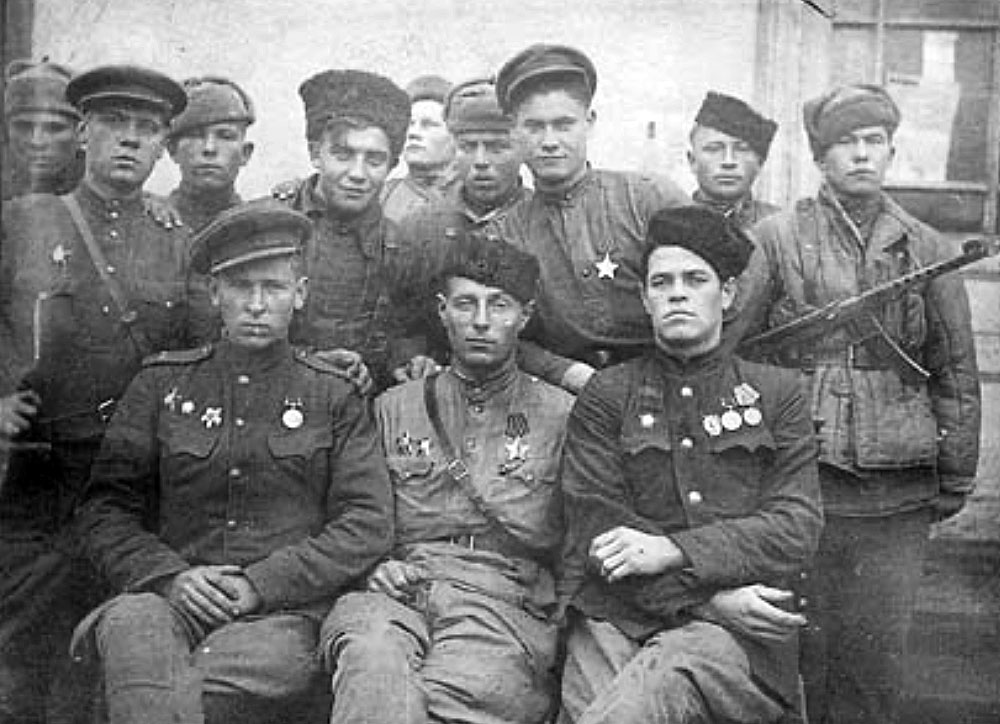
For Mstislav Ivanov, survival on the Eastern Front depended on something more than courage. A scout had to remain calm when everything around him suggested panic, understand the enemy, trust the men beside him and accept that every journey into no-man's-land might be his last. Ivanov fought his way across Eastern Europe as a reconnaissance soldier of the Red Army, crossing rivers under fire, crawling through enemy positions, capturing German soldiers for interrogation and repeatedly returning from missions from which he believed he might never come back.
By the end of the war he had been wounded several times and had fought through the Soviet Union, Moldavia, Romania, Hungary, Austria and Czechoslovakia. He became a full holder of the Order of Glory, receiving all three classes of one of the Soviet Union's most distinguished military decorations. Yet behind the decorations was a young man who had gone to war knowing that his father was somewhere at the front and whose mother eventually had to tell him that he would never return.
From school to war
Ivanov grew up as an only child. His father had served as a junior lieutenant in the Tsarist Army before becoming a physics teacher. In 1930 his father was sentenced to five years in prison, although he was released after three and a half years. The family eventually settled in Kata-Kurgan.
When Germany invaded the Soviet Union in 1941, Ivanov had just completed his ninth year at school. Like many young Soviet boys, he immediately wanted to enlist, but he was initially rejected because of his age. After completing school, Ivanov was finally mobilised on September 20, 1942 and sent to the Tashkent Machine-Gun and Mortar School, where he was supposed to train as an officer. He became a sergeant and section commander and proved to be one of the school's better cadets.
Then came orders sending cadets to the front. Ivanov was initially kept behind to complete his examinations, something he deeply resented. His comrades were leaving to fight while he remained safely at school, and he repeatedly asked to be allowed to join them. After more than a dozen requests, the commander finally gave in. Ivanov was going to war.
Becoming a scout
His group was sent towards the Stalingrad sector and eventually assigned to the battered 252nd Rifle Division. Ivanov chose the regimental reconnaissance unit because reconnaissance gave a soldier a degree of independence that ordinary infantrymen rarely possessed. A scout had to think for himself. Orders defined the objective, but survival depended upon how the men themselves carried it out. It was a world that suited Ivanov.
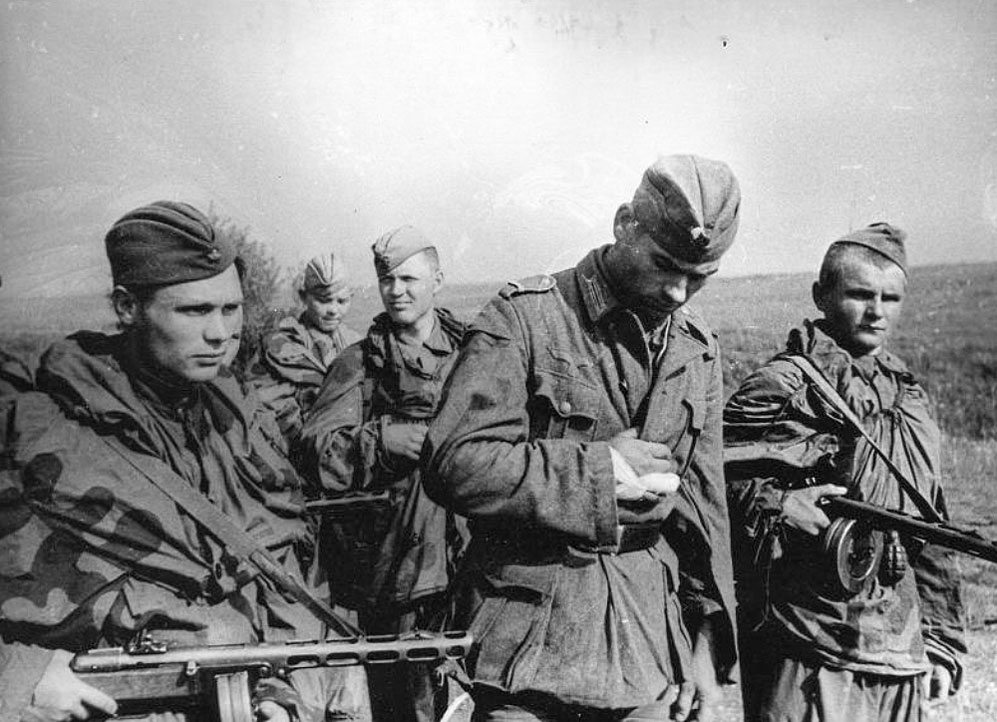
His first reconnaissance mission nearly became his last. During fighting in the Kursk sector, Ivanov and his men were ordered to make contact with neighbouring units and, if possible, capture a German prisoner for interrogation. Such prisoners were known among Soviet soldiers as a yazyk — literally a "tongue" — because the intelligence they provided could reveal enemy positions, units and intentions.
Ivanov selected a scout named Fedya to accompany him towards a German machine-gun position. They crawled through dry grass while German flares repeatedly illuminated the battlefield. Each time darkness returned, they moved forward again until they came within approximately twenty metres of the German trench.
Then a machine gun fired. A bullet entered near Ivanov's right shoulder blade and exited near the left, damaging his lung. Blood poured from his mouth. Both shoulder blades had been hit and he could no longer use his arms. He had gone out to capture a German yazyk and now found himself lying almost helpless beside the German positions.
Fedya refused to leave him. He dragged Ivanov backwards into a shell crater, dressed his wounds and then returned with the other scouts. They placed Ivanov on a rain poncho and carried him towards the Soviet lines, running whenever the German flares disappeared and dropping to the ground whenever another illuminated the battlefield. Ivanov survived. It would not be the last time.
Across the Dnieper
After recovering, Ivanov returned to the front and soon found himself among troops preparing to cross the Dnieper River. The weapons issued to them hardly inspired confidence. Many had been recovered from battlefields and were badly rusted. Ivanov's submachine gun could fire only single shots.
The crossing took place in darkness under German artillery fire, flares and bombing. Ivanov and his platoon commander ordered the men aboard their pontoon not to fire. Their hope was simple: if they remained silent, the Germans might assume that everyone aboard had already been killed. It worked. While other pontoons attracted German fire, theirs crossed without losing a man.
They landed beneath the steep western bank and began digging into loose sand. Soon afterwards they were ordered to attack a nearby village. Ivanov was wounded again when a mortar fragment struck him in the buttock and a second explosion sent another fragment into his leg just below the knee. His friend Yasha was also wounded.
The two men eventually reached the river and found an old civilian with a small boat who carried them back across the Dnieper. After recovering, Ivanov was assigned to the 303rd Red Banner Verkhnedneprovsk Division. He eventually joined its divisional reconnaissance unit and remained with its foot scouts for the rest of the war. He had found his place.
Life among the scouts
Reconnaissance was a specialised and extraordinarily dangerous form of warfare. The scouts operated ahead of Soviet positions and sometimes several kilometres behind German lines. Their most important tasks were to determine enemy positions and capture prisoners who could provide intelligence.
Ivanov later remembered that volunteers were preferred. He did not want a frightened man beside him during a mission. Fear itself was not shameful; even experienced scouts sometimes admitted that they did not feel capable of going out on a particular night. Ivanov respected that instinct because a man whose nerves failed at the wrong moment could endanger the entire group.
The reconnaissance teams were generally divided into a small capture group and one or more covering groups. The capture group might contain only two or three men and its task was to seize the prisoner, while the covering group protected their withdrawal. Ivanov usually went with the capture group.
The scouts travelled light. They removed insignia and decorations and carried as much ammunition as possible. By the later stages of the war, Ivanov and many of his comrades preferred captured German equipment, including camouflage clothing, boots, submachine guns, rifles and pistols. Ivanov particularly liked the German rifle because of its accuracy and carried a Walther pistol that fitted his hand well.
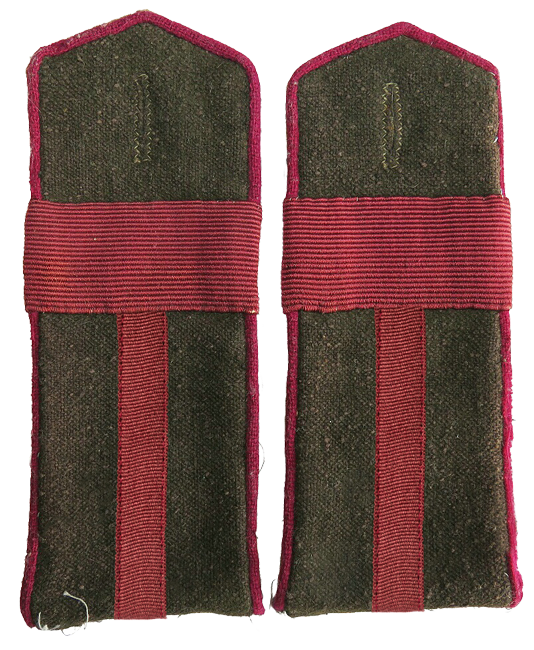
Experience mattered more than rank. Young officers sometimes arrived directly from military schools with theoretical knowledge but no practical understanding of reconnaissance. Ivanov remembered occasions when experienced sergeants effectively took command during missions because everyone knew that survival depended upon experience rather than shoulder boards.
Voronok
The scouts also made extensive use of horses. Ivanov was given a small black Mongolian horse that had been acquired from Cossacks and named him Voronok. The horse became one of his strongest memories of the war. Voronok was small, fast and extraordinarily hardy, and Ivanov remembered that he could jump almost anything placed in front of him.
During one engagement they were caught under fire in open ground. A burst of machine-gun fire struck Voronok in the side. Mortally wounded, the horse nevertheless turned and carried Ivanov behind a haystack before collapsing. Voronok died there.
"I never had a horse like him again."
The Order of Glory
Near Kirovograd, Ivanov fought in a bitter struggle for a hill that repeatedly changed hands. During the fighting, a German grenade exploded behind him and a fragment struck his left shoulder blade. A medic treated the wound and Ivanov was supposed to leave for hospital, but he refused because the hill had still not been secured.
Only after the position had finally been captured did he allow himself to be evacuated. For his actions during the fighting, Ivanov received the Order of Glory, 3rd Class. It was the beginning of an extraordinary sequence of decorations. The Order of Glory was awarded in three classes, beginning with the third and progressing towards the first. Ivanov would eventually receive all three.
The Hron River
Some of Ivanov's most dangerous experiences occurred during the winter fighting on the Hron River in Slovakia. The river was narrow but fast flowing. Ice formed along parts of it while the current remained open elsewhere, making silent crossings at night extraordinarily dangerous. The scouts nicknamed it the "Coffin" because so many of their comrades died there.
On one mission Ivanov attempted to swim across carrying a rope that would later be used to pull a steel cable over the river. The ice collapsed beneath him. The current dragged him downstream and began pulling him underneath the ice. A sapper accompanying him smashed through the ice with his feet and helped Ivanov escape. He emerged soaked and freezing.
The Hron claimed other scouts. Ivanov remembered men drowning during crossings and one scout becoming twisted beneath the water after fastening himself to a cable. His comrades could do nothing to save him. Losses among reconnaissance soldiers were intensely personal. These were not anonymous soldiers disappearing from distant formations; they were men who crawled together, slept beside one another, carried one another from battlefields and depended upon each other for survival. Ivanov described it as a brotherhood. Every death made the survivors harder.
A prisoner for a life
During the fighting near the Hron, Ivanov became involved in a confrontation with an intelligence officer. According to Ivanov's account, the officer reached for his pistol during an argument and Ivanov shot him first. Ivanov expected to be executed. Instead, divisional commander Konstantin Fedorovsky offered him a chance. The division desperately needed a German prisoner for interrogation. Bring back a yazyk, Fedorovsky told him, and his life would be spared.
Ivanov selected two men he trusted completely. They crossed the Hron at night, penetrated a village behind German positions and located a headquarters. Eventually they saw an officer emerge carrying a briefcase and accompanied by two armed guards. The scouts killed the guards and wounded the officer. Then the alarm sounded. Ivanov and his men hid with their prisoner in a haystack while German troops searched the area and mortar fire struck no-man's-land and the Soviet positions. They waited until the search subsided. Ivanov then lifted the wounded German officer onto his shoulders and carried him towards the river.
The journey was approximately three kilometres. Exhausted, the scouts eventually reached their boat, crossed back to Soviet territory and delivered their prisoner. Fedorovsky kept his promise, and Ivanov was subsequently awarded the Order of Glory, 2nd Class.
A hill in Hungary
In the spring of 1945, the scouts received another seemingly impossible assignment. A strongly defended hill in Hungary had resisted repeated attacks by Soviet infantry. Three regiments had failed to capture it and suffered heavy casualties. Now the reconnaissance company was ordered to take it. Ivanov wanted to attack at night, but the divisional commander refused. The scouts would attack in daylight. Only around forty operational scouts remained, so Ivanov devised a plan. They would spread out with approximately ten metres between each man and crawl through the tall dry grass towards the German trenches. Once discovered, everyone would rise simultaneously, unleash automatic fire and charge.
They reached the German position. Four scouts were killed and six wounded, but the hill was captured. The infantry subsequently took over the position — and lost it again. The scouts were ordered back. Ivanov knew that the same method would not fool the Germans twice. This time he requested almost two hours of rocket-artillery fire against the edge of the forest. German soldiers, he believed, had become accustomed to Soviet bombardments ending after predictable periods, so Ivanov arranged for the bombardment to end at the deliberately irregular time of 3:53 p.m.
His scouts crawled forward while the artillery was still falling ahead of them and synchronised their watches. The moment the bombardment stopped, they rose and rushed the German trenches. The defenders were still recovering from the shelling and the scouts captured the position. The Germans repeatedly counterattacked. Eventually the scouts ran out of their own ammunition and collected German weapons and cartridges from the dead, using them against the counterattacking troops. Ivanov remembered more than twenty counterattacks, but the hill remained in Soviet hands.
For the action, Ivanov received the Order of Glory, 1st Class. He had now become a full holder of the Order of Glory. "I was sure that sooner or later I would be killed"
Ivanov's description of reconnaissance reveals the psychological world in which the scouts lived. They slept mainly during the day because darkness was their working environment. They crawled through no-man's-land, sometimes night after night, searching for German positions and prisoners. Ivanov gradually stopped imagining a future for himself.
He rarely wrote to his mother. There was a grim reason for this. If he wrote a letter and was then killed, someone would have to decide whether that final letter should still be sent. Ivanov preferred his mother gradually to become accustomed to the possibility that he was already dead. If he survived, he could simply appear at home.
Eventually his mother wrote directly to his company commander asking whether her son was still alive. Her message also revealed that Ivanov's father had been killed near Poltava. Ivanov had gone to war with his father; now his mother and son were all that remained of the family. The news changed something inside him. He later remembered becoming consumed by anger. War had already taught him to kill. Now it had made the conflict intensely personal.
The final days
Ivanov fought through Moldavia, Romania and Hungary, briefly entered Austria, and finished the war in Czechoslovakia. Germany surrendered, but for Ivanov the shooting did not immediately stop. On May 11, 1945, two days after the Soviet celebration of victory, Ivanov and another scout were riding ahead of a column when they encountered an ambush. Gunfire killed Ivanov's horse, and the falling animal broke his foot. Two civilians eventually found him and carried him to a hospital.
Ivanov remained hospitalised for approximately five months in Bratislava. The war was finally over for him. He finished his military service with the rank of starshina, roughly comparable to a sergeant major. He had survived something he had spent years believing he would not survive.
Coming home
Ivanov was demobilised from hospital and began the long journey home. Only then, he remembered, did his desire to remain alive become overwhelming. During the war death had been expected; now survival suddenly mattered. On November 7, Ivanov finally arrived home in Kata-Kurgan. Civilian life proved difficult. Years spent moving silently through enemy territory, capturing prisoners and killing at close range were not experiences that could simply be left behind at the railway station.
Criminal gangs attempted to recruit him because his wartime skills made him useful to them, but Ivanov refused. He wanted another life. Before the war he had been fascinated by animals and had hoped to study game management. Eventually he entered university in Samarkand, first joining the Faculty of Biology before transferring to geology at the Uzbekistan State University. He began building a civilian life, but the war remained with him.
The meaning of war
When asked many years later what the war had meant to him, Ivanov did not romanticise combat. He remembered fear, exhaustion, hunger, lice, freezing rivers, dead comrades, impossible orders and the constant expectation of death. But he also remembered the extraordinary trust between scouts. For Ivanov, that comradeship was perhaps the hardest part of wartime life to replace. He had lived among men whose lives depended literally upon one another. A scout had to know that the man crawling beside him would remain calm, would not abandon him and, if necessary, would risk his own life to bring him home.
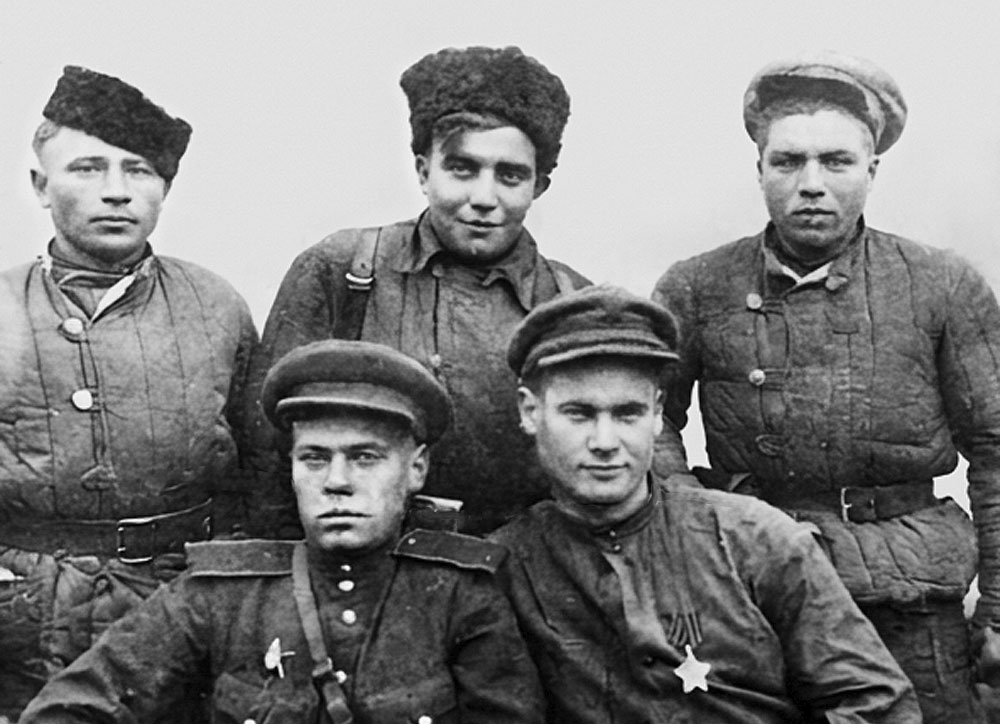
Ivanov survived the war carrying the Order of the Patriotic War and the Orders of Glory, 2nd and 3rd Class. His Order of Glory, 1st Class followed after his return, completing the three classes. He later also received two Orders of the Red Star. But the decorations tell only part of his story. The greater testimony is contained in his memories of men such as Fedya dragging him from beneath the German machine guns; comrades who disappeared beneath the freezing waters of the Hron; the scouts who carried their wounded and dead whenever they could; and Voronok, the small black horse that carried him to safety despite being mortally wounded.
Ivanov had entered the war as a schoolboy who desperately wanted to reach the front. He returned having spent years expecting to die there. Asked whether he ever wanted to return to war after becoming a civilian, his answer was unequivocal: "Of course not. Combat isn't much fun." What he missed was something else: the men, the trust and the brotherhood of the scouts.
Mstislav Ivanov survived the Second World War and died in 2014. His testimony preserves the experience of a Red Army reconnaissance soldier who fought his way westward across Europe and lived to tell what happened there.
Thank you to Vladimir Kroupnik for providing the story.The Original Russian text was published at the portal www.iremember.ru