By the summer of 1945, Nazi Germany had surrendered, but the Second World War was still raging in the Pacific. Despite years of devastating defeats, the Empire of Japan refused to surrender unconditionally, while Allied planners prepared for what was expected to become the largest amphibious invasion in history. Instead, the United States introduced a weapon unlike anything the world had ever seen. On 6 August 1945, an American B-29 bomber dropped the uranium bomb Little Boy over Hiroshima. Three days later, on 9 August, a second bomber released the plutonium bomb Fat Man over Nagasaki. The two atomic bombings killed well over 150,000 people by the end of 1945, the overwhelming majority of them civilians and remain the only use of nuclear weapons in armed conflict.
The bombings, together with the Soviet declaration of war against Japan, convinced the Japanese leadership that further resistance was impossible. On 15 August 1945, Emperor Hirohito announced Japan's surrender, bringing the Second World War to an end and opening the nuclear age.
More than eight decades later, the bombings remain among the most debated military decisions in modern history.
Quick Facts
Date: 6 August 1945 (Hiroshima) and 9 August 1945 (Nagasaki)
Location: Hiroshima and Nagasaki, Japan
Conflict: Pacific War, Second World War
Belligerents: United States and the Empire of Japan
Operation: Atomic bombing missions conducted by the 509th Composite Group
Aircraft: Enola Gay (Hiroshima) and Bockscar (Nagasaki)
Weapons: Little Boy (uranium-235) and Fat Man (plutonium-239)
Immediate outcome: Japan announced its surrender on 15 August 1945
Historical significance: Ended the Second World War and marked the beginning of the nuclear age
The Road to the Atomic Bomb
The atomic bombings of Hiroshima and Nagasaki were not isolated events but the culmination of years of scientific research, military planning and an increasingly desperate war in the Pacific. By 1945, Allied leaders faced a difficult decision. Conventional bombing had devastated dozens of Japanese cities, yet the Japanese government continued to reject unconditional surrender. Military planners expected that invading the Japanese home islands would result in enormous casualties on both sides.
At the same time, a secret Allied research programme had produced a revolutionary new weapon capable of releasing destructive power on an unprecedented scale. After its successful test in the New Mexico desert, American leaders concluded that the atomic bomb might force Japan to surrender without the need for a full-scale invasion.
Within weeks, preparations were underway for history's first, and so far only, combat use of nuclear weapons.
The Manhattan Project
The origins of the atomic bomb can be traced to the discovery of nuclear fission in 1938. Scientists quickly realised that splitting uranium atoms released enormous amounts of energy. Concern grew that Nazi Germany might develop such a weapon first, prompting physicists, including Albert Einstein and Leó Szilárd, to urge President Franklin D. Roosevelt to begin an American research programme. That programme evolved into the highly secretive Manhattan Project, administered by the U.S. Army Corps of Engineers under Major General Leslie R. Groves Jr.. At its peak, the project employed more than 125,000 people across dozens of sites in the United States and cost over $2 billion, an extraordinary sum at the time. Remarkably, many of those working on the project had little idea of its true purpose because of strict security measures.
The scientific work was centred at the Los Alamos Laboratory in New Mexico under the direction of physicist J. Robert Oppenheimer. Engineers and scientists developed two fundamentally different weapons: the uranium gun-type bomb later named Little Boy and the far more complex plutonium implosion weapon known as Fat Man.
Although Japan also pursued nuclear research during the war, it lacked the industrial capacity, resources and funding required to produce an operational atomic weapon.
The Trinity Test
Before an atomic bomb could be used in combat, American scientists first had to prove that the revolutionary weapon actually worked. During the early hours of 16 July 1945, the world's first nuclear explosion took place at the remote Trinity test site in the New Mexico desert.
The device, nicknamed "The Gadget", used the same plutonium implosion design that would later be employed in the Fat Man bomb dropped on Nagasaki. At 05:29 local time, the explosion produced an intense flash of light, a rapidly expanding fireball and the now-famous mushroom cloud. The blast released energy equivalent to approximately 21 kilotons of TNT, exceeding expectations and confirming that the new weapon was ready for operational use.
News of the successful test reached President Harry S. Truman while he attended the Potsdam Conference in Germany. Armed with proof that the bomb functioned as intended, American leaders continued preparations for its use against Japan if the Japanese government refused to surrender.
Less than three weeks later, the first atomic bomb would be dropped over Hiroshima.
The Pacific War in 1945
By 1945, the war in the Pacific had entered its final and most destructive phase. Although Japan had lost control of much of its empire, its military leadership remained determined to resist an Allied invasion of the home islands. The battles fought during the previous year convinced American commanders that any invasion would be met with fierce resistance and result in catastrophic casualties on both sides. Two battles in particular shaped Allied expectations. At Iwo Jima, fought between 19 February and 26 March 1945, nearly all of the island's approximately 21,000 Japanese defenders were killed after weeks of bitter fighting. Only a few hundred survived to be taken prisoner. The battle cost the United States almost 7,000 killed and more than 19,000 wounded, making it one of the bloodiest campaigns of the Pacific War.
The subsequent Battle of Okinawa, fought from 1 April to 22 June 1945, proved even more devastating. Around 117,000 Japanese soldiers defended the island, while thousands of civilians became caught in the fighting. More than 12,000 American servicemen were killed and tens of thousands wounded. Japanese military losses exceeded 90 percent, while civilian casualties reached well into the hundreds of thousands. The widespread use of Kamikaze attacks demonstrated that Japan remained willing to sacrifice enormous numbers of lives rather than surrender.
For Allied planners, these battles suggested that an invasion of mainland Japan would be unlike anything previously experienced during the Second World War. Every mile gained had come at a tremendous human cost and military leaders feared that the final campaign could eclipse all those that had come before.
Japan Under Siege
While Allied forces advanced across the Pacific, Japan's ability to continue the war steadily collapsed. American submarines and naval aircraft had devastated Japanese shipping, reducing the country's merchant fleet from approximately 5.25 million gross register tons in 1941 to only about 557,000 tons by August 1945. Vital imports of oil, food and raw materials could no longer reach the home islands in sufficient quantities.
The effects were felt throughout Japanese society. Industrial production declined sharply as factories struggled to obtain fuel and materials, while transportation networks became increasingly unreliable. Food shortages worsened as the 1945 rice harvest became the poorest since 1909 and fishing catches fell to around 22 percent of pre-war levels. Malnutrition spread among both civilians and military personnel.
At the same time, the industrial power of the United States vastly outmatched that of Japan. By 1943, American factories were producing nearly 100,000 aircraft annually, whereas Japan manufactured approximately 70,000 aircraft during the entire war. Despite Japan's deteriorating military and economic position, its government continued to reject unconditional surrender.
Operation Downfall
With Japan refusing to surrender, Allied leaders began planning Operation Downfall, the invasion of the Japanese home islands. It would have been the largest amphibious operation ever undertaken. The invasion was divided into two phases. Operation Olympic, scheduled for October 1945, aimed to capture the southern island of Kyushu, providing airfields and naval bases for the final assault. The second phase, Operation Coronet, was planned for March 1946 and called for a massive landing on the Kantō Plain near Tokyo.
Japan prepared its own defensive strategy, known as Operation Ketsugō. Rather than attempting to stop the invasion at sea, Japanese planners intended to inflict such devastating casualties during the landings that the Allies might negotiate more favourable peace terms. Around 2.3 million regular troops were assigned to defend the home islands, supported by a civilian militia of nearly 28 million men, women and children armed with whatever weapons were available.
Predicting the cost of such an invasion proved extremely difficult. Contemporary American military estimates ranged from approximately 132,500 Allied casualties to several million, depending on the assumptions used.
Japanese planners anticipated losses on an even greater scale. Although historians continue to debate these projections, few doubted that Operation Downfall would become one of the bloodiest military campaigns in history.
The Firebombing of Japan
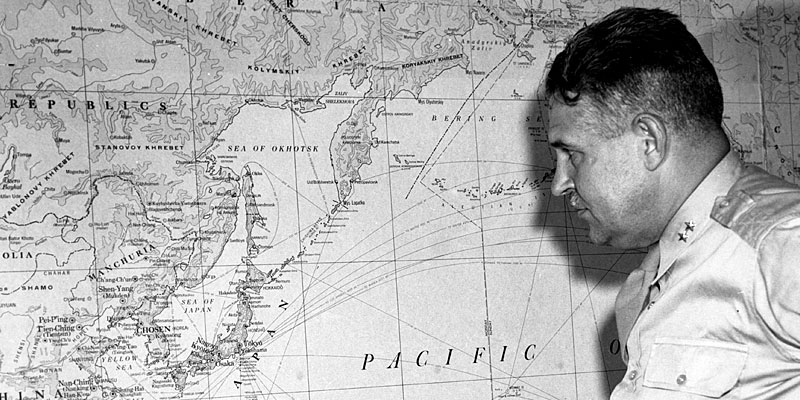
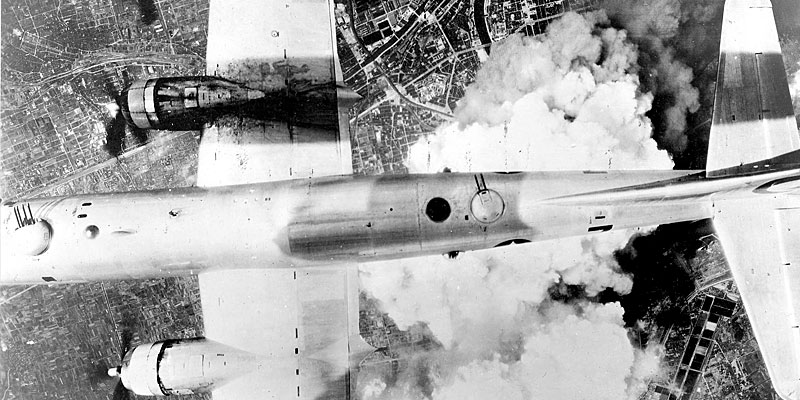
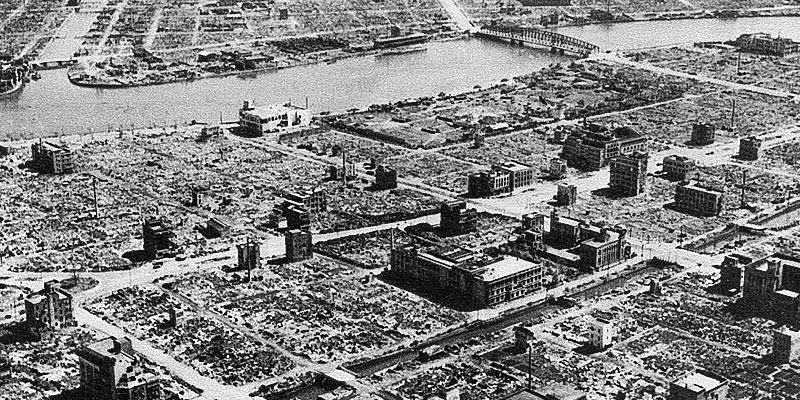
Long before atomic bombs were used, much of urban Japan had already been devastated by conventional bombing. During 1945, the U.S. Army Air Forces intensified their strategic bombing campaign under the command of Major General Curtis LeMay, abandoning high-altitude precision attacks in favour of low-level nighttime incendiary raids. The most destructive of these operations was Operation Meetinghouse on the night of 9–10 March 1945. Hundreds of B-29 Superfortress bombers attacked Tokyo using incendiary bombs, creating a firestorm that killed an estimated 100,000 people, destroyed approximately 16 square miles of the city and reduced around 267,000 buildings to ashes. It remains the deadliest single conventional air raid in history.
Over the following months, American bombers systematically attacked more than 60 Japanese cities, destroying vast urban areas and severely weakening Japan's industrial capacity. By the summer of 1945, much of the country's infrastructure had already been crippled, yet the Japanese government continued the war.
Selecting the Targets
As preparations for the atomic missions advanced, American military planners carefully selected potential targets. In April 1945, a committee chaired by Major General Leslie R. Groves Jr. evaluated several Japanese cities. The chosen targets needed to possess military or industrial significance, be large enough for the bomb's destructive effects to be accurately measured and, importantly, remain largely undamaged by previous bombing raids.
The original shortlist consisted of Hiroshima, Kokura, Kyoto, Niigata and Yokohama. Secretary of War Henry L. Stimson successfully argued that Kyoto should be removed because of its immense cultural, historical and religious importance. It was replaced by Nagasaki, an important industrial city with major shipbuilding and arms manufacturing facilities.
Some scientists proposed demonstrating the bomb on an uninhabited area in the hope that Japan would surrender without civilian casualties. Others, including J. Robert Oppenheimer and Arthur Compton, argued that such a demonstration might fail or fail to convince Japanese leaders. They also feared that advance warning would reduce the weapon's psychological impact.
On 26 July 1945, the Potsdam Declaration demanded Japan's unconditional surrender and warned of "prompt and utter destruction" should the country continue fighting. Japanese Prime Minister Kantarō Suzuki publicly indicated that the government intended to ignore the ultimatum. Preparations for the atomic missions therefore continued.
Hiroshima
Hiroshima was selected as the primary target because of its military importance rather than its size alone. The city served as the headquarters of Field Marshal Shunroku Hata's Second General Army, which commanded the defence of southern Japan. It was also a major embarkation port, an important logistics centre and home to factories producing military equipment. Approximately 40,000 military personnel were stationed in the city, which had an estimated population of between 340,000 and 350,000 people.
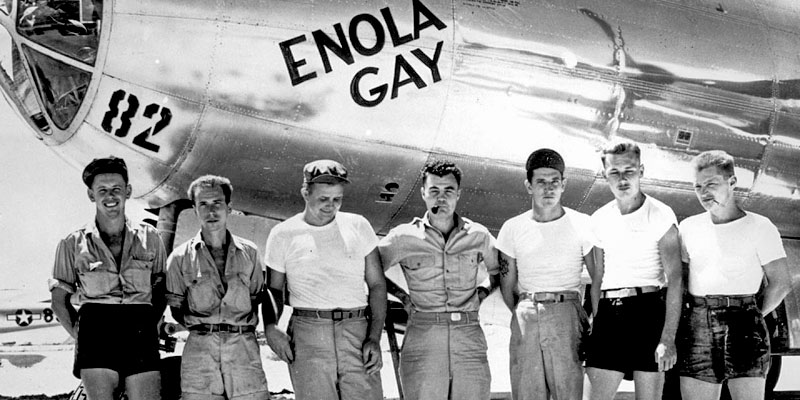
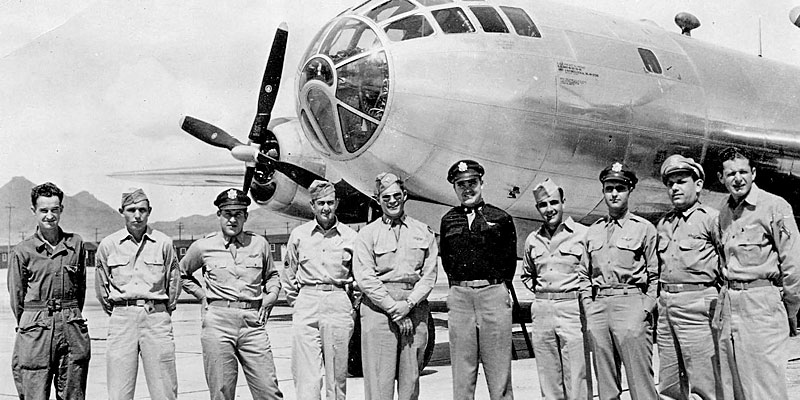
On the morning of 6 August 1945, the specially modified B-29 Superfortress Enola Gay, commanded by Colonel Paul W. Tibbets Jr., departed North Field on the island of Tinian. On board was the uranium bomb Little Boy. Two accompanying B-29s, The Great Artiste and Necessary Evil, carried scientific instruments and photographic equipment to record the mission.
For safety reasons, Captain William S. Parsons armed the bomb only after the aircraft was safely airborne. Had the aircraft crashed during take-off with a fully armed weapon, the consequences could have been catastrophic. After a flight of approximately six hours, the formation reached Hiroshima under clear skies.
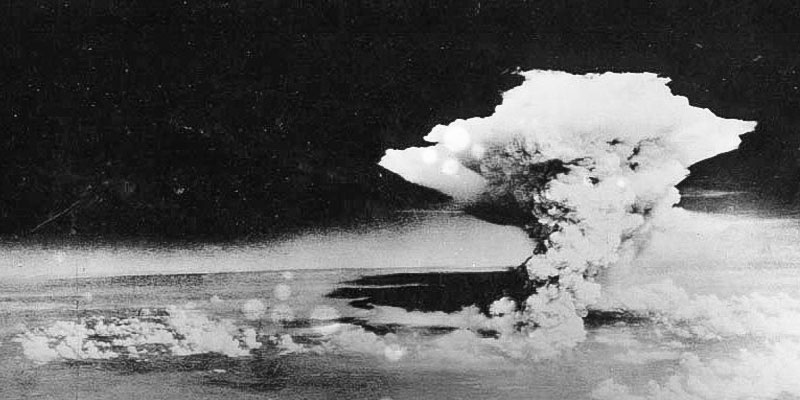
At 08:15 local time, bombardier Major Thomas Ferebee released Little Boy from an altitude of approximately 31,000 feet (9,450 metres). The bomb fell for 44.4 seconds before detonating about 1,900 feet (580 metres) above the city, almost directly over the Shima Surgical Clinic. Although the intended aiming point was the distinctive Aioi Bridge, the bomb exploded roughly 800 feet (240 metres) away.
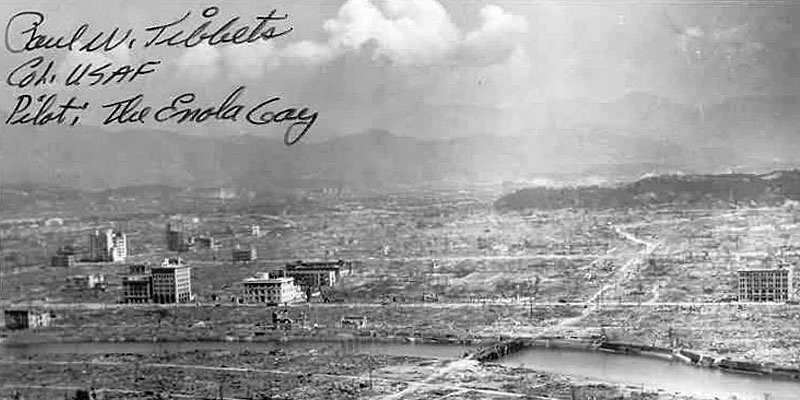
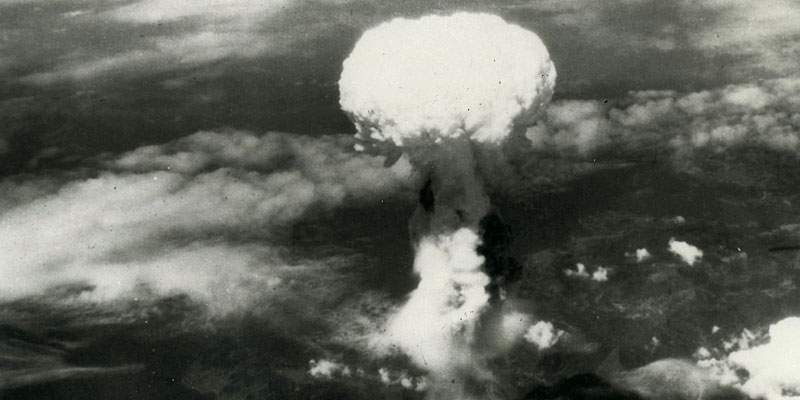
The explosion released energy equivalent to approximately 16 kilotons of TNT. Within a fraction of a second, an intensely bright flash, an immense blast wave and extreme thermal radiation engulfed the city. Buildings within roughly a one-mile radius were almost completely destroyed, while fires rapidly spread across an area of more than 4.4 square miles (11 km²).
The destruction overwhelmed Hiroshima almost instantly. Approximately 69 percent of the city's buildings were completely destroyed, while another 6 to 7 percent suffered severe damage. Thousands of fires merged into a devastating firestorm, forcing many survivors to seek refuge in rivers as temperatures reached extraordinary levels.
The city's medical services collapsed. Of Hiroshima's approximately 300 registered doctors, more than 90 percent were killed or injured, while many hospitals were destroyed or rendered unusable. At the headquarters of the Second General Army inside Hiroshima Castle, more than 3,200 soldiers died, leaving military commanders initially unable to assess the scale of the disaster.
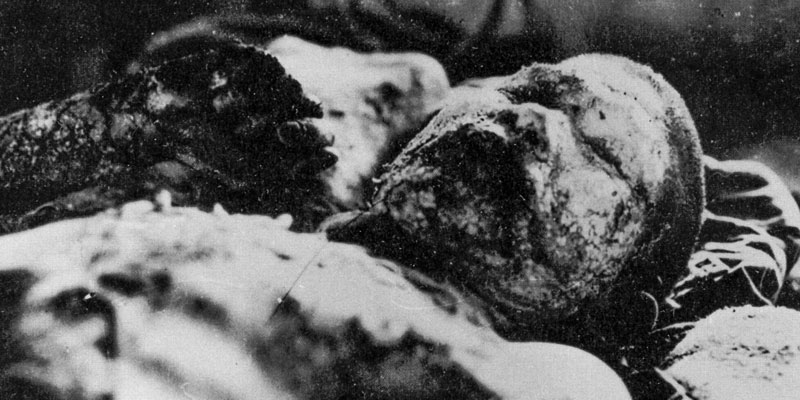
Modern estimates suggest that between 90,000 and 166,000 people died in Hiroshima by the end of 1945. Roughly half perished on the day of the explosion, while many others succumbed during the following weeks and months from severe burns, traumatic injuries and acute radiation sickness.
Although Hiroshima contained important military facilities, civilians accounted for approximately 90 percent of those killed.
Between Hiroshima and Nagasaki
News of Hiroshima reached Tokyo slowly because much of the city's communications network had been destroyed. Initial reports were confused and Japanese authorities struggled to understand what had happened. Sixteen hours after the attack, President Harry S. Truman publicly announced that the United States had used an atomic bomb and warned Japan that it could expect further destruction unless it surrendered unconditionally.
On 7 August 1945, Japanese physicist Yoshio Nishina travelled to Hiroshima to investigate the devastation. After examining the ruins, he concluded that the city had indeed been destroyed by an atomic weapon. Despite this assessment, influential members of Japan's military leadership believed that the United States possessed only a small number of such bombs and argued that the war should continue.
The Soviet Invasion of Manchuria
While Japan was still assessing the destruction of Hiroshima, another major strategic shock followed. Shortly after midnight on 9 August 1945, the Soviet Union declared war on Japan and launched a massive offensive against Japanese forces in Manchuria, ending the neutrality pact that had existed between the two nations since 1941. More than one million Soviet troops advanced against the Kwantung Army, long regarded as one of Japan's strongest military formations. The offensive achieved rapid success, demonstrating that Japan now faced invasion from both east and west. Together with the atomic bombings, the Soviet declaration of war fundamentally altered Japan's strategic situation.
The Mission to Nagasaki
Because of deteriorating weather forecasts over Japan, American commanders decided to move the second atomic mission forward from 11 August to 9 August 1945. The primary target was the city of Kokura, while Nagasaki was designated as the secondary objective.
Before dawn on 9 August, the specially modified B-29 Bockscar, commanded by Major Charles W. Sweeney, departed Tinian carrying the plutonium bomb Fat Man. Shortly after take-off, the aircraft experienced a malfunction in one of its fuel pumps, leaving approximately 640 gallons of fuel unusable and significantly reducing its operational margin.
After waiting unsuccessfully for a rendezvous aircraft over Yakushima, Bockscar proceeded towards Kokura. However, smoke from previous conventional bombing raids on nearby Yahata, combined with cloud cover, obscured most of the city. After making three bombing runs over approximately fifty minutes and with fuel supplies becoming dangerously low, Sweeney abandoned the primary target.
The unexpected diversion became known as "Kokura's luck", reflecting the extraordinary circumstances that spared the city from becoming the target of the world's second atomic bombing.
Nagasaki
Bockscar turned towards its secondary target, Nagasaki, one of Japan's principal industrial ports. The city was home to the Mitsubishi Shipyards, steel works and major arms factories that played an important role in Japan's war industry. On the morning of 9 August 1945, approximately 263,000 people were present in the city, including civilians, soldiers, forced labourers and Allied prisoners of war. When the bomber reached Nagasaki shortly before 11:00, heavy cloud cover again threatened the mission. At 11:01, a brief break in the clouds allowed bombardier Captain Kermit Beahan to identify the target visually. Fat Man was released and detonated 47 seconds later at an altitude of approximately 1,650 feet (500 metres) above the Urakami Valley, almost 1.9 miles (3 kilometres) northwest of the intended aiming point.
The plutonium weapon produced an explosion equivalent to approximately 21 kilotons of TNT, making it significantly more powerful than the bomb dropped on Hiroshima. However, the surrounding hills partially contained the blast, limiting the overall area of destruction compared with the flatter terrain of Hiroshima.
Even so, the explosion devastated the Urakami Valley. The Mitsubishi Arms Plant was destroyed, while the historic Urakami Cathedral, once the largest Christian church in East Asia, was almost completely obliterated. Fires spread rapidly through the surrounding districts as rescue efforts struggled to begin.
Current estimates indicate that between 60,000 and 80,000 people died in Nagasaki by the end of 1945. After completing its mission, Bockscar, critically short of fuel, made an emergency landing on three engines at Yontan Airfield on Okinawa before eventually returning safely to Tinian.
Japan's Surrender
By 10 August 1945, Japan faced an unprecedented military crisis. Two atomic bombings had devastated Hiroshima and Nagasaki, while the Soviet Union had entered the war and was rapidly overrunning Japanese forces in Manchuria. For the first time since the conflict had begun, many members of Japan's leadership accepted that victory was no longer possible.
Despite the worsening situation, the Japanese government remained divided. Some military leaders wished to continue fighting in the hope of securing more favourable surrender terms, while others believed that further resistance would only bring greater destruction. During an Imperial Conference on 10 August 1945, Emperor Hirohito took the unprecedented step of personally supporting acceptance of the Potsdam Declaration, provided that the position of the Emperor could be preserved.
The United States and its Allies responded that the Emperor would remain subject to the authority of the Supreme Commander for the Allied Powers. After further debate, Hirohito again intervened, urging his government to accept the Allied terms. It was the first time in modern Japanese history that an Emperor had directly influenced such a major political decision.
The Kyūjō Incident
Not everyone within the Japanese military accepted surrender. During the night of 14–15 August 1945, a group of army officers attempted to prevent the Emperor's surrender announcement in what became known as the Kyūjō Incident. The conspirators occupied parts of the Imperial Palace in Tokyo, murdered Lieutenant General Takeshi Mori after he refused to support the coup and searched desperately for the recorded speech in which Emperor Hirohito announced Japan's surrender. Their intention was to destroy the recording before it could be broadcast to the nation.
The coup quickly collapsed after senior military commanders refused to support it. The recording remained hidden inside the Imperial Palace and survived the night. At noon on 15 August 1945, millions of Japanese citizens heard the Emperor's voice for the first time as he announced that Japan would accept the Allied terms. Although many listeners found the formal language difficult to understand, the message was unmistakable: the war was over.
The formal surrender ceremony took place on 2 September 1945 aboard the battleship USS Missouri, anchored in Tokyo Bay. Representatives of Japan signed the Instrument of Surrender before Allied officials, officially bringing the Second World War to an end.
The Human Cost
The atomic bombings inflicted destruction on a scale never before witnessed. By the end of 1945, modern estimates indicate that between 90,000 and 166,000 people had died in Hiroshima, while a further 60,000 to 80,000 had died in Nagasaki. Most victims were civilians, including thousands of women, children and elderly people. Many military personnel, forced labourers and Allied prisoners of war also lost their lives.
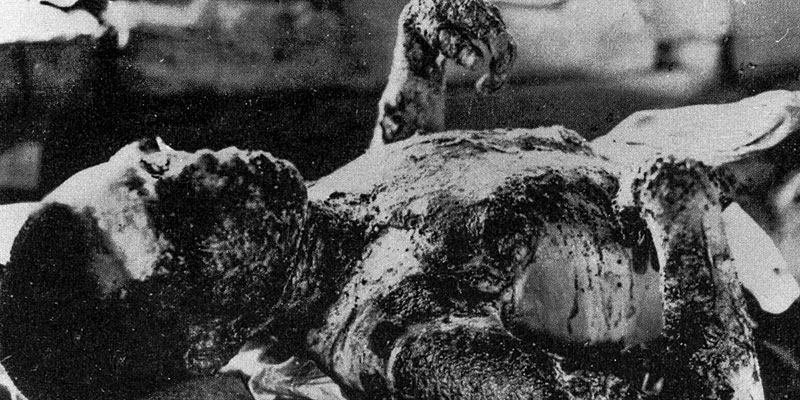
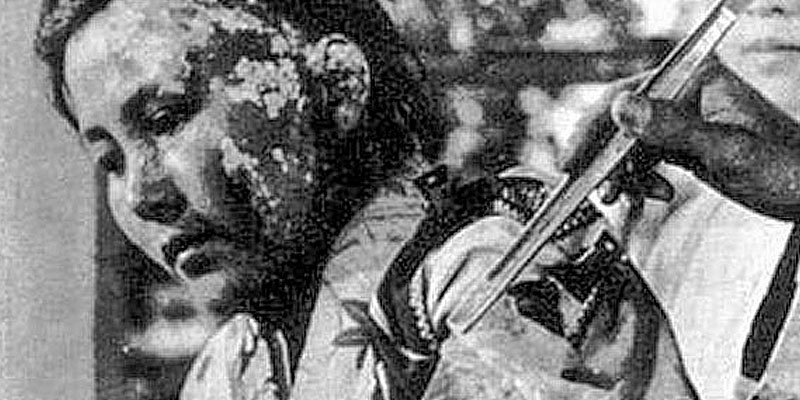
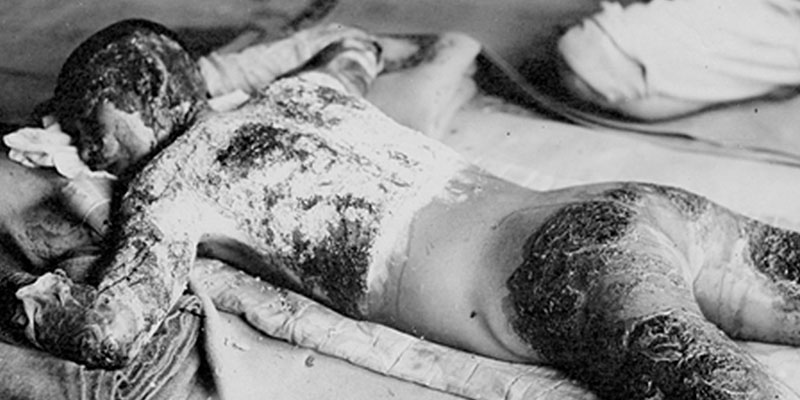
Those who survived the initial explosions often suffered severe burns, crushing injuries and blindness caused by the intense flash of thermal radiation. Many others developed Acute Radiation Syndrome (ARS), a condition that was little understood in 1945. Victims experienced nausea, vomiting, fever, internal bleeding, hair loss and severe infections as radiation damaged bone marrow and weakened the body's immune system.
The long-term effects continued for decades. Studies of survivors showed increased rates of leukaemia, thyroid cancer, breast cancer, lung cancer and several other forms of cancer, particularly among those who had been closest to the explosions. Children exposed before birth also faced an increased risk of developmental disorders, including microcephaly and intellectual disabilities.
The survivors became known in Japan as the Hibakusha, meaning "bomb-affected people". Many faced discrimination for decades because of widespread fears that radiation sickness was contagious or could be inherited by future generations. Even today, the hibakusha remain powerful advocates for peace and nuclear disarmament.
Legacy and Historical Debate
The atomic bombings of Hiroshima and Nagasaki marked the beginning of the nuclear age. For the first time in history, a single weapon possessed the ability to destroy an entire city within seconds. The events of August 1945 fundamentally changed military strategy, international diplomacy and scientific research throughout the remainder of the twentieth century.
The bombings also remain among the most debated decisions of the Second World War. Supporters argue that the use of atomic weapons forced Japan's surrender, avoided the enormous casualties expected during Operation Downfall and ultimately saved hundreds of thousands of Allied and Japanese lives. Critics contend that Japan was already close to defeat, that the bombings caused unacceptable civilian suffering and that the attacks also served as a demonstration of American power at the beginning of the emerging Cold War.
Many historians conclude that no single event explains Japan's surrender. Instead, the atomic bombings, the Soviet declaration of war and the rapidly deteriorating military situation combined to convince Japan's leadership that continued resistance was impossible. The relative importance of these factors continues to be discussed by scholars today.
Today, both Hiroshima and Nagasaki have become international symbols of peace. The preserved ruins of the Genbaku Dome in Hiroshima stand as a reminder of the first use of nuclear weapons in war and were designated a UNESCO World Heritage Site in 1996. Annual memorial ceremonies continue to honour the victims and promote a world free of nuclear weapons.
"The enemy has begun to employ a new and most cruel bomb, the power of which to do damage is, indeed, incalculable."
Principal Figure

in-depth information.