
Commanders of the Attack on Pearl Harbor


What was the Attack on Pearl Harbor?
The Attack on Pearl Harbor took place on the morning of 7 December 1941, when the Imperial Japanese Navy launched a surprise military strike against the United States naval base at Pearl Harbor on the island of Oahu, Hawaii. The attack was designed to cripple the American Pacific Fleet and prevent American interference with Japanese military operations planned across Southeast Asia and the Pacific. At the time of the attack, the United States was still officially neutral during the Second World War.
The operation was planned by Admiral Isoroku Yamamoto, commander-in-chief of the Japanese Combined Fleet, who believed Japan needed to destroy American naval power in the Pacific before the United States could fully mobilise its enormous industrial capacity.
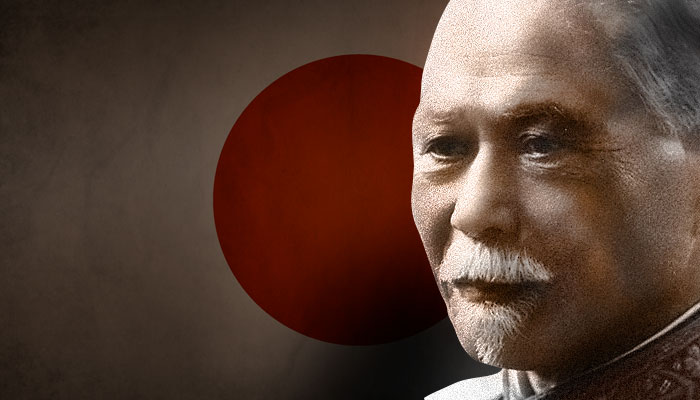
Admiral Isoroku Yamamoto
Growing tensions in the Pacific
During the late 1930s and early 1940s, relations between Japan and the United States deteriorated rapidly. Japan continued expanding across China and Southeast Asia, while the United States responded with economic sanctions, trade restrictions, and an oil embargo aimed at limiting Japanese military expansion. Japanese leaders increasingly believed war with the United States had become unavoidable. At the same time, American military commanders expected that if war came, Japan would most likely attack American territories in the Philippines or Southeast Asia rather than Hawaii itself.
Planning the Japanese attack
On 26 November 1941, a Japanese carrier strike force departed northern Japan and sailed across the Pacific under strict radio silence toward Hawaii. The task force consisted of six aircraft carriers: Akagi, Kaga, Sōryū, Hiryū, Shōkaku, and Zuikaku.
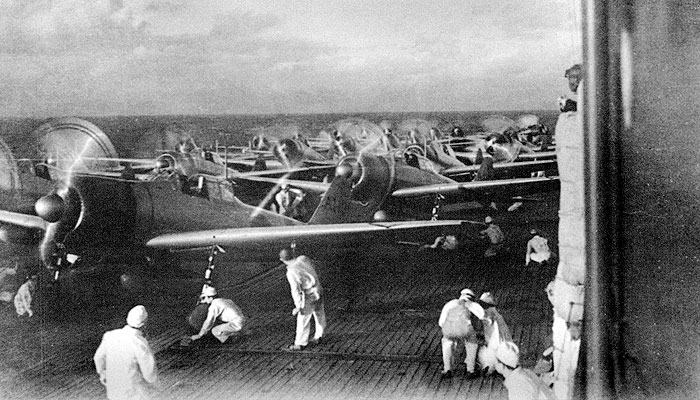
Together, they carried more than 400 aircraft, including torpedo bombers, dive bombers, high-level bombers, and Mitsubishi A6M Zero fighters. Japan also deployed submarines and five midget submarines near Pearl Harbor to support the operation.
American commanders at Pearl Harbor
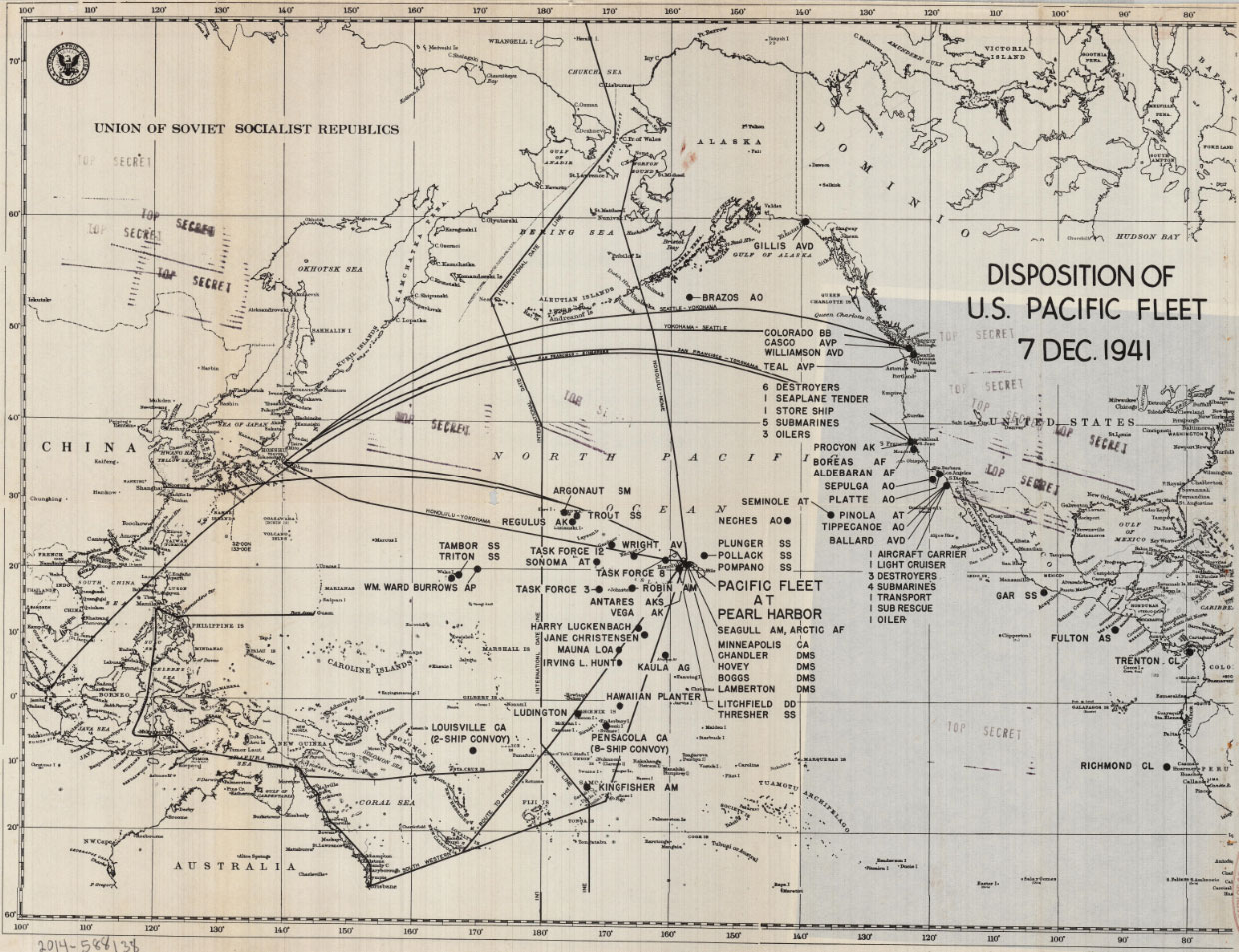
At the time of the attack, the United States Pacific Fleet at Pearl Harbor was commanded by Admiral Husband E. Kimmel, while American Army forces in Hawaii were led by Lieutenant General Walter Short. Although American intelligence had detected signs of rising tensions with Japan, commanders in Hawaii did not expect a major air attack against Pearl Harbor itself. Following the attack, both Kimmel and Short were heavily criticised for the lack of preparedness and were later relieved of their commands.
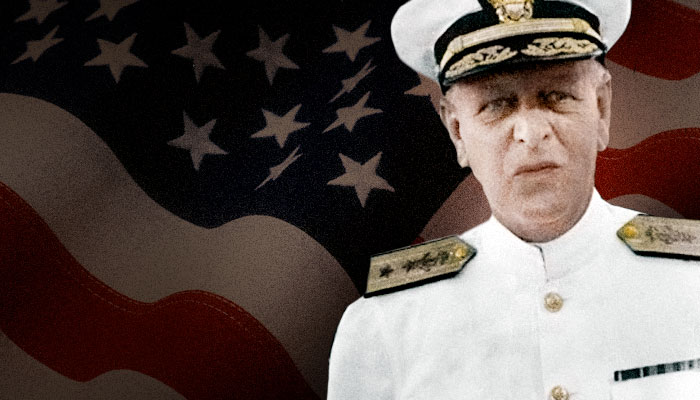
Admiral Husband E. Kimmel
Warnings before the attack
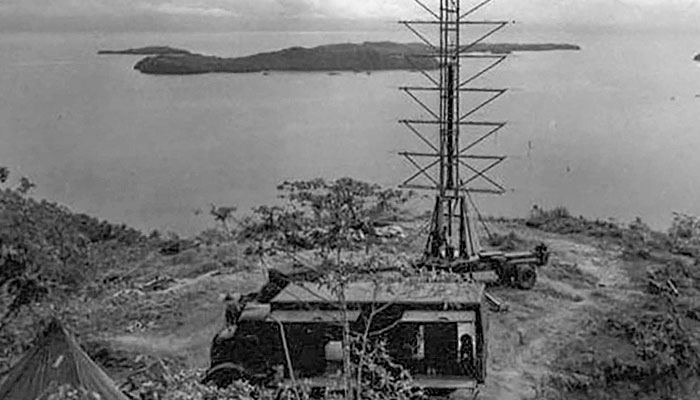
In the early hours of 7 December 1941, the American destroyer USS Ward detected and sank a Japanese midget submarine near the entrance to Pearl Harbor. Although the incident was reported, it did not trigger a full alert. Shortly afterward, an American radar station detected a large formation of incoming aircraft approaching Oahu. The radar warning was mistakenly believed to be a flight of expected American B-17 bombers arriving from the mainland United States.
These warnings failed to prevent one of the most devastating surprise attacks in American military history.
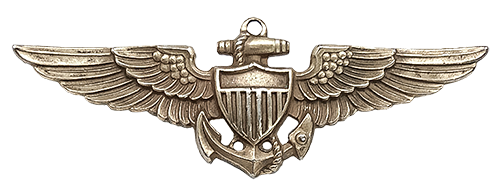
United States Navy

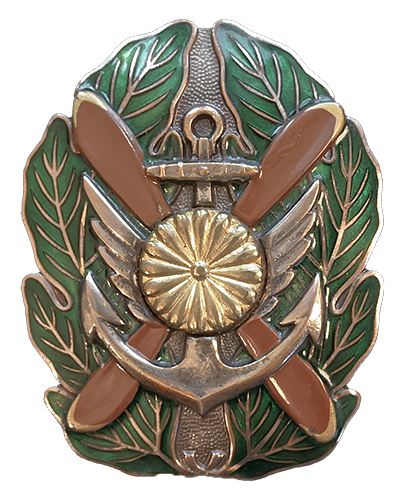
Imperial Japanse Navy

Battle specifications
Date of the battle
Duration of the battle
Reason for the battle
Location
Battle result
The attack begins
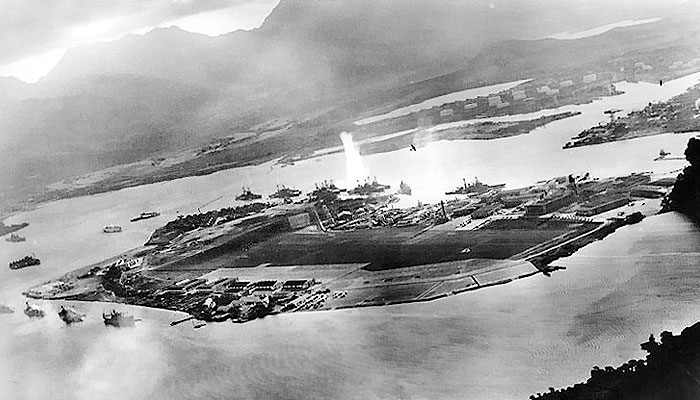
At approximately 7:48 a.m. on 7 December 1941, the first wave of Japanese aircraft arrived over Oahu and began attacking American military targets across Hawaii. A total of 353 Japanese aircraft participated in the attack in two separate waves. Torpedo bombers targeted battleships anchored inside Pearl Harbor while dive bombers and fighters attacked military airfields, hangars, barracks, and naval facilities.
The first attack wave
The first wave consisted of 183 aircraft commanded by Commander Mitsuo Fuchida. Japanese torpedo bombers attacked battleships lined up along Battleship Row, while bombers and fighters struck American airfields including Hickam Field, Wheeler Field, Bellows Field, and Ford Island. Many American aircraft had been parked close together to protect them from sabotage, making them easy targets for Japanese bombing and strafing attacks. Large numbers of aircraft were destroyed on the ground before they could take off.
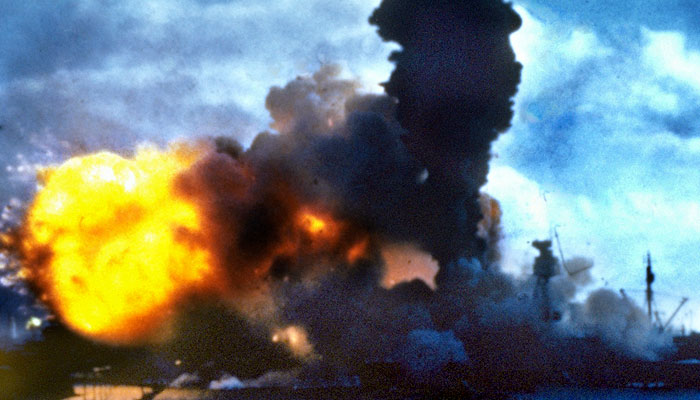
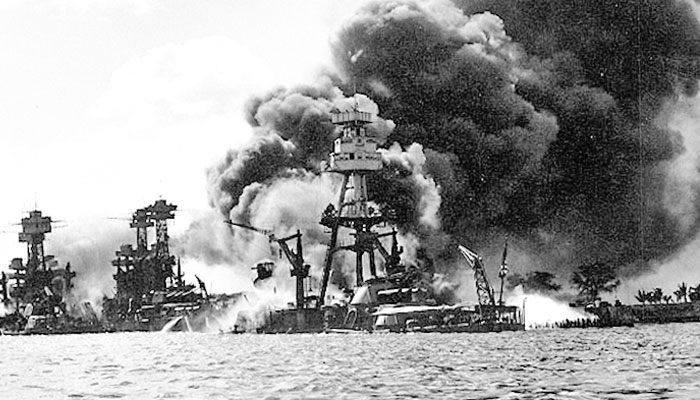
The battleship USS Arizona suffered one of the most catastrophic losses of the attack when an armor-piercing bomb detonated the ship’s forward ammunition magazine. The resulting explosion destroyed much of the vessel and killed more than 1.100 sailors and Marines. Other battleships including USS Oklahoma, USS West Virginia, USS California, and USS Nevada were sunk or heavily damaged during the opening stages of the assault.
The second attack wave
The second wave consisted of 171 aircraft led by Lieutenant Commander Shigekazu Shimazaki. These aircraft targeted additional ships, dry docks, and military facilities around Pearl Harbor. By the time of the second wave, American anti-aircraft defenses had become more organised. Several Japanese aircraft were shot down as American sailors and soldiers attempted to respond to the attack. Despite the confusion and destruction, many acts of bravery took place throughout the harbor. Sailors fought fires, rescued trapped crew members, and attempted to save damaged ships while under continued attack.
Damage and casualties
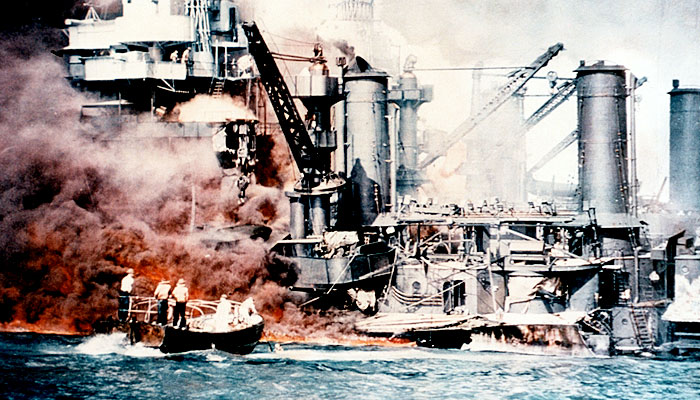
The attack caused enormous destruction across Pearl Harbor and the island of Oahu. In total, eight American battleships were damaged or sunk, while numerous cruisers, destroyers, and support vessels also suffered damage. More than 180 American aircraft were destroyed and many others were heavily damaged. Military installations and airfields across Oahu suffered extensive destruction. American casualties totaled approximately 2.403 killed and more than 1.100 wounded. Among the dead were sailors, soldiers, Marines, pilots, and civilians stationed across Hawaii. Japanese losses were comparatively small. Japan lost fewer than 30 aircraft, five midget submarines, and approximately 64 servicemen during the operation.


The United States enters the Second World War
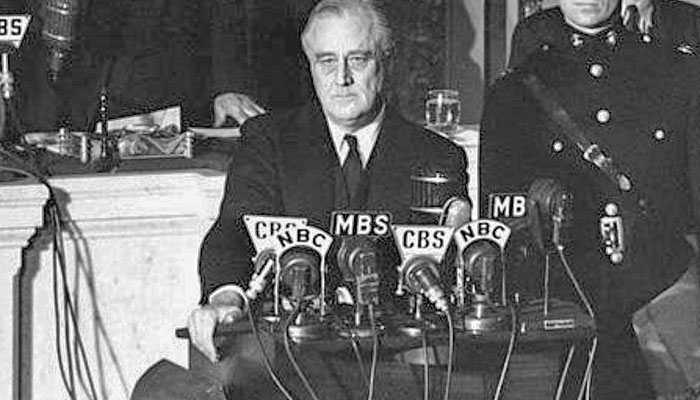
On 8 December 1941, President Franklin D. Roosevelt addressed Congress and described the attack on Pearl Harbor as "a date which will live in infamy". The United States formally declared war on Japan later that same day. Only days later, Germany and Italy declared war on the United States, transforming the conflict into a truly global war involving all major world powers.
Japanese expansion across the Pacific
Following the attack on Pearl Harbor, Japanese forces launched rapid offensives across Southeast Asia and the Pacific. Japan attacked territories including the Philippines, Hong Kong, Malaya, Singapore, and the Dutch East Indies. In the Philippines, American and Filipino forces under General Douglas MacArthur were forced into a prolonged defensive campaign against advancing Japanese forces before the islands eventually fell in 1942.
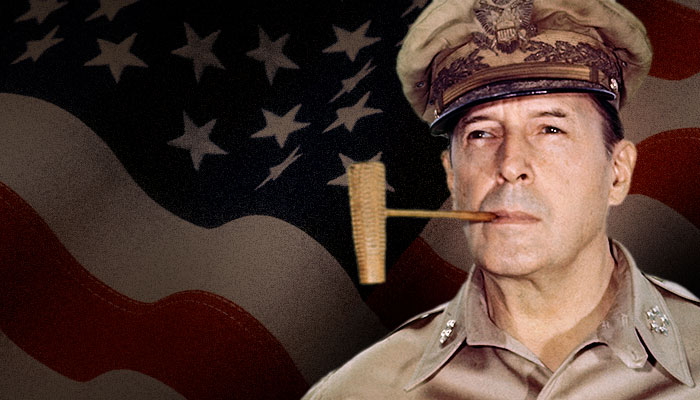
General Douglas MacArthur
A tactical victory but strategic mistake
Although the attack on Pearl Harbor was a major tactical success for Japan, many historians consider it a strategic mistake. The attack temporarily weakened American naval power in the Pacific but failed to destroy the United States’ long-term industrial and military capabilities. Most importantly for the Americans, the Pacific Fleet’s aircraft carriers were absent from Pearl Harbor during the attack and survived intact. These carriers later played decisive roles in battles such as the Battle of Midway and the wider Pacific campaign.
The Japanese also failed to destroy critical fuel storage facilities, submarine bases, and major repair docks at Pearl Harbor. Many damaged American ships were eventually repaired and returned to active service during the war.
Investigations and criticism
Following the attack, several American investigations examined how Pearl Harbor had been caught by surprise. Admiral Husband E. Kimmel and Lieutenant General Walter Short were heavily criticised for the lack of preparedness in Hawaii and were relieved of their commands shortly after the attack. Historians continue to debate the extent to which intelligence failures, communication problems, and underestimation of Japanese capabilities contributed to the disaster.
The USS Arizona Memorial
Today, Pearl Harbor remains one of the most important historic sites of the Second World War. The wreck of USS Arizona still lies beneath the water inside the harbor as a memorial to the sailors and Marines who lost their lives during the attack. The USS Arizona Memorial, dedicated in 1962, has become one of the most visited military memorials in the United States and serves as a lasting reminder of the events of 7 December 1941.
Historical significance
The Attack on Pearl Harbor remains one of the most significant events of the twentieth century. The surprise attack not only brought the United States into the war but also fundamentally changed the balance of power in the Pacific. The attack marked the beginning of a long and brutal conflict between the United States and Japan that continued until the end of the Second World War in 1945. Pearl Harbor has since become a symbol of remembrance, sacrifice, and the sudden impact of war on the United States.
Cite this historical page
