
Holocaust victim Anna Lehnkering
A life cut short: Remembering Anna
Anna Lehnkering was born on 2 August 1915 in Oberhausen-Sterkrade, the third child of Anna and Friedrich Lehnkering, who ran a restaurant in Sterkrade. Anna experienced learning difficulties from an early age. Her enrollment in school was delayed by one year and she was later transferred to a special education school, which she left at the age of 14. Afterwards, she helped in her parents' home.
In 1934, the family moved to Mülheim an der Ruhr. On 18 February 1935, at the age of 19, Anna was forcibly sterilized under Nazi racial-hygiene legislation. Her surviving records also contain a detailed family pedigree, or Sippentafel, compiled in an attempt to establish a hereditary basis for what Nazi doctors considered her disability.
Bedburg-Hau
After being treated for kidney disease, Anna was admitted to the Bedburg-Hau Provincial Sanatorium and Nursing Home on 21 December 1936. She was diagnosed as "schwachsinnig", a derogatory term then used for people considered mentally deficient, and her condition was classified as congenital and hereditary. Anna's surviving patient file provides glimpses of her life inside the institution. Initially described as quiet, and remembered by her brothers as gentle and kind, she became increasingly withdrawn and resistant to the institutional regime. She frequently cried, refused to work and repeatedly demanded to be released. Most poignantly, the records reveal that Anna wanted to go home.
Staff increasingly regarded her as "troublesome". Her refusal or inability to work would become particularly significant after the Nazi regime began Aktion T4, the systematic murder of people with mental and physical disabilities.
Anna was considered "incurably hereditarily diseased", difficult to manage and economically unproductive characteristics that placed her among those selected for death.
Deportation to Grafeneck
Early in 1940, a delegation headed by Werner Heyde, medical director of the T4 organisation, visited Bedburg-Hau to select patients for transfer. Anna was among those chosen.
On 6 March 1940, Anna and 456 other men and women were deported from Bedburg-Hau. Unlike many T4 victims transported in the notorious grey buses of the Gemeinnützige Krankentransport GmbH (GEKRAT), this group travelled aboard a special Reichsbahn train.
Their destination was the Grafeneck killing centre, almost 600 kilometres away.
Murder at Grafeneck
Anna was probably murdered with carbon monoxide gas on 7 March 1940, the day after leaving Bedburg-Hau. She was 24 years old. Her body was subsequently cremated together with those of other victims. The T4 bureaucracy deliberately falsified information sent to relatives to conceal the killings. Anna's family was given 23 April 1940 as her date of death. Later research established that this date was false and that she was almost certainly murdered at Grafeneck on 7 March 1940.
For decades, much of Anna's fate remained unknown within her family. In 2003, her niece Sigrid Falkenstein discovered Anna's name on a list of victims and began researching her life and death. Anna's surviving patient file, preserved in the Bundesarchiv under reference R 179/3368, helped reconstruct the path that led from forced sterilisation and institutionalisation to her murder.
Anna Lehnkering was a daughter, a sister and a young woman who repeatedly asked to go home. On 7 March 1940, the Nazi state murdered her because it had decided that her life had no value.
With special thanks to Gedenkstätte Grafeneck and Ms. Sigrid Falkenstein, Anna Lehnkering's niece, for providing biographical information and for the research that restored Anna's story to public memory. Additional information reproduced and adapted with permission from Sigrid Falkenstein's Gedenken & Erinnerung – Anna Lehnkering (1915–1940).
Personal images
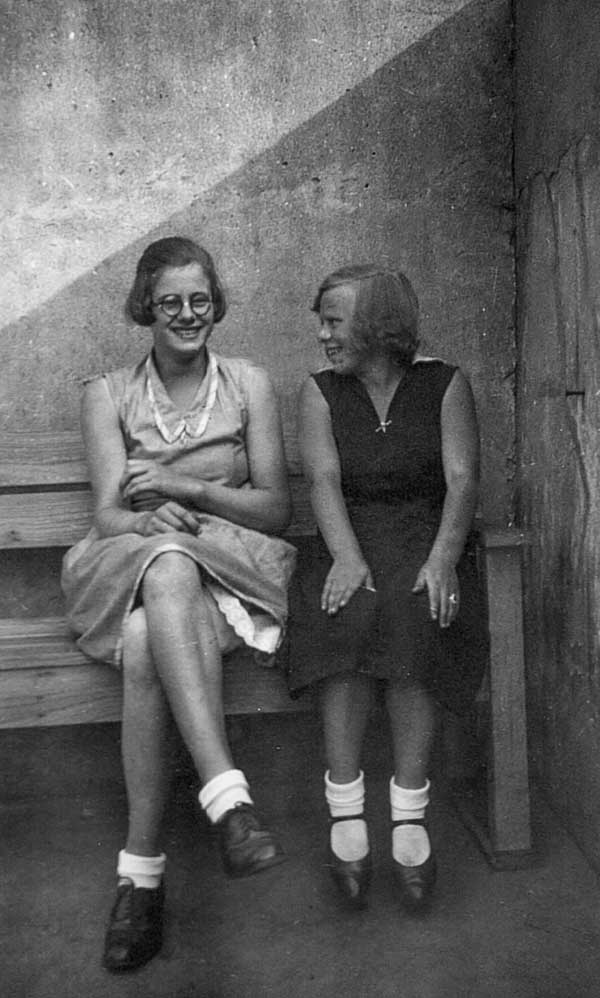
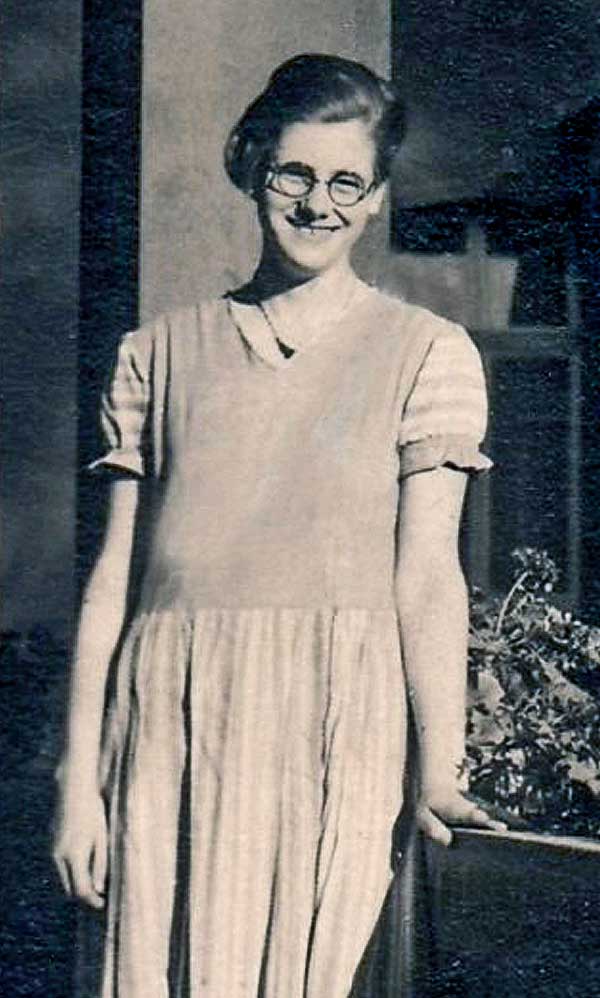
Visit the location where Anna Lehnkering was held.
Help to share on social media
The stories on my website educate about WWII. Please help by sharing them with your family, friends and on social media. Thank you!
Cite this historical page
