
Welcome to D-Day, Normandy and beyond
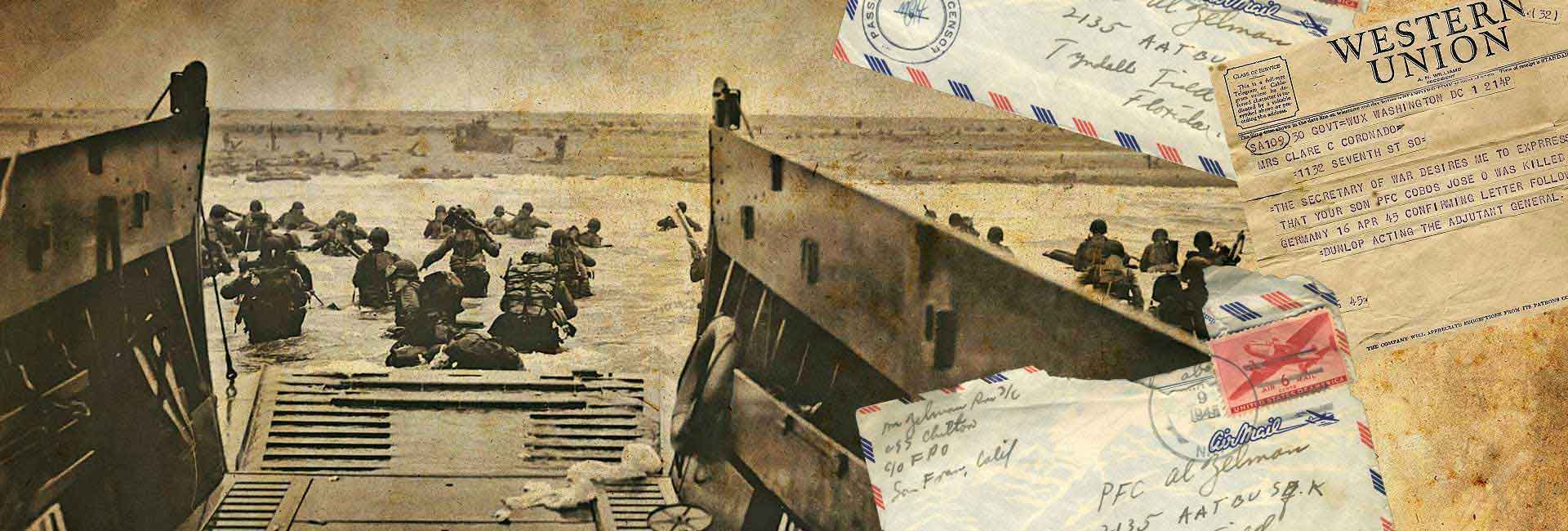
Discover the human side of WWII
History of WW2 from the invasion of Poland to the fall of Berlin
State of the archives
- Over 25 years of research
- 590+ historical articles
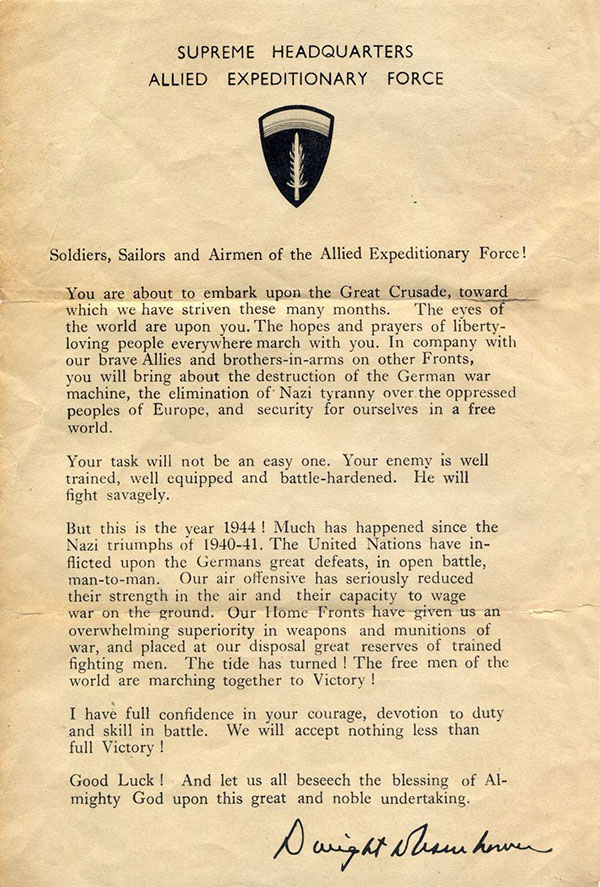
- 5.000+ archival photographs and footage
- 300+ authentic testimonies
- Private project
World War II: The global conflict that changed the world
The course of the war
As the war spread, entire nations mobilized their economies, industries and citizens. The Axis powers: Germany, Italy and Japan pursued aggressive expansion, while the Allies, including the United States, the Soviet Union, China and the United Kingdom, fought to resist them. The conflict reached every corner of the globe. The Eastern Front saw brutal fighting between Germany and the Soviet Union, while in the Pacific, fierce battles raged between Japan and Allied forces. D-Day, on June 6, 1944, marked a decisive turning point when Allied troops landed in Normandy, France, beginning the liberation of Western Europe. The war ultimately ended in 1945: Germany surrendered in May and Japan capitulated in September after the atomic bombings of Hiroshima and Nagasaki. These events not only ended the conflict but also marked the beginning of the nuclear age.The human cost and the Holocaust
World War II caused an estimated 50 to 85 million deaths, making it the deadliest conflict in human history. Civilians suffered enormously, with the Soviet Union and China enduring especially heavy losses. At the heart of this tragedy was the Holocaust, in which over six million Jews, alongside Roma people, disabled individuals, political prisoners and others were systematically murdered by the Nazis. The Einsatzgruppen (mobile killing units) and the Aktion T4 program carried out horrific acts under the guise of “euthanasia,” targeting society’s most vulnerable.The legacy of World War II
The war reshaped borders, transformed global power and gave rise to institutions such as the United Nations. It left behind a legacy of unimaginable suffering but also of courage, resilience and sacrifice.This website is the result of over 25 years of independent research dedicated to preserving the voices of soldiers, civilians, survivors, and victims of World War II. As a non-profit educational archive, my mission is to ensure that history lives through personal stories of bravery and loss, as well as accurate archival data.
While this is a solo project, it has earned the cooperation of leading institutions, including the Arolsen Archives, various Concentration camp memorials, Aktion T4 sites, and the USHMM to ensure every record is factually grounded. Free from political or commercial influence, I work to honor the sacrifices of those who lived through this period, ensuring the true cost of war is never forgotten by future generations.
Selected gems just for you
New and updated WWII articles
Germany after World War I
After World War I, Germany faced a difficult and uncertain time. The Weimar Republic (Germany’s first democracy) was established following the abdication of the Kaiser, but the country was burdened by the harsh terms of the Treaty of Versailles, which blamed Germany for the war and imposed heavy reparations. The 1920's saw extreme economic hardship, including devastating hyperinflation that wiped out people’s savings and widespread unemployment. Politically, Germany was unstable, with violent clashes between left- and right-wing groups threatening the fragile democracy. Although there was a brief period of recovery in the mid-1920s, the Great Depression hit hard in 1929, plunging the country into deeper crisis. This environment of fear and anger paved the way for the rise of the Nazi Party and Adolf Hitler.
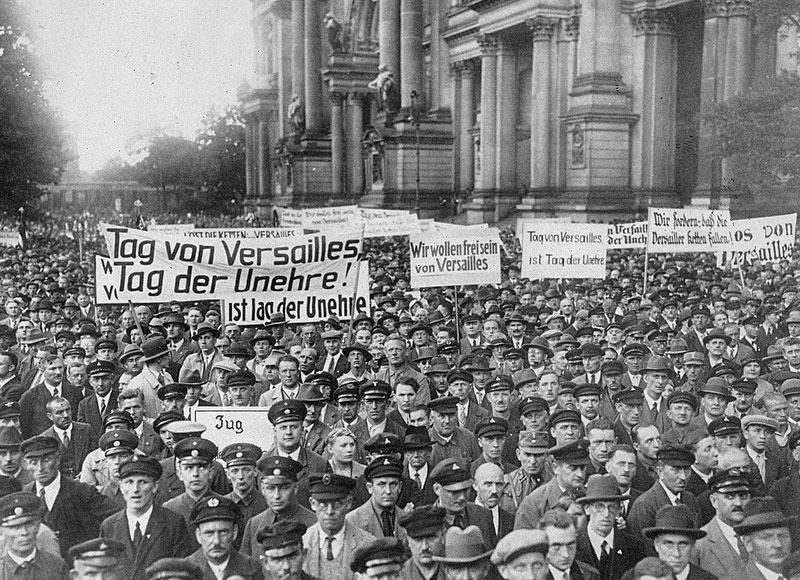
The rise of the Nazi party in Germany
Origins of Nazism: Dietrich Eckart and Adolf Hitler
Dietrich Eckart (1868–1923) was a German poet, journalist, occultist and nationalist ideologue whose influence helped shape Adolf Hitler’s political awakening. A founding member of the Thule Society, a secretive Munich-based nationalist and antisemitic group, Eckart combined German mysticism with racial and political extremism. His ideas formed a cornerstone of early National Socialist ideology.
In the chaotic years following Germany’s defeat in World War I, Eckart became both mentor and guide to a young Adolf Hitler. He introduced Hitler to influential nationalist circles and helped him refine his public speaking, rhetoric and propaganda techniques. Eckart’s antisemitic and anti-democratic writings profoundly influenced Hitler’s worldview and his vision of a racially “pure” and authoritarian Germany.
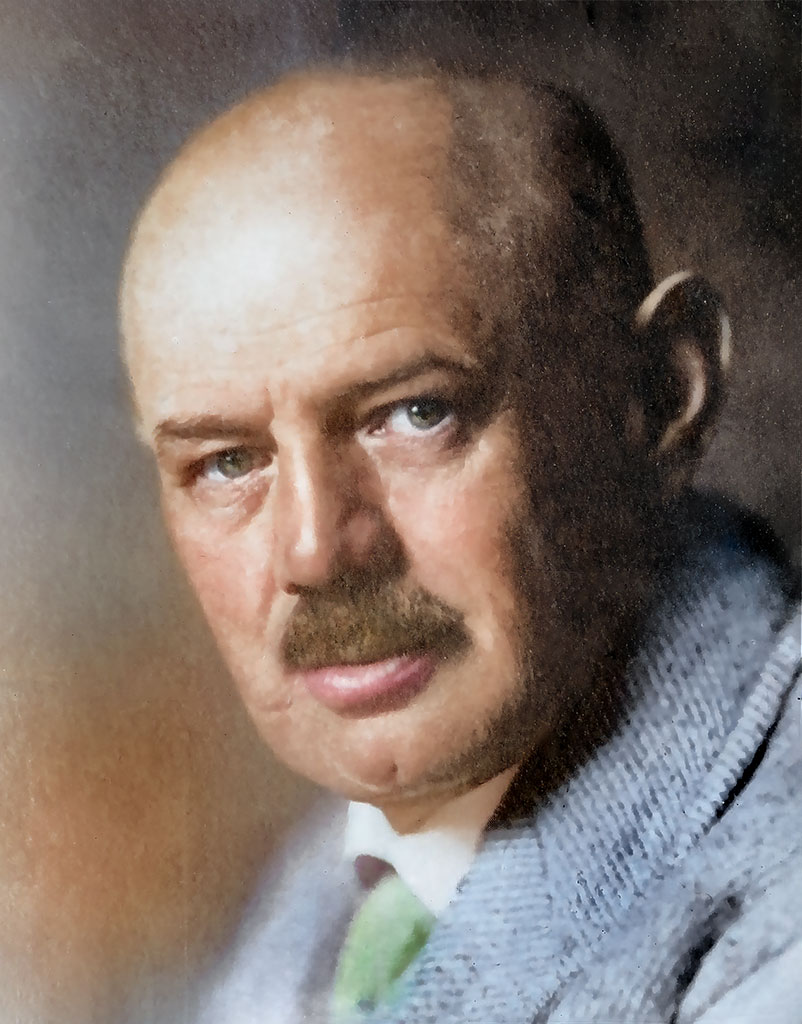
The origins of Nazism can be traced back to Dietrich Eckart. Above picture was colored by myself.
Adolf Hitler’s early life and entry into politics
-
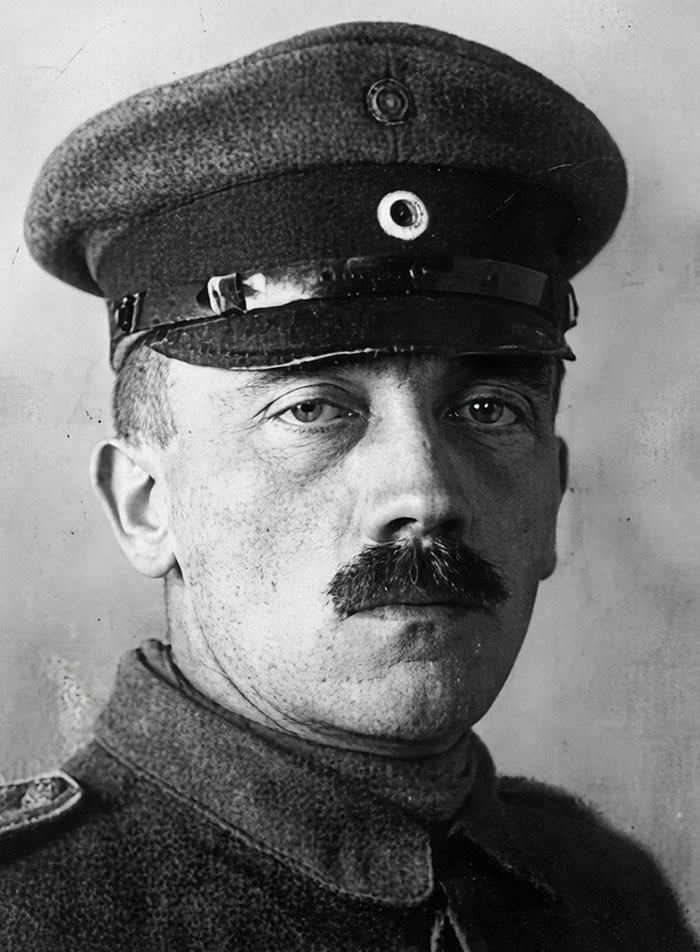
Adolf Hitler
20 April 1889 - 30 April 1945
Führer of Germany -
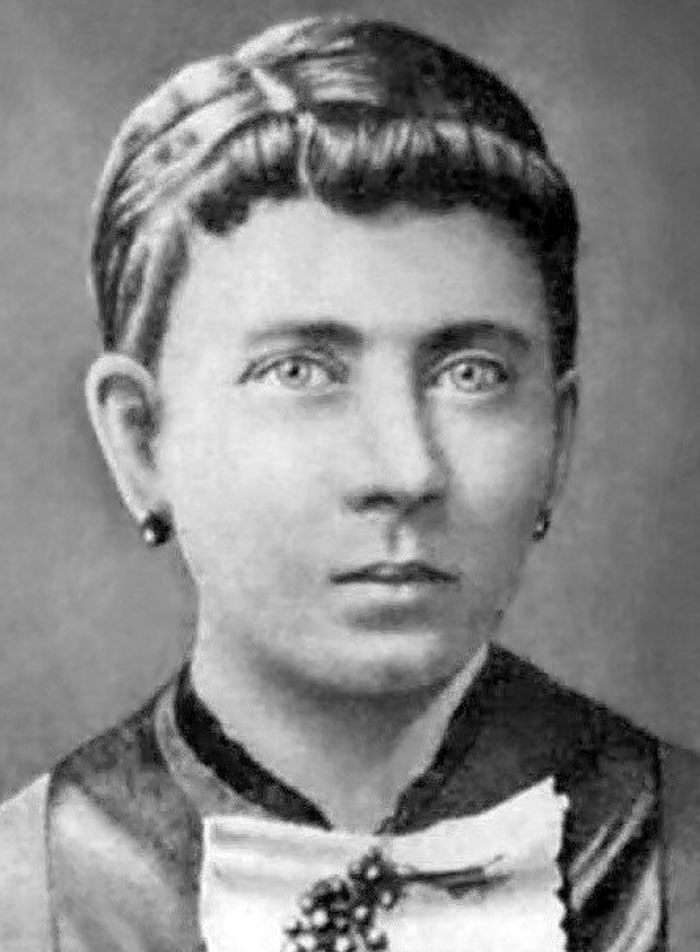
Klara Hitler - Pölzl
12 August 1860 - 21 December 1907
Hitler's mother -
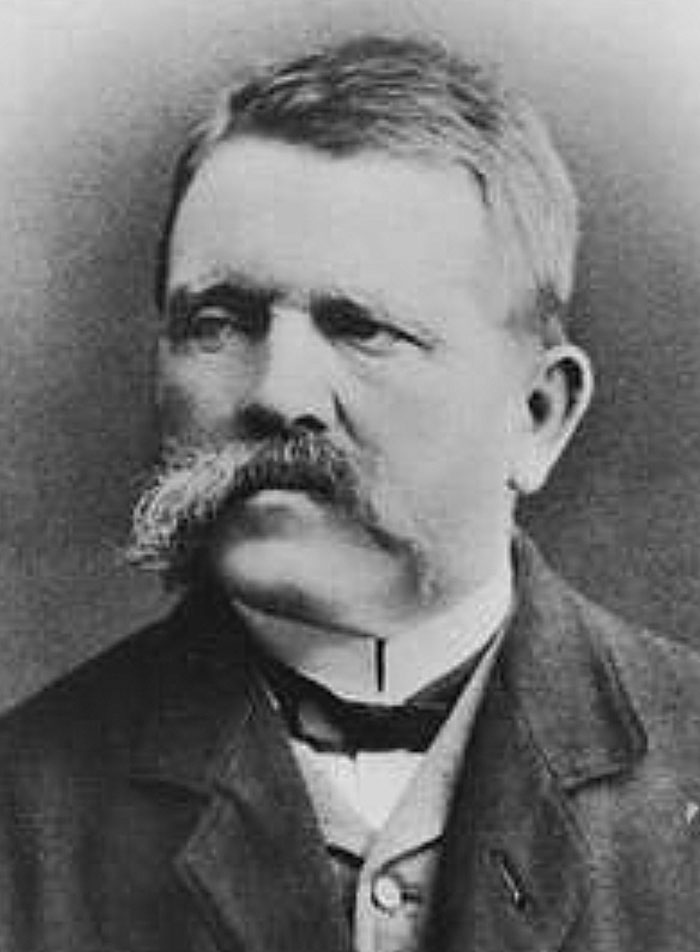
Alois Hitler
7 June 1837 - 3 January 1903
Hitler's father and customs officer
From trenches to dictator: radicalization of a soldier
Adolf Hitler was born on April 20, 1889, in Braunau am Inn, Austria. His parents were Alois Hitler (1837–1903) and Klara Pölzl (1860–1907). They were second cousins and married in 1885, a union that required special permission from the Catholic Church because of their close family relationship. Alois worked as a mid-level official in the Austrian customs service, while Klara came from a rural peasant background. The family lived in relative comfort and had six children, of whom Adolf was the fourth.World War 1
After serving as a corporal in the First World War, Hitler returned to a defeated and divided Germany. In 1919, he joined the small nationalist German Workers’ Party (DAP). The country’s economic hardship and the humiliation of the Treaty of Versailles deepened his hostility toward the Weimar Republic and the Allied powers.Under Hitler’s leadership, the group was soon renamed the National Socialist German Workers’ Party (NSDAP) the Nazi Party. The party’s 25-point program (1920) outlined its radical nationalist, antisemitic and anti-Marxist goals, calling for a new, powerful German Reich.
Hitler’s early life influenced his political beliefs, exposing him to ideas such as extreme German nationalism, racial antisemitism, opposition to democracy, and hostility toward communism. Historians continue to debate when and how these views became fully radicalized.
The Beer Hall putsch
On the evening of November 8, 1923, Adolf Hitler and the Nazi Party (NSDAP) launched a failed coup d'état known as the Beer Hall Putsch. The attempt began at the Bürgerbräukeller, one of Munich’s largest beer halls, where high-ranking Bavarian government officials were holding a public meeting. Hitler’s goal was to seize control of the Bavarian state government and then march on Berlin to overthrow the Weimar Republic, mirroring Mussolini’s "March on Rome" from the previous year.
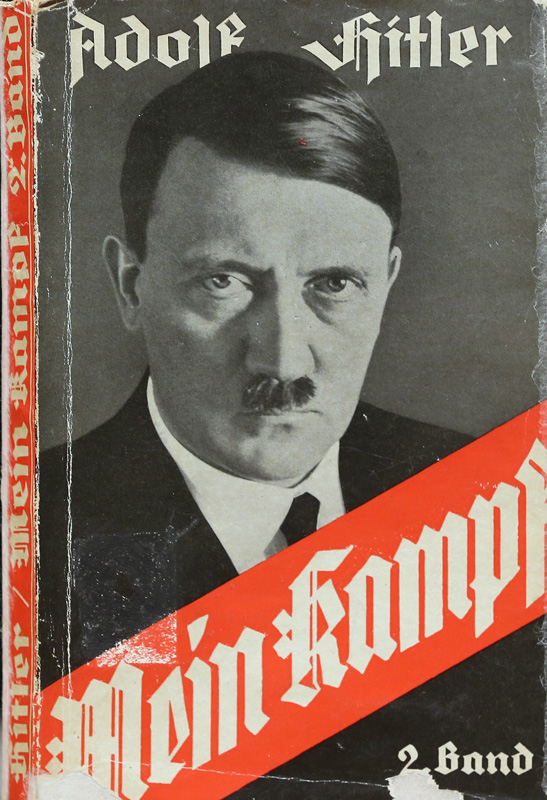
Political manifesto "Mein Kampf"
In November 1923, Hitler and his followers attempted to overthrow the Bavarian government in the failed Beer Hall Putsch in the 'Bürgerbräukeller' large beer hall in Munich. Arrested and tried for treason, Hitler was imprisoned in Landsberg. While imprisoned, he wrote “Mein Kampf” (“My Struggle”), outlining his political ideology, racial theories and future ambitions for Germany. After his release, Hitler shifted strategy from violent revolution to legal political means. The Nazi Party rebuilt its organization, using mass rallies, propaganda and symbols like the Swastika to attract growing support amid Germany’s deepening economic crisis.
Sturmabteilung (SA)
Political violence and propaganda
Ernst Röhm, an early member of the Nazi Party, became chief of staff of the SA on 5 January 1931. Under his leadership, the organization expanded dramatically, growing into a mass movement with several million members by 1933. This rapid growth gave the Nazi Party a highly visible and aggressive presence throughout Germany.
Increasing tension between the SA and SS
These tensions culminated in the Night of the Long Knives (June 30–July 2, 1934), when Hitler ordered a purge carried out largely by the SS. Röhm was arrested on Hitler’s orders and imprisoned at Stadelheim Prison in Munich. He was offered the opportunity to commit suicide but refused. On July 1, 1934, Röhm was executed by SS officers (Historical accounts identify Theodor Eicke and Michael Lippert). His death ended his leadership of the SA and removed a major internal rival within the Nazi Party. In the aftermath of the purge, the SS emerged as a dominant force within the Nazi regime, while the SA was reduced to a subordinate and largely symbolic role.
-
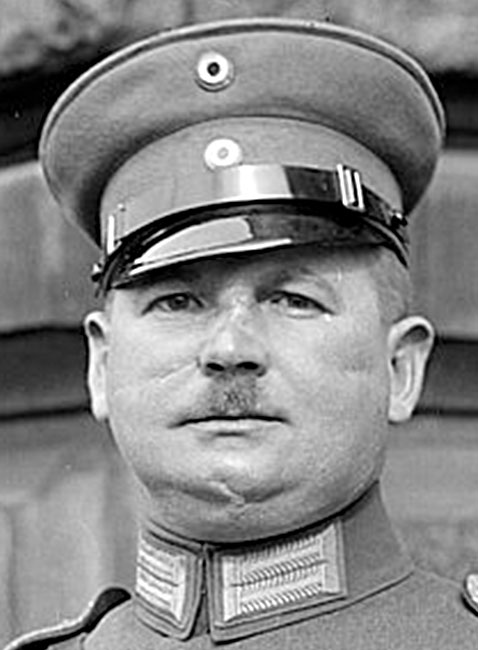
Ernst Röhm
Sturmabteilung leader
-
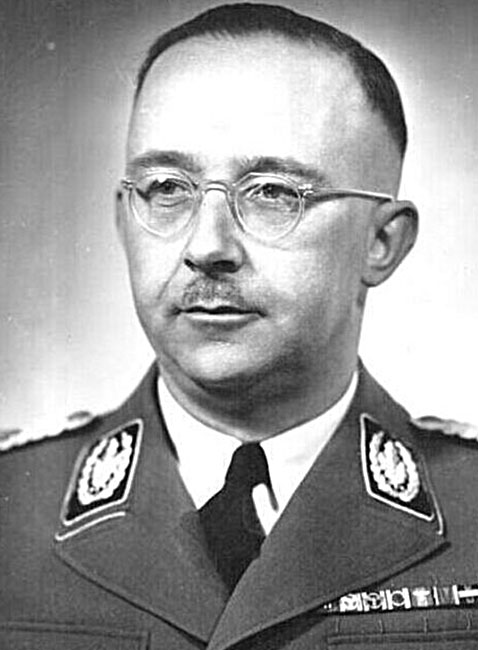
Heinrich Himmler
Schutzstaffel leader
-
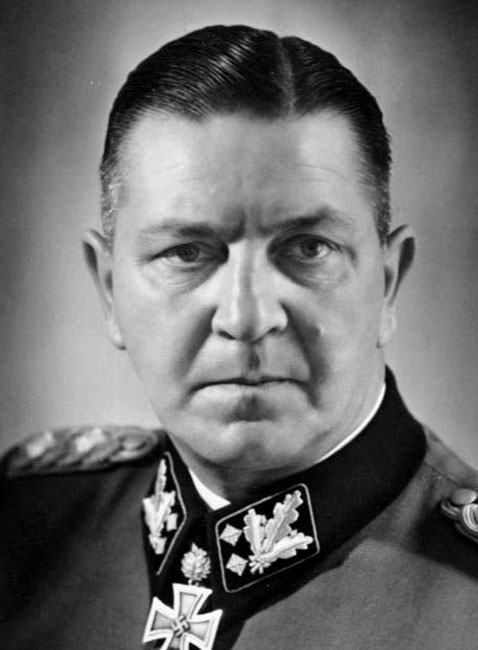
Theodor Eicke
Identified as Röhm's killer
-
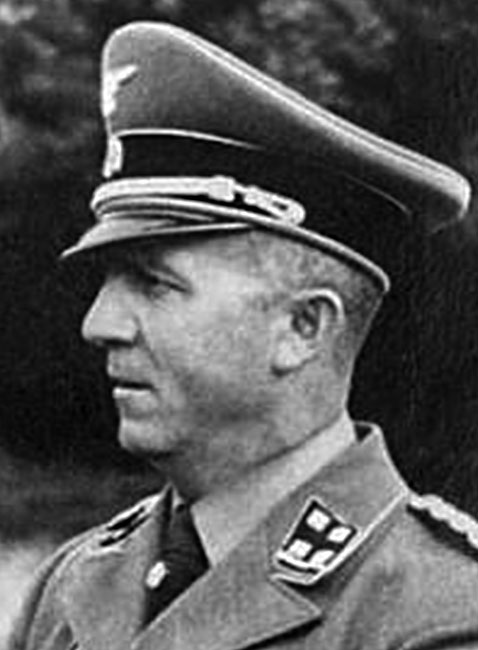
Michael Lippert
Identified as Röhm's killer
Exploiting crisis and the road to power
The Great Depression of 1929 had a catastrophic impact on Germany’s economy, leading to widespread unemployment, poverty and despair. By the early 1930s, millions of Germans were jobless, factories had closed and savings were wiped out. The Weimar Republic, already struggling with political instability and the lingering resentment from the Treaty of Versailles, rapidly lost public confidence. Amid this turmoil, Adolf Hitler and the Nazi Party capitalized on the crisis by promising strong leadership, national unity and economic recovery. Hitler’s powerful rhetoric and propaganda portrayed him as a man of action who could restore Germany’s former glory.
Hitler becomes Chancellor
As economic and social chaos deepened, support for extremist movements surged. In the Reichstag elections of 1932, the Nazi Party (NSDAP) emerged as the largest political faction in Germany, though it did not yet have an absolute majority. Political elites, hoping to control and use Hitler for their own ends, underestimated his ambitions. On January 30, 1933, President Paul von Hindenburg appointed Adolf Hitler as Chancellor of Germany, a decision that marked the beginning of the Third Reich and the end of democracy in Germany. Within months, Hitler consolidated power, transforming the nation into a totalitarian state that would soon plunge the world into war.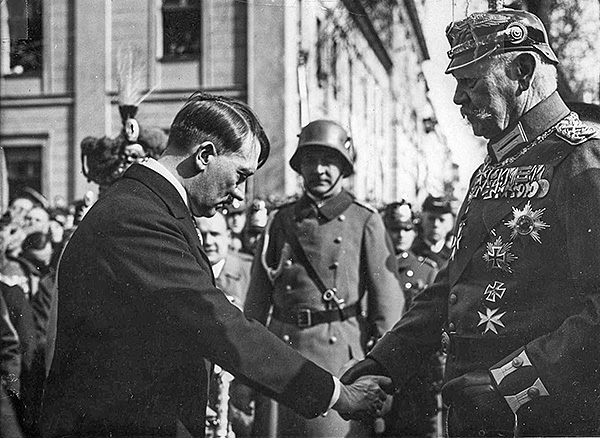
Adolf Hitler and German President Paul von Hindenburg, shortly after Hindenburg's invitation for Hitler to become the Chancellor, on January 30, 1933.
The Reichstag fire
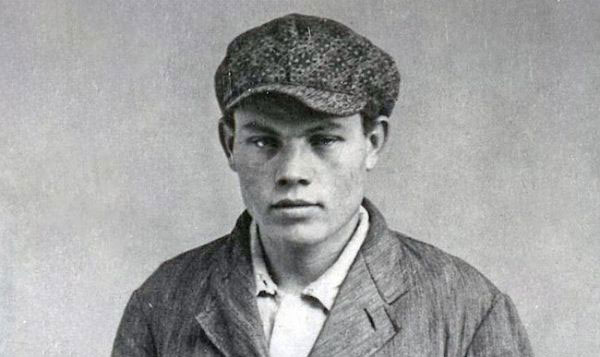
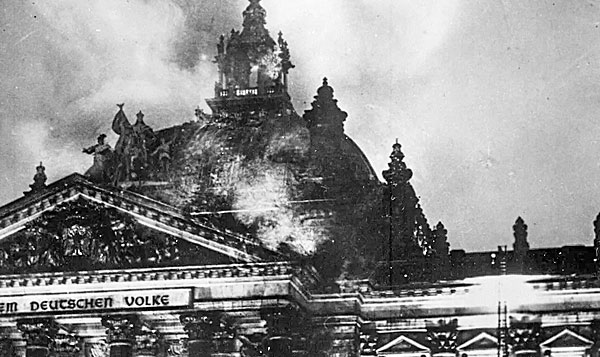
Van der Lubbe confessed and claimed he had acted alone, but the case has remained controversial. Later accounts, including disputed testimony from former SA members, suggested the fire may have been part of a broader Nazi operation or at least deliberately exploited by them. No definitive proof has ever resolved the question.
Regardless of who started the fire, the Nazis used it to justify sweeping political changes. The following day, Hitler issued the Reichstag Fire Decree, which suspended civil liberties, allowed arrests without trial, and targeted political opponents, especially communists. This repression paved the way for the Enabling Act in March 1933, which gave Hitler the power to rule by decree and effectively ended democracy in Germany.
Born on 13 January 1909, Marinus van der Lubbe became infamous as the central figure blamed for the Reichstag Fire during a period of intense political and economic instability in Europe. The truth remains uncertain, and historians continue to debate whether he acted alone or whether the Nazis were directly involved.
From Nazi dictatorship to genocide
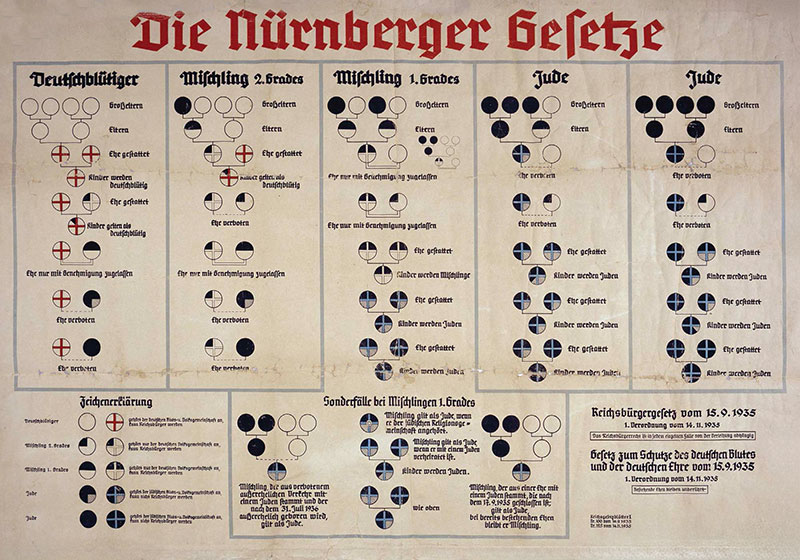
Once in power, Adolf Hitler and the Nazi Party began a systematic campaign to transform every aspect of German society according to their totalitarian and racist ideology. Early measures focused on consolidating political control, silencing opposition, and promoting the idea of Aryan racial superiority through propaganda and education.
As Nazi rule continued, anti-Jewish measures intensified, businesses were boycotted, property was confiscated, and Jews were forced into segregated ghettos. What began as social and legal exclusion evolved into a campaign of mass violence and extermination during World War II. This culminated in the Holocaust, the state-sponsored genocide that led to the murder of six million Jews, along with millions of others considered “undesirable” by the Nazi regime, including Roma people, people with disabilities, Slavic populations, and political dissidents. By the war’s end in 1945, Nazi policies had left an indelible scar on human history, serving as one of the most devastating examples of how prejudice and authoritarian power can lead to systematic mass murder.
Legacy of the Nazi era
The rise of the Nazi Party and the horrors of the Holocaust remain a stark reminder of the dangers of totalitarianism, racism and propaganda. The events of this period continue to shape global conversations about human rights, democracy and the responsibility to confront hate. We must be vigilant that a global war like the one World War II was, never happens again.The history of the Holocaust
Kristallnacht: Turning point in Nazi persecution of Jews
The night of November 9 to November 10, 1938, marked a pivotal moment in the escalating persecution of Jews in Nazi Germany. Known as Kristallnacht, or the "Night of Broken Glass," this violent pogrom saw synagogues, Jewish homes, and businesses across Germany vandalized, looted, and set ablaze. The destruction was widespread, with countless shards of shattered glass littering the streets.
The immediate catalyst for Kristallnacht was the assassination of German diplomat Ernst vom Rath by 17-year-old Herschel Grynszpan on November 7, 1938. Grynszpan's act was a desperate retaliation for the expulsion of his Jewish parents from Germany, a move that had forced them to flee to Paris. The death of vom Rath provided the Nazi regime with a pretext to unleash a wave of anti-Jewish violence.
In the aftermath of Kristallnacht, thousands of Jews were arrested, deported to concentration camps, and subjected to further persecution. The pogrom marked a significant escalation in the systematic discrimination and violence against Jews in Nazi Germany, paving the way for the Holocaust.
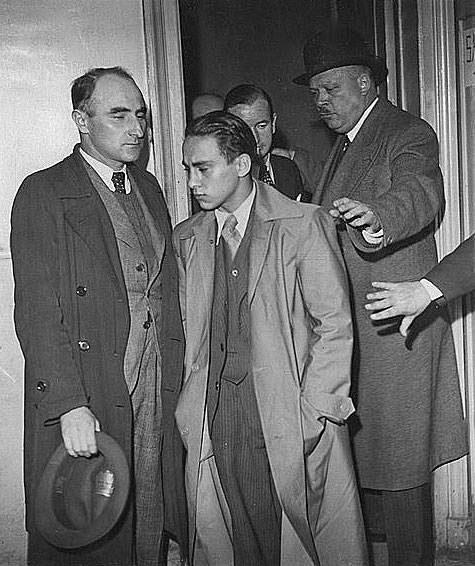
Herschel Grynszpan, surrounded by police officers, following his initial interrogation at police headquarters in Paris, France, on November 7, 1938.
When did World War II start?
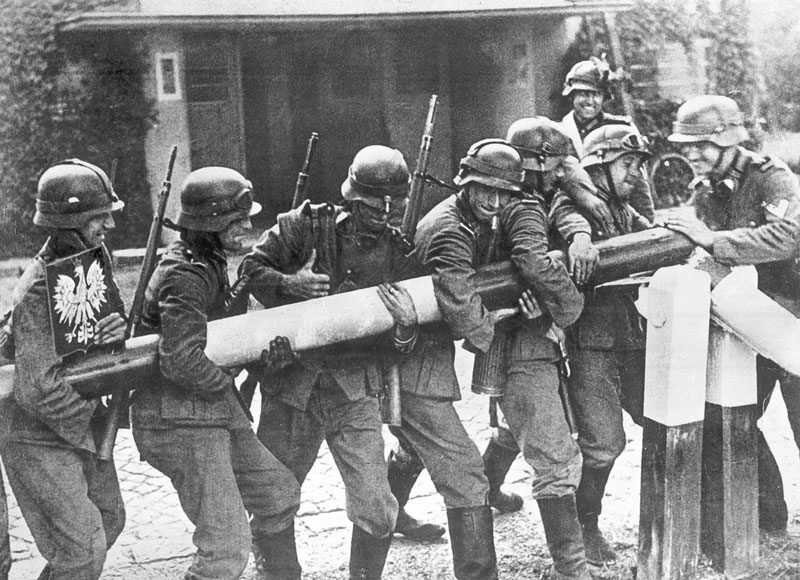
On September 1, 1939, the world was plunged into a devastating war as Nazi Germany launched a brutal invasion of Poland. This unprovoked attack, carried out without a formal declaration of war, marked the beginning of World War II. Despite Poland's efforts to maintain peace, Nazi Germany's unfounded claims of an imminent Polish attack served as a pretext for the invasion.
The invasion of Poland was a horrific act of aggression, marked by extreme violence and brutality. Nazi forces inflicted immense suffering on the Polish population, resulting in the deaths of millions of civilians, including over 2 million Jews. The country's infrastructure was systematically destroyed, leaving a lasting legacy of destruction.
In response to Germany's aggression, France and Britain declared war on Nazi Germany on September 3, 1939. The invasion of Poland served as a grim harbinger of the atrocities to come, setting the stage for a global conflict of unprecedented scale and devastation. The war would leave an enduring mark on human history as one of the deadliest and most destructive conflicts ever witnessed.
Holocaust: Nazi Germany's genocide of European Jews
The Nazi regime's genocidal campaign against European Jews, known as the Holocaust, was implemented under the horrific policy dubbed the "Final Solution." This term was adopted in July 1941 to describe the systematic extermination of individuals identified as Jews across Europe and beyond. The campaign's horrific escalation began with the segregation of Jews into ghettos, culminating in the full implementation of the "Final Solution to the Jewish Question."
The Wannsee Conference in Berlin on January 20, 1942, formalized this genocidal policy by Nazi officials. The devastating consequences of this plan led to the Holocaust, a period marked by the methodical and widespread extermination of European Jews.
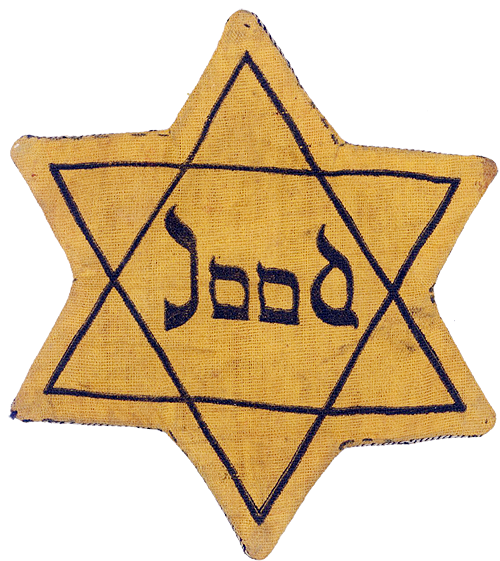
The definition of the Holocaust also known as the Shoah (Hebrew) is exceptionally complex. But it can be stated that it was the genocide of the European Jews during WW2.
The most decisive battles of WW2
D-Day: Turning point of WW2
What was D-Day?
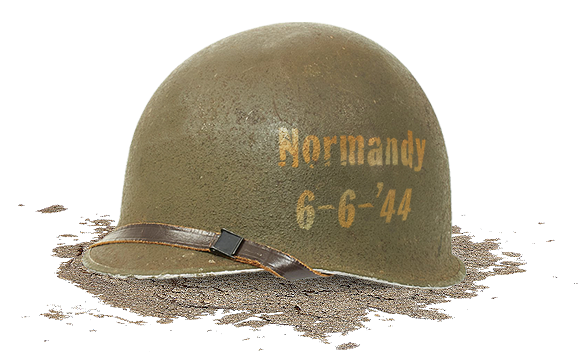
D-Day was the the Allied answer to occupancy and hostile regime of Nazi Germany with the end goal of putting an end to WW2. At 06:30 am on Tuesday June 6th, 1944 Operation Neptune or D-Day (amphibious assault) is unleashed along a 60 mile stretch of coast between the Cotentin Peninsula and the Orne River in Normandy, France. The invasion on the shores of Normandy were part of Operation Overlord (Allied invasion of Normandy).
Planning for D-Day
Planning for the operation began in 1943. Overlord was an Allied military operation of unprecedented scale, with an amphibious assault from Allied troops on the beaches combined with Allied airborne operations behind enemy lines inland. The Allies conducted a substantial military deception, codenamed Operation Bodyguard, to mislead the Germans as to the date and location of the main landings.
D-Day was originally planned for June 5
In the months leading up to the invasion, the weather was far from ideal and the operation had to be delayed 24 hours until June 6th, 1944. A further postponement would have meant a delay of at least two weeks, as the invasion planners had requirements for the phase of the moon, the tides, and the time of day that meant only a few days each month were deemed suitable.
The landings beaches in Normandy
The amphibious assault focused on five separate beaches in Normandy codenamed Omaha, Utah (American sector), Gold, Sword (British sector), and Juno (Canadian sector). At the end of the day small beachheads had been secured. It would turn out to be the turning point of World War 2 in western Europe. With over 156.000 troops, 5.000 landing craft, and 2.800 combat aircraft, the Allies launched a massive assault along a 50-mile stretch of coastline. Despite fierce resistance from German forces, the Allies managed to secure a foothold in Normandy, paving the way for a long and arduous campaign to liberate France and other occupied territories.
D-Day in numbers
Statistics behind Operation Overlord
Looking at D-Day through numbers helps us grasp what happened on that historic day. It's one thing to say it was important, but when you hear that over 156.000 troops landed, or that more than 10.000 (combined) gave their lives on the beaches and inland, it hits differently. The numbers make it real. They show just how massive the effort was, how much was risked, and how many people were involved in changing the course of the war. It's a way to connect with the scale of the event and the courage it took to make it happen.
Impact and scale of the Normandy landings
The staggering numbers behind the D-Day landings are often estimates rather than exact counts. Why? Because the largest amphibious invasion in history unfolded under extreme combat conditions where precise record-keeping was nearly impossible. Amid the chaos, units were split, overwhelmed, or restructured, making accurate tallies difficult on the ground.
Records varied between Allied nations, each using different methods to count personnel, equipment and casualties. Many official documents were lost, destroyed, or never compiled during the fog of war. German figures were even more fragmented, with retreating forces often destroying reports and inconsistencies plaguing Nazi records.
-
156000Allied troops
Jumped on June 5 to 6, 1944
(estimated) -
4414Allied casualties
Sailed on June 6, 1944
(estimated) -
11590Allied aircraft
Flew on June 6, 1944
(estimated) -
6939Allied vessels
Sailed on June 6, 1944
(estimated)
-
50000German troops
Jumped on June 5 to 6, 1944
(estimated) -
6500German casualties(estimated)
-
400German aircraft(on paper)
-
104German vessels
Sailed on June 6, 1944
(estimated)
“The other day I visited a German internment camp (Ohrdruf). I never dreamed that such cruelty, bestiality and savagery could really exist in this world! It was horrible. I made the visit deliberately, in order to be in position to give first-hand evidence of these things if ever, in the future, there develops a tendency to charge these allegations merely to “propaganda.”
Discover the history of the Nazi concentration camps
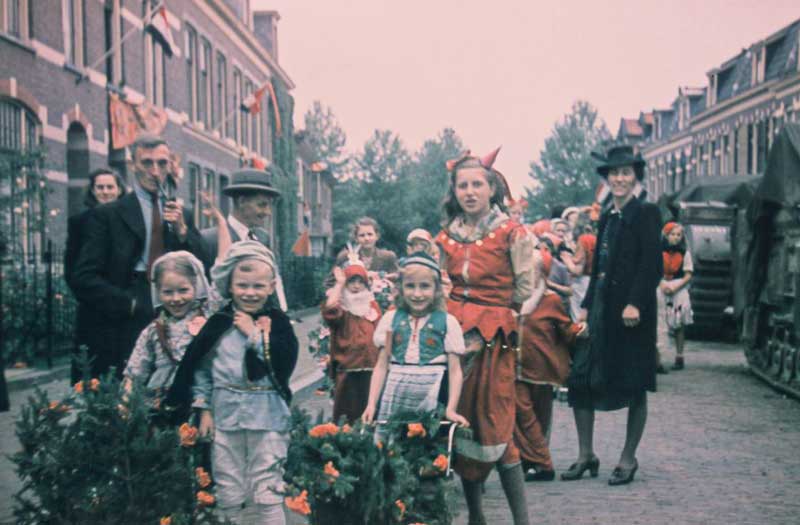
The Netherlands is liberated!
On May 5th, in Hotel de Wereld in Wageningen (NL), Canadian General Charles Foulkes and German General Johannes Blaskowitz met to arrange the implementation of the surrender. The formal agreement was signed on May 6th at Wageningen University. Although the real capitulation occurred on May 4th, May 5th became Liberation Day, symbolizing the moment freedom truly returned to the Netherlands.
Dodenherdenking
Every year on May 4th, The Netherlands remembers it's war victims
The human cost of World War II: Casualty estimates
World War II was one of the deadliest events in human history, with an estimated 50 to 85 million lives lost. Around 20 million were soldiers, but the majority, nearly 40 million, were civilians who suffered unimaginable horrors.
Death had many causes: genocide, including the Holocaust, mass bombings, starvation, disease, and forced labor. Millions of innocent people Jews, Roma and Sinti, gay people, the disabled and others, were systematically targeted and killed.
Behind every number is a human story. We must continue to remember, learn and work toward a world built on peace, dignity and justice for all.
Leaders of the Axis and Allied forces during WW2
Read more …Welcome to D-Day, Normandy and beyond
- Hits: 1764405