---
title: "Battle of Normandy"
description: "Comprehensive overview of the Battle of Normandy, including D-Day landings, key battles, strategy, and the Allied campaign that led to the liberation of France in World War II."
url: "https://www.normandy1944.info/home/battles/battle-of-normandy"
date: "2026-08-01T11:40:28+00:00"
language: "en-GB"
---
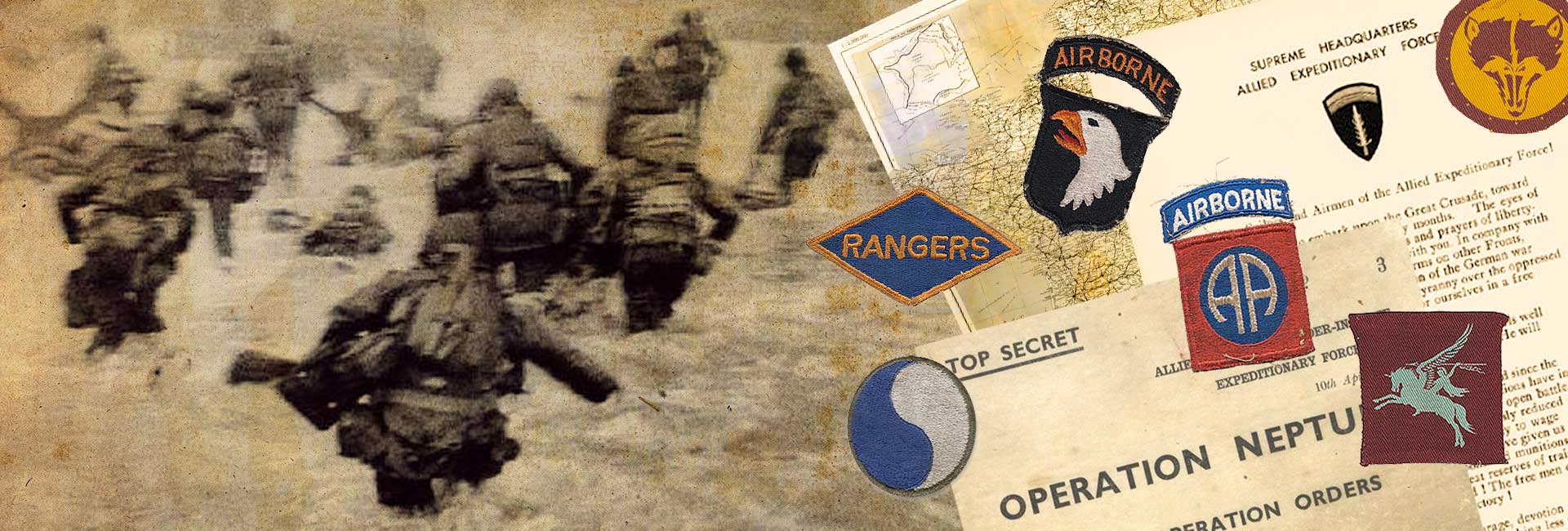
# Battle of Normandy
## This battle started on: 6 June 1944
Objective: The landings would allow Allies to free northern Europe from occupation
[](#) [](#)
- [Battle of Normandy](#)
- [ Intro to the battle ](#intro)
- [ Into detail ](#indepth)
- [ Aftermath ](#aftermath)
- [ Cite this page ](#cite)
## Commanders of the Battle of Normandy
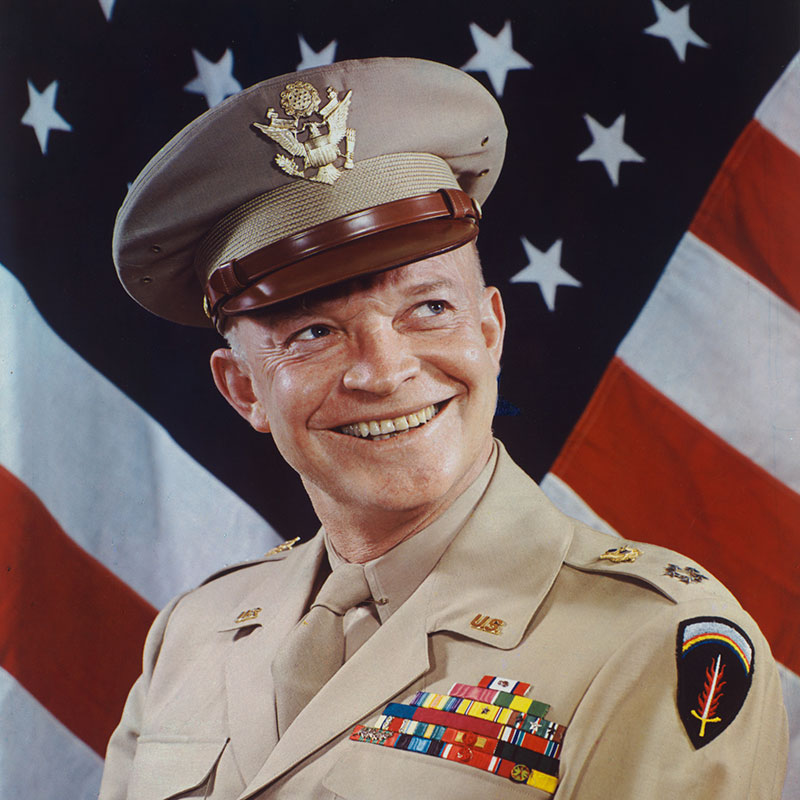
### Dwight D. Eisenhower
Nationality: American
Commander of Supreme Headquarters Allied Expeditionary Force (SHAEF)
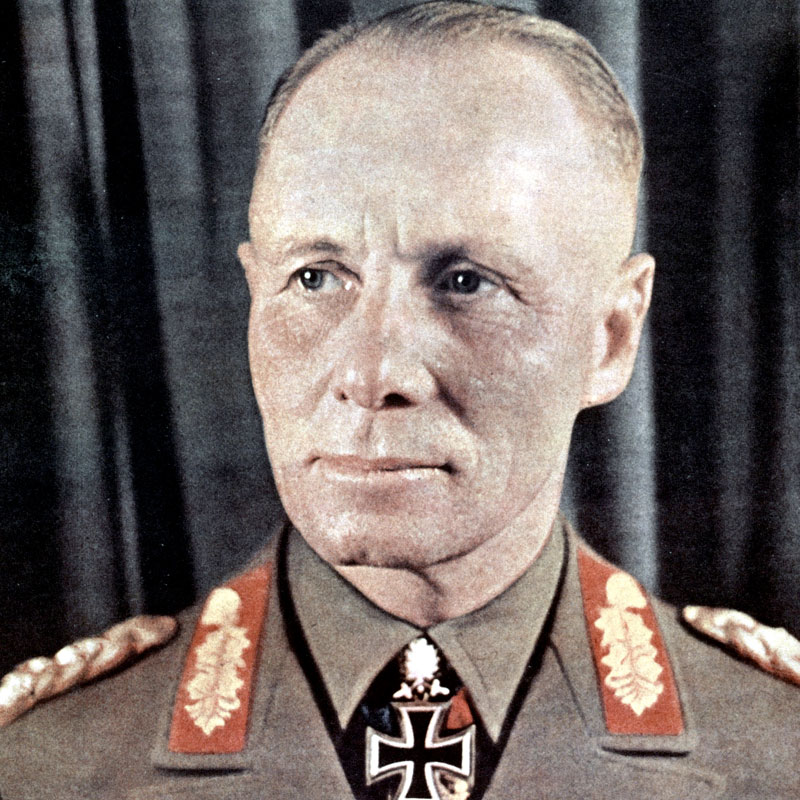
### Erwin Rommel
Nationality: German
Commander German defense of the Normandy region.
## What is the Battle of Normandy?
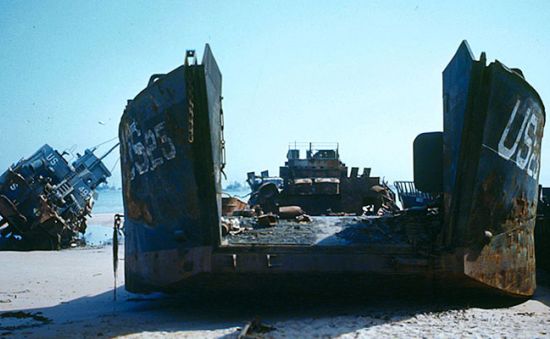
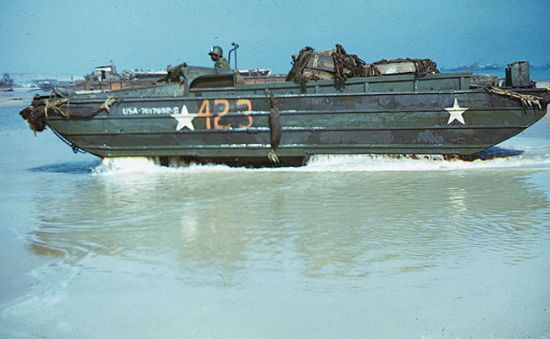
**The Battle of Normandy (6 June – 25 August 1944) was the decisive Allied campaign to liberate France from German occupation during the Second World War**. The offensive began with **Operation Neptune**, the **naval and amphibious assault** phase of the broader **Operation Overlord**, **launched on D-Day, 6 June 1944**. The invasion armada involved **6.939 vessels, including 1.213 warships and 4.126 landing craft**. Involving millions of Allied troops supported by overwhelming naval and air power, the campaign established a critical second front in Western Europe. **This strategic breakthrough led to the liberation of Paris, the collapse of German defensive positions in France and the eventual defeat of Nazi Germany in Western Europe.**
### Key Facts
Duration: **6 June – 25 August 1944**
Location: **Normandy, France**
Result: **Allied victory**
Allied forces landed: **Over 2.000.000 men from the United States, United Kingdom, Canada, France, Poland, Norway and six other Allied nations.**
Total casualties: **Around** **400.000+**
Civilian deaths: **Between 13.000 – 20.000** German casualties (est.): **Approximately 240.000 to 450.000 killed, wounded or missing.**
## What were the key factors behind the D-Day success?
The **success of the D-Day landings on 6 June 1944** was determined by a combination of careful planning, Allied air and naval superiority, deception and weather conditions. Allied planners required a full moon for airborne operations and a low tide at dawn to expose German beach obstacles.
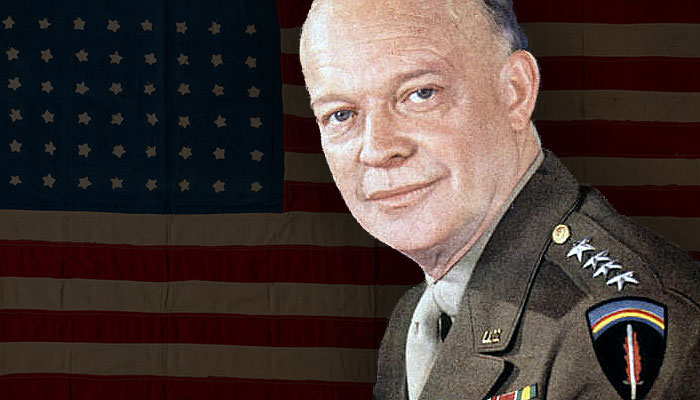
**Originally scheduled for 5 June 1944**, **the invasion was postponed due to high winds, rough seas and heavy cloud cover.** **Group Captain James Stagg**, chief meteorological adviser to [**General of the Army Dwight D. Eisenhower**](https://www.normandy1944.info/home/commanders/life-and-death-of-dwight-d-eisenhower), predicted a **short break in the weather for 6 June**. Eisenhower accepted the risk and ordered the invasion to proceed.
[](https://www.normandy1944.info/home/commanders/life-and-death-of-dwight-d-eisenhower)
[**The Life and death General of the Army Dwight D. Eisenhower**](https://www.normandy1944.info/home/commanders/life-and-death-of-dwight-d-eisenhower)
This decision proved decisive, as a longer delay would have exposed the invasion fleet to the severe Channel storm that struck between 19 and 22 June 1944. German commanders did not expect an invasion under such unfavorable conditions and many units were not at full readiness, giving the Allies a critical element of surprise.
### What happened on D-Day
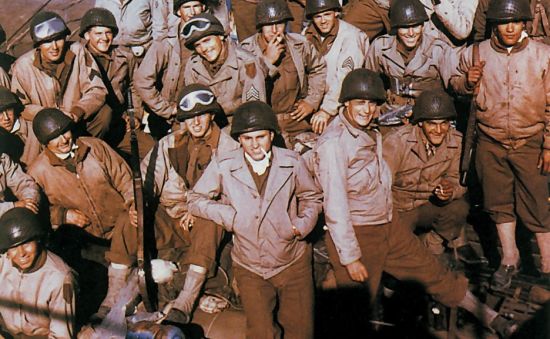
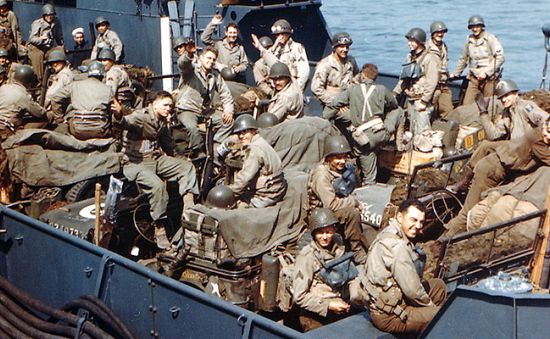
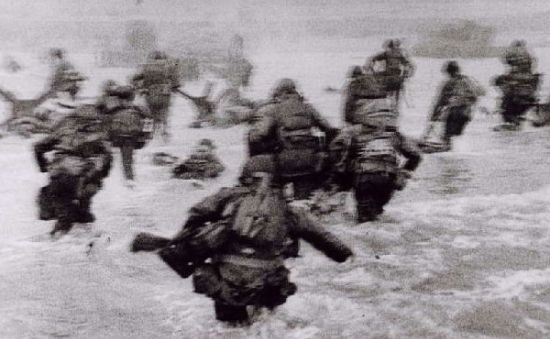
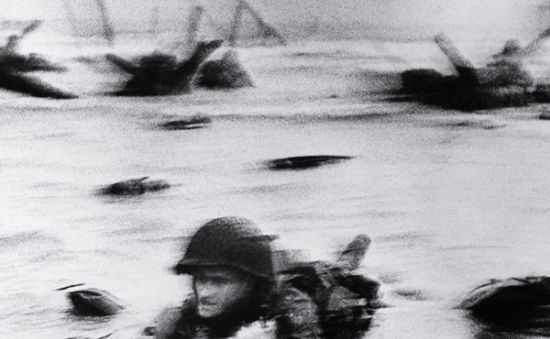
D-Day, the opening phase of **Operation Overlord**, began in the early hours of 6 June 1944. Allied forces launched the largest amphibious invasion in history along the Normandy coast of France. **Around 156.000 Allied troops landed across five beaches: Utah and Omaha for the United States, Gold and Sword for Britain and Juno for Canada.**
More than **24.000 airborne troops** were also deployed behind enemy lines to secure bridges, causeways and key road junctions. Their mission was to disrupt German movement and support the seaborne landings. Despite heavy resistance, especially at Omaha Beach, Allied forces secured a foothold by the end of the day.
### D-Day and H-Hour explained
In military terminology, “**D-Day**” and “**H-Hour**” are planning terms used to mark the start date and time of an operation. The “**D**” stands for “**day**” and the “**H**” for “**hour**.” This allowed planners to coordinate large operations without revealing the exact date or time in advance.
Terms such as “**D +1**” meant one day after the operation began, while “**H −3**” meant three hours before the start time. Later meanings such as “**Decision Day**” or “**Disembarkation Day**” are backronyms rather than the original meaning.
### Planning the invasion
The planning of the Normandy invasion was a complex multinational effort involving close cooperation between Britain and the United States. Even before America entered the war, British and American military planners had begun preparing for possible joint operations.
After [**Pearl Harbor**](https://www.normandy1944.info/home/battles/attack-on-pearl-harbor) and **Germany’s declaration of war on the United States**, cooperation intensified. In January 1942, the Combined Chiefs of Staff was created to coordinate Allied strategy, logistics and resources. Over the following years, the Allies built up forces in Britain, trained for amphibious warfare and used deception operations such as Operation Fortitude to mislead Germany about the invasion site.
### Duration of the Normandy campaign
The Normandy campaign lasted far beyond D-Day. **From 6 June to the end of August 1944**, Allied forces fought through strong German resistance, difficult terrain and heavily defended positions.
The campaign reached its decisive phase with the closing of the **Falaise Pocket** between **21 and 24 August 1944**, trapping large numbers of German forces. **Paris** was liberated on **25 August** and by **30 August the German army had retreated across the Seine River**, marking the effective end of the Normandy campaign.
Adversaries in this battle
### S.H.A.E.F.
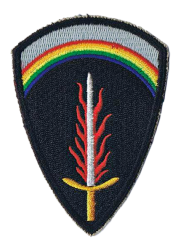Allies under command of Supreme Headquarters Allied Expeditionary Force
### German Wehrmacht
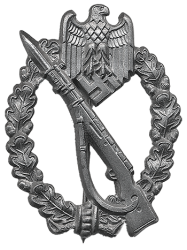German Wehrmacht troops under command of Field marshal Rommel
### Battle specifications
### Date of the battle
6 June 1944
---
### Duration of the battle
30 August 1944
---
### Reason for the battle
The landings would allow Allies to free northern Europe from occupation
---
### Location
Normandy Peninsula
---
### Battle result
Allied Victory
---
[### Battle of Normandy Location Map
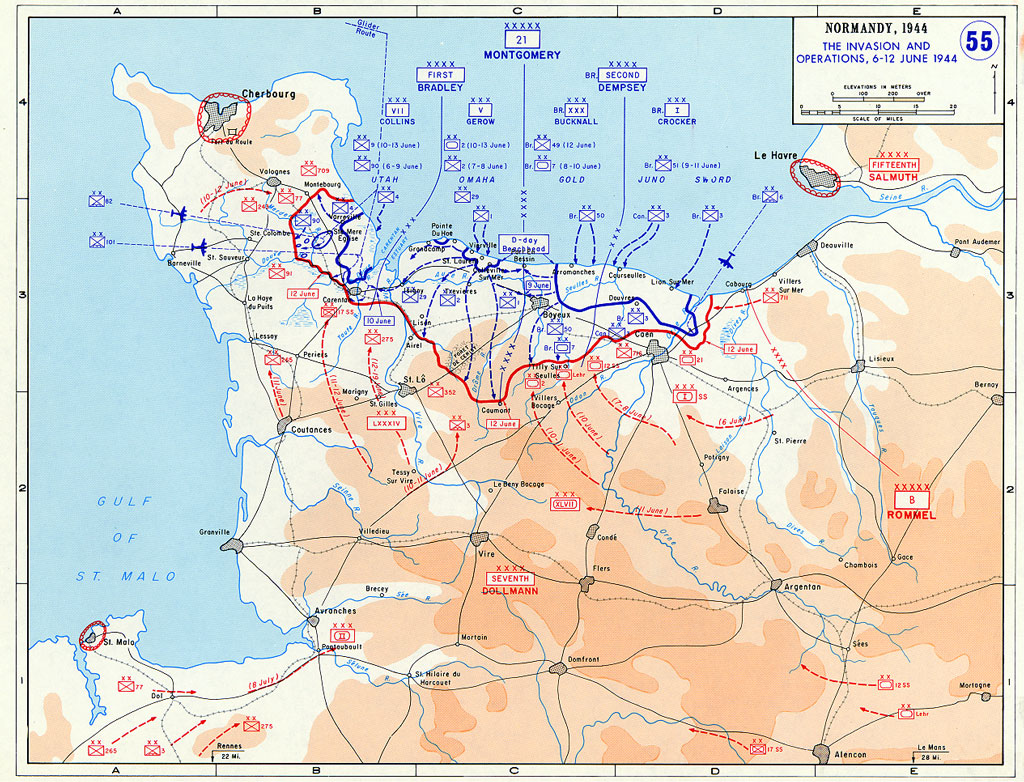Map of the Battle of Normandy
](https://www.normandy1944.info/images/cities/dday/DDay2.jpg)
---
General Dwight D. Eisenhower's famous pre D-day speech
---
---
Page updated on: 12 July 2026
Military awards associated with this campaign
### 8th Armoured Brigade
British
### 29th Infantry Division
American
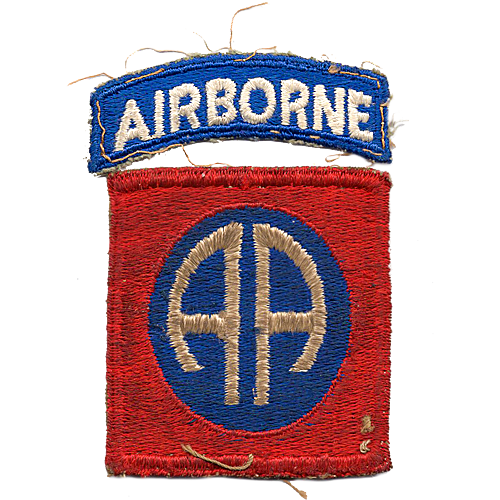### 82nd Airborne Division
American
### 101st Airborne Division
American
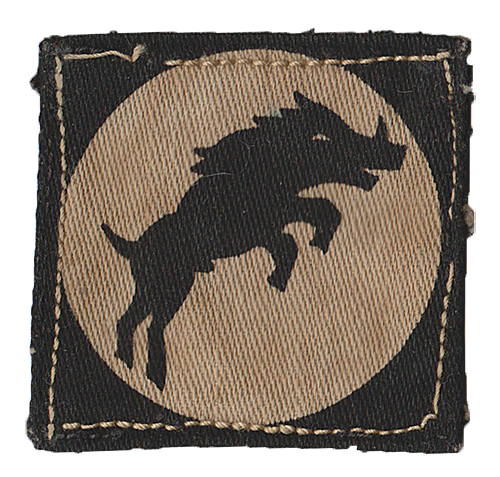### XXX (30th) Corps
British
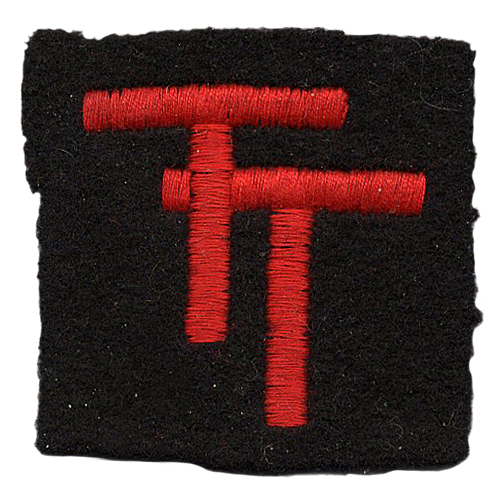### 50th Infantry Division
British
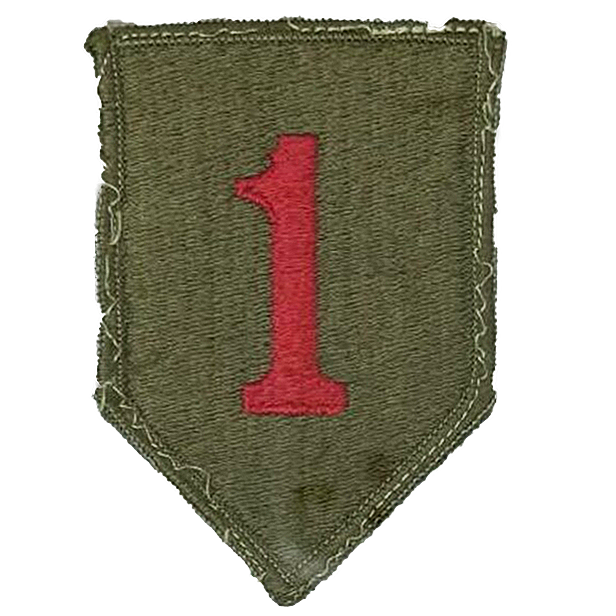### 1st Infantry Division
American
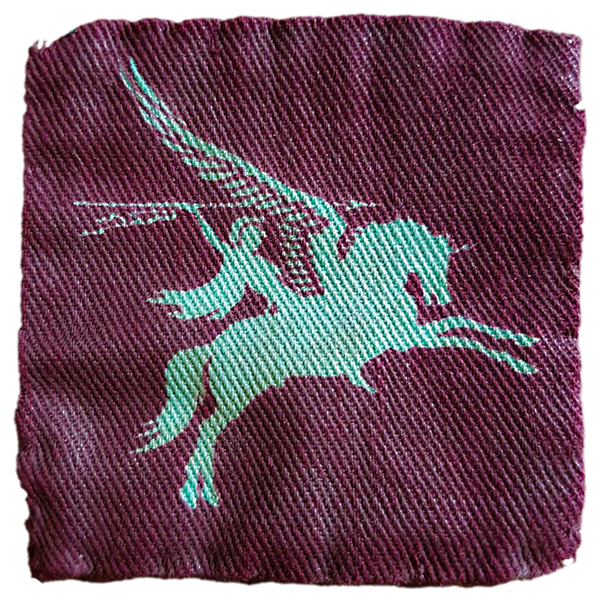### 6th Airborne Division
British
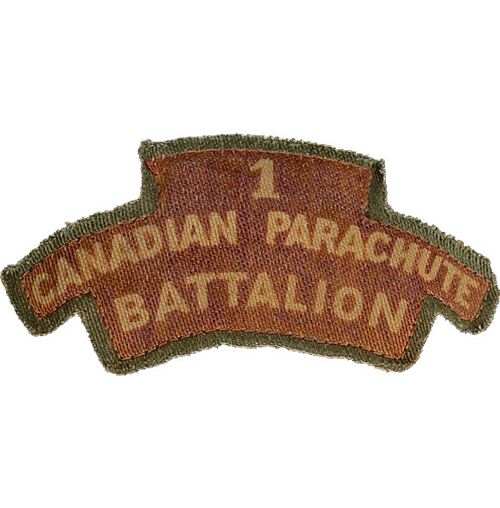### 1st Canadian Parachute Battalion
Canadian
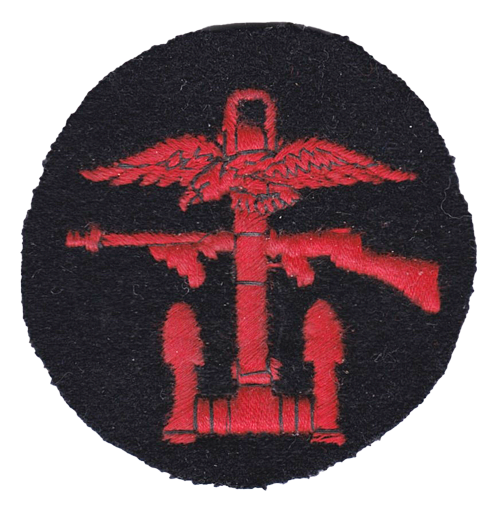### Commando Combined Operations
British
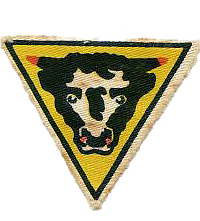### 79th Armoured Division
British
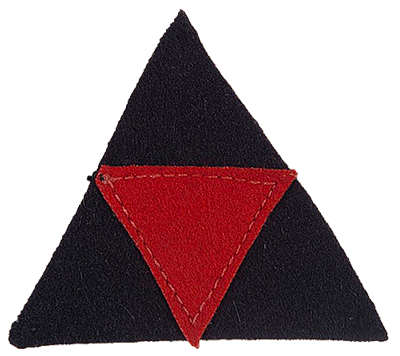### 3rd Infantry Division
British
[](#)
[](#)
Some original WW2 formation patches and medals shown here are from my own personal collection.
Footage of this battle
Video courtesy of: US National Archives
Video courtesy of: Matt Archer
## Preparations for D-Day
Following the German conquest of France in June 1940, Western Europe fell under Nazi control. Despite the defeat, opposition to German occupation quickly emerged within France. What began as scattered acts of resistance gradually developed into an organized underground movement.
By 1944, the **French Resistance** had grown into a force of **approximately 200.000 members,** providing intelligence, conducting sabotage, and supporting Allied operations. Although initially fragmented and divided along political lines, the Resistance became an increasingly important factor in weakening German control prior to the Allied invasion.
### Development of the French Resistance
During the early years of occupation, resistance groups operated independently in both the occupied northern zone and the unoccupied southern zone. These groups were often divided by political differences and lacked coordination.
Efforts to unify the Resistance intensified after November 1942, when Germany occupied southern France. By 1943, multiple organizations were brought together under a more coordinated structure. While unity remained imperfect, cooperation improved significantly, allowing for more effective sabotage and intelligence operations.
### Role of Charles de Gaulle
A key figure in the unification of the Resistance was [**Charles de Gaulle**](https://www.normandy1944.info/home/commanders/life-and-death-of-charles-de-gaulle), who directed efforts from London. Through the **Bureau Central de Renseignements et d’Action (BCRA)**, Free French authorities coordinated intelligence gathering, supply operations, and communication with resistance groups.
[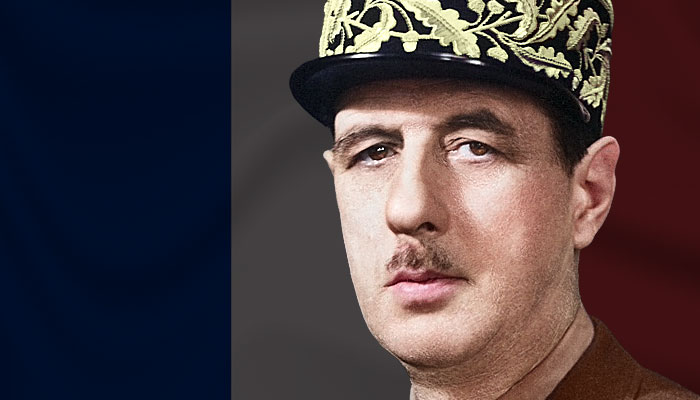](https://www.normandy1944.info/home/commanders/life-and-death-of-charles-de-gaulle)
[**The life and death Charles de Gaulle**](https://www.normandy1944.info/home/commanders/life-and-death-of-charles-de-gaulle)
On **27 May 1943, the Conseil National de la Résistance (CNR)** was formed in Paris under the leadership of **Jean Moulin**. This body brought together resistance movements and political parties, providing a unified political and military framework. The Resistance also established the Armée Secrète, an underground army intended to support Allied operations during the invasion.
### German repression and Resistance resilience
German authorities, particularly the Gestapo, responded with severe repression. In June 1943, a wave of arrests targeted Resistance leaders, including Jean Moulin, who later died under torture. Many key figures were killed or captured, and the Resistance suffered heavy losses.
Despite this, the movement proved resilient. Decentralized organization allowed local groups to continue operating even after leadership structures were disrupted. By 1944, the Resistance remained active across France, continuing sabotage operations and preparing to assist the Allied invasion.
### Allied strategy and planning
The planning of the invasion of Western Europe was shaped by strategic disagreements between Allied leaders. [**Winston Churchill**](https://www.normandy1944.info/home/commanders/life-and-death-of-winston-churchill) favored operations in the Mediterranean and southern Europe, while the United States advocated a direct invasion of France.
[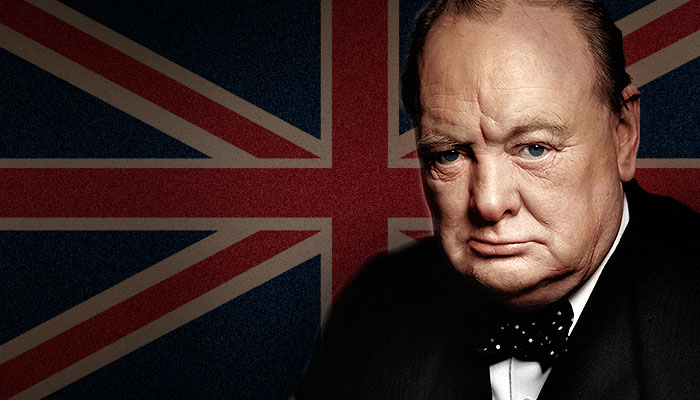](https://www.normandy1944.info/home/commanders/life-and-death-of-winston-churchill)
[**The life and death Winston Churchill**](https://www.normandy1944.info/home/commanders/life-and-death-of-winston-churchill)
Two early proposals, **Operation Sledgehammer (1942)** and **Operation Roundup (1943)**, were considered but postponed due to insufficient resources. These plans eventually evolved into **Operation Overlord**, scheduled for 1944.
Planning accelerated after the **Casablanca Conference (January 1943)** and the **Tehran Conference (November 1943)**, where Allied leaders confirmed the invasion of France as a priority.
### Final planning and command structure
In 1943, **Lieutenant-General Frederick E. Morgan** was appointed **Chief of Staff to the Supreme Allied Commander (COSSAC)** and tasked with developing the initial invasion plan. This plan was later expanded after **Dwight D. Eisenhower** was appointed commander of the **Supreme Headquarters Allied Expeditionary Force (SHAEF) in November 1943**.
[**General Bernard Montgomery**](https://www.normandy1944.info/home/commanders/life-and-death-of-bernard-montgomery) was given command of all ground forces and played a key role in expanding the invasion plan. The operation was enlarged from an initial landing of three divisions to five seaborne divisions and three airborne divisions.
[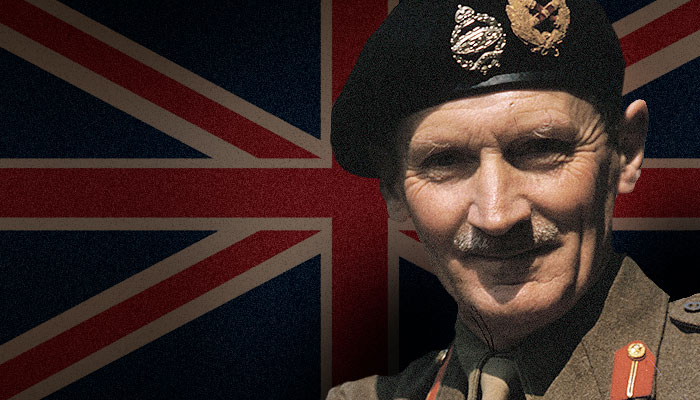](https://www.normandy1944.info/home/commanders/life-and-death-of-bernard-montgomery)
[**The life and death General Bernard Montgomery**](https://www.normandy1944.info/home/commanders/life-and-death-of-bernard-montgomery)
> In total, 39 Allied divisions would eventually take part in the Normandy campaign, representing over one million troops.
### Selection of Normandy
The choice of Normandy as the invasion site was influenced by both strategic and practical considerations. The **Pas de Calais** offered the shortest route from Britain but was heavily fortified and expected by German commanders.
**Normandy**, although more distant, was less heavily defended and allowed for a broader front of advance. It also provided access to the port of **Cherbourg** and the possibility of advancing toward Paris. These advantages outweighed the logistical challenges, leading to its selection as the invasion site.
### Technology and innovation
The success of the invasion depended on several technological innovations. The Allies developed **Mulberry harbours**, prefabricated artificial ports that allowed supplies to be unloaded directly onto the beaches. The **PLUTO** pipeline (**Pipe-Line Under The Ocean**) enabled fuel to be transported from Britain to the continent. Specialized armored vehicles, known as **Hobart’s Funnies**, were designed to overcome obstacles, clear mines, and support infantry during the landings.
### Allied deception operations
To mislead German forces, the Allies launched a large-scale deception campaign known as **Operation Bodyguard**. Its most important component, **Operation Fortitude**, aimed to convince Germany that the main invasion would occur at the **Pas de Calais**.
A fictitious formation, the **First U.S. Army Group (FUSAG)**, supposedly commanded by [**General George S. Patton**](https://www.normandy1944.info/home/commanders/life-and-death-of-george-s-patton-jr), was created using dummy equipment, false radio traffic, and double agents. These efforts successfully convinced German commanders to keep significant forces away from Normandy, even after the landings had begun.
[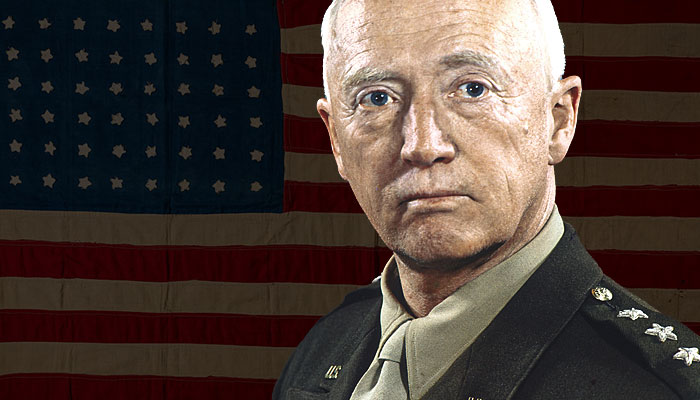](https://www.normandy1944.info/home/commanders/life-and-death-of-george-s-patton-jr)
[**The life and death General George S. Patton**](https://www.normandy1944.info/home/commanders/life-and-death-of-george-s-patton-jr)
### German preparations and the Atlantic Wall
German defenses along the western coast of Europe were organized into the **Atlantic Wall**, a system of fortifications constructed between 1942 and 1944. These included bunkers, artillery positions, minefields, and beach obstacles.
Command of German forces in Western Europe was held by **Gerd von Rundstedt**, while [**Field Marshal Erwin Rommel** ](https://www.normandy1944.info/home/commanders/life-and-death-of-erwin-rommel)was responsible for strengthening coastal defenses. Rommel recognized the threat of invasion and ordered extensive improvements, including flooding low-lying areas and placing obstacles to disrupt airborne landings. Despite these efforts, many defenses remained incomplete, particularly in Normandy. Allied bombing campaigns also disrupted German logistics and slowed construction.
[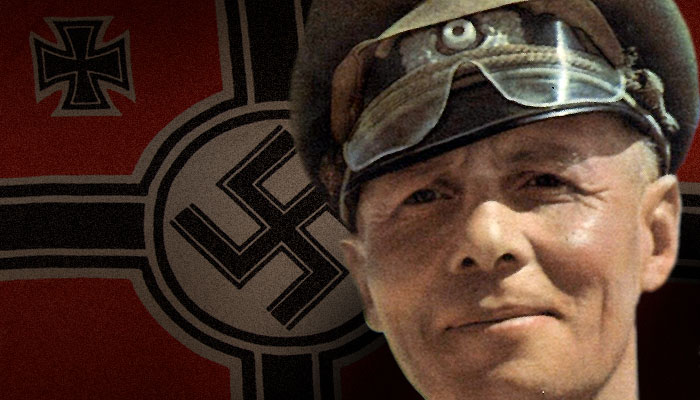](https://www.normandy1944.info/home/commanders/life-and-death-of-erwin-rommel)
[**The life and death Field Marshal Erwin Rommel** ](https://www.normandy1944.info/home/commanders/life-and-death-of-erwin-rommel)
### German strategy and armored reserves
German strategy was divided over how to respond to an invasion. **Rommel** argued for defending the coast and stopping the Allies at the beaches, while other commanders favored a mobile defense using armored reserves.
Hitler imposed a compromise, placing some Panzer divisions near the coast while keeping others under central control. This decision limited the speed and effectiveness of German counterattacks on D-Day.
### Final preparations and rehearsals
Allied forces conducted extensive rehearsals in the months leading up to the invasion. One of the most significant incidents occurred during **Exercise Tiger** on **28 April 1944**, when German torpedo boats attacked a training convoy, resulting in the deaths of **946 American personnel**.
Strict security measures were implemented, including movement restrictions and a news blackout, to prevent information leaks. Although some intelligence reached German forces, it was often dismissed or misinterpreted due to the success of Allied deception efforts.
### Related insignias
[ 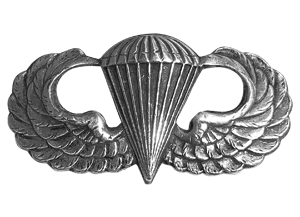US Jump Wings
Original WW2 item
](https://www.normandy1944.info/images/badges/american/US-Jump-Wings.png)
[ 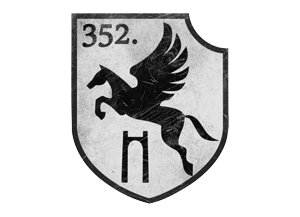German 325 Infantry Division
Original WW2 item
](https://www.normandy1944.info/images/badges/german/German-352th-Infantry-Division.png)
[ 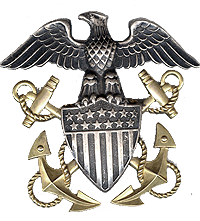US Navy
Original WW2 item
](https://www.normandy1944.info/images/patches/us-navy-badge.png)
[ 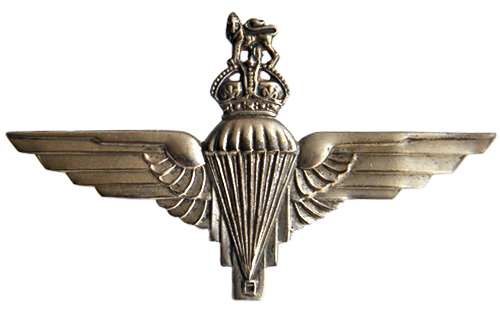British Parachute badge
Original WW2 item
](https://www.normandy1944.info/images/patches/1st-Parachute-Regiment_UK.png)
[ 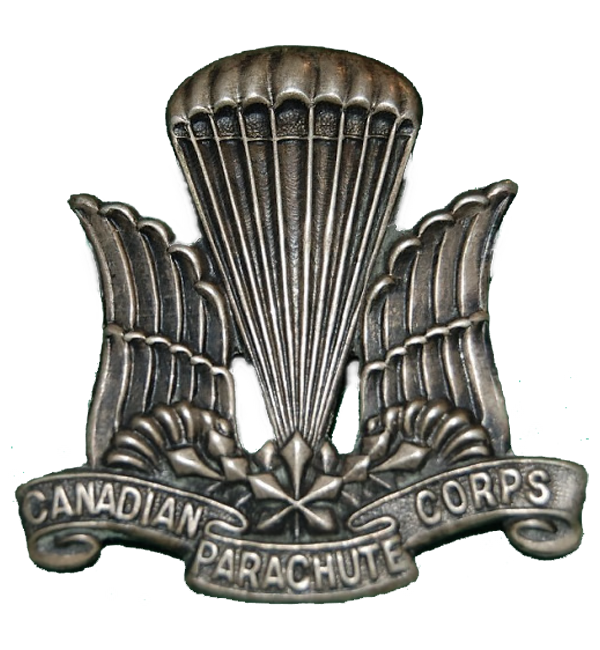Canadian Parachute badge
Original WW2 item
](https://www.normandy1944.info/images/patches/Canadian-Airborne-Regiment-badge.png)
[ 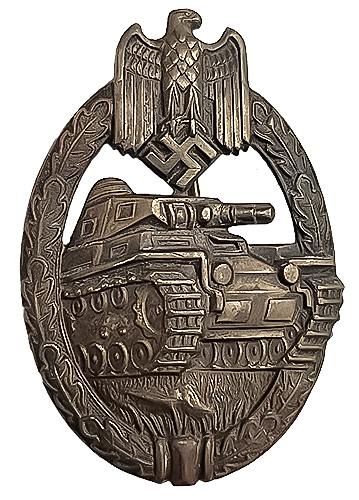German SS Panzer badge
Original WW2 item
](https://www.normandy1944.info/images/patches/German-SS-panzer-badge.png)
Some of these original WW2 badges and insgnias from my own personal collectioin.
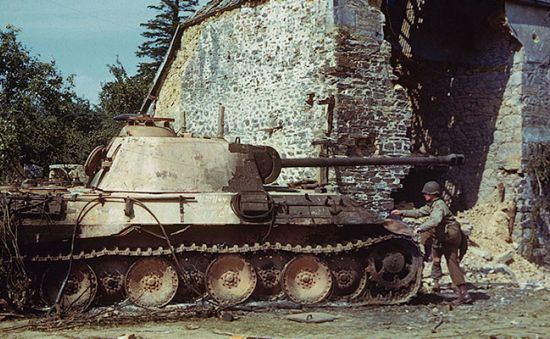
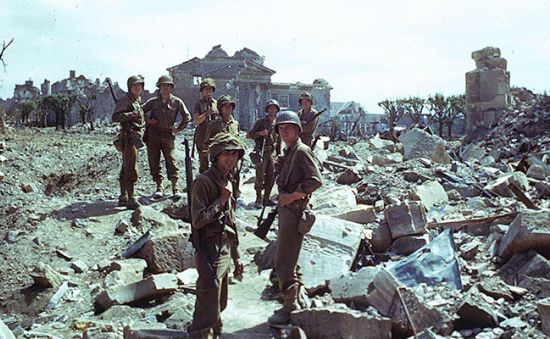
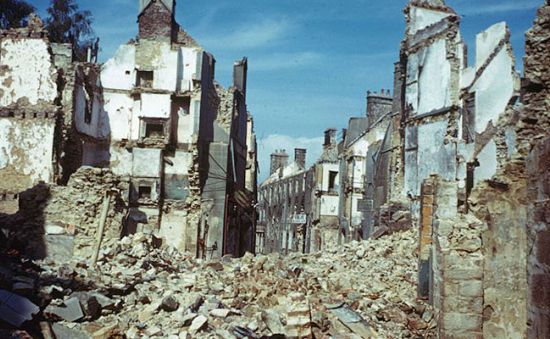
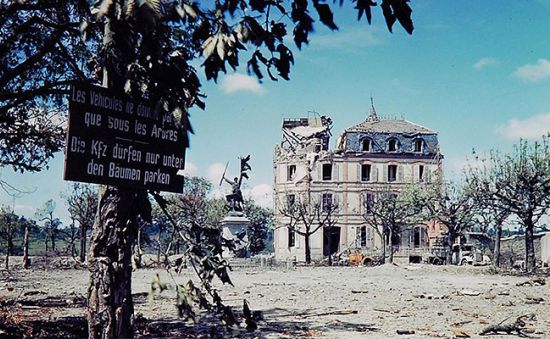
#### Photographs of Battle of Normandy
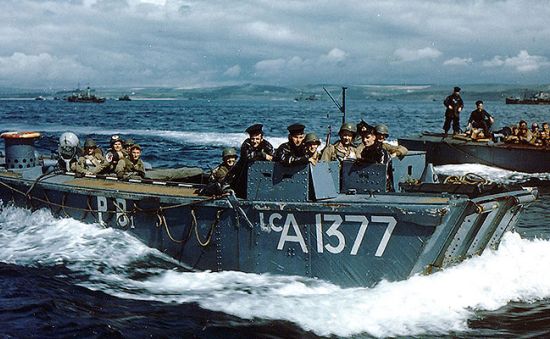
[](#)
[](#)
### ****Falaise Pocket
By early August 1944, the German position in Normandy was becoming increasingly dangerous. The Allied breakout from the American sector after **Operation Cobra** had created the possibility of encircling German forces west of the Seine. Instead of allowing an orderly withdrawal, Adolf Hitler ordered a counterattack toward Mortain on 7 August 1944. The attack, known as **Operation Lüttich**, was detected in advance through Allied intelligence and was repelled by American forces.
The **failure at Mortain** left large German formations exposed to encirclement. Allied commanders then moved to close a shorter trap around Falaise, Argentan, Trun, Chambois, and Mont-Ormel. American forces advanced from the south, while British, Canadian, and Polish forces pressed from the north. The **1st Polish Armoured Division** played a crucial role at **Mont-Ormel, also known as Hill 262**, where it helped block German escape routes from the pocket.
**The Falaise Pocket was effectively sealed by 21 August 1944**. Tens of thousands of German soldiers were trapped; many were killed, wounded, or captured, while others escaped eastward after abandoning large amounts of equipment. Although the pocket was not closed as quickly as it might have been, the battle destroyed much of the German Army’s remaining strength in Normandy and made the defence of the Seine line impossible.
### Liberation of Paris
The liberation of Paris followed soon after the collapse of the German position in Normandy. On 19 August 1944, the French Resistance rose against the German occupation forces inside the city. Allied commanders had initially planned to bypass Paris, but the uprising and the symbolic importance of the capital changed the situation.
The **French 2nd Armoured Division** under **General Philippe Leclerc**, supported by elements of the [**U.S. 4th Infantry Division**](https://www.normandy1944.info/home/unit-histories/4th-infantry-division), advanced toward the city. On **25 August 1944**, German forces in Paris surrendered, and the city was liberated. The liberation of Paris became one of the most powerful symbols of the collapse of German control in France.
### Withdrawal to the Seine
After the fighting around Falaise, German forces continued retreating eastward toward the Seine River. British, Canadian, Polish, and American forces pursued them across northern France. In the British and Canadian sector, fighting continued until the end of August as German rearguards attempted to delay the Allied advance.
Canadian troops faced particularly difficult fighting in areas such as the Forêt de la Londe, where German forces used wooded terrain to slow the pursuit. By 30 August 1944, the last major German formations had withdrawn across the Seine, marking the effective end of the Normandy campaign.
### Campaign close
Historians define the end of the Normandy campaign in slightly different ways. Some American accounts treat the breakout after **Operation Cobra on 25 July 1944** as the start of the Northern France campaign. British, Canadian, and Polish accounts more often include the closing of the Falaise Pocket and the pursuit to the Seine as part of the Battle of Normandy. Canadian official histories describe the Canadian Army’s Normandy operations as lasting from **6 June to 1 September 1944.**
In practical terms, the Normandy campaign ended when German forces were driven beyond the Seine and the Allies broke out into northern France. The campaign achieved its main strategic goal earlier than the original ninety-day planning target: the Allies had secured a lodgment in France, defeated German forces in Normandy, and opened the road toward Belgium, the Netherlands, and Germany.
### Allied logistics, intelligence and air power
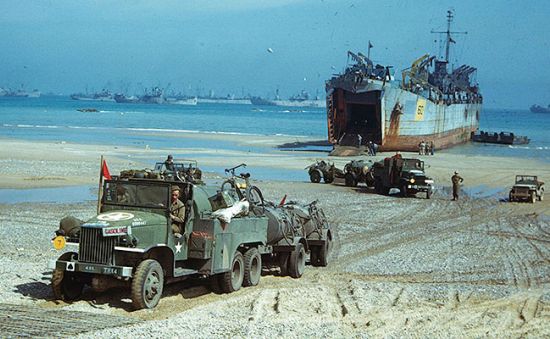
The Allied victory in Normandy depended not only on battlefield success but also on logistics, intelligence, and air superiority. By the end of July 1944, more than one million Allied troops had been landed in Normandy, along with hundreds of thousands of vehicles and vast quantities of supplies. This was achieved despite the lack of a major port during the early weeks of the campaign.
**Temporary Mulberry harbours**, open beach supply operations, and later the capture of **Cherbourg** helped sustain the Allied armies. Although the American Mulberry harbour was destroyed by the severe storm of **19–22 June**, supply operations over the beaches continued at a scale greater than expected.
Allied intelligence also played a decisive role. **Operation Fortitude** helped convince German commanders that the main invasion might still come in the Pas-de-Calais. This kept important German formations away from Normandy during the critical early phase of the campaign. Ultra decrypts also provided valuable information about German intentions, including the Mortain counterattack.
Allied air superiority was another decisive factor. German reinforcements and supplies were constantly attacked from the air, making daylight movement extremely dangerous. The Luftwaffe was unable to seriously challenge Allied control of the skies, leaving German ground forces exposed and increasingly isolated.
### German leadership and strategy
German defence in Normandy was weakened by divided command and strategic confusion. [**Field Marshal Erwin Rommel**](https://www.normandy1944.info/home/commanders/life-and-death-of-erwin-rommel) believed that the Allies had to be defeated on the beaches, before their air and naval superiority could be fully brought to bear. **Field Marshal Gerd von Rundstedt** and others preferred to hold armoured reserves farther inland for a large counterattack after the invasion site had been identified.
The result was a compromise that satisfied neither approach. German armoured reserves were not close enough to defeat the landings immediately, but they were also not free to manoeuvre effectively once Allied air power dominated the battlefield. Hitler’s personal control over armoured reserves further delayed German reactions.
German local resistance was often determined and effective, especially in the bocage and around **Caen**. However, the higher command structure was slow, divided, and constrained by Hitler’s refusal to permit timely withdrawals. Von Rundstedt was removed from command after telling **Field Marshal Wilhelm Keitel** to make peace. Rommel was seriously wounded by Allied aircraft on **17 July 1944.** **Field Marshal Günther von Kluge**, who replaced them, later lost Hitler’s confidence and died by suicide in August. These command disruptions further weakened German ability to respond.
### Normandy in the wider war
The Battle of Normandy had consequences far beyond France. By forcing Germany to fight a major campaign in the west, the Allies increased pressure on a regime already heavily engaged against the Soviet Union in the east and under attack in Italy and from the air.
The Normandy landings and the subsequent breakout helped create a true western front. By September 1944, Allied armies advancing from Normandy and southern France were approaching Germany’s borders. The campaign did not defeat Germany by itself, but it greatly accelerated the collapse of German control in Western Europe.
### Casualties
**The cost of the Normandy campaign was extremely high.** From 6 June to the end of August 1944, Allied casualties are commonly **estimated at around 209.000, including approximately 37.000 killed, 153.000 wounded and 19.000 missing.** These figures include **American, British, Canadian, Polish, French, and other Allied** forces.
German casualties are harder to calculate precisely. Estimates vary widely, but German losses in Normandy likely reached several hundred thousand killed, wounded, missing, or captured. A large proportion of these losses occurred during the collapse of the front and the fighting around the Falaise Pocket.
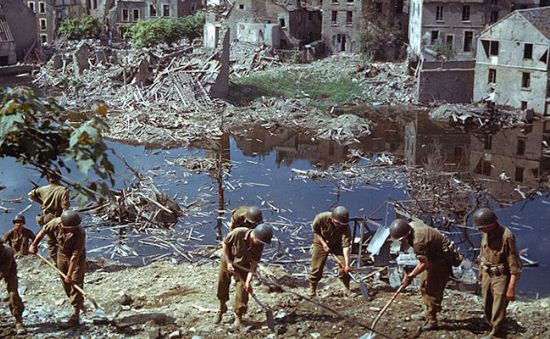
French civilians also suffered heavily. Between roughly **13.000 and 20.000 civilians in Normandy** were killed during the campaign, many as a result of bombing, artillery fire, and fighting in towns and villages. Cities such as Caen, Saint-Lô, and Le Havre suffered severe destruction.
### Civilian damage and heritage
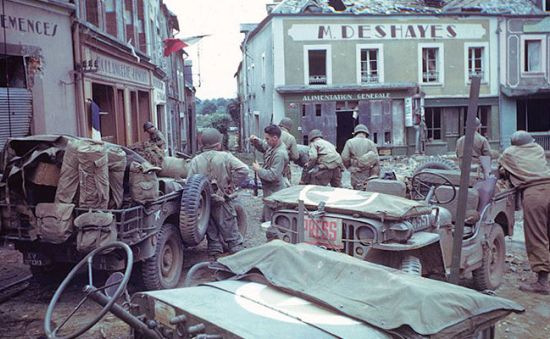
The liberation of Normandy came at a terrible cost to the civilian population. Many towns and villages were damaged or destroyed by bombing, artillery, and ground combat. **Caen**, **Saint-Lô** and other urban centres suffered especially heavy destruction.
Allied commanders were aware of the need to protect cultural and historic sites where possible, but military necessity often took priority in areas of heavy fighting. Churches, archives, monuments, homes, and public buildings were damaged across the region. Mines and unexploded ordnance continued to endanger civilians even after the fighting had moved east.
Despite this destruction, the campaign achieved its military purpose. Normandy became the base from which Allied forces liberated France and continued the advance toward Germany.
### Famous battle quotes
### Company of heroes
"I cherish the memories of a question my grandson asked me the other day when he said, 'Grandpa, were you a hero in the war?' Grandpa said, 'No, but I served in a company of heroes'".
Major Richard Winters
### Riding open barges
"All I could see was water, miles and miles of water. But this was D-Day and nobody went back to England and a lot of infantry riding in open barges seasick to the low-tide beaches were depending on us to draw the Germans off the causeways and gun batteries, and so, as Porter hurled himself against me, I grabbed both sides of the door and threw myself at the water."
Private David Kenyon Webster,
### Start the war
"We'll start the war from right here." After landing with his troops in the wrong place on Utah Beach
Brigadier General Theodore Roosevelt Jr., son of the President Roosevelt
---
[ Get in touch with me ](https://www.normandy1944.info/contact#contact)
External references on this battle
- [Eisenhower Presidential Library and Museum
](https://www.eisenhowerlibrary.gov/research/online-documents/world-war-ii-d-day-invasion-normandy)
### More epic battles of the Second Wold War
[ 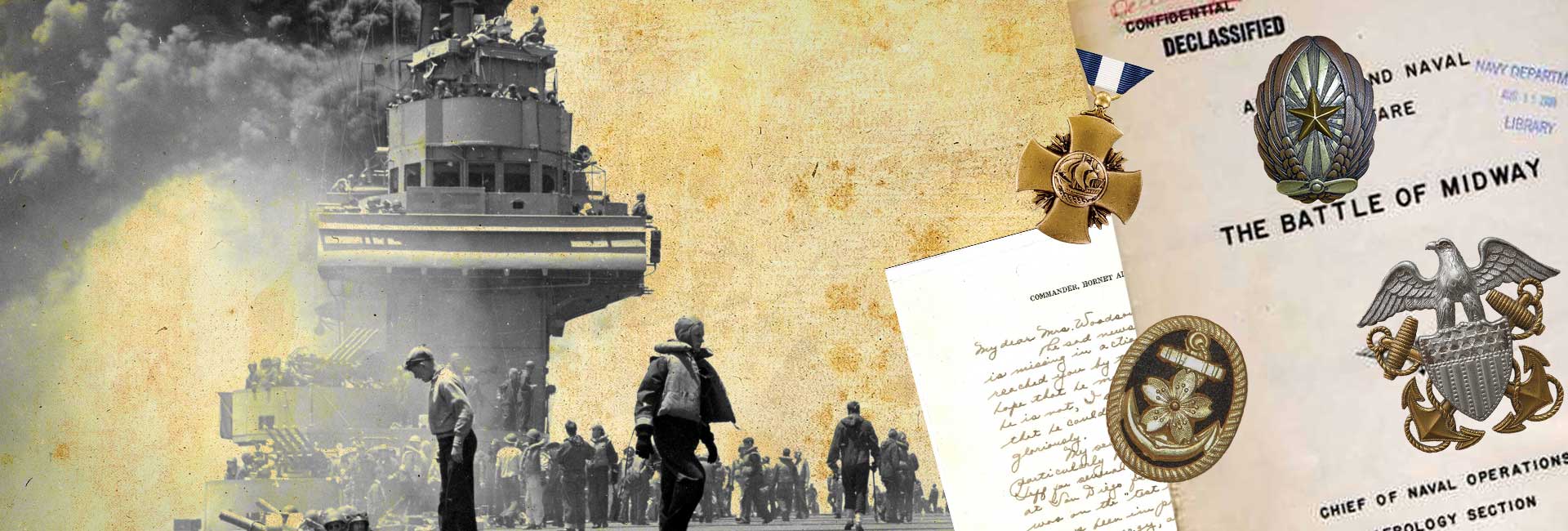
### Battle of Midway
3 June 1942
What was the Battle of Midway? The Battle of Midway, fought between 4 and 7 June 1942, was one of the most decisive naval battles of the Second Worl…
Discover this battle
](https://www.normandy1944.info/home/battles/battle-of-midway)
[ 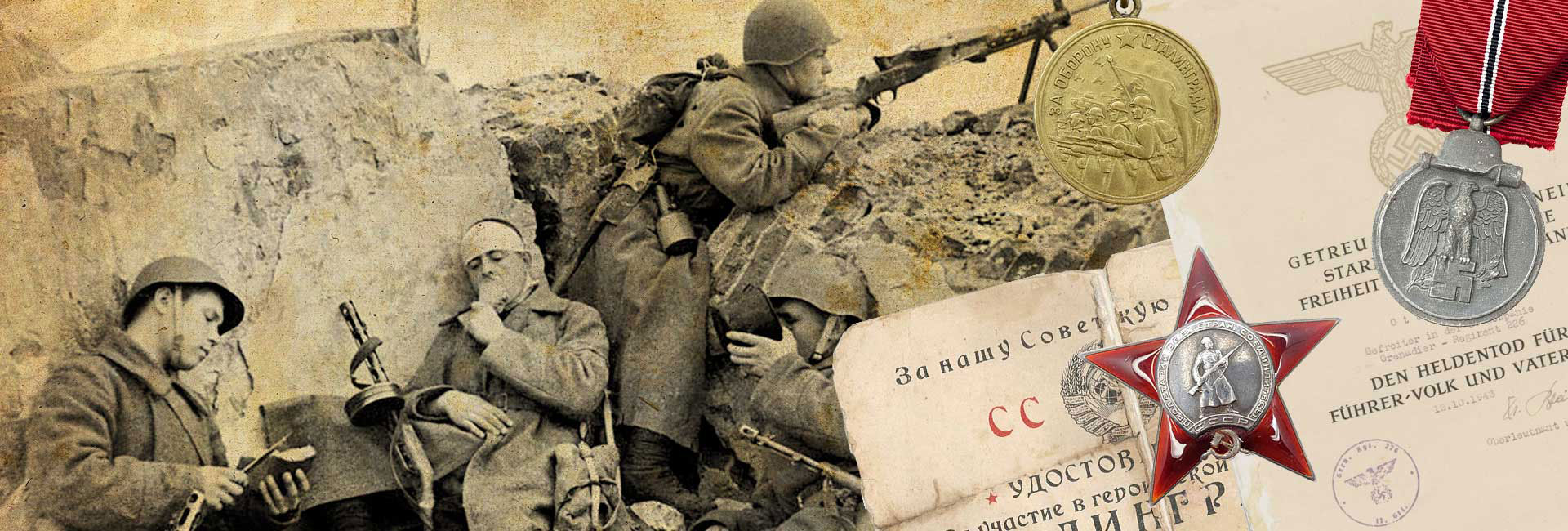
### Operation Barbarossa
22 June 1941
What was Operation Barbarossa? Operation Barbarossa was the codename for Nazi Germany's invasion of the Soviet Union, launched on 22 June 1941 durin…
Discover this battle
](https://www.normandy1944.info/home/battles/operation-barbarossa)
[ 
### Battle of Normandy
6 June 1944
What is the Battle of Normandy? The Battle of Normandy (6 June – 25 August 1944) was the decisive Allied campaign to liberate France from German occ…
Discover this battle
](https://www.normandy1944.info/home/battles/battle-of-normandy)
[ 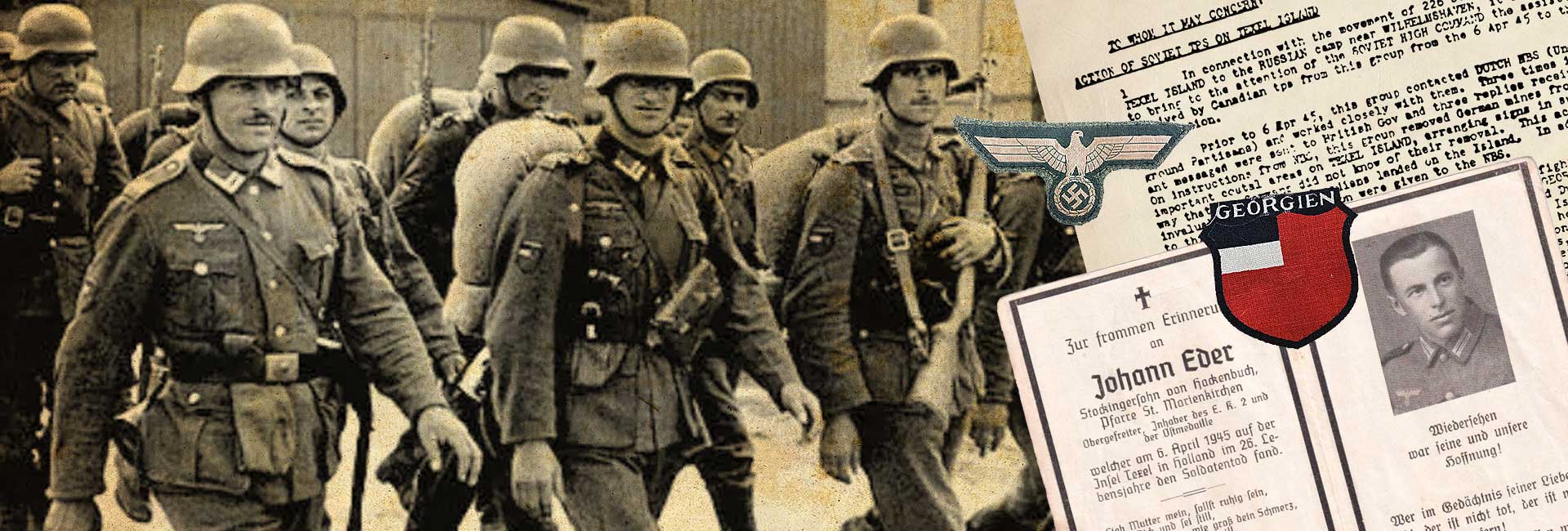
### Battle of Texel
5 April 1945
What Was the Battle for Texel? The Battle of Texel, also known as the Georgian Revolt on Texel, was one of the final battles fought in Europe during…
Discover this battle
](https://www.normandy1944.info/home/battles/battle-of-texel)
[ 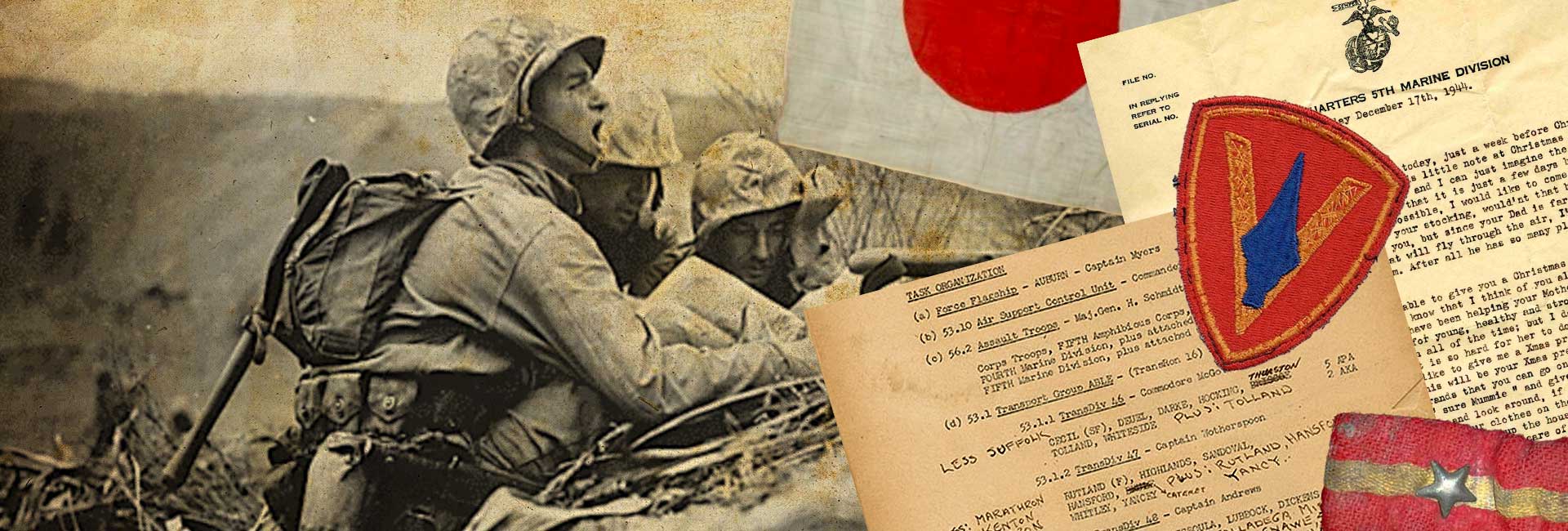
### Battle of Iwo Jima
19 February 1945
What was the Battle of Iwo Jima? The Battle of Iwo Jima (19 February - 26 March 1945), codenamed Operation Detachment, was one of the bloodiest batt…
Discover this battle
](https://www.normandy1944.info/home/battles/battle-of-iwo-jima)
[ 
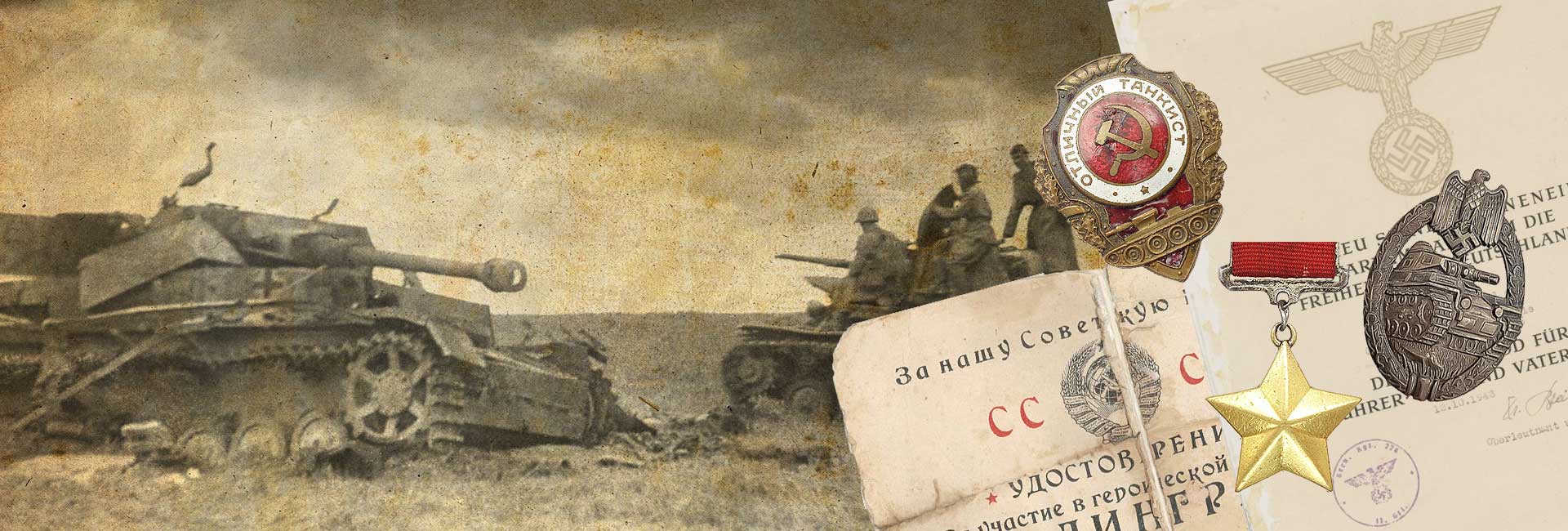
### Battle of Stalingrad
17 July 1942
What was the Battle of Stalingrad? The Battle of Stalingrad (17 July 1942 - 2 February 1943) was one of the most decisive and bloodiest battles of t…
Discover this battle
](https://www.normandy1944.info/home/battles/battle-of-stalingrad)
[ 
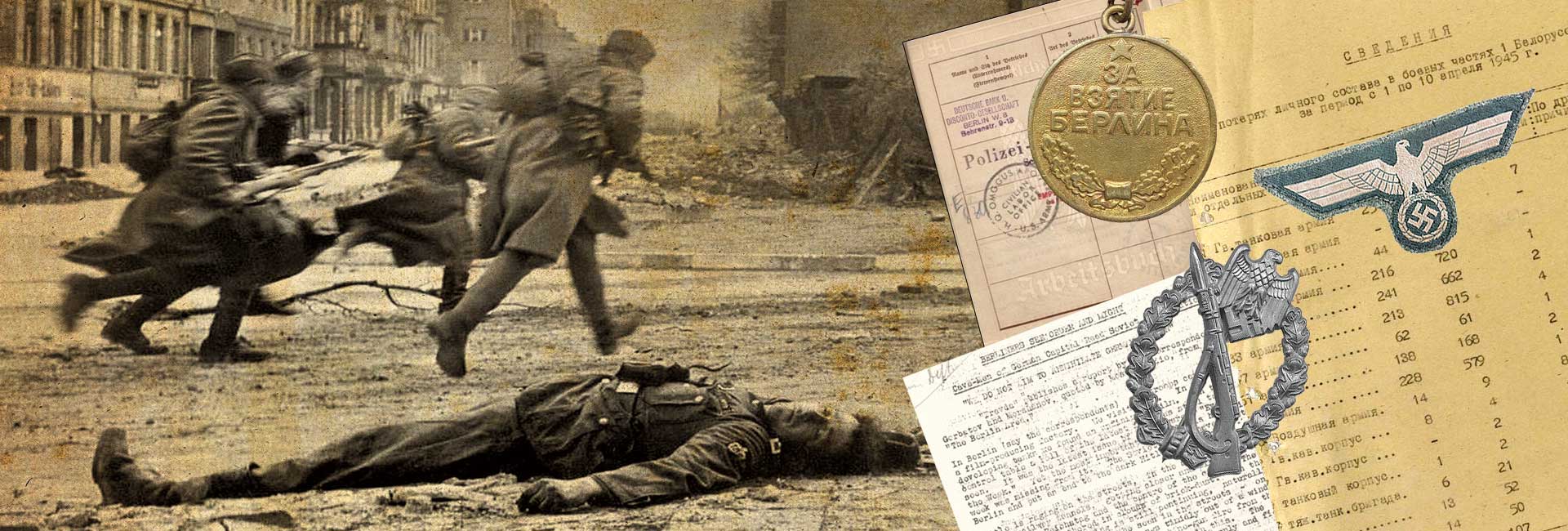
### Battle of Kursk
5 July 1943
The Battle of Kursk or Operation Citadel was a large and decisive tank battle on the Eastern Front in World War II. It marked the end of the German o…
Discover this battle
](https://www.normandy1944.info/home/battles/battle-of-kursk)
[ 
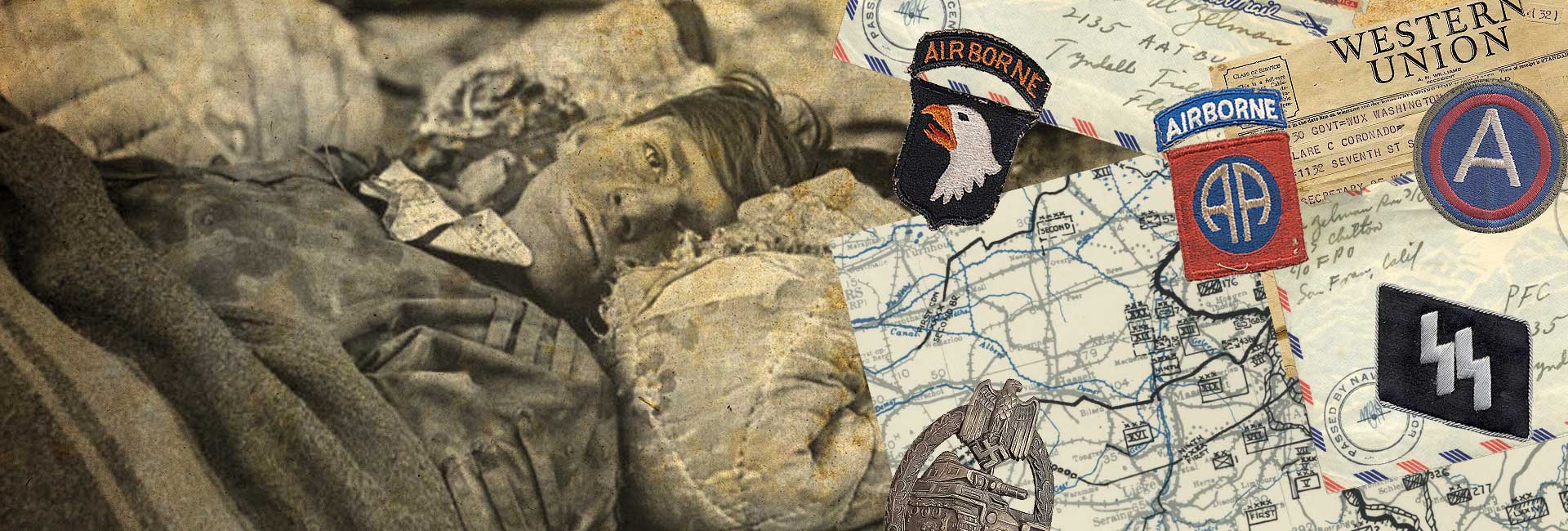
### Battle of Berlin
16 April 1945
What was the Battle for Berlin? The Battle for Berlin was the final major battle in Europe during the Second World War. It took place from 16 April…
Discover this battle
](https://www.normandy1944.info/home/battles/battle-of-berlin)
[ 
### Battle of the Ardennes
16 december 1944
The Battle of the Bulge, also known as the Battle of the Bulge, was the last major offensive by the German Wehrmacht on the Western Front in World Wa…
Discover this battle
](https://www.normandy1944.info/home/battles/battle-of-the-ardennes)
[ 
### Attack on Pearl Harbor
7 December 1941
What was the Attack on Pearl Harbor? The Attack on Pearl Harbor took place on the morning of 7 December 1941, when the Imperial Japanese Navy launch…
Discover this battle
](https://www.normandy1944.info/home/battles/attack-on-pearl-harbor)
[](#)
[](#)
#### Cite this historical page
I aim to provide open-access accurate historical records. If you are using this content for academic research, articles or educational projects, please use the citation below to credit this source. Click the button below to copy the direct URL for your research or citations.

###### Share this page on social media
The stories on my website are meant to educate people about WW2. You can help by sharing them with your family and friends on your social platforms. Thank you so much for your assistance.
- [](https://x.com/intent/post?url=https%3A%2F%2Fwww.normandy1944.info%2Fhome%2Fbattles%2Fbattle-of-normandy.md&text=)
- [](https://www.facebook.com/sharer/sharer.php?u=https%3A%2F%2Fwww.normandy1944.info%2Fhome%2Fbattles%2Fbattle-of-normandy.md)
- [](http://pinterest.com/pin/create/button/?url=https%3A%2F%2Fwww.normandy1944.info%2Fhome%2Fbattles%2Fbattle-of-normandy.md)
- [](https://api.whatsapp.com/send?text=https%3A%2F%2Fwww.normandy1944.info%2Fhome%2Fbattles%2Fbattle-of-normandy.md)
## Schema
```json
{ "@context": "https://schema.org", "@type": "Article", "mainEntityOfPage": { "@type": "WebPage", "@id": "https://www.normandy1944.info/home/battles/battle-of-normandy" }, "headline": "Battle of Normandy", "description": "Comprehensive overview of the Battle of Normandy, including D-Day landings, key battles, strategy, and the Allied campaign that led to the liberation of France in World War II.", "image": { "@type": "ImageObject", "url": "https://www.normandy1944.info/images/cities/dday/d-day-normandy-beyond-normandy-dday-slider.jpg" }, "publisher": { "@type": "Organization", "name": "Normandy1944.info – D-Day, Normandy and Beyond", "logo": { "@type": "ImageObject", "url": "https://www.normandy1944.info/images/logo/D-Day-Normandy-1944-WW2-logo.png" } }, "author": { "@type": "Person", "name": "Frank C. Everards", "url": "https://www.normandy1944.info/blog/how-it-started" }, "datePublished": "2022-09-06T14:45:15+02:00", "dateCreated": "2022-09-05T14:45:15+02:00", "dateModified": "2026-07-12T21:37:48+02:00" }
```