---
title: "Battle of Iwo Jima"
description: "The Battle of Iwo Jima was a major battle of the US Marine Corps and Navy against the Imperial Japanese Army (IJA) during World War II."
url: "https://www.normandy1944.info/home/battles/battle-of-iwo-jima"
date: "2026-07-18T09:38:03+00:00"
language: "en-GB"
---
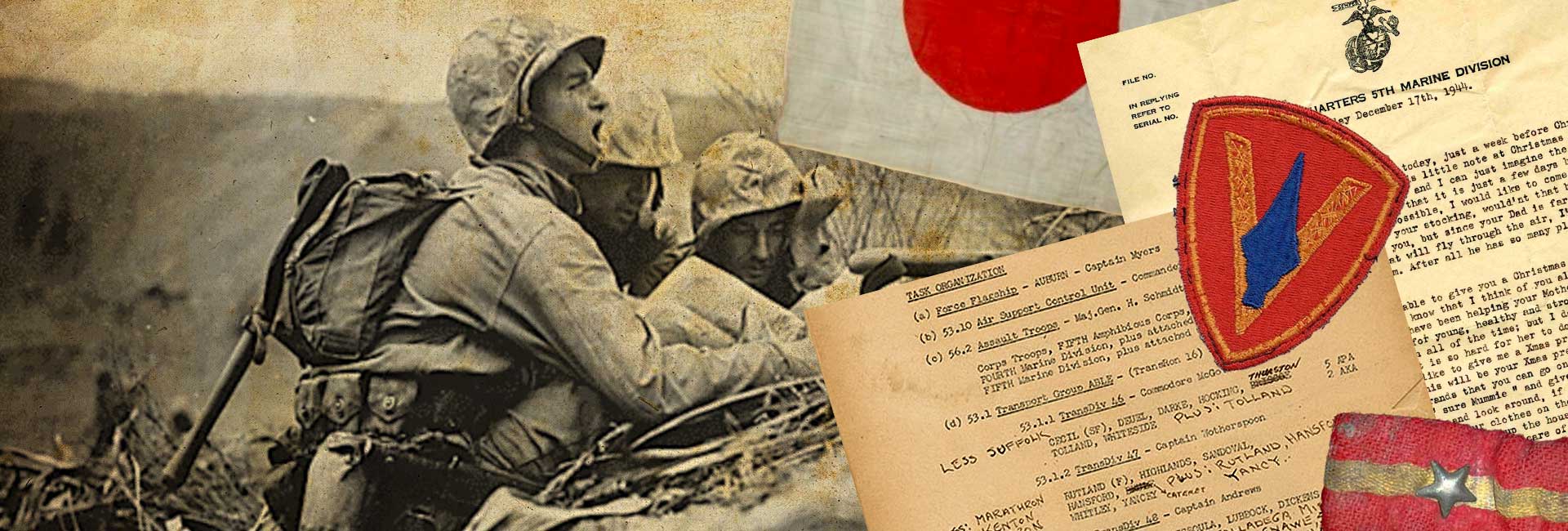
# Battle of Iwo Jima
## This battle started on: 19 February 1945
Objective: Nearby bases for US planes to be able to attack Japan
[](#) [](#)
- [Battle of Iwo Jima](#)
- [ Intro to the battle ](#intro)
- [ Into detail ](#indepth)
- [ Aftermath ](#aftermath)
- [ Cite this page ](#cite)
## Commanders of the Battle of Iwo Jima
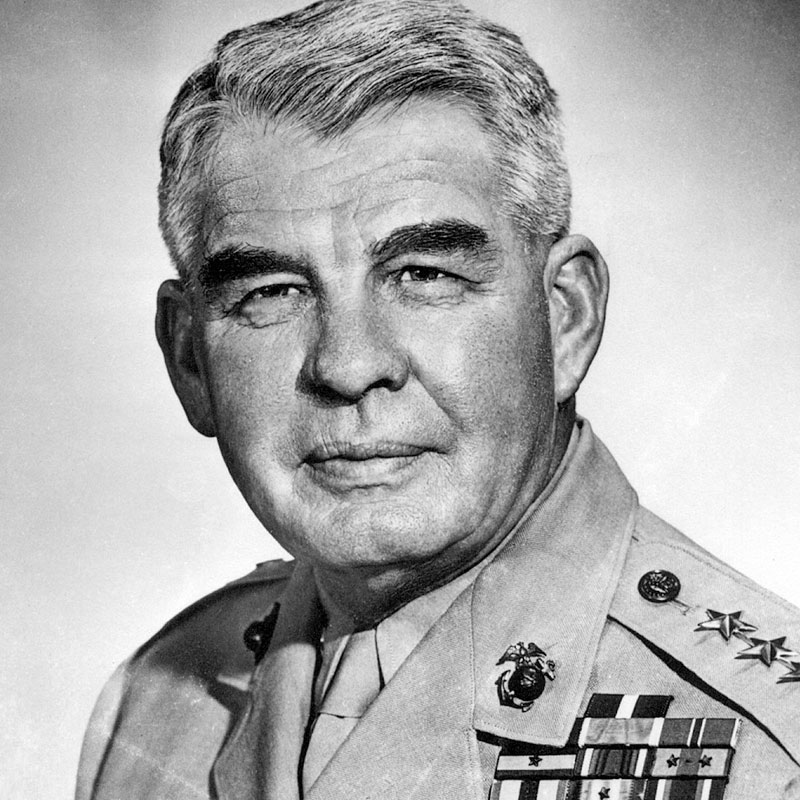
### Harry Schmidt
Nationality: American
Commander of the Marine landing force
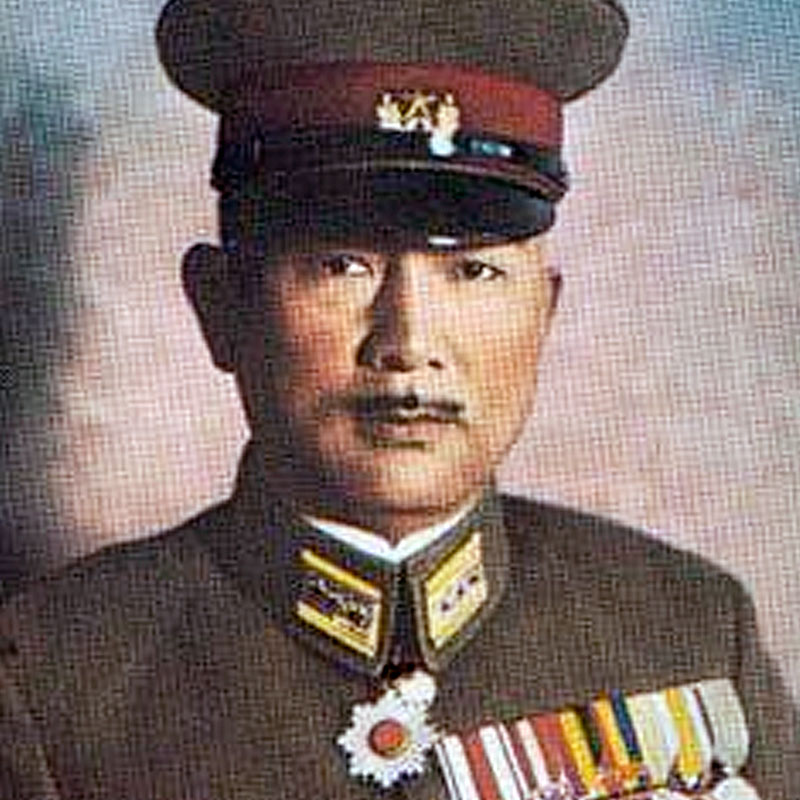
### Tadamichi Kuribayashi
Nationality: Japanese
Overall commander of the Japanese garrison
### What was the Battle of Iwo Jima?
The **Battle of Iwo Jima** (**19 February - 26 March 1945**), codenamed **Operation Detachment**, was one of the bloodiest battles of the **Pacific War** during the **Second World War**. The battle was fought between the **United States Marine Corps**, supported by the **United States Navy** and the defending forces of the **Empire of Japan** on the volcanic island of **Iwo Jima**.
The American objective was to capture the island and its three airfields, which were being used by Japanese forces to detect and intercept American **B-29 Superfortress** bombing raids against Japan. Located roughly halfway between the **Mariana Islands** and the Japanese mainland, Iwo Jima also offered the United States a potential emergency landing base and fighter escort station for bombing operations over Japan.
### Strategic importance of the island
For the Japanese, Iwo Jima served as an important early warning station that reported incoming American bombers to the Home Islands. The island also provided fighter aircraft with an opportunity to intercept American bombing raids. For the United States, the capture of Iwo Jima would eliminate this threat while also providing emergency landing fields for damaged bombers returning from missions over Japan.
### Japanese defenses
The island was heavily defended by approximately **21.000 Japanese soldiers** under the command of **Lieutenant General Tadamichi Kuribayashi**. Japanese forces constructed extensive tunnel systems, underground bunkers, artillery positions, pillboxes and fortified defensive networks across the island.
Unlike earlier battles in the Pacific, the Japanese defenders avoided large-scale suicidal attacks and instead fought a carefully planned defensive battle designed to inflict maximum casualties on the invading forces.
### The beginning of the battle
On **19 February 1945**, American Marines landed on the southeastern beaches of Iwo Jima following months of naval bombardment and aerial attacks. Despite the heavy bombardment, many Japanese defensive positions remained intact due to the island’s extensive underground tunnel system.
The battle quickly developed into one of the fiercest engagements of the Pacific campaign, with American forces facing constant resistance from hidden machine gun nests, artillery fire, sniper positions and fortified underground defenses.
Adversaries in this battle
### United States Marine Corps (USMC)
US Marine Corps captured the island of Iwo Jima from the Imperial Japanese Army
### Imperial Japanse army
General Kuribayashi recognized that he could not defeat an American landing
### Battle specifications
[ 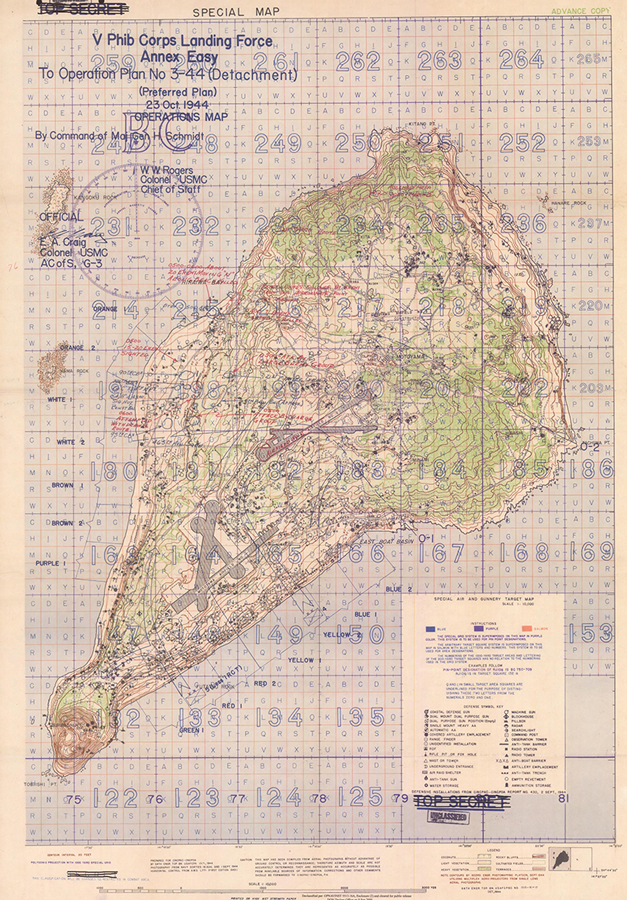Map of the Battle of Iwo Jima
](https://www.normandy1944.info/images/history/iwojima/d-day-normandy-beyond-iwo-jima-map.jpg)
### Date of the battle
19 February 1945
---
### Duration of the battle
26 March 1945
---
### Reason for the battle
Nearby bases for US planes to be able to attack Japan
---
### Location
Iwo Jima, Japanese Empire
---
### Battle result
American victory
---
### Allied casualties
- Killed: 6.102
- Wounded: 19.709
- Planes lost: 153
- Vehicles lost: 137
---
### Axis casualties
- Killed: 18.375
- Wounded: not known
- Planes lost: not known
- Vehicles lost: not known
[ Contact me ](https://www.normandy1944.info/contact#contact)
Page updated on: 12 July 2026
Military awards associated with this campaign
 3rd Marine Division
US 3rd Marine Division was part of the landing force
 Japanese Imperial Army
Rifle Shooting Badge Medal Copper
 4th Marine Division
Awarded both a PCT and NUC for their sacrifices
 Japanese Imperial Army
Non-commissioned Officer Reward Badge Medal
 5th Marine Division
Saw its first combat here and sustained the highest casualty rate
[](#)
[](#)
Original WW2 formation patches and medals from the author's own collection.
Footage of this battle
Copyright: US National Archives (YouTube)
Copyright: Steve Harnsberger
### Planning and preparation
By **June 1944**, **Lieutenant General Tadamichi Kuribayashi** had been assigned to command the defense of **Iwo Jima**. Realizing that Japan could not realistically stop an American invasion, Kuribayashi instead focused on inflicting extremely heavy casualties on the invading forces.
Drawing lessons from the **Battle of Peleliu**, Kuribayashi abandoned traditional Japanese defensive doctrine. Rather than concentrating defenses directly on the beaches, he created a deep defensive network across the island using bunkers, hidden artillery positions, underground tunnels and heavily fortified strongpoints. The Japanese constructed more than **18 kilometers** of tunnels connecting defensive positions across the island. These tunnels allowed defenders to move underground between positions and reoccupy bunkers that had already been cleared by American troops.
### American bombardment
Beginning in **June 1944**, the **United States Navy** and the **United States Army Air Forces** launched extensive naval bombardments and air raids against Iwo Jima. These attacks continued for months and became some of the heaviest pre-invasion bombardments of the Pacific War.
Despite the intensity of the bombardment, the Japanese tunnel systems and underground fortifications allowed many defenders to survive largely unharmed. American intelligence officers incorrectly believed that the island would fall within only a few days of the invasion.
### The amphibious landings
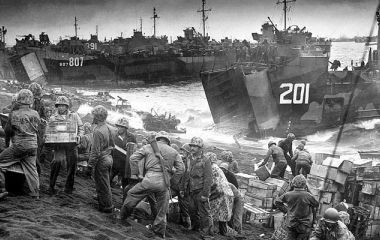
On the morning of **19 February 1945**, approximately **60.000 United States Marines** from the **3rd**, **4th** and **5th Marine Divisions** began landing on the southeastern beaches of Iwo Jima. Initially, the beaches appeared unusually quiet. General Kuribayashi had ordered his troops to hold their fire until the beaches were crowded with American troops and equipment. Once the Marines had advanced inland, concealed Japanese bunkers and artillery positions suddenly opened fire.
The Marines faced devastating machine gun fire, mortar bombardments, sniper attacks and artillery fire from hidden defensive positions. The volcanic ash terrain made movement extremely difficult and slowed the deployment of vehicles and supplies.
### Fighting across the island
The battle soon developed into a brutal war of attrition. American troops were forced to clear Japanese bunkers and tunnel systems one position at a time using flamethrowers, grenades, demolition charges, tanks and close-quarters combat. Specialized **M4 Sherman flamethrower tanks**, often nicknamed "**Zippo tanks**", proved highly effective against Japanese cave positions and underground fortifications.
The northern sector of the island became especially deadly. Areas such as **Hill 382**, the "**Turkey Knob**" and the "**Amphitheater**" became known collectively among the Marines as the "**Meatgrinder**" because of the extremely heavy fighting and casualties.
### Mount Suribachi and the famous flag raising
On **23 February 1945**, American Marines captured the summit of **Mount Suribachi**, the dormant volcanic mountain dominating the southern end of the island. During the battle, photographer **Joe Rosenthal** captured the famous image "**Raising the Flag on Iwo Jima**," showing six American servicemen raising the United States flag on the summit. The photograph became one of the most recognizable images of the **Second World War** and later inspired the **Marine Corps War Memorial** near **Arlington National Cemetery**.
### The corrected identities in the famous photograph
For many years, the servicemen in Joe Rosenthal’s famous photograph were officially identified as **Michael Strank**, **Harlon Block**, **Franklin Sousley**, **John Bradley**, **Rene Gagnon** and **Ira Hayes**. However, decades after the war, extensive historical research and forensic photo analysis led to official corrections by the **United States Marine Corps**.
In **2016**, the Marine Corps confirmed that **Harold Schultz** had been mistakenly identified as **John Bradley**. In **2019**, it was further confirmed that **Harold Keller** had been incorrectly identified as **Rene Gagnon**. The corrected identities of the six men in the photograph are now officially recognized as **Michael Strank**, **Harlon Block**, **Franklin Sousley**, **Ira Hayes**, **Harold Schultz** and **Harold Keller**. (Thank you Peter Marshall)
### The final stages of the battle
Although Mount Suribachi had been captured, fighting continued across northern Iwo Jima for several more weeks. Japanese resistance remained fierce throughout March 1945, with defenders continuing to fight from caves, bunkers and underground tunnels. On the night of **25 March 1945**, surviving Japanese troops launched a final counterattack near **Airfield No. 2**. The attack was eventually defeated after intense close-quarters fighting.
The island was officially declared secure on **26 March 1945**, ending one of the bloodiest battles of the Pacific campaign.
Related medals and patches
[ 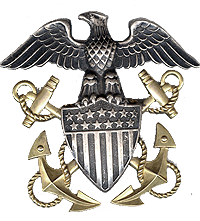 United States Navy cap badge
Original WW2 item
](https://www.normandy1944.info/images/patches/us-navy-badge.png)
[ 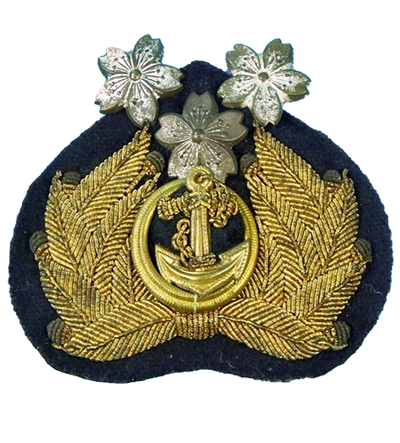 Imperial Japanese Navy
Original WW2 item
](https://www.normandy1944.info/images/patches/Imperial-Japanese-Navy.png)
[ 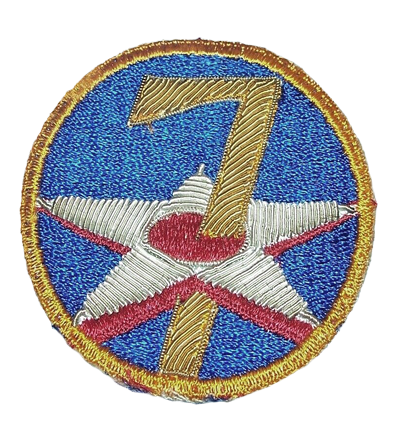 US 7th Airforce
Original WW2 item
](https://www.normandy1944.info/images/patches/7th-airforce-US.png)
[ 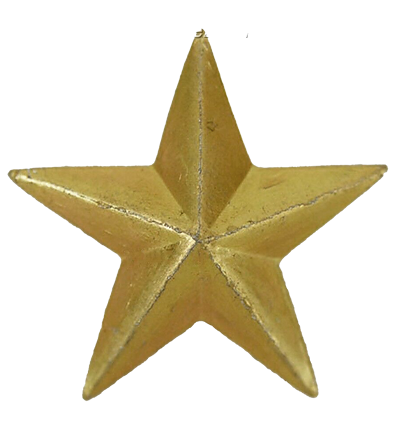 Imperial Japanese Army cap star
Original WW2 item
](https://www.normandy1944.info/images/patches/Imperial-Japanese-Cap-Star.png)
[ 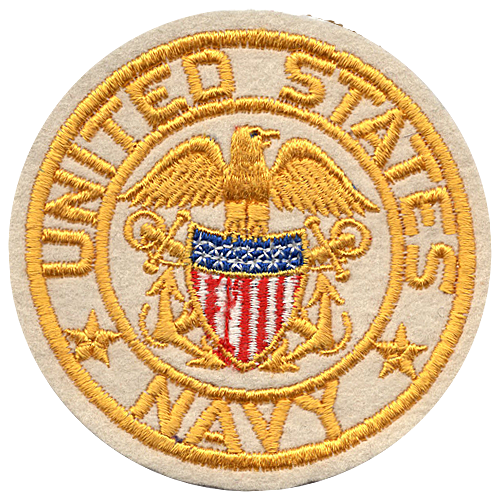 United States Navy
Original WW2 item
](https://www.normandy1944.info/images/patches/US-navy-patch.png)
Original WW2 badges and insgnia from the author's own collectioin.
#### Photographs of Battle of Iwo Jima



[](#)
[](#)
### Aftermath of the battle
By the end of the **Battle of Iwo Jima**, nearly the entire Japanese garrison had been destroyed. Of the approximately **21.000 to 22.000 Japanese soldiers** defending the island, the vast majority were killed in combat or died by suicide. Only around **200 Japanese soldiers** were taken prisoner during the battle.
Many Japanese troops continued hiding in the island’s caves and tunnel systems after organized resistance had officially ended. Influenced by the Japanese **Bushido code** and wartime propaganda, many defenders considered surrender dishonorable.
Some isolated Japanese holdouts survived underground for months and, in rare cases, years after the battle by hiding in caves and emerging at night to search for food and water. The final known holdouts on Iwo Jima eventually surrendered in **1949**, several years after the end of the **Second World War**.
### American casualties
The Battle of Iwo Jima resulted in devastating casualties for the United States. During the 36-day battle, more than **26.000 American servicemen** were killed or wounded, including approximately **6.800 dead**.
Iwo Jima became the only major battle fought by the **United States Marine Corps** during the Pacific War in which total American casualties exceeded those of the Japanese defenders, although Japanese deaths remained significantly higher overall.
Several American warships were damaged during the fighting and the escort carrier **USS Bismarck Sea** was sunk during a Japanese **kamikaze attack**, becoming the last American aircraft carrier lost during the Second World War.
### Historical significance
The **Battle of Iwo Jima** became one of the defining battles of the **Pacific campaign** and demonstrated the extreme intensity of the fighting during the final stages of the **Second World War**. The battle also demonstrated the effectiveness of Japan’s defensive tactics and foreshadowed the enormous casualties expected during a possible Allied invasion of the Japanese mainland.
Although historians continue to debate the long-term strategic value of the island, Iwo Jima later served as an emergency landing site for hundreds of damaged American **B-29 bombers** returning from missions over Japan, potentially saving thousands of aircrew lives.
Famous WW2 quotes
The day I became a Marine
“Kenneth Milstead, a 2nd Platoon buddy of Mike, Ira, Franklin, and Harlon, had just dropped into a shallow foxhole he'd dug when a shell landed beside him and blew him out again. Blood streamed from the embedded fragments in his face. "I could have been evacuated," Milstead recalled, "but the Japanese had pissed me off. I went from being scared to being angry. That was the day I became a Marine.”
James Bradley, Flags of Our Fathers: Heroes of Iwo Jima
---
[ Get in touch with me ](https://www.normandy1944.info/contact#contact)
### More epic battles of the Second Wold War
[ 
### Operation Barbarossa
22 June 1941
What was Operation Barbarossa? Operation Barbarossa was the codename for Nazi Germany's invasion of the Soviet Union, launched on 22 June 1941 durin…
Discover this battle
](https://www.normandy1944.info/home/battles/operation-barbarossa)
[ 
### Battle of Normandy
6 June 1944
What is the Battle of Normandy? The Battle of Normandy (6 June – 25 August 1944) was the decisive Allied campaign to liberate France from German occ…
Discover this battle
](https://www.normandy1944.info/home/battles/battle-of-normandy)
[ 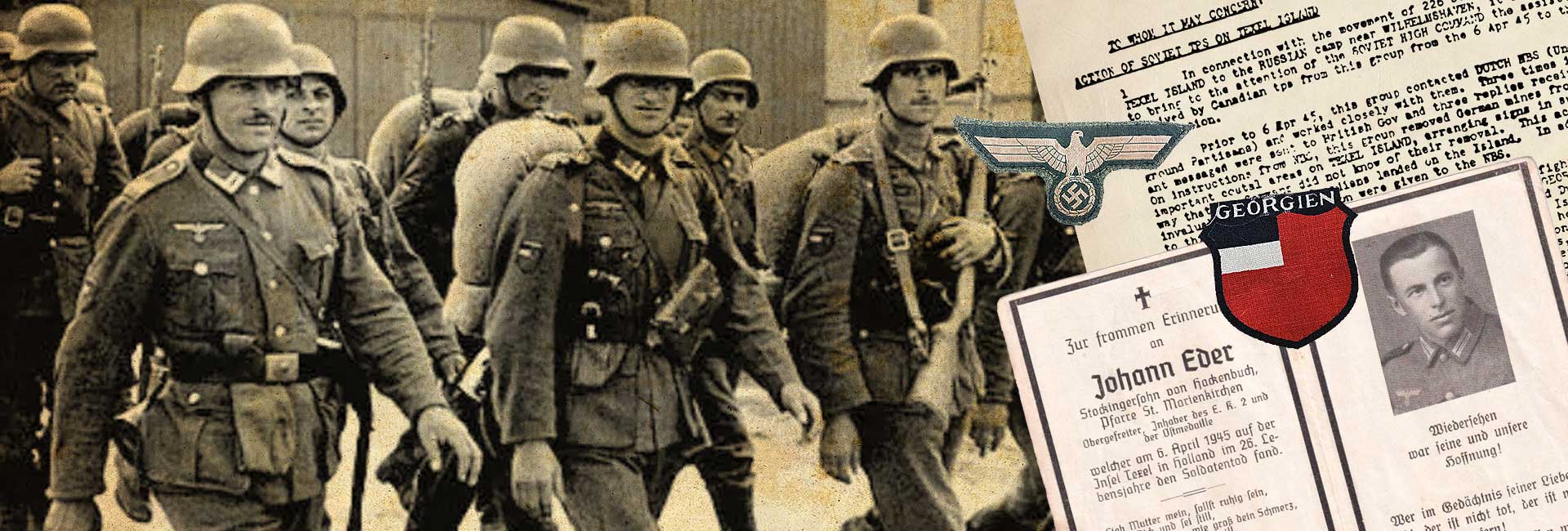
### Battle of Texel
5 April 1945
What Was the Battle for Texel? The Battle of Texel, also known as the Georgian Revolt on Texel, was one of the final battles fought in Europe during…
Discover this battle
](https://www.normandy1944.info/home/battles/battle-of-texel)
[ 
### Battle of Iwo Jima
19 February 1945
What was the Battle of Iwo Jima? The Battle of Iwo Jima (19 February - 26 March 1945), codenamed Operation Detachment, was one of the bloodiest batt…
Discover this battle
](https://www.normandy1944.info/home/battles/battle-of-iwo-jima)
[ 
### Battle of Stalingrad
17 July 1942
What was the Battle of Stalingrad? The Battle of Stalingrad (17 July 1942 - 2 February 1943) was one of the most decisive and bloodiest battles of t…
Discover this battle
](https://www.normandy1944.info/home/battles/battle-of-stalingrad)
[ 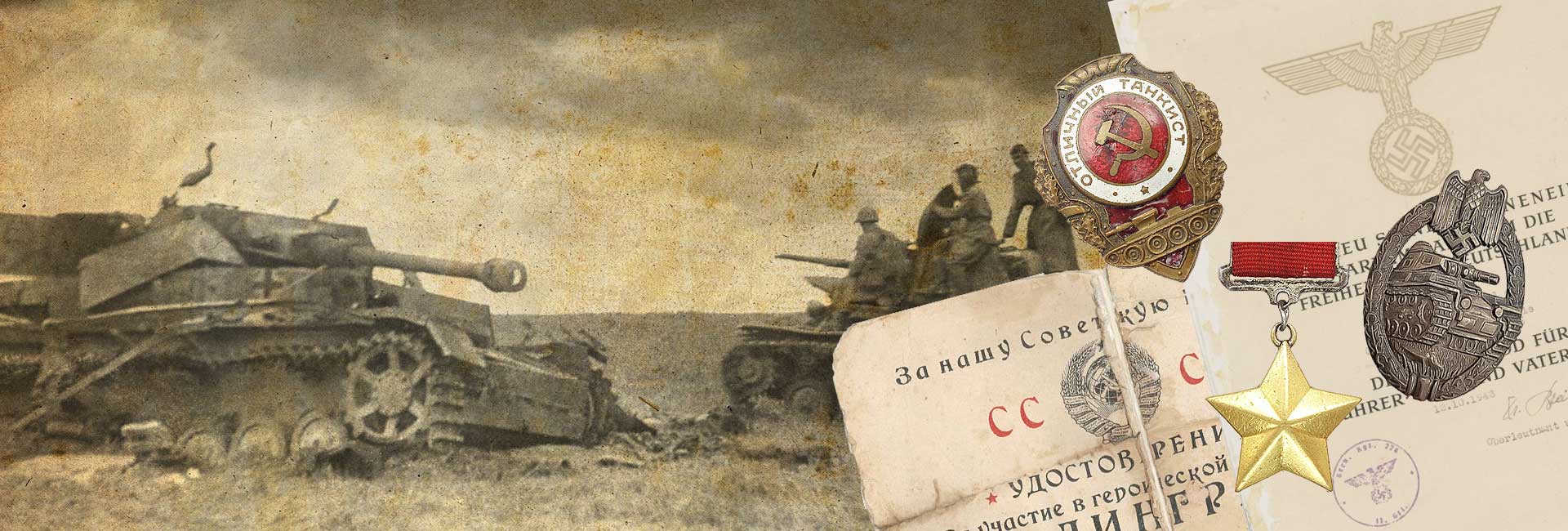
### Battle of Kursk
5 July 1943
The Battle of Kursk or Operation Citadel was a large and decisive tank battle on the Eastern Front in World War II. It marked the end of the German o…
Discover this battle
](https://www.normandy1944.info/home/battles/battle-of-kursk)
[ 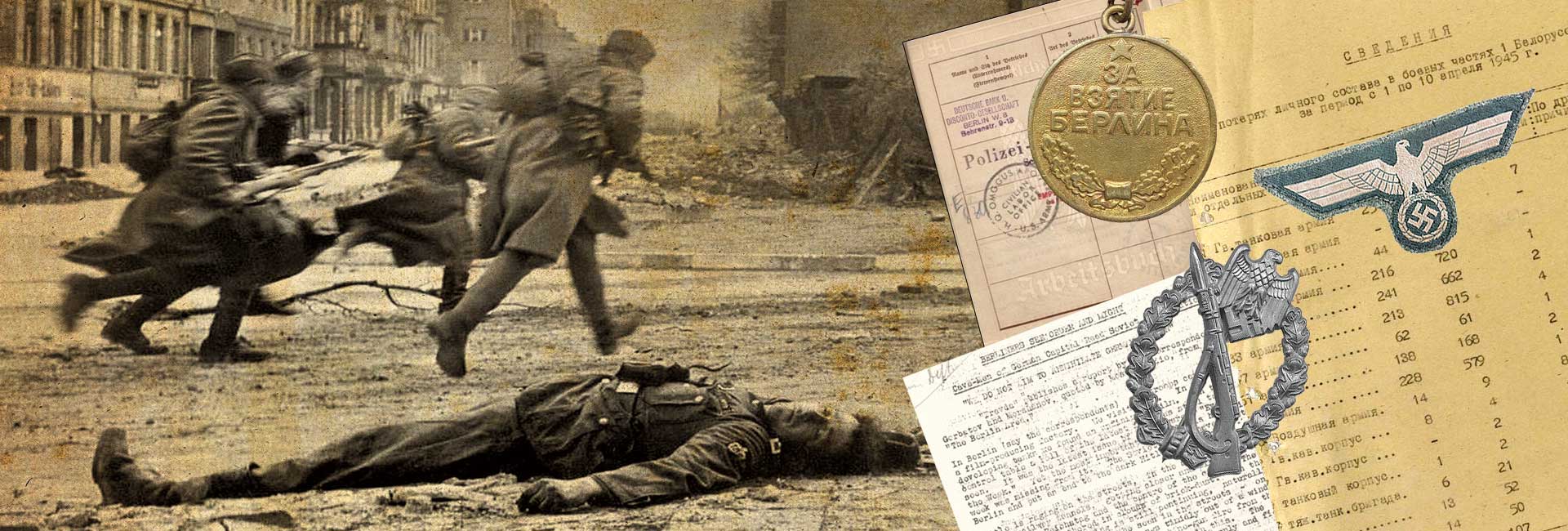
### Battle of Berlin
16 April 1945
What was the Battle for Berlin? The Battle for Berlin was the final major battle in Europe during the Second World War. It took place from 16 April…
Discover this battle
](https://www.normandy1944.info/home/battles/battle-of-berlin)
[ 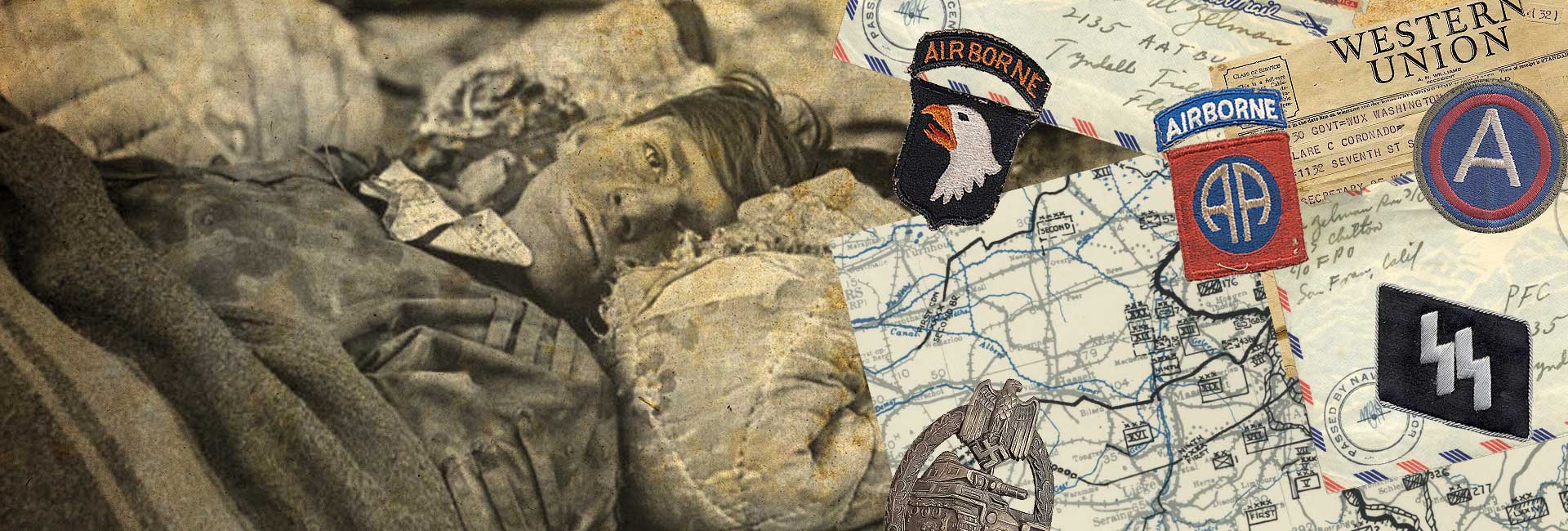
### Battle of the Ardennes
16 december 1944
The Battle of the Bulge, also known as the Battle of the Bulge, was the last major offensive by the German Wehrmacht on the Western Front in World Wa…
Discover this battle
](https://www.normandy1944.info/home/battles/battle-of-the-ardennes)
[ 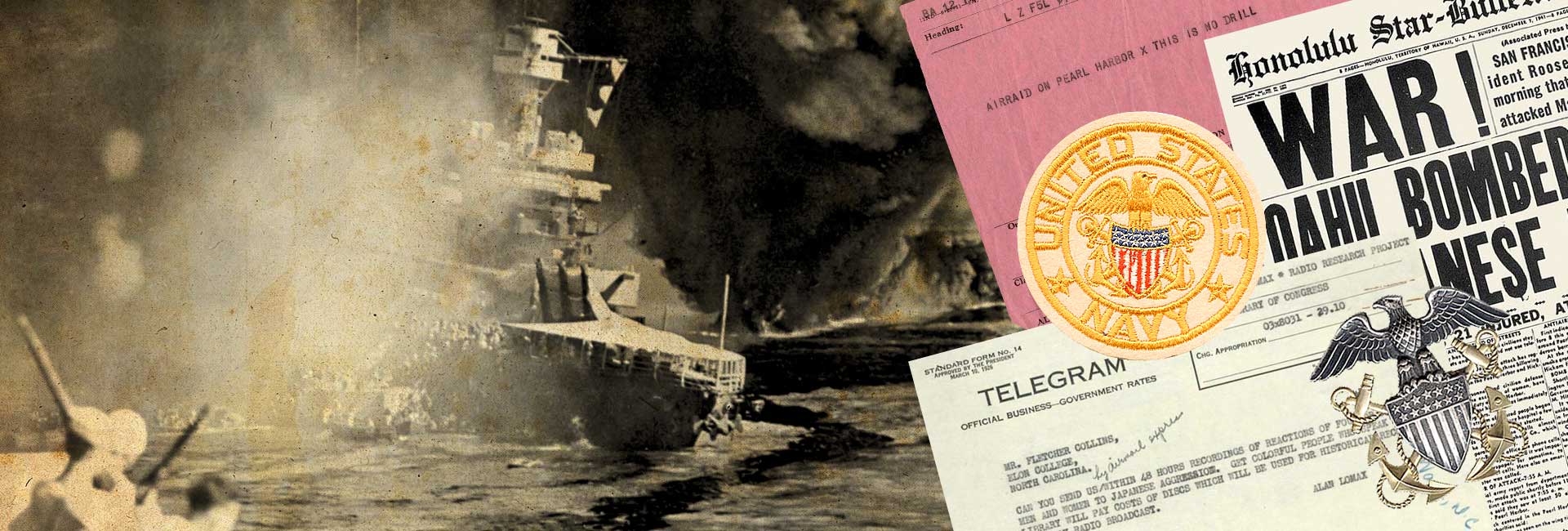
### Attack on Pearl Harbor
7 December 1941
What was the Attack on Pearl Harbor? The Attack on Pearl Harbor took place on the morning of 7 December 1941, when the Imperial Japanese Navy launch…
Discover this battle
](https://www.normandy1944.info/home/battles/attack-on-pearl-harbor)
[ 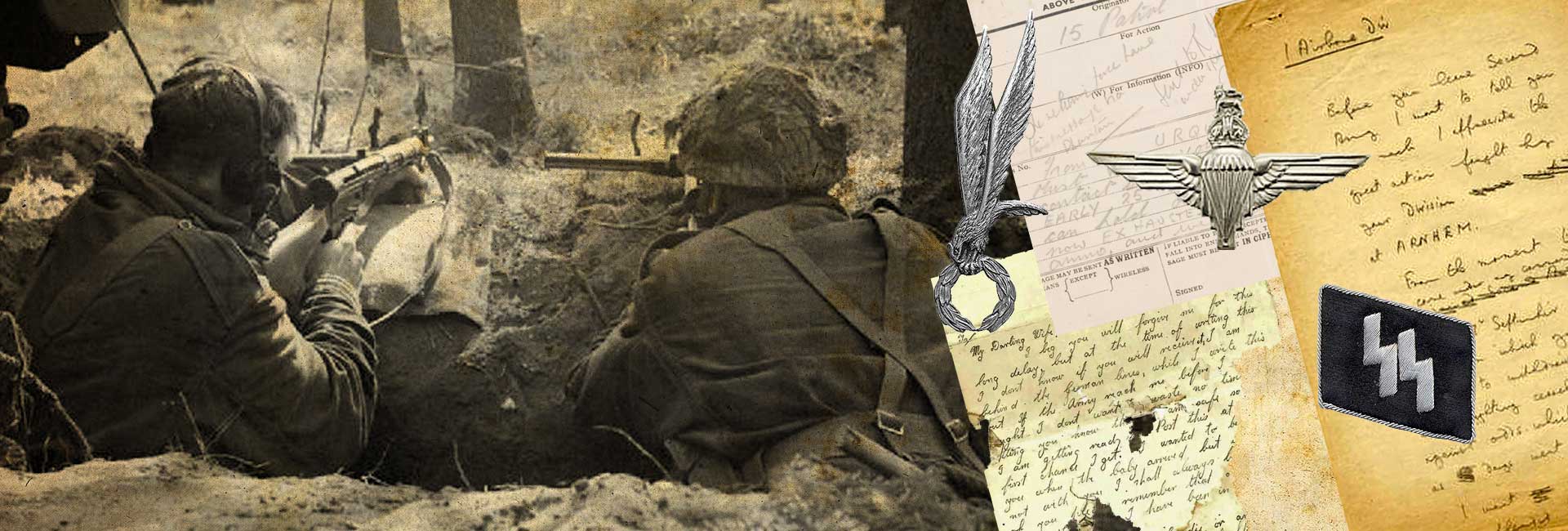
### Operation Market Garden
17 September 1944
What was Operation Market Garden? Operation Market Garden (17 - 25 September 1944) was a major Allied military operation in the Netherlands during t…
Discover this battle
](https://www.normandy1944.info/home/battles/operation-market-garden)
[](#)
[](#)
#### Cite this historical page
I aim to provide open-access accurate historical records. If you are using this content for academic research, articles or educational projects, please use the citation below to credit this source. Click the button below to copy the direct URL for your research or citations.

###### Share this page on social media
The stories on my website are meant to educate people about WW2. You can help by sharing them with your family and friends on your social platforms. Thank you so much for your assistance.
- [](https://x.com/intent/post?url=https%3A%2F%2Fwww.normandy1944.info%2Fhome%2Fbattles%2Fbattle-of-iwo-jima.md&text=)
- [](https://www.facebook.com/sharer/sharer.php?u=https%3A%2F%2Fwww.normandy1944.info%2Fhome%2Fbattles%2Fbattle-of-iwo-jima.md)
- [](http://pinterest.com/pin/create/button/?url=https%3A%2F%2Fwww.normandy1944.info%2Fhome%2Fbattles%2Fbattle-of-iwo-jima.md)
- [](https://api.whatsapp.com/send?text=https%3A%2F%2Fwww.normandy1944.info%2Fhome%2Fbattles%2Fbattle-of-iwo-jima.md)
## Schema
```json
{ "@context": "https://schema.org", "@type": "Article", "mainEntityOfPage": { "@type": "WebPage", "@id": "https://www.normandy1944.info/home/battles/battle-of-iwo-jima" }, "headline": "Battle of Iwo Jima", "description": "The Battle of Iwo Jima was a major battle of the US Marine Corps and Navy against the Imperial Japanese Army (IJA) during World War II.", "image": { "@type": "ImageObject", "url": "https://www.normandy1944.info/images/history/iwojima/d-day-normandy-beyond-iwo-jima-slider.jpg" }, "publisher": { "@type": "Organization", "name": "Normandy1944.info – D-Day, Normandy and Beyond", "logo": { "@type": "ImageObject", "url": "https://www.normandy1944.info/images/logo/D-Day-Normandy-1944-WW2-logo.png" } }, "author": { "@type": "Person", "name": "Frank C. Everards", "url": "https://www.normandy1944.info/blog/how-it-started" }, "datePublished": "2021-02-16T20:12:12+01:00", "dateCreated": "2021-02-15T20:12:12+01:00", "dateModified": "2026-07-12T21:38:46+02:00" }
```