---
title: "Einsatzgruppen"
description: "An investigation into the Einsatzgruppen, the Nazi mobile killing units responsible for mass shootings across occupied Europe. featuring unit histories and evidence."
url: "https://www.normandy1944.info/holocaust/einsatzgruppen"
date: "2026-07-16T01:45:22+00:00"
language: "en-GB"
---
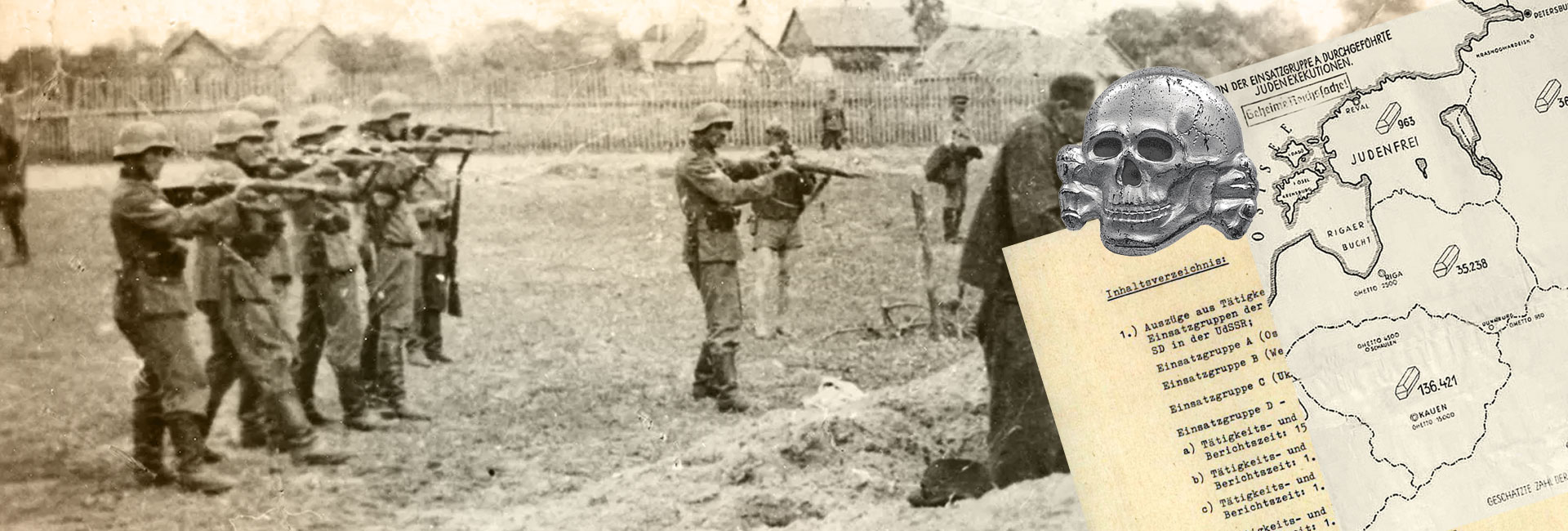
### Holocaust by Bullets in Eastern Europe
# Einsatzgruppen:
Nazi mobile killing units
A documented history of Nazi mass murder in Eastern Europe.
[](#) [](#)
- [Einsatzgruppen:
Nazi mobile killing units](#)
Einsatzgruppen
Officially known as the **Einsatzgruppen** **der** **Sicherheitspolizei** **und des SD**, the **Einsatzgruppen** were mobile SS and police killing units that operated behind the advancing German Army during the Second World War. Organised by the **Reich Security Main Office (RSHA)** under the authority of [**SS-Reichsführer Heinrich Himmler**](https://www.normandy1944.info/home/commanders/life-and-death-of-heinrich-himmler) and directed operationally by [**Reinhard Heydrich**](https://www.normandy1944.info/home/commanders/life-and-death-of-reinhard-heydrich), these mobile task forces were responsible for identifying, arresting and systematically murdering those whom the Nazi regime considered political, racial or ideological enemies. Their victims included **Jews**, **Communist officials**, **Soviet prisoners of war**, **Roma** and c**ountless other civilians targeted by Nazi racial policies**.
Following the German invasion of the Soviet Union on **22 June 1941** ([**Operation Barbarossa**](https://www.normandy1944.info/home/battles/operation-barbarossa)), four Einsatzgruppen accompanied the advancing German Army into the occupied Soviet Union. Operating in close cooperation with the **Wehrmacht**, the **Ordnungspolizei (Orpo)**, the **Sicherheitspolizei (SiPo)**, the **Sicherheitsdienst (SD)**, **Waffen-SS** formations and local collaborators, they became the principal instrument of what historians now call the **"Holocaust by Bullets."**
Through mass shootings carried out in forests, ravines, fields and anti-tank ditches across Eastern Europe, the Einsatzgruppen and their supporting units murdered approximately **1.5–2 million people**, the overwhelming majority of them Jews.
---
### Quick Facts
**Official name:** Einsatzgruppen der Sicherheitspolizei und des SD
**Meaning:** Operational Groups of the Security Police and Security Service (SD)
**Active:** 1941–1945
**Parent organisation:** Reich Main Security Office (RSHA)
**Directed by:** Reinhard Heydrich (until 1942), later Ernst Kaltenbrunner
**Number of main units:** Four (Einsatzgruppen A, B, C and D)
**Subordinate units:** Einsatzkommandos and Sonderkommandos
**Area of operations:** Occupied Eastern Europe and the Soviet Union
**Primary role:** Mass shootings and the systematic murder of Jews, Roma, Communist officials, Soviet prisoners of war and other civilians
**Estimated victims:** Approximately **1.5–2 million people**
[](#)
[](#)
---
### Key Dates
**1939:** Einsatzgruppen first deployed during the invasion of Poland.
**21 June 1941:** Reinhard Heydrich issued operational instructions before the invasion of the Soviet Union.
**22 June 1941:** Operation Barbarossa began and the four Einsatzgruppen followed the German Army into the Soviet Union.
**29–30 September 1941:** More than 33,000 Jews were murdered at Babi Yar near Kyiv by Einsatzgruppe C with support from German police units and local collaborators.
**1941–1945:** The Einsatzgruppen remained active across occupied Eastern Europe, carrying out mass shootings, anti-partisan operations and security duties, while participating in the murder of approximately **1.5–2 million people**, the overwhelming majority of them Jews.
**20 January 1942:** The Wannsee Conference coordinated the implementation of the Final Solution, although the Einsatzgruppen had already been conducting systematic mass murder for months.
**1943–1944:** Operation 1005 attempted to destroy evidence of the mass shootings by exhuming and burning victims' bodies.
**29 September 1947 – 10 April 1948:** The Einsatzgruppen Trial took place in Nuremberg, resulting in numerous convictions for crimes against humanity and war crimes.
[](#)
[](#)
---
> This page explores the origins, evolution, organisation and command structure of the Einsatzgruppen, their relationship with the German Army, their operational methods, subordinate units, and the post-war trials that sought to bring many of their commanders to justice.
## The Formation of the Einsatzgruppen
The **Einsatzgruppen** were formally established by the **Reich Security Main Office (RSHA)** as preparations for [**Operation Barbarossa**](https://www.normandy1944.info/home/battles/operation-barbarossa) intensified during the spring of **1941**. Under the operational leadership of [**Reinhard Heydrich**](https://www.normandy1944.info/home/commanders/life-and-death-of-reinhard-heydrich) and with the approval of [**Heinrich Himmler**](https://www.normandy1944.info/home/commanders/life-and-death-of-heinrich-himmler), these mobile task forces were created to accompany the advancing German Army into the occupied Soviet Union and eliminate those whom the Nazi regime identified as political, racial and ideological enemies.
Heydrich selected experienced officers from the **Security Police (SiPo)** and the **Security Service (SD)**, while each of the four main Einsatzgruppen, **(A, B, C and D)** was assigned to one of the German Army Groups. Every Einsatzgruppe was further divided into smaller **Einsatzkommandos** and **Sonderkommandos**, allowing the units to operate simultaneously across vast areas of occupied Eastern Europe.
The [**invasion of the Soviet Union**](https://www.normandy1944.info/home/battles/operation-barbarossa) marked the beginning of the largest campaign of mass shootings in the Holocaust. Although extermination camps would later become synonymous with the Final Solution, systematic genocide by shooting had already begun on an unprecedented scale during the summer of 1941.
> This campaign entered a new and far more lethal phase on **22 June 1941**, with the launch of **Operation Barbarossa**, the Nazi invasion of the Soviet Union.
## The Operational Role of the Einsatzgruppen
Following the launch of [**Operation Barbarossa**](https://www.normandy1944.info/home/battles/operation-barbarossa), the Einsatzgruppen began operations behind the advancing **Wehrmacht**. Although initially tasked with eliminating Communist officials, political commissars and perceived security threats, their mission rapidly expanded into the systematic murder of Jewish communities, Roma, Soviet prisoners of war and other groups targeted under Nazi racial and ideological policies. Their operations were characterised by:
- **Scale of the murders:** Together with **Order Police battalions**, **Waffen-SS** formations and local auxiliary units, the Einsatzgruppen murdered approximately **1.5–2 million people**, the overwhelming majority of them Jews, primarily through face-to-face mass shootings.
- **The Holocaust by Bullets:** Most of these murders were carried out in forests, ravines, fields and anti-tank ditches across occupied Eastern Europe rather than in extermination camps.
- **The Babi Yar massacre:** One of the most notorious atrocities took place at **Babi Yar** near Kyiv, where **33.771 Jewish men, women and children** were murdered over two days (**29–30 September 1941**).
- **Collaborative violence:** The Einsatzgruppen operated with the assistance of local collaborators, auxiliary police forces and German Order Police battalions, greatly increasing the scale and speed of the killings.
### A Methodical and Documented Campaign
Contrary to the perception of chaotic wartime violence, the activities of the Einsatzgruppen were centrally directed, meticulously organised and systematically documented. Operational reports (**Ereignismeldungen** and **Einsatzgruppen Reports**) were regularly submitted to the **Reich Security Main Office (RSHA)** in Berlin, detailing executions, locations and categories of victims. Many operations were also photographed by German personnel, creating an extensive documentary record of the crimes.
These reports, photographs and captured German documents later became crucial evidence during the **Nuremberg Trials** and, in particular, the **Einsatzgruppen Trial (1947–1948)**, demonstrating beyond doubt the planned and systematic nature of the genocide.
### The Historical Significance of the Eastern Front Massacres
The mass shootings carried out across the occupied Soviet Union remain one of the most significant, yet often overlooked, chapters of Holocaust history. They demonstrate that the Nazi policy of genocide was already fully operational before the widespread use of extermination camps and gas chambers. The Einsatzgruppen transformed ideological persecution into systematic mass murder and paved the way for the later phases of the [**Final Solution**](https://www.normandy1944.info/holocaust). The surviving reports, photographs, witness testimonies and operational records remain among the most compelling documentary evidence of the crimes committed by the Einsatzgruppen and continue to provide historians with an unparalleled insight into the implementation of the Holocaust across Eastern Europe.
## What were the Einsatzgruppen?
The **Einsatzgruppen** were **specialized SS mobile units** operating under the authority of the **Reich Security Main Office (RSHA)**. Deployed behind the advancing Wehrmacht, they carried out mass executions against **Jews**, **Roma** and **Sinti**, **Soviet political commissars** and other groups targeted under Nazi **racial and ideological policies**. Their actions marked the beginning of what became known as the **"Holocaust by Bullets."**
---
Last updated: June 2026. updated with new archival data, unit profiles and map coordinates of the eastern front genocide.
## The administrative origins of the Einsatzgruppen
### The evolution of the Nazi security apparatus (1938–1939)
The **Einsatzgruppen** emerged during the period of Nazi territorial expansion between 1938 and 1939. Operating within the expanding SS security apparatus under [**Reichsführer-SS Heinrich Himmler**](https://www.normandy1944.info/home/commanders/life-and-death-of-heinrich-himmler), these mobile units were initially tasked with securing newly occupied territories, identifying political opponents and enforcing Nazi racial and ideological policies.
#### The role of Reinhard Heydrich and the RSHA
A central figure in the development of the Einsatzgruppen was [**SS-Obergruppenführer Reinhard Heydrich**](https://www.normandy1944.info/home/commanders/life-and-death-of-reinhard-heydrich). As head of the **Reich Security Main Office (RSHA)**, he coordinated the Security Police (Sipo) and the Security Service (SD) into a unified command structure. Under Heydrich's direction, the Einsatzgruppen evolved from security and intelligence detachments into highly organized mobile killing units that became a principal instrument in the early implementation of the Holocaust.
[ 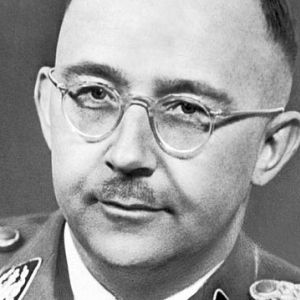###### Heinrich Himmler
Reichsführer SS
1900 - 1945
Life and death
](https://www.normandy1944.info/home/commanders/life-and-death-of-heinrich-himmler)
[ 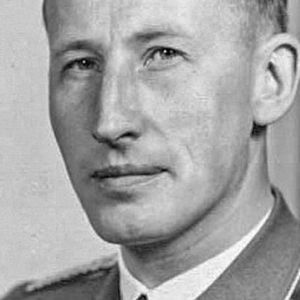###### Reinhard Heydrich
Chief RSHA
1904 - 1942
Life and death
](https://www.normandy1944.info/home/commanders/life-and-death-of-reinhard-heydrich)
## The evolution of the Einsatzgruppen (1938–1941)
### The Anschluss of Austria (March 1938)
The **Anschluss** of Austria marked the first large-scale deployment of **Einsatzgruppen**-type formations. During the annexation, the Nazi security apparatus used these mobile units to secure territory, arrest political opponents and identify individuals considered hostile to the regime. These early operations provided valuable experience in coordinating SS and Security Police activities and established the organizational foundations for future deployments in occupied Europe.
### The occupation of Czechoslovakia and the role of the RSHA (1939)
Following the occupation of **Czechoslovakia** in March 1939, the Einsatzgruppen assumed a more formal and structured role. Under the direction of [**SS-Obergruppenführer Reinhard Heydrich**](https://www.normandy1944.info/home/commanders/life-and-death-of-reinhard-heydrich), head of the **Reich Security Main Office (RSHA)**, their responsibilities included:
- **Territorial security:** Securing newly occupied regions and maintaining Nazi control.
- **Intelligence gathering:** Identifying political opponents and individuals classified as "enemies of the State."
- **Political repression:** Conducting arrests, interrogations and deportations in support of Nazi occupation policy.
### From Occupation to mass annihilation (1939–1941)
The outbreak of the Second World War on **September 1, 1939**, with the invasion of Poland, marked a decisive turning point in the evolution of the Einsatzgruppen. Their mission expanded beyond intelligence and security operations to include the systematic persecution and murder of members of the Polish elite as part of efforts to destroy the country's political, intellectual and cultural leadership. Their principal targets included:
- **Political and community leaders:** Politicians, civil servants, clergy, educators, judges and members of the Polish nobility.
- **The Polish intelligentsia:** Academics, writers, lawyers, teachers and other influential figures regarded as potential sources of resistance.
This process reached its most lethal phase during [**Operation Barbarossa**](https://www.normandy1944.info/home/battles/operation-barbarossa) in 1941. Following the invasion of the Soviet Union, the Einsatzgruppen were deployed behind the advancing **Wehrmacht** to carry out the **"Holocaust by Bullets."**
> They systematically murdered **Jewish communities**, **Roma**, **Soviet political commissars**, **Communist officials** and **many others targeted under Nazi racial and ideological policies** on an unprecedented scale.
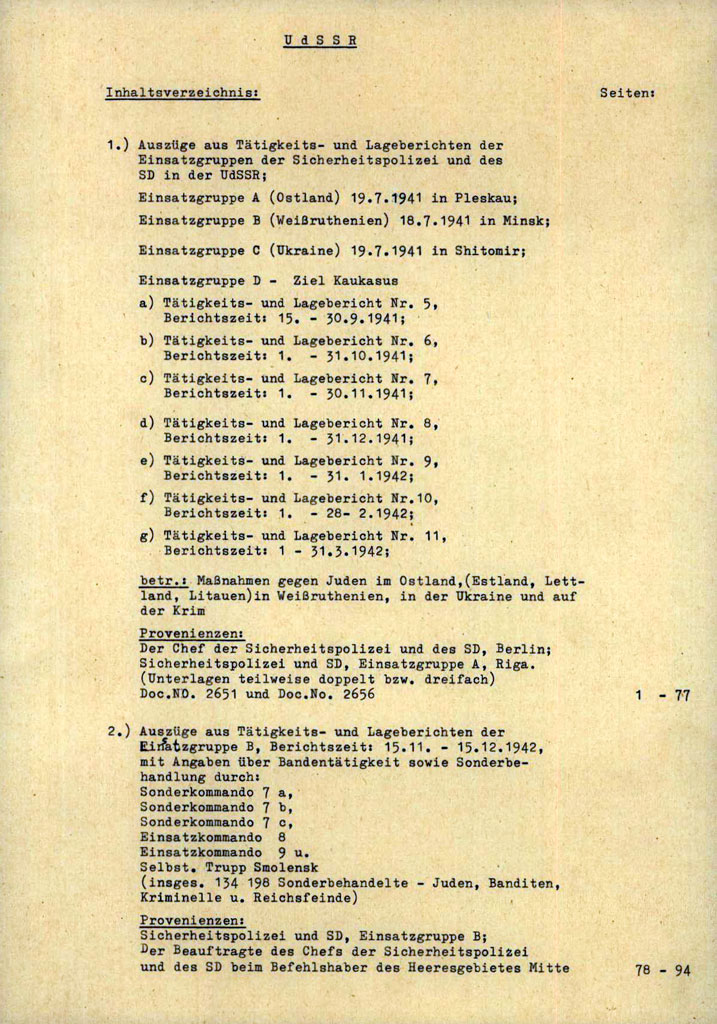
Orders for the Einsatzgruppen
[](#js-0) 
### Mandate of strategic ambiguity
The orders issued to the **Einsatzgruppen** were deliberately broad rather than highly specific. This allowed commanders to interpret and implement directives according to local conditions while pursuing the ideological objectives of the Nazi regime. By avoiding rigid operational instructions, the **Reich Security Main Office (RSHA)** enabled the rapid escalation of violence as the German advance moved deeper into occupied Eastern Europe.
Copyright US Holocaust Memorial Museum Collection.
###### Interview with Frima
Frima and her family were confined to a ghetto by the Nazis. Her father was forced to work as an interpreter and he later died. Frima, her mother and sister escaped a German mobile killing unit massacre by pretending not to be Jews. However, they were later discovered and jailed. Frima's mother devised another escape plan.
She had Frima's sister smuggled to Romania, while Frima wandered in search of safekeeping. Eventually, Frima's mother was able to arrange for her to be smuggled to Romania as well. The family was reunited in Romania, where they were liberated.
## Leadership, recruitment and training
### The Pretzsch Training School
In preparation for [**Operation Barbarossa**](https://www.normandy1944.info/home/battles/operation-barbarossa), **SS-Brigadeführer Bruno Streckenbach** (1902–1977) was entrusted with the recruitment and training of **Einsatzgruppen** personnel. The principal training center was the **Border Police School** at **Pretzsch on the Elbe**, approximately 150 kilometers southwest of Berlin. Owing to the large number of recruits, many personnel were accommodated in surrounding towns. The training programme prepared the units for their forthcoming "special tasks" on the Eastern Front and included:
- **Ideological indoctrination:** Lectures on Nazi racial ideology, anti-Bolshevism and the so-called "Russian mentality."
- **Tactical instruction:** Training in security operations, anti-partisan warfare and logistical planning.
- **Operational readiness:** Military drills, weapons training and medical briefings on diseases likely to be encountered on the Eastern Front.
In June 1941, [**Reinhard Heydrich**](https://www.normandy1944.info/home/commanders/life-and-death-of-reinhard-heydrich) personally briefed the Einsatzgruppen commanders before the invasion of the Soviet Union. Although no complete transcript of his address survives, surviving evidence indicates that the briefing emphasized the ideological objectives of the campaign and prepared the units for the mass executions that followed in the occupied territories.
## Personnel composition and the execution mandate
### Who were the men of the death squads?
The **Einsatzgruppen** consisted of approximately **3.000** personnel. Their ranks were drawn from several Nazi security organizations, including the **Sicherheitspolizei (Sipo)**, **Sicherheitsdienst (SD)** and **Ordnungspolizei (Orpo)** and were reinforced by selected members of the **Waffen-SS**.
### The Heydrich Directive (July 2, 1941)
In a formal communication to the **Higher SS and Police Leaders (HSSPFs)**, **Reinhard Heydrich** defined the principal categories of individuals to be targeted during security operations in the occupied Soviet territories. These included:
- **Communist officials:** Representatives of the Comintern, senior Communist Party officials and professional Communist politicians.
- **Party cadres:** National and regional Communist Party functionaries, particularly those regarded as ideological leaders or potential organizers of resistance.
- **People's Commissars:** Soviet political commissars and senior officials within the Soviet administration.
- **Jewish targets:** Jews holding positions within the Communist Party or Soviet state administration, as well as individuals accused of sabotage, resistance, or other activities deemed hostile to the Nazi occupation.
Heydrich also instructed Einsatzgruppen commanders to encourage and exploit local antisemitic sentiment wherever possible. By fostering and supporting pogroms against Jewish communities, the SS sought to intensify the violence while creating the appearance that the killings were spontaneous actions carried out by local populations.
During the first weeks of Operation Barbarossa, the Einsatzgruppen primarily targeted **Jewish men of military age**, **Communist officials** and **Soviet political commissars**. Within **only a few months**, however, the scope of the killings had expanded to encompass the systematic extermination of entire Jewish communities.
> **Men, women, children and the elderly were murdered without distinction**, demonstrating the rapid radicalization of Nazi genocidal policy during the summer of 1941.
### Who were the leaders of the Einsatzgruppen?
The commanders of the **Einsatzgruppen** and **Einsatzkommandos** were carefully selected from **Reinhard Heydrich's** senior SS and Security Police leadership. Unlike many of the rank-and-file personnel, these officers were highly educated, with many holding doctorates in law, economics, history, or other academic disciplines. Their education and administrative experience enabled them to organize and direct large-scale operations with remarkable efficiency.
- **Ideological commitment:** Many commanders were committed National Socialists who embraced Nazi racial and ideological doctrine.
- **Administrative leadership:** They coordinated personnel, logistics, reporting and cooperation with other SS, police and military authorities.
- **Operational command:** They planned and supervised mass executions while ensuring that detailed operational reports were submitted to the **Reich Security Main Office (RSHA)**.
### Collaboration and auxiliary forces
The effectiveness of the **Einsatzgruppen** depended heavily on the support of local collaborators and auxiliary forces. Across the **Baltic states**, **Ukraine**, **Belarus** and other occupied territories, the SS worked closely with auxiliary police units, local militias and other collaborators who assisted in identifying, arresting, guarding and murdering those targeted under Nazi racial and ideological policies.
> This cooperation significantly increased the scale and speed of the killings. While the Einsatzgruppen planned and directed the operations, the participation of local auxiliary forces played a crucial role in implementing the **"Holocaust by Bullets"** across occupied Eastern Europe.
## Did the Einsatzgruppen have enough manpower?
### The limits of paramilitary capacity
Despite commanding an auxiliary force of approximately **10.000 police officers** and **33.000 local collaborators**, the **Einsatzgruppen** lacked the manpower to carry out the systematic extermination of Jewish communities across the vast territories of occupied Eastern Europe on their own. To achieve the regime's genocidal objectives, the **Reich Security Main Office (RSHA)** and senior SS leadership relied on the participation of additional **Order Police (Orpo)** battalions, **Waffen-SS units** and other auxiliary formations.
This broad network of military, police and civilian collaborators transformed the mass shootings from operations conducted by relatively small mobile units into a coordinated campaign of genocide across occupied Eastern Europe.
### Key participating units and collaborators
The **Einsatzgruppen** did not operate in isolation. Their campaign of mass murder relied on the support and participation of numerous German military, police and auxiliary organizations, including:
- **SS Brigades:** Various SS formations operated behind the front lines, supporting security operations and participating in mass killings.
- **The Fegelein Cavalry Brigade:** Commanded by **Hermann Fegelein**, this SS cavalry formation conducted large-scale "pacification" operations in the Pripyat Marshes, resulting in the mass murder of thousands of civilians, particularly Jews.
- **The Arājs Kommando:** A Latvian auxiliary unit led by **Viktors Arājs**, responsible for the murder of tens of thousands of Jews and other victims in Latvia.
- **Reserve Police Battalions (Ordnungspolizei):** These police units played a central role in the roundup, deportation and mass shooting of Jewish communities and other civilians throughout occupied Eastern Europe.
- **SS Sturmbrigade Dirlewanger:** Commanded by **Oskar Dirlewanger**, a convicted sex offender, this notorious penal unit was composed largely of convicted criminals and became infamous for its exceptional brutality during anti-partisan operations and the mass murder of civilians. Its deployment illustrates how the Nazi regime exploited convicted criminals alongside ideologically committed SS personnel in the pursuit of genocide.
- **The 5th SS Panzer Division Wiking:** Although primarily a Waffen-SS combat formation, elements of the division participated in security operations and were implicated in atrocities against Jewish civilians and other targeted groups during the campaign in the Soviet Union.
- **The Wehrmacht:** Although not formally part of the Einsatzgruppen, elements of the German Army secured operational areas, provided logistical support, assisted in the roundup of civilians and in some instances directly participated in mass shootings.
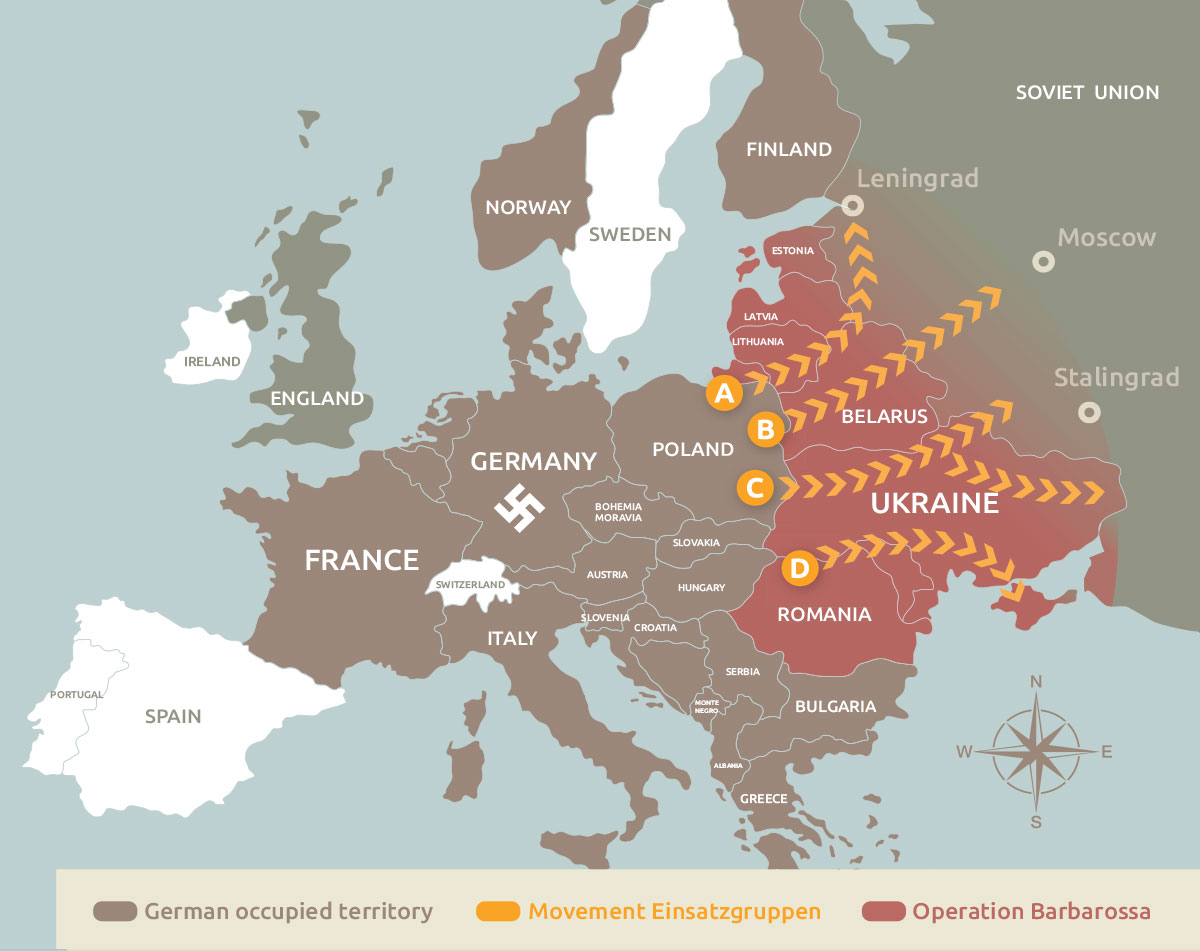
### Movement of the Einsatzgruppen (1941-1942)
[](#js-1) 
Click on the map to enlarge
> The map above illustrates the movement of the **Einsatzgruppen A, B, C** and D from **June 1941 to November 1942**. These mobile units tracked alongside the advancing German Wehrmacht into the Soviet Union under [**Operation Barbarossa**](https://www.normandy1944.info/home/battles/operation-barbarossa).
## Psychological impact of mass executions
#### The mental toll on perpetrators
While the victims endured unimaginable suffering and death, the members of the **Einsatzgruppen** also faced the psychological consequences of carrying out thousands of face-to-face executions. Unlike the later extermination camps, where killing became increasingly mechanized, the Holocaust by bullets required perpetrators to shoot men, women and children at close range, often over prolonged periods.
Reports from the Eastern Front described cases of battle fatigue, emotional strain and widespread alcoholism among some members of the Einsatzgruppen and attached police units. However, historians also note that many perpetrators continued their duties without significant hesitation, motivated by ideological conviction, obedience, peer pressure, career ambitions or a gradual desensitization to violence. Psychological distress rarely resulted in refusal to participate.
> On **1 August 1941**, [**Heinrich Himmler**](https://www.normandy1944.info/home/commanders/life-and-death-of-heinrich-himmler) witnessed a mass execution near **Minsk**. During the shooting, Himmler reportedly became physically ill after observing the brutal killings at close range. The incident reinforced his concern that the direct involvement of SS personnel in mass shootings could negatively affect the efficiency and morale of the execution squads.
### The shift toward industrialized killing
Following his visit, Himmler instructed **Arthur Nebe**, commander of **Einsatzgruppe B**, to investigate alternative methods of mass murder that would reduce the psychological burden on the perpetrators while increasing efficiency. Experiments with explosives and carbon monoxide eventually led to the development of **mobile gas vans**, in which victims were killed by engine exhaust during transport.
The search for more systematic methods of mass murder culminated in the establishment of permanent extermination camps. On **13 October 1941**, Himmler instructed [**Odilo Globočnik**](https://www.normandy1944.info/home/commanders/life-and-death-of-odilo-globocnik), SS and Police Leader in the Lublin District, to begin preparations for the construction of **Bełżec**, the first extermination camp established as part of **Operation Reinhard**. Together with [**Sobibór**](https://www.normandy1944.info/holocaust/concentrationcamps/sobibor) and **Treblinka**, these camps marked the transition from the mass shootings carried out by the Einsatzgruppen to the industrialized extermination of Europe's Jews during the **Final Solution**.
Although the extermination camps became the principal means of mass murder, the Einsatzgruppen and related SS and police formations continued to carry out mass executions throughout the remainder of the war. They remained active in **anti-partisan operations**, r**eprisals against civilians** and the **murder of Jews** who had survived earlier massacres or were discovered in hiding, demonstrating that the "**Holocaust by Bullets**" continued alongside the operation of the extermination camps.
Click on the pictures to enlarge them
[ 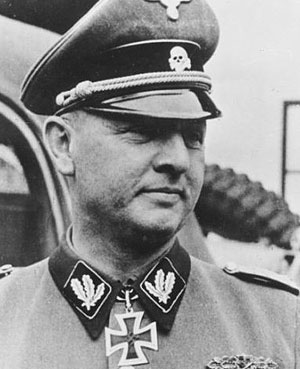###### Bruno Streckenbach
SS-Brigadeführer
Responsible for recruiting and training the men of the Einsatzgruppen.
](https://www.normandy1944.info/images/einsatzgruppen/SS-Gruppenfuhrer-Bruno-Streckenbach.jpg)
[ 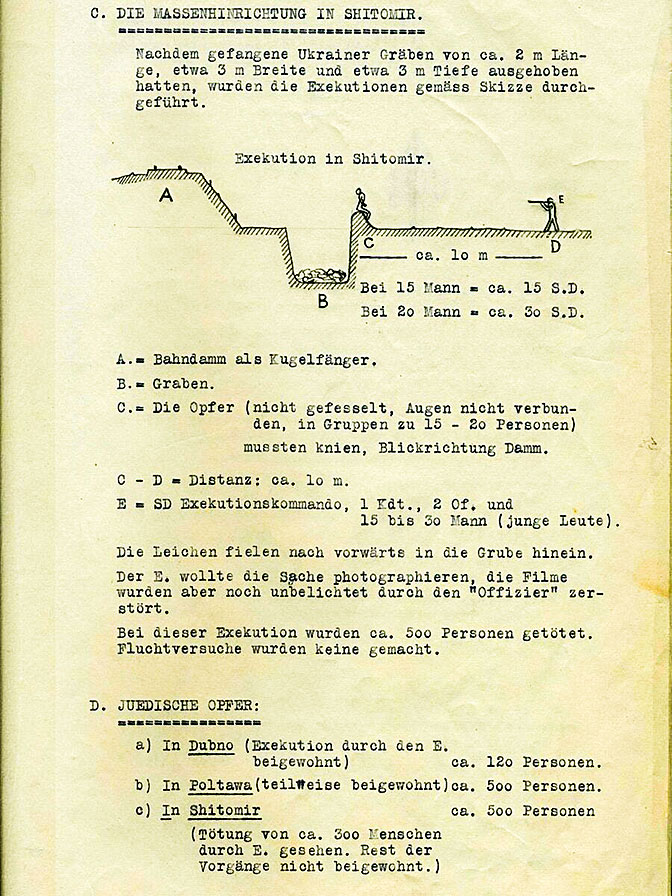###### Schematic of the mass shooting setup in Shitomir
](https://www.normandy1944.info/images/documents/D-Day-einsatzgruppen-report-drawing-mass-shooting.jpg)
[ ###### Polizei Battalions
Assisted in the Holocaust
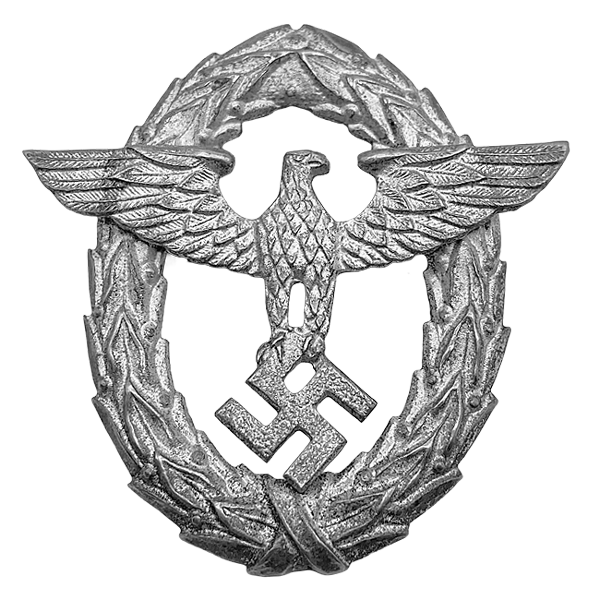
During **World War II**, more than **130 Order Police (Ordnungspolizei) battalions** served in occupied Europe. Their primary role was to enforce German occupation policies, maintain public order, guard prisoners and conduct anti-partisan operations. Many battalions also played a central role in the **Holocaust by bullets**, assisting the **Einsatzgruppen** in the roundup and mass shooting of **Jews**, **Roma**, **Soviet political commissars** and **other civilians targeted by the Nazi regime.**
Although participation in many of the mass shootings was technically voluntary, historical research has shown that very few policemen refused to take part. Those who declined were generally assigned other duties and were rarely subjected to severe punishment by their commanding officers. Nevertheless, peer pressure, ideological conviction, obedience to authority and concern for their military careers ensured that the overwhelming majority participated in the killings.
](https://www.normandy1944.info/images/badges/german/German-Polizei-Cap-Badge.png)
[ ###### The "Jäger" report
Baltic states Judenfrei
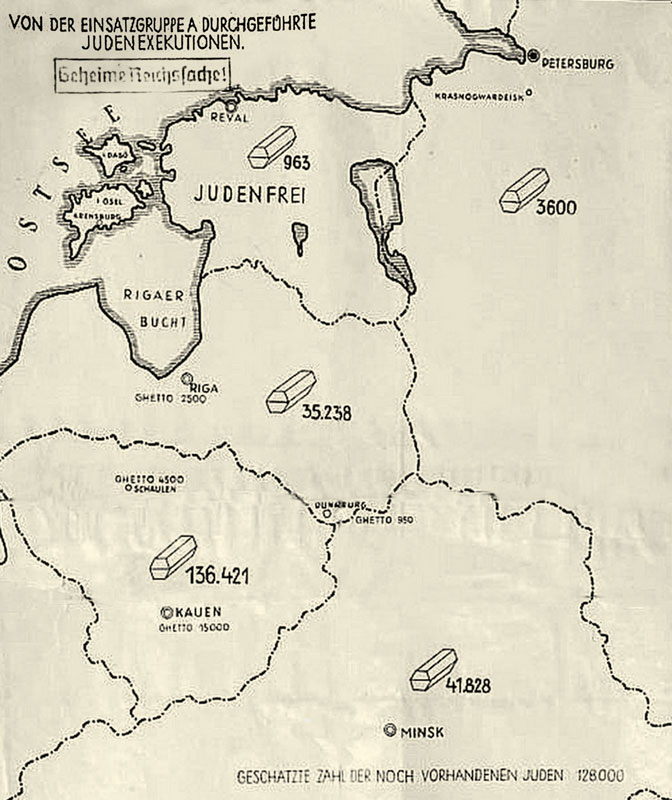
The murder of **137.346 people** was meticulously recorded in the **Jäger Report**, one of the most detailed surviving documents of the Holocaust by bullets. The report lists the dates, locations and numbers of victims executed by **Einsatzkommando 3** between **2 July and 25 November 1941**.
](https://www.normandy1944.info/images/documents/D-Day-Map-einsatzgruppen-Stahlecker-Report.jpg)
[ ###### Karl Jäger
SS Standartenführer
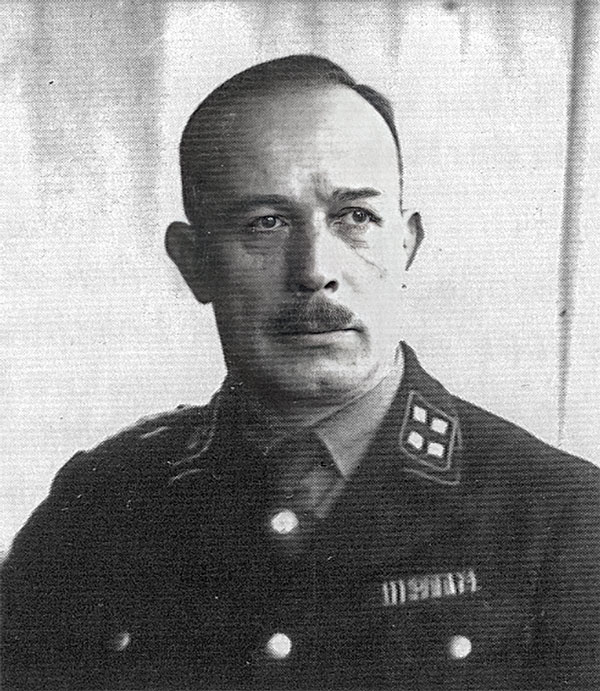
SS-Standartenführer Karl Jäger, commander of Einsatzkommando 3, proudly reported that Lithuania was largely ***"Judenfrei"*** ("free of Jews") after the systematic murder of more than **137.346 people**. His report remains one of the most detailed surviving records of the Holocaust by bullets.
](https://www.normandy1944.info/images/commanders/german/Einsatzgruppen/D-Day-Normandy-Beyond-Karl-Jager.jpg)
[ Discover the Holocaust ](https://www.normandy1944.info/holocaust "Discover the Holocaust ")
### Operation 1005: Destroying the evidence
As the war turned against Germany, the Nazi leadership also sought to conceal the crimes committed by the Einsatzgruppen. Beginning in 1942, the SS launched **Operation 1005**, a secret programme to destroy the physical evidence of mass murder before the advancing Soviet forces and other Allied armies could uncover the massacre sites.
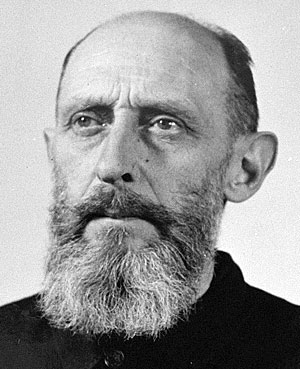
The operation was directed by **SS-Standartenführer Paul Blobel**, the former commander of **Sonderkommando 4a**, who had overseen the **Babi Yar massacre**. Jewish prisoners were forced to exhume thousands of decomposing bodies from mass graves. The corpses were burned on large pyres constructed from railway tracks and timber, after which the remaining bones were crushed and the ashes scattered or reburied. Once the work had been completed, the prisoners themselves were usually murdered to eliminate witnesses.
Although Operation 1005 succeeded in destroying evidence at numerous massacre sites, it was only partially successful. Many graves remained undiscovered or could not be completely erased. Surviving German documents, eyewitness testimony and modern archaeological and forensic investigations have since confirmed the scale of the Einsatzgruppen's crimes despite these deliberate attempts to conceal them.
### SS-Standartenführer Paul Blobel
Commander of Sonderkommando 4a
Responsible for the **Babi Yar massacre** and later appointed to direct **Operation 1005**, the secret SS programme to exhume and burn the bodies of Einsatzgruppen victims in an attempt to destroy evidence of the Holocaust.
[](#)
[](#)
### Commanding officers of the Einsatzgruppen
### Commanding officers of the Einsatzgruppen up to 1941
- Einsatzgruppe A
- Einsatzgruppe B
- Einsatzgruppe C
- Einsatzgruppe D
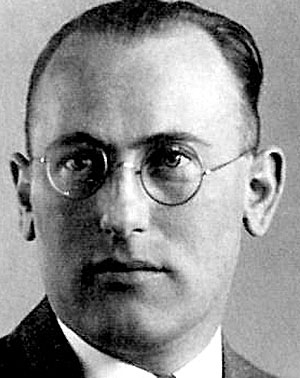
### SS-Brigadeführer Dr. Franz W. Stahlecker
Einsatzgruppe A consisted of approximately 990 men
**Franz Walter Stahlecker** commanded **Einsatzgruppe A**, the largest of the four Einsatzgruppen assigned to **Operation Barbarossa**. His unit consisted of approximately **990 men** drawn from the **Gestapo**, the **Sicherheitsdienst (SD)**, the **Kriminalpolizei (Kripo)**, the **Ordnungspolizei (Orpo)** and the **Waffen-SS**.
Operating in the **Baltic States** and advancing into **northwestern Soviet territory**, **Einsatzgruppe A** was responsible for the systematic murder of hundreds of thousands of **Jews**, **political commissars**, **Roma** and **other groups targeted by the Nazi regime**. Stahlecker worked closely with local collaborators, encouraging and organizing anti-Jewish pogroms before the Einsatzgruppe assumed direct control of the mass killings.
### Death
**Franz Walter Stahlecker** was killed on **22 March 1942** during an engagement with Soviet partisans near **Krasnogvardeysk**, Soviet Union (today **Gatchina**, Russia). He was succeeded as commander of **Einsatzgruppe A** by **Heinz Jost**.
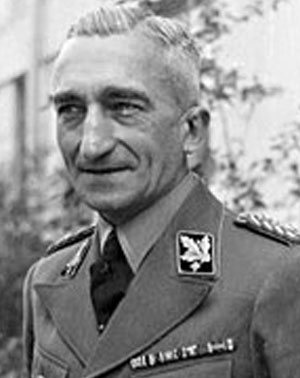
### SS-Brigadeführer Arthur Nebe
Einsatzgruppe B consisted of approximately 650 men
**Arthur Nebe** commanded **Einsatzgruppe B**, which consisted of approximately **650 men**. The unit was composed of personnel from the **Gestapo**, the **Sicherheitsdienst (SD)**, the **Kriminalpolizei (Kripo)**, the **Ordnungspolizei (Orpo)** and the **Waffen-SS**.
Operating behind **Army Group Centre**, **Einsatzgruppe B** carried out mass shootings throughout present-day **Belarus** and **western Russia**. Under Nebe's command, the unit systematically murdered tens of thousands of Jews, Soviet political commissars, Roma and other civilians identified as enemies of the Nazi regime.
### Death
In **October 1941**, Arthur Nebe returned to **Berlin**, where he resumed his position as head of the **Reich Criminal Police Office (Kripo)** within the **Reich Main Security Office (RSHA)**. Historians believe he sought reassignment after becoming increasingly affected by the psychological strain of the mass shootings.
Following the failed **20 July Plot** against **Adolf Hitler** in 1944, Nebe was implicated in the conspiracy. After several months in hiding, he was arrested by the Gestapo, sentenced to death by the **People's Court (Volksgerichtshof)** and executed by hanging at **Plötzensee Prison** in Berlin on **21 March 1945**.
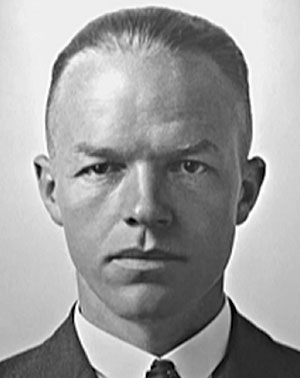
### SS-Gruppenführer Dr. Dr. Otto Rasch
Einsatzgruppe C consisted of approximately 700 men
**Otto Rasch** commanded **Einsatzgruppe C**, which consisted of approximately **700 men**. The unit was composed of personnel from the **Gestapo**, the **Sicherheitsdienst (SD)**, the **Kriminalpolizei (Kripo)**, the **Ordnungspolizei (Orpo)** and the **Waffen-SS**.
Operating behind **Army Group South**, **Einsatzgruppe C** carried out mass shootings throughout **Ukraine**. Under Rasch's command, the unit was responsible for the murder of tens of thousands of **Jews**, **Soviet political commissars**, **Roma and other civilians**. The most notorious massacre carried out by **Einsatzgruppe C** was the mass execution at [**Babi Yar**](https://www.normandy1944.info/holocaust/massacres-and-atrocities/babi-yar) near Kyiv on **29–30 September 1941**, during which **33.771 Jewish men, women and children** were murdered in just two days.
### Death
At the end of **September 1947**, Otto Rasch was indicted before the **Einsatzgruppen Trial** in Nuremberg. However, the proceedings against him were discontinued on **5 February 1948** after he was diagnosed with **Parkinson's disease** and declared medically unfit to stand trial.
**Otto Rasch** died on **1 November 1948** in **Wehrstedt**, Lower Saxony, Germany, without ever being brought to justice for his crimes.
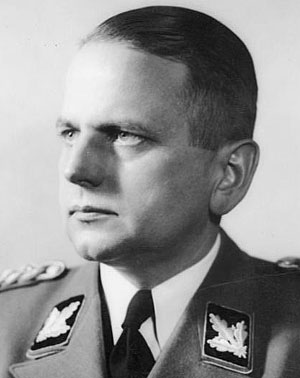
### SS-Gruppenführer Dr. Otto Ohlendorf
Einsatzgruppe D consisted of approximately 500–600 men
**Otto Ohlendorf** commanded **Einsatzgruppe D**, which consisted of approximately **500-600 men**. The unit was composed of personnel from the **Gestapo**, the **Sicherheitsdienst (SD)**, the **Kriminalpolizei (Kripo)**, the **Ordnungspolizei (Orpo)** and the **Waffen-SS**.
Operating behind the German **11th Army** in southern **Ukraine**, **Crimea** and later the northern **Caucasus**, **Einsatzgruppe D** systematically murdered **Jews**, **Soviet political commissars**, **Roma** and other civilians identified as enemies of the Nazi regime. Under Ohlendorf's command, the unit was responsible for the murder of an estimated **90.000 people** between **1941 and 1942**.
---
### Commanding officers Einsatzgruppen after 1941
- Einsatzgruppe A
- Einsatzgruppe B
- Einsatzgruppe C
- Einsatzgruppe D
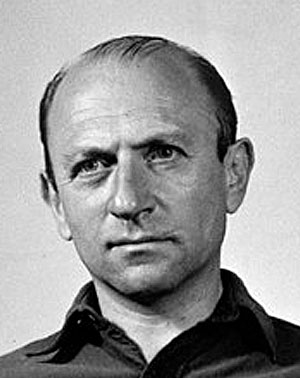
### SS-Brigadeführer Heinz Jost
Einsatzgruppe A consisted of approximately 990men
**Heinz Jost** succeeded **Franz Walter Stahlecker** as commander of **Einsatzgruppe A** in **March 1942**. The unit consisted of approximately **990 men** drawn from the **Gestapo**, the **Sicherheitsdienst (SD)**, the **Kriminalpolizei (Kripo)**, the **Ordnungspolizei (Orpo)** and the **Waffen-SS**.
Operating in the **Baltic States** and **northwestern Soviet territory**, **Einsatzgruppe A** continued the systematic murder of **Jews**, **political commissars, Roma** and **other groups targeted by the Nazi regime**. Although Jost's period of command was relatively brief, the Einsatzgruppe remained actively involved in mass shootings and anti-partisan operations until he was replaced later in 1942.
### Death
Following the war, Heinz Jost was tried before the **Einsatzgruppen Trial** in Nuremberg. In **1948**, he was convicted of war crimes and crimes against humanity and sentenced to life imprisonment. His sentence was later reduced and he was released from **Landsberg Prison** in **1951**. After his release, Jost worked as a **real estate agent** in **Düsseldorf**. He died on **12 November 1964** in **Bensheim**, West Germany.
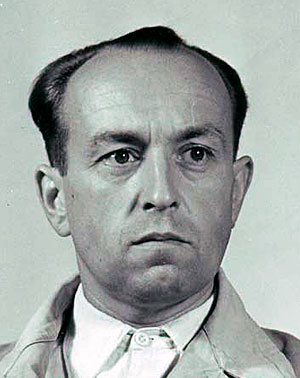
### SS-Brigadeführer Erich Naumann
Einsatzgruppe B consisted of approximately 650 men
**Erich Naumann** succeeded **Arthur Nebe** as commander of **Einsatzgruppe B** in **November 1941**. The unit consisted of approximately **650 men** drawn from the **Gestapo**, the **Sicherheitsdienst (SD)**, the **Kriminalpolizei (Kripo)**, the **Ordnungspolizei (Orpo)** and the **Waffen-SS**.
Operating behind **Army Group Centre**, **Einsatzgruppe B** continued the systematic murder of **Jews**, **Soviet political commissars**, **Roma** and **other civilians in Belarus and western Russia**. Under Naumann's command, the unit remained one of the principal instruments of the Holocaust by bullets and the Nazi policy of mass murder in the occupied Soviet Union.
### Death
Following the war, Erich Naumann was tried before the **Einsatzgruppen Trial** in Nuremberg. He was found guilty of **war crimes**, **crimes against humanity**, and membership in the criminal organizations of the **SS** and the **Sicherheitsdienst (SD)**. He was sentenced to death and executed by hanging at **Landsberg Prison** shortly after midnight on **7 June 1951**.
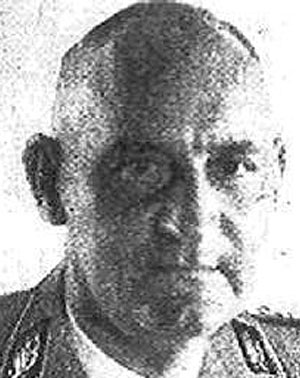
### SS-Gruppenführer Dr. Max Thomas
Einsatzgruppe C consisted of approximately 700 men
**Max Thomas** succeeded **Otto Rasch** as commander of **Einsatzgruppe C** in **October 1941**. The unit consisted of approximately **700 men** drawn from the **Gestapo**, the **Sicherheitsdienst (SD)**, the **Kriminalpolizei (Kripo)**, the **Ordnungspolizei (Orpo)** and the **Waffen-SS**.
Operating behind **Army Group South**, **Einsatzgruppe C** continued the systematic murder of **Jews**, **Soviet political commissars**, **Roma** and **other civilians throughout occupied Ukraine**. Under Thomas's command, the unit remained actively involved in mass shootings, anti-partisan operations and the implementation of Nazi racial policy in the occupied territories.
### Death
Following Germany's surrender, **Max Thomas** was arrested by Allied forces. On **6 December 1945**, while in custody, he attempted suicide. He died the same day from his injuries at the **Luitpold Hospital** in **Würzburg**, Germany.

### SS-Gruppenführer Dr. Otto Ohlendorf
Einsatzgruppe D consisted of approximately 500–600 men
**Otto Ohlendorf** commanded **Einsatzgruppe D**, which consisted of approximately **500-600 men**. The unit was composed of personnel from the **Gestapo**, the **Sicherheitsdienst (SD)**, the **Kriminalpolizei (Kripo)**, the **Ordnungspolizei (Orpo)** and the **Waffen-SS**.
Operating behind the German **11th Army** in **southern Ukraine**, **Crimea** and later the **northern Caucasus**, **Einsatzgruppe D** systematically murdered **Jews**, **Soviet political commissars**, **Roma** and **other civilians identified as enemies of the Nazi regime**. Under Ohlendorf's command, the unit was responsible for the murder of an estimated **90.000 people** between 1941 and 1942.
### Replacement
In **July 1942**, **Ohlendorf** relinquished command of **Einsatzgruppe D** and was succeeded by **SS-Brigadeführer Dr. Walther Bierkamp**. Ohlendorf then returned to Berlin to resume his duties as **head of RSHA Amt III (SD-Inland)**.
### Death
Following the war, Otto Ohlendorf was tried before the **Einsatzgruppen Trial** in Nuremberg. He was convicted of **war crimes**, **crimes against humanity**, and membership in the criminal organizations of the **SS** and the **Sicherheitsdienst (SD)**. He was sentenced to death and, after spending nearly three years in detention, was executed by hanging at **Landsberg Prison**, Bavaria, on **7 June 1951**.
## Structure and Organization of the Einsatzgruppen
###### Hierarchy of the Sonderkommandos and Einsatzkommandos
The figures below represent documented victims reported in surviving German Einsatzgruppen operational reports (Ereignismeldungen UdSSR) and should be regarded as minimum totals rather than the final number of victims.
##### Einsatzgruppen A
##### 136.421 documented victims
**Einsatzgruppe A** was assigned to **Army Group North** under **Field Marshal Wilhelm von Leeb**, operated throughout the **Baltic states** up to **Leningrad**. It was composed of the following units:
- Sonderkommando 1a
Commanded by Martin Sandberger
replaced by Bernhard Baatz.
- Sonderkommando 1b
Commanded by Erich Ehrlinger
later replaced by Walter Hoffmann and later by Eduard Strauch.
- Einsatzkommando 2
Commanded by Rudolf Batz
replaced by Eduard Strauch and later Rudolf Lange.
- Einsatzkommando 3
Commanded by Karl Jäger
replaced by Wilhelm Fuchs and later by Hans-Joachim Böhme.
##### Einsatzgruppen B
##### 134.298 documented victims
**Einsatzgruppe B** was assigned to **Army Group Centre** under **Field Marshal Fedor von Bock**, operated in **Belarus** and along **the advance toward Moscow**. It was composed of the following units:
- Sonderkommando 7a
Commanded by Walter Blume
replaced by Eugen Steimle later by Kurt Matschke and later by Albert Rapp and Helmut Looss and Gerhard Bast.
- Sonderkommando 7b
Commanded by Günter Rausch
replaced by Adolf Ott and later by Josef Auinger and Karl-Georg Rabe.
- Sonderkommando 7c
Commanded by Wilhelm Bock
replaced by Ernst Schmücker and later by Wilhelm Blühm and Hans Eckhardt
- Einsatzkommando 8
Commanded by Otto Bradfisch
replaced by Heinz Richter, then by Erich Isselhorst and later by Hans-Gerhard Schindhelm and Alfred Rendörffer.
- Einsatzkommando 9
Commanded by Alfred Filbert
replaced by Oswald Schäfer later by Wilhelm Wiebens and by Dr. Friedrich Buchardt and Werner Kämpf.
- Vorkommando Moskau
Commanded by Franz Six
replaced by Woldemar Klingelhöfer and later by Dr. Erich Körting and Dr. Friedrich Buchardt and by Friedrich-Wilhelm Bock .
##### Einsatzgruppen C
##### 118.341 documented victims
**Einsatzgruppe C** was assigned to **Army Group South** under **Field Marshal Gerd von Rundstedt,** operated in the **northern and central part of Ukraine**. It was composed of the following units:
- Sonderkommando 4a
Commanded by Paul Blobel
replaced by Erwin Weinmann, then Eugen Steimle and later by Friedrich Schmidt and Theodor Christensen.
- Sonderkommando 4b
Commanded by Günter Hermann
replaced by Fritz Braune, then by Dr. Walter Hänsch and later by Walter Hänsch and August Meier, Friedrich Suhr and Waldemar Krause.
- Einsatzkommando 5
Commanded by Erwin Schulz
replaced by August Meier.
- Einsatzkommando 6
Commanded by Dr. Erhard Kröger
replaced by Robert Möhr, later by Ernst Biberstein and later by Friedrich Suhr.
##### Einsatzgruppen D
##### 91.728 documented victims
**Einsatzgruppe D** was assigned to the **German 11th Army** under **Generaloberst Erich von Manstein**, operated in **Moldavia**, **southern Ukraine**, **Crimea** and the **Caucasus**. It was composed of the following units:
- Sonderkommando 10a
Commanded by Heinz Seetzen
replaced by Dr. Kurt Christmann.
- Sonderkommando 10b
Commanded by Aloïs Persterer
replaced by Eduard Jedamzik.
- Einsatzkommando 11a
Commanded by Paul Zapp
replaced by Dr. Gerhard Bast and later by Werner Hersmann.
- Einsatzkommando 11b
Commanded by Hans Unglaube
replaced by Bruno Müller and later by Werner Braune and Paul Schulz.
- Einsatzkommando 12
Commanded by Gustav Nosske
replaced by Erich Müller and later by Günther Herrmann.
### Number of people executed by the different Einsatzgruppen
## Einsatzgruppen's major operations
#### Pogroms, massacres and atrocities committed in 1941
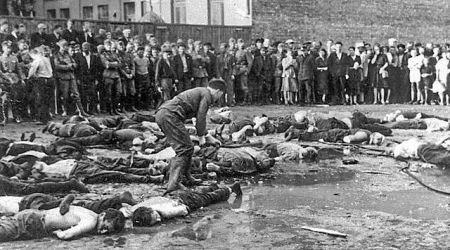##### Kaunas Pogrom, Lithuania
25 – 29 June 1941
**Around 4.000 Jews** murdered in public beatings, street killings and mass executions. The most notorious event, known as the **Lietūkis Garage Massacre**, took place at the former NKVD garage in Kaunas, nationalized as the Lietūkis garage. On 27 June, several dozen Jewish men allegedly linked to the NKV were publicly tortured and executed in front of a crowd of Lithuanian men, women and children.
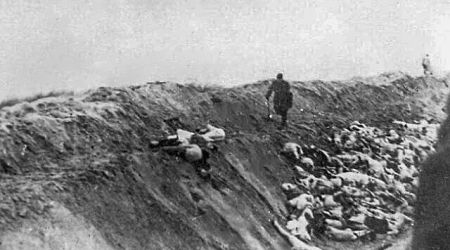##### Liepāja Massacres, Latvia
29 – 30 June 1941
The Liepāja massacres were a series of mass executions, many public or semi-public, in and near the city of Liepāja, on the west coast of Latvia. About 5.000 of the 5.700 Jews trapped in Liepāja were shot by the Einsatzgruppen 1a, Ordnungspolizei, Arajs Kommando, Latvian Auxiliary Police, Wehrmacht and the Kriegsmarine.
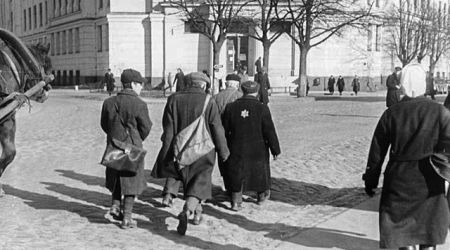##### Riga Pogrom, Latvia
4 July 1941
Having entered the town, German Einsatzgruppe A initiated a pogrom with the participation of Latvian units. Ca. 400 Jews were murdered and all synagogues were burned down.
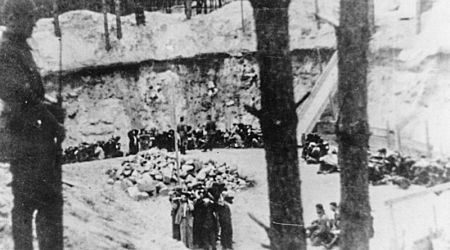##### Ponary Forest Massacre
July to September 1941
After the German occupation of Vilna, Lithuania on June 24, 1941 (now Vilnius). In the following weeks, Einsatzgruppen, aided by Lithuanian collaborators, began systematically murdering the Jewish population. They were taken to the Ponary Forest (Paneriai), southwest of the city, and executed in mass graves. Killings continued which resulted in 75.000 people, mostly Jews, having been murdered.
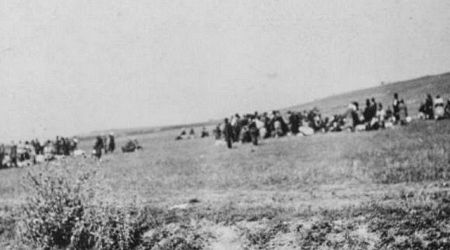##### Kamenets-Podolsk Massacre
27 - 28 August 1941
One of the first large-scale mass shootings of the Holocaust. **23.600 Jews**, **primarily Hungarian Jew**s deported to Ukraine. Hungarian authorities deported thousands of Jews, many of whom were stateless, to German-occupied Ukraine. The SS, assisted by local collaborators, executed them over two days in pits outside the city.
[ 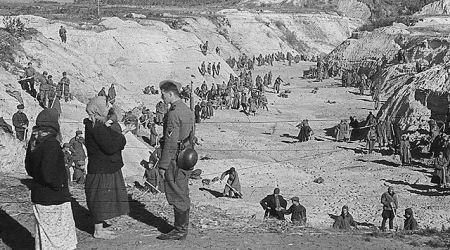##### Babi Yar Massacre, Ukraine
29 - 30 September 1941
**33.771 Jews executed** in a ravine in **Kiev** over two days by **Einsatzgruppe C**, **Sonderkommando 4a** and Ukrainian auxiliaries. Main perpetrators were: **Friedrich Jeckeln**, Otto Rasch, Paul Blobel, Kurt Eberhard
Read more
](https://www.normandy1944.info/holocaust/massacres-and-atrocities/babi-yar)
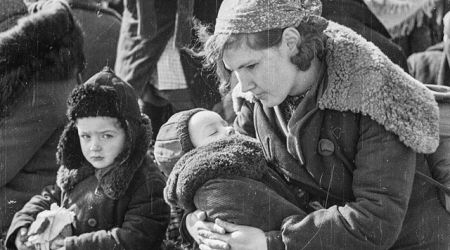##### Lubny Massacre, Ukraine
16 October 1941
On October 16, 1941, more than a thousand Jewish residents of Lubny, a town in what is now Ukraine, were forced to gather in an open field under the pretense of “resettlement.” Instead, they were brutally massacred by Nazi Einsatzgruppen.
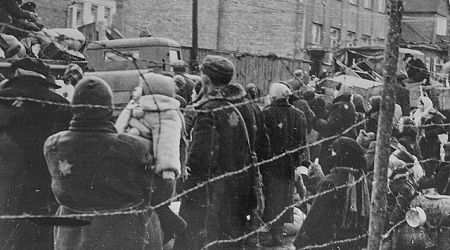##### Kaunas Massacre
October to November 1941
Mass executions were carried out at Fort IX by members of Einsatzkommando 3, under orders from Karl Jäger and Helmut Rauca. They murdered 9.200 Jews, 2.007 men, 2.920 women, and 4.273 children in a single day. About 27.000 Jews assembled, while Lithuanian partisans searched homes for anyone in hiding.
##### Rumbula Massacre, Riga, Latvia
30 November - 8 December 1941
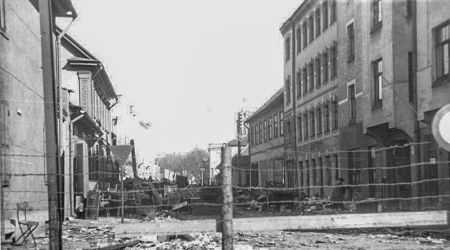
±25.000 Jews murdered over two days: 13.000 on 30 November (including 1.000 Jews from Berlin). 10.000 on 8 December and approximately 1.000 killed en route or in the streets. Victims marched, stripped and shot into pits prepared by POWs. 1.500 Jews spared temporarily for slave labor.
[ ##### Tallinn, Estonia
1941–1942
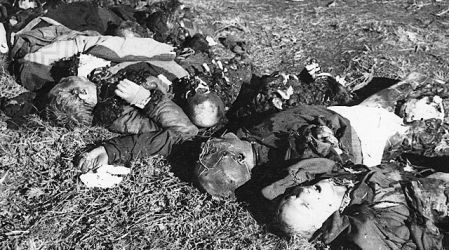
In Tallinn and other areas in Estonia, round-ups and killings of the remaining Jews began immediately following the arrival of the first German troops on July 7, 1941. The killings were undertaken by the extermination squad Einsatzkommando 1A (Sonderkommando) under Martin Sandberger, part of Einsatzgruppe A led by Walter Stahlecker,
Read more
](https://www.normandy1944.info/holocaust/massacres-and-atrocities)
[](#) [](#)
###### What is a Pogrom?
The word **pogrom** originates from the Russian language and means *"to wreak havoc"* or *"to destroy violently."* Historically, the term refers to violent, organized attacks against Jewish communities, often carried out by local mobs with the support, encouragement or indifference of government authorities. Pogroms were especially common in the **Russian Empire** and parts of **Eastern Europe** during the late nineteenth and early twentieth centuries.
During **Operation Barbarossa** in 1941, the Nazis deliberately encouraged and exploited anti-Jewish sentiment in the occupied Soviet territories. In several cities, including **Kaunas**, **Lviv** and **Riga**, local collaborators carried out pogroms against Jewish residents before or alongside the arrival of the **Einsatzgruppen**. The SS used these attacks as propaganda, portraying the murders as spontaneous acts of local revenge while, in reality, they were often instigated, organized or encouraged by German occupation authorities.
###### Operational 'success'
[**Reinhard Heydrich's**](https://www.normandy1944.info/home/commanders/life-and-death-of-reinhard-heydrich) strategy proved effective from the perspective of the Nazi leadership. During the first weeks of [**Operation Barbarossa**](https://www.normandy1944.info/home/battles/operation-barbarossa), more than **40 pogroms** took place across the occupied Soviet territories, resulting in the murder of thousands of Jewish men, women and children by local collaborators.
These outbreaks of violence created an atmosphere of fear and terror within Jewish communities while also helping the German occupation authorities identify and isolate their victims. The pogroms enabled the **Einsatzgruppen** to expand and accelerate their campaign of mass murder, while Nazi propaganda falsely portrayed the killings as spontaneous acts of local anti-Jewish violence rather than part of a centrally planned policy of extermination.
#### Mass shootings and massacres of innocent civilians
The **Einsatzgruppen**, the Nazi mobile killing units, committed some of the most horrific atrocities of **World War II**. Assisted by **Order Police battalions**, **Waffen-SS units**, local auxiliary forces and civilian collaborators, they carried out systematic mass shootings throughout the occupied Soviet Union. Between **1941 and 1945**, these operations resulted in the murder of approximately **1.5 to 2 million people**, the vast majority of them Jews. Their victims also included Roma, Soviet political commissars, prisoners of war, disabled people and others whom the Nazi regime considered undesirable.
Unlike the extermination camps, where murder became increasingly industrialized through the use of gas chambers, the crimes committed by the Einsatzgruppen were carried out face-to-face. Victims were rounded up, marched to ravines, forests or prepared pits, forced to surrender their possessions and then shot at close range. These massacres became known as the **Holocaust by bullets** and remain one of the darkest chapters in human history. Understanding these mass shootings is essential to understanding the full scope of the Holocaust and the implementation of Nazi genocide across Eastern Europe.
---
[ Discover some of these massacres ](https://www.normandy1944.info/holocaust/massacres-and-atrocities "Discover the Nazi massacres of world war 2 ")
### Why mass shootings rather than extermination camps?
When Germany invaded the Soviet Union in June 1941, the Nazi leadership expected a rapid military victory and believed that the conquered territories would soon be permanently incorporated into the German Reich. The highly mobile nature of the campaign required killing units that could advance alongside the Wehrmacht and operate wherever Jewish communities, Communist officials and other targeted groups were encountered.
At this stage of the war, permanent extermination camps had not yet been established. The **Einsatzgruppen** therefore carried out mass murder primarily through large-scale shootings, a method that allowed them to execute victims immediately in occupied towns, villages, forests and ravines. As the campaign continued, however, the psychological burden experienced by some perpetrators, together with the Nazi regime's desire for more efficient, centralized and systematic methods of mass murder, led to the development of mobile gas vans and eventually to the construction of dedicated extermination camps such as Bełżec, [Sobibór](https://www.normandy1944.info/holocaust/concentrationcamps/sobibor) and Treblinka under Operation Reinhard.

### Murder by gassing in the Soviet Union
### A dark milestone in the Holocaust
Between **1941 and 1942**, **SS-Standartenführer Walter Rauff** played a key role in developing and deploying one of the Nazi regime's most notorious instruments of mass murder: the **gas van**. These mobile gas chambers killed their victims through **carbon monoxide poisoning** and represented an important step in the transition from face-to-face mass shootings to increasingly mechanized methods of extermination.
As the scale of the **Holocaust by bullets** expanded, **Heinrich Himmler** and other SS leaders sought a more "impersonal" method of killing that would reduce the psychological burden on the execution squads while maintaining the pace of mass murder. Drawing upon the technology and personnel of [**Aktion T4**](https://www.normandy1944.info/holocaust/aktion-t4), the Nazi euthanasia programme, engineers developed sealed vans in which engine exhaust was redirected into the cargo compartment, killing those trapped inside.
The first operational use of gas vans took place in the occupied Soviet Union during late **1941**, where they were employed by the **Einsatzgruppen** and other SS units. Shortly afterwards, they were introduced on a much larger scale at the **Chełmno extermination camp** in occupied Poland, where they became the primary method of killing.
Victims, most often **Jews**, but also **Roma**, **people with disabilities** and others labelled "**undesirable**" by the Nazi regime, were falsely told they were being transported for resettlement or labour. Instead, they were forced into the sealed rear compartment of the vans. Once the doors were closed, engine exhaust was pumped inside, causing death by carbon monoxide poisoning during the journey to nearby burial sites. Historians estimate that **well over 100.000 people** were murdered using gas vans during the Holocaust.
Although often associated exclusively with Nazi Germany, similar vehicles had reportedly been used on a limited scale by the Soviet **NKVD** during the **Great Purge** of the 1930s. However, the Nazis refined, expanded and systematically incorporated the technology into their programme of genocide on an unprecedented scale.
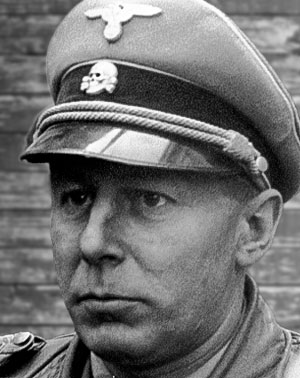
###### SS-Standartenführer Walter Rauff
19 juni 1906 - 14 mei 1984
Responsible for the development of the gas vans
[](#)
[](#)
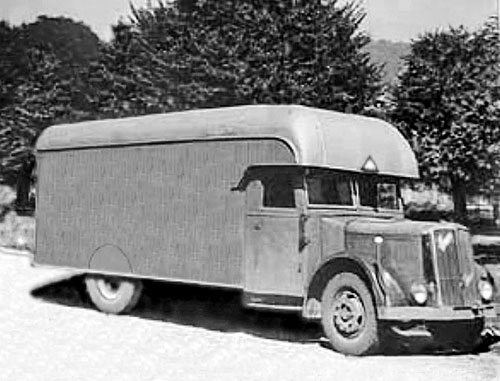
###### Gruesome gas vans
Nazi mobile gas chambers
Similar gas vans such as this one, were provided to the Einsatzgruppen.
[](#)
[](#)
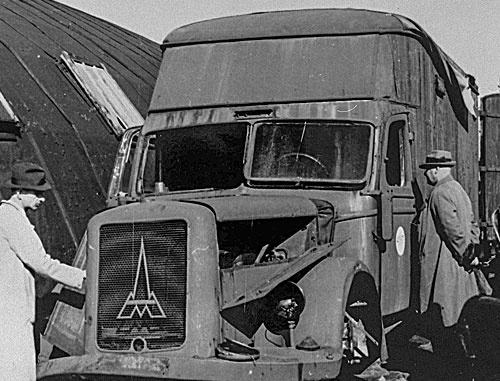
###### Destroyed Magirus-Deutz
Found at Chełmno camp
Victims were locked inside and the lethal fumes were used to kill them.
[](#)
[](#)
The introduction of the gas van marked a significant stage in the evolution of the Holocaust. Although mass shootings remained the primary method of murder employed by the **Einsatzgruppen**, the gas vans demonstrated how technology and bureaucracy were increasingly combined to facilitate systematic killing. They also served as a precursor to the stationary gas chambers later used at extermination camps such as **Bełżec**, [**Sobibór**](https://www.normandy1944.info/holocaust/concentrationcamps/sobibor), **Treblinka** and [**Auschwitz-Birkenau**](https://www.normandy1944.info/holocaust/concentrationcamps/auschwitz#Birkenau), where industrialized mass murder reached its deadliest form.
###### The Einsatzgruppen facilitated the 'Holocaust by Bullets' in Eastern Europe during Operation Barbarossa.
In this picture, members of Einsatzgruppe D are carrying out a mass shooting of Jews.
This took place near the Soviet city of Dubossary, September 14, 1941.
#### The einsatzgruppen in numbers
3000
##### was the number of personnel in the Einsatzgruppen?
Added with ± 43.000 auxiliary forces (mostly police) and locals
2000000
##### were murdered by the Einsatzgruppen
Approximately **1.5 to 2 million people** people died due to mass shootings or in gas vans
700000
##### by asphyxiation with carbon monoxide in gassing vans
Gassing was considered and proved to be more economical and less aggravating for the SS.
600
##### in Eastern Europe were completely annihilated
These villages were wiped off the map by the Einsatzgruppen.
#### Exposed: Photographic evidence of Einsatzgruppen crimes
**Caution:** The following images contain graphic historical content and may be disturbing. **Parental guidance is advised for viewers under the age of 18.**
The photographs below provide rare and disturbing evidence of the crimes committed by the **Einsatzgruppen**, the Nazi mobile killing units that operated behind the advancing German armies during **Operation Barbarossa**. They show uniformed members of the Einsatzgruppen, often assisted by **Order Police battalions**, local auxiliary forces and collaborators, carrying out the systematic execution of innocent civilians, including **men, women and children**.
These images are presented for historical and educational purposes only. They document the reality of the **Holocaust by bullets** and serve as irrefutable evidence of the systematic murder carried out by the Nazi regime in occupied Eastern Europe. Although deeply disturbing, they remain an essential part of understanding the scale, brutality and human cost of the Holocaust.
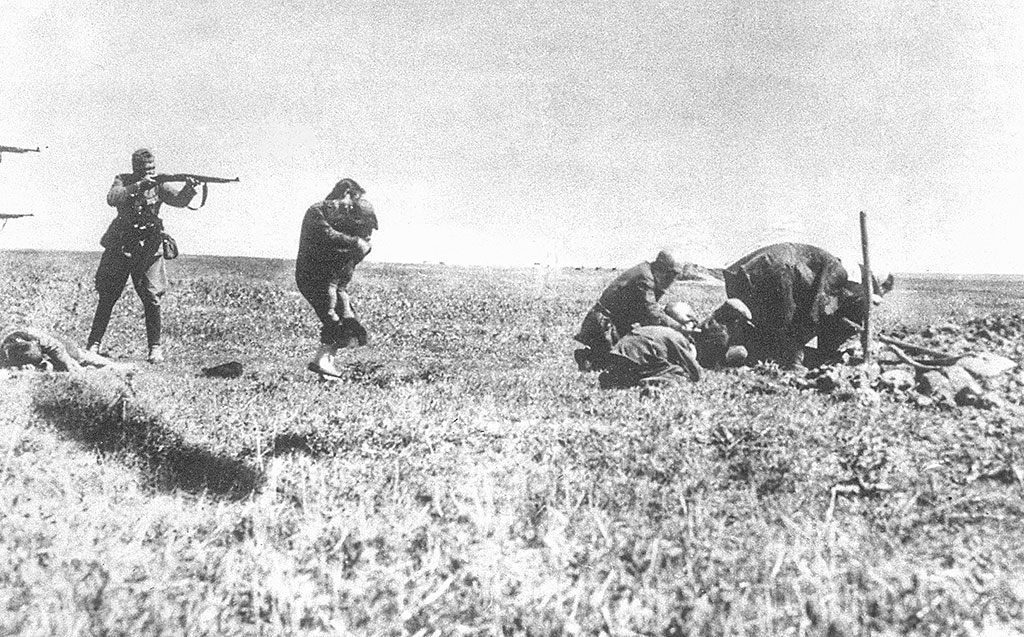
Ivangorod in 1942
Einsatzgruppen murder Jews in near Kiev, Ukraine,
An innocent mother protecting her child are being murdered by a member of the Einsatzgruppe near Ivanhorod in Ukraine. The photo was mailed from the Eastern Front to Germany and intercepted at a Warsaw post office by a member of the Polish resistance collecting documentation on Nazi war crimes.
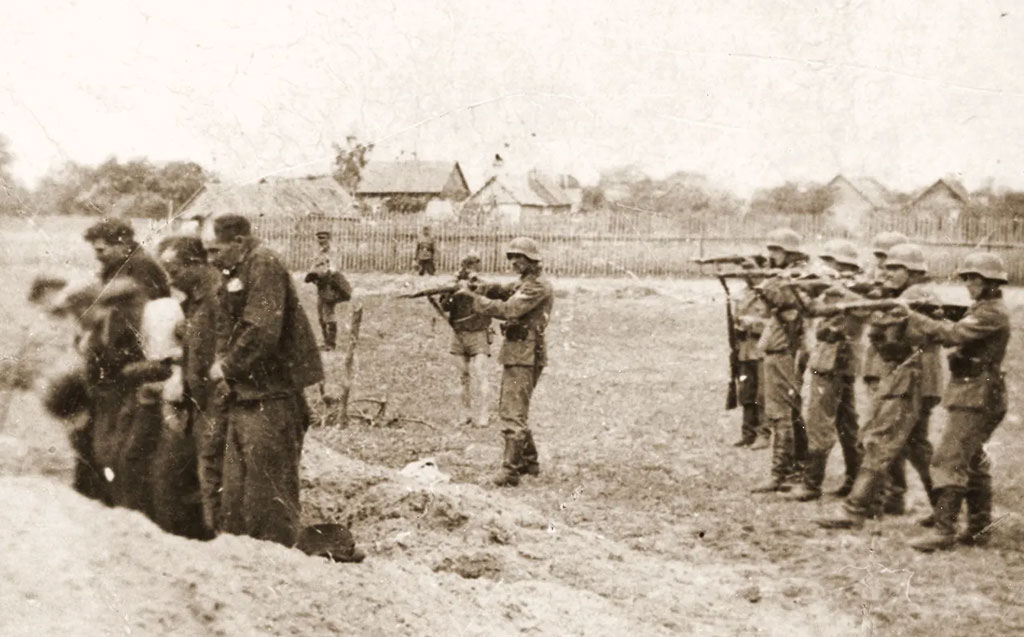
Šiauliai, Lithuania, in July 1941
A firing squad of Einsaztgruppen men is aiming at the group.
A group of civilians, likely Jews, as Einsatzgruppen primarily targeted Jewish communities, are seen standing at the edge of a trench, moments before execution.
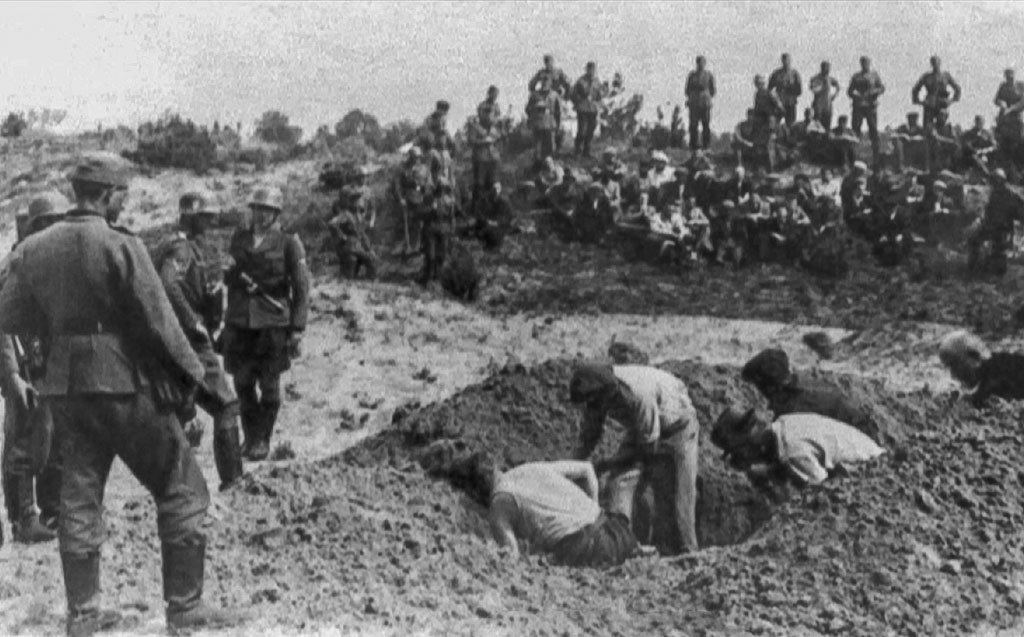
July 1941, in Šiauliai, Lithuania
The execution process often extended over several days
A subunit of Einsatzgruppe A carried out executions in Nazi-occupied Soviet territory. The condemned men were forced to dig their own graves before being killed.
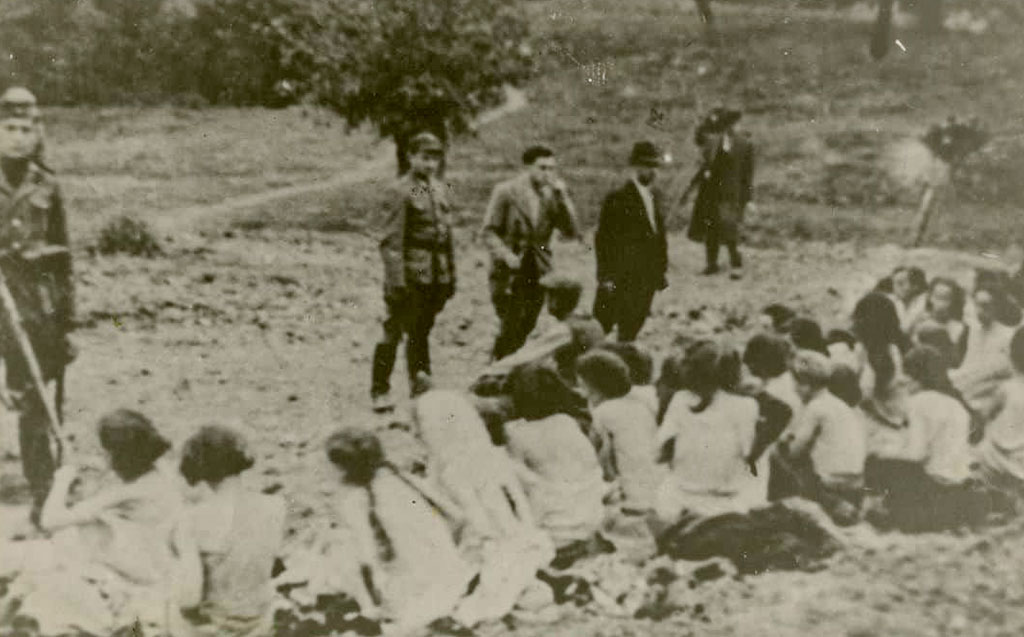
Liepaja, Latvia
Local auxiliaries gather Jewish children
Jewish women and children are forced to undress before being executed by the Einsatzgruppen and local auxiliaries
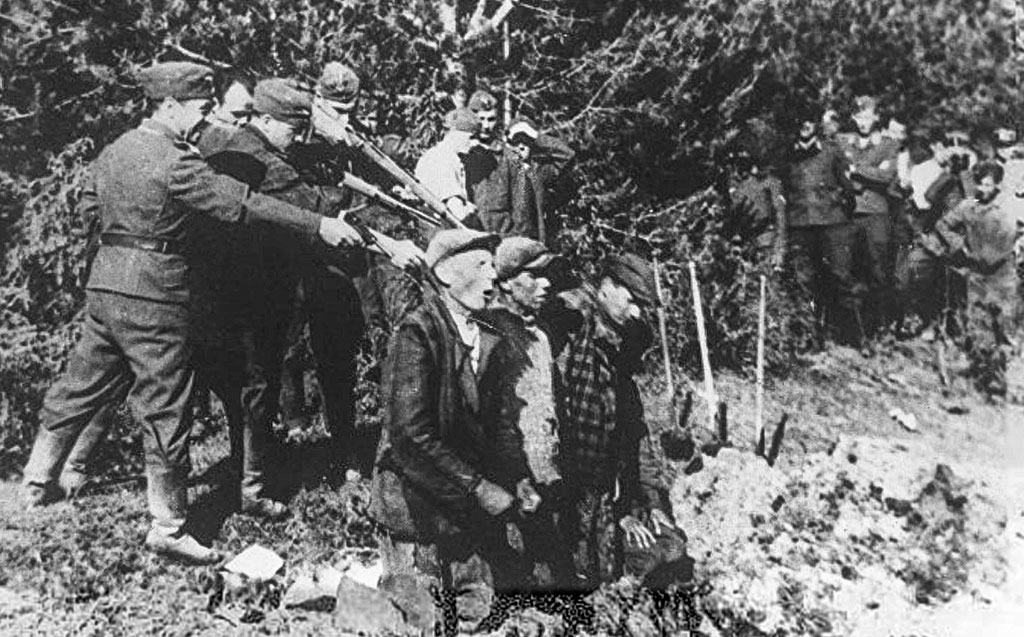
Kovno, Lithuania, 1942
Einsatzgruppen and their auxiliaries commit murder
Innocent men are being murdered at point blank range by the einsatzgruppen and their auxiliaries

Zhitomir, September 19, 1941
Mass execution of Soviet civilians
Men from an unidentified unit execute a group of Soviet civilians kneeling by the side of a mass grave
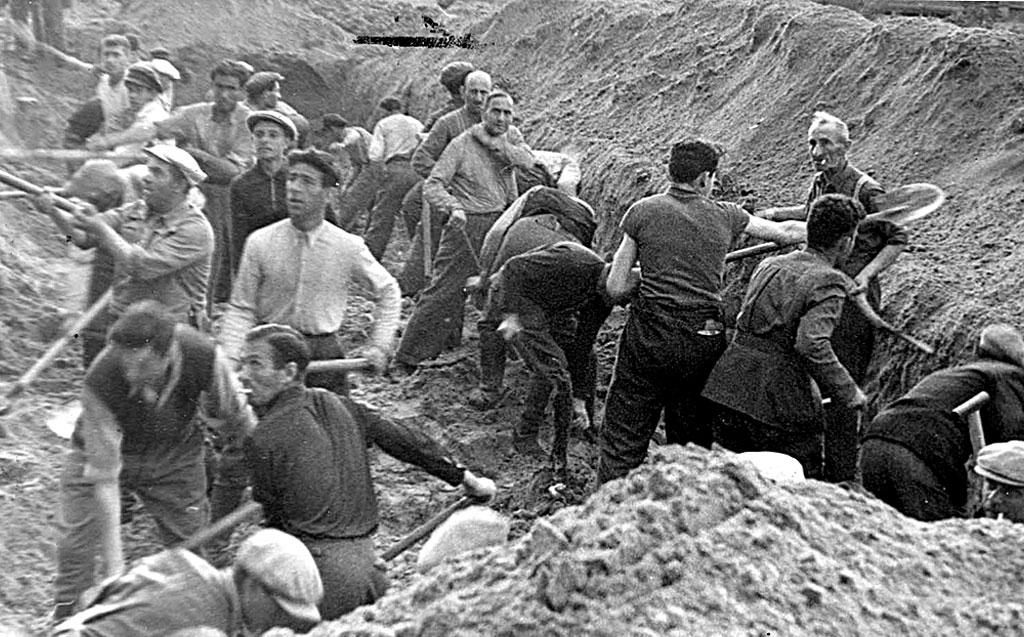
Ponary forrest, Vilnius, 1941
Digging a trench in which they were later buried
Nazi killing squads and Lithuanian auxiliaires executed around 75.000 Jews from Vilna in the Ponary forest in the summer of 1941
[](#) [](#)
#### The Einsatzgruppen Trials
##### Justice for the Nazi crimes and atrocities
Following **World War II**, the **Einsatzgruppen Trial** was held in **Nuremberg, Germany**, to bring leading members of the Nazi mobile killing units to justice. Officially known as **United States of America v. Otto Ohlendorf, et al.**, it was **Case 9** of the **Subsequent Nuremberg Trials**, formally conducted before **Nuremberg Military Tribunal II**. The trial took place from **29 September 1947** to **10 April 1948**. A total of **24 defendants**, all senior officers or officials connected to the Einsatzgruppen, were charged with **war crimes**, **crimes against humanity** and membership in criminal organizations, including the **SS** and the **Sicherheitsdienst (SD)**.
### Judges of Nuremberg Military Tribunal II, Case 9
**Michael A. Musmanno**
Presiding Judge, United States Naval Reserve, County of Allegheny, Pennsylvania.
**John J. Speight**
Judge, prominent member of the Alabama Bar.
**Richard D. Dixon**
Judge, Superior Court of the State of North Carolina.
The evidence presented during the trial exposed in detail the systematic mass murder carried out by the Einsatzgruppen in occupied Eastern Europe. The proceedings demonstrated that the killings were not random acts of wartime violence, but part of a planned programme of extermination directed by the Nazi regime.
The trial resulted in numerous convictions, with sentences ranging from prison terms to death by hanging. It became one of the most important legal proceedings after the war because it documented the crimes of the **Holocaust by bullets** and helped establish legal precedents for prosecuting **crimes against humanity**. The Einsatzgruppen Trial remains a powerful reminder that those who organize and carry out mass murder can be held accountable before the law.
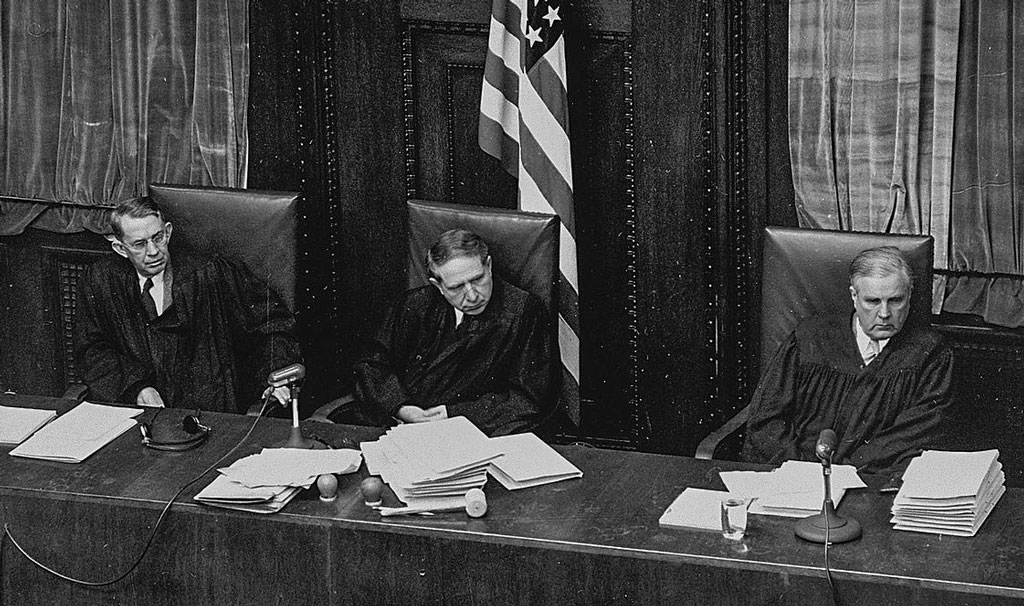
The judges (from left to right) **John J. Speight**, **Michael A. Musmanno** and **Richard D. Dixon.**
---
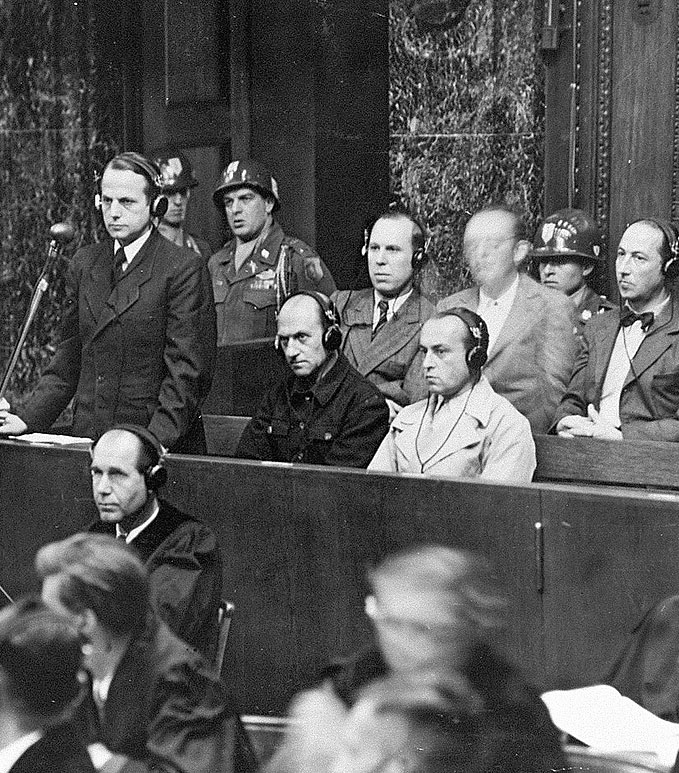
Defendant **Otto Ohlendorf**, commander of Einsatzgruppe D and responsible for the murder of approximately **90.000 people**, stands behind the microphone as he formally enters a plea of "not guilty" during the Einsatzgruppen Trial in Nuremberg.
#### Chief prosecutor Benjamin Berell Ferencz
### Chief prosecutor Benjamin B. Ferencz
**Benjamin Berell Ferencz** (**11 March 1920 – 7 April 2023**) was honorably discharged from the **United States Army** as a sergeant on **Christmas Day 1945**. Shortly after returning to New York, he was recruited by **Telford Taylor** to join the prosecution team for the **Subsequent Nuremberg Trials**, where he was given the honorary rank of colonel.
In early **1946**, while examining captured German documents near **Tempelhof Airport** in Berlin, Ferencz discovered detailed **Einsatzgruppen Reports (Ereignismeldungen UdSSR)**. These reports meticulously documented the systematic murder of more than one million people in the occupied Soviet Union beginning in **June 1941**. Realizing the significance of the evidence, Ferencz travelled to Nuremberg and urged that those responsible be brought to trial.
Although **Telford Taylor** initially hesitated because of limited resources, he appointed the **26-year-old Benjamin Ferencz** as Chief Prosecutor of the **Einsatzgruppen Trial**, making it his first major case. Twenty-four senior Einsatzgruppen commanders and officials were indicted. Twenty-two were convicted, thirteen were sentenced to death and four were ultimately executed by hanging, among the last executions carried out on German soil.
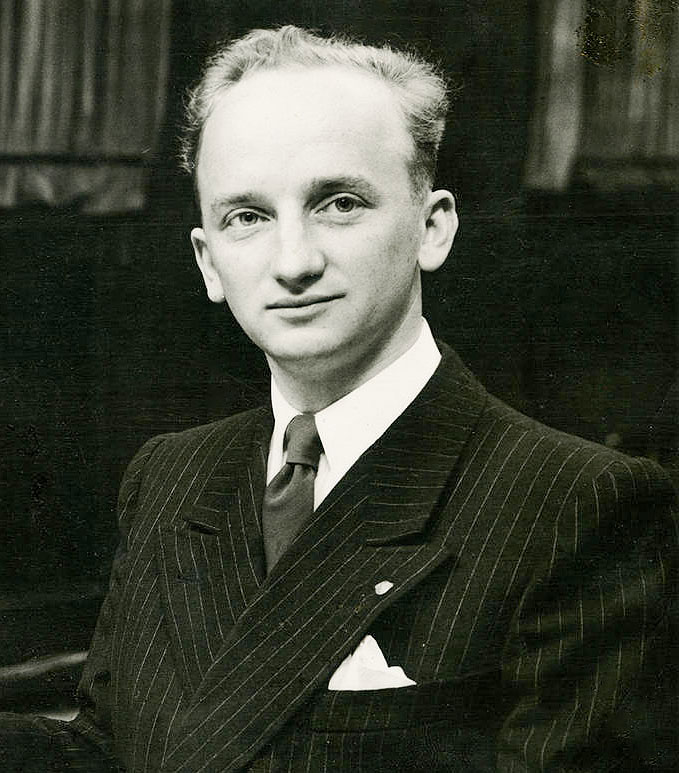
Chief Prosecutor **Benjamin B. Ferencz** during the Einsatzgruppen Trial (**Case No. 9**) of the Subsequent **Nuremberg Trials.**
#### Perpetrators and their sentences
- All
- Einsatzgruppe
- Einsatzkommando
- Sonderkommando

### Heinz Jost
Commander of Einsatzgruppe A
**Life imprisonment**
Commuted to 10 years
Released in December 1951
Died in 1964
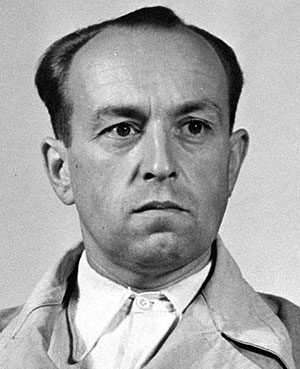
### Erich Naumann
Commander of Einsatzgruppe B
**Death by hanging**
Executed on June 7, 1951

### Dr. Dr. Otto Rasch
Commander of Einsatzgruppe C
**Case dropped**
Removed from trial for medical reasons
Died on November 1, 1948
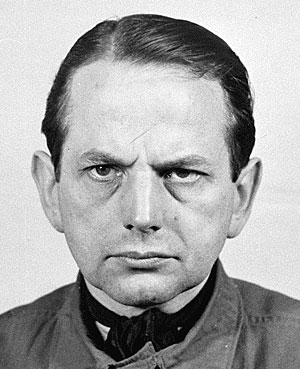
### Otto Ohlendorf
Commander of Einsatzgruppe D
**Death by hanging**
Executed on June 7, 1951
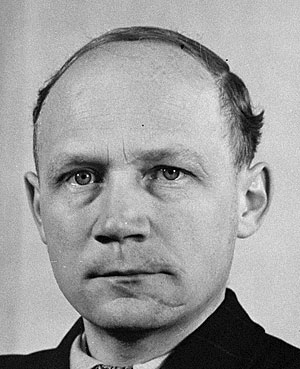
### Willy Seibert
Deputy Commander Einsatzgruppen D
**Death by hanging**
Commuted to 15 years
Released on May 14, 1954
Died in 1976
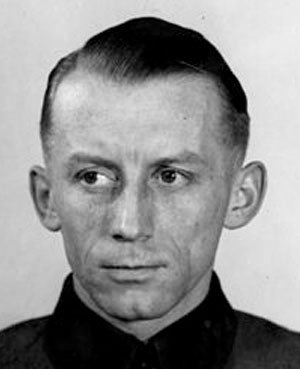
### Heinz Schubert
Adjutant to Ohlendorf
**Death by hanging** Commuted to 10 years
Released in December 1951
Died in 1987
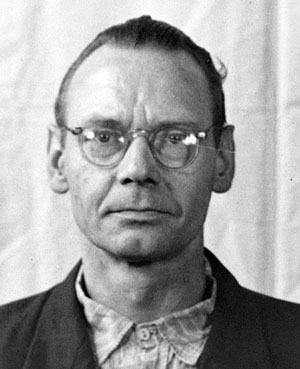
### Waldemar Klingelhöfer
Einsatzgruppe B
**Death by hanging**
Commuted to life imprisonment
Released in December 1956
Died in 1977
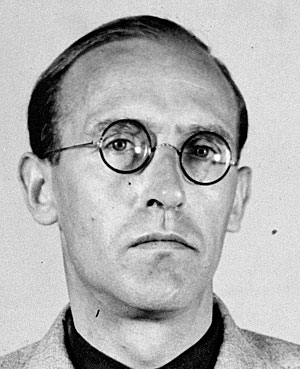
### Eugen Steimle
Einsatzgruppe B & C
**Death by hanging**
Commuted to 20 years
Released in June 1954
Died in 1987

### Paul Blobel
Commander of Sonderkommando 4a
**Death by hanging**
Executed on June 7, 1951
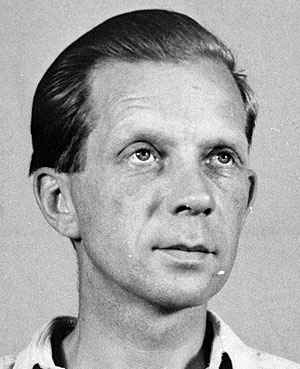
### Waldemar von Radetzky
Deputy commander Sonderkommando 4a
**20 years in prison** Released
Died in 1990
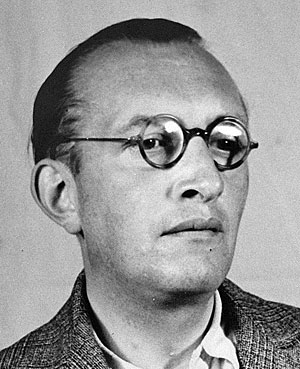
### Walter Haensch
Commander of Sonderkommando 4b
**Death by hanging**
Commuted to 15 years
Released in August 1955
Died in 1994
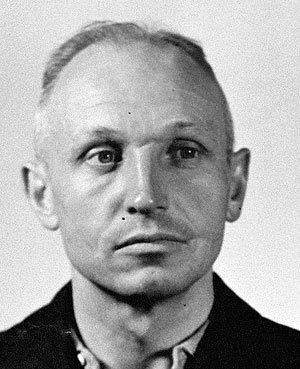
### Walter Blume
Commander of Sonderkommando 7a
**Death by hanging**
Commuted to 25 years
Released in March 1955
Died in 1974
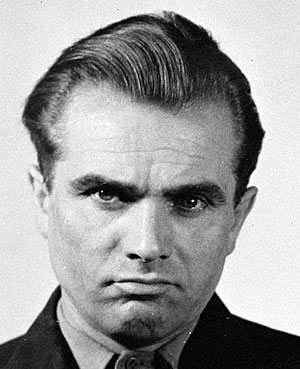
### Adolf Ott
Commander of Sonderkommando 7b
**Death by hanging**
Commuted to life imprisonment
Released on May 9, 1958
Died in 1973
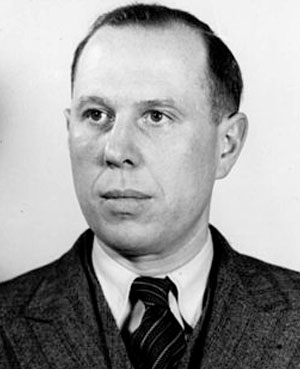
### Werner Braune
Commander of Sonderkommando 11b
**Death bu hanging**
Executed on June 7, 1951
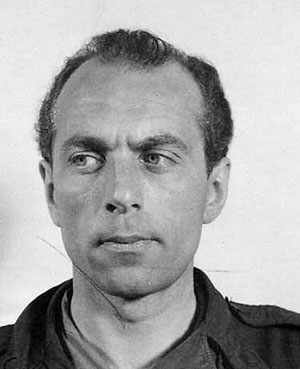
### Lothar Fendler
Sonderkommando 4b
**10 years in prison**
Commuted to 8 years
Released in March 1951
Died in 1983
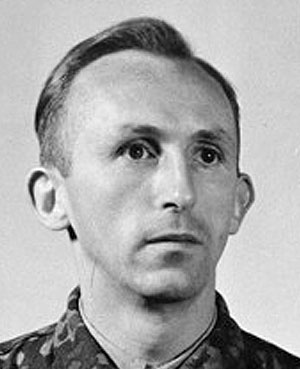
### Felix Rühl
Sonderkommando 10b
**10 years in prison**
Released
Died in 1982
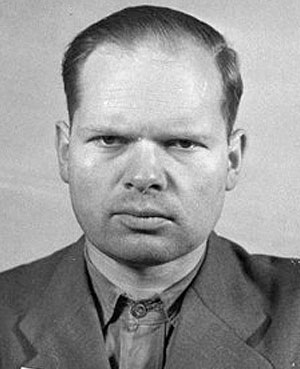
### Martin Sandberger
Commander of Einsatzkommando 1a
**Death by hanging**
Commuted to life imprisonment
Released on May 9, 1958
Died in 2010
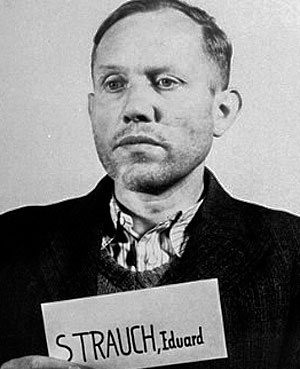
### Eduard Strauch
Commander of Einsatzkommando 2
**Death by hanging** Handed over to Belgian authorities
Received another death sentence
Died prior to execution on 11 September 1955
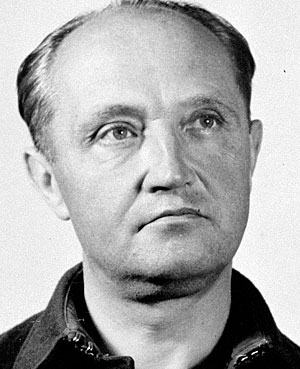
### Ernst Biberstein
Commander of Einsatzkommando 6
**Death by hanging**
Commuted to life imprisonment
Released on May 9, 1958
Died in 1986
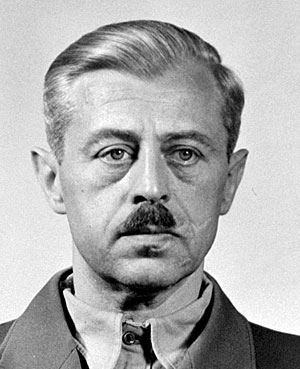
### Erwin Schultz
Commander of Einsatzkommando 12
**20 years in prison**
Commuted to 15 years
Released on January 9, 1954
Died in 1981
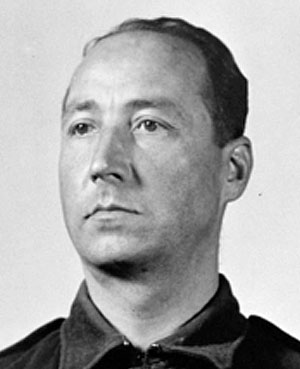
### Gustav Noske
Commander of Einsatzkommando 12
**Life imprisonment**
Commuted to 10 years
Released in December 1951
Died in 1986
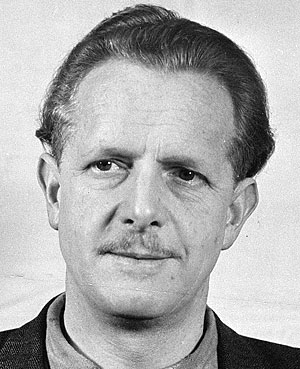
### Matthias Graf
Einsatzkommando 6
**Time served**
From end of war to trial date
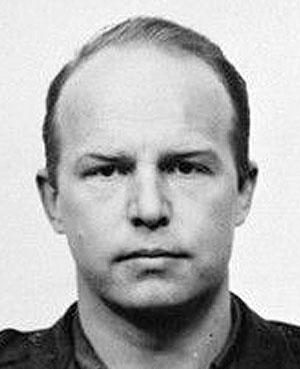
### Emil Haussmann
Einsatzkommando 12
Committed suicide before the
arraignment on July 31, 1947
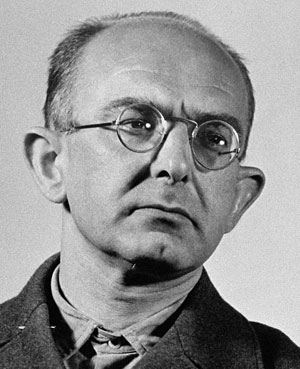
### Franz Six
Planned Einsatzgruppe occupation roles
**20 years in prison**
Commuted to 10 years
Released in October 1952
Died in 1975
#### Limited justice after the Einsatzgruppen trial
Of the **13 death sentences** imposed during the **Einsatzgruppen Trial**, only **four** were ultimately carried out. Those executed were **Otto Ohlendorf**, **Paul Blobel**, **Werner Braune** and **Erich Naumann**, all of whom had played leading roles in the systematic mass murder of civilians in occupied Eastern Europe.
During the **1950s**, changing political priorities associated with the emerging **Cold War** led to the commutation or reduction of many prison and death sentences. As a result, numerous convicted Einsatzgruppen leaders were released from prison years before completing their original sentences.
These men were not low-ranking participants but senior commanders who directed mobile killing units responsible for the murder of tens of thousands of innocent people and the destruction of entire Jewish communities. Although the Einsatzgruppen Trial established important legal precedents and documented the crimes of the **Holocaust by bullets**, many perpetrators ultimately spent only a fraction of their lives in prison, leaving many survivors and victims' families with the belief that justice had remained incomplete.

Throughout the trial, **Otto Ohlendorf** showed no remorse for the murder of **approximately 90.000 people**. He maintained that he had merely carried out his duty as an SS officer.
## Einsatzgruppen: Frequently Asked Questions & Historical Facts
What were the Einsatzgruppen? The **Einsatzgruppen** were mobile killing units of **Nazi Germany**, composed primarily of personnel from the **SS**, the **Sicherheitsdienst (SD)**, the **Gestapo**, the **Kriminalpolizei (Kripo)**, the **Ordnungspolizei (Orpo)** and, in some cases, the **Waffen-SS**. Following the German invasion of the **Soviet Union** in June 1941, these units advanced behind the front lines with orders to identify, round up and systematically murder Jews, Soviet political commissars, Roma and other groups regarded by the Nazi regime as enemies of the state.
Who commanded the four main Einsatzgruppen units? The four main **Einsatzgruppen** (**A**, **B**, **C** and **D**) were commanded by senior **SS** officers. Many were highly educated and several held doctoral degrees, illustrating that the perpetrators of the Holocaust by bullets were often experienced administrators, lawyers and professionals rather than ordinary soldiers.
- **Dr. Franz Walter Stahlecker** – Commander of **Einsatzgruppe A**
- **Arthur Nebe** – Commander of **Einsatzgruppe B**
- **Dr. Dr. Otto Rasch** – Commander of **Einsatzgruppe C**
- **Dr. Otto Ohlendorf** – Commander of **Einsatzgruppe D**
During **1942**, Stahlecker, Nebe and Rasch were replaced by new commanders, while **Otto Ohlendorf** remained in command of **Einsatzgruppe D** until it was dissolved in 1942.
What happened to the Einsatzgruppen leaders after the war? Following **World War II**, many senior **Einsatzgruppen** commanders were prosecuted during the **Einsatzgruppen Trial** (**1947–1948**), one of the **Subsequent Nuremberg Trials**. Twenty-four defendants were indicted for **war crimes**, **crimes against humanity**, and membership in criminal organizations, including the **SS** and the **Sicherheitsdienst (SD)**.
Twenty-two defendants were convicted. Thirteen were sentenced to death, although only four **Otto Ohlendorf**, **Paul Blobel**, **Werner Braune**, and **Erich Naumann** were ultimately executed. Many of the remaining prison and death sentences were later reduced or commuted during the 1950s, allowing several convicted war criminals to regain their freedom.
Why did the Einsatzgruppen transition from mass shootings to gas vans? By late **1941**, the **SS** leadership sought a more "impersonal" method of mass murder to reduce the psychological burden on the **Einsatzgruppen** firing squads while increasing the efficiency of the killing process. This led to the introduction of **gas vans (Sonderwagen)**, mobile gas chambers in which victims were murdered by **carbon monoxide** from the vehicle's exhaust.
Gas vans were first deployed in the occupied **Soviet Union** and were later used extensively at the **Chełmno extermination camp** in occupied Poland. However, they never replaced mass shootings as the primary method of murder employed by the Einsatzgruppen. Poor road conditions, mechanical breakdowns and the limited capacity of the vehicles meant that large-scale shootings remained the principal means of carrying out the **Holocaust by bullets**.
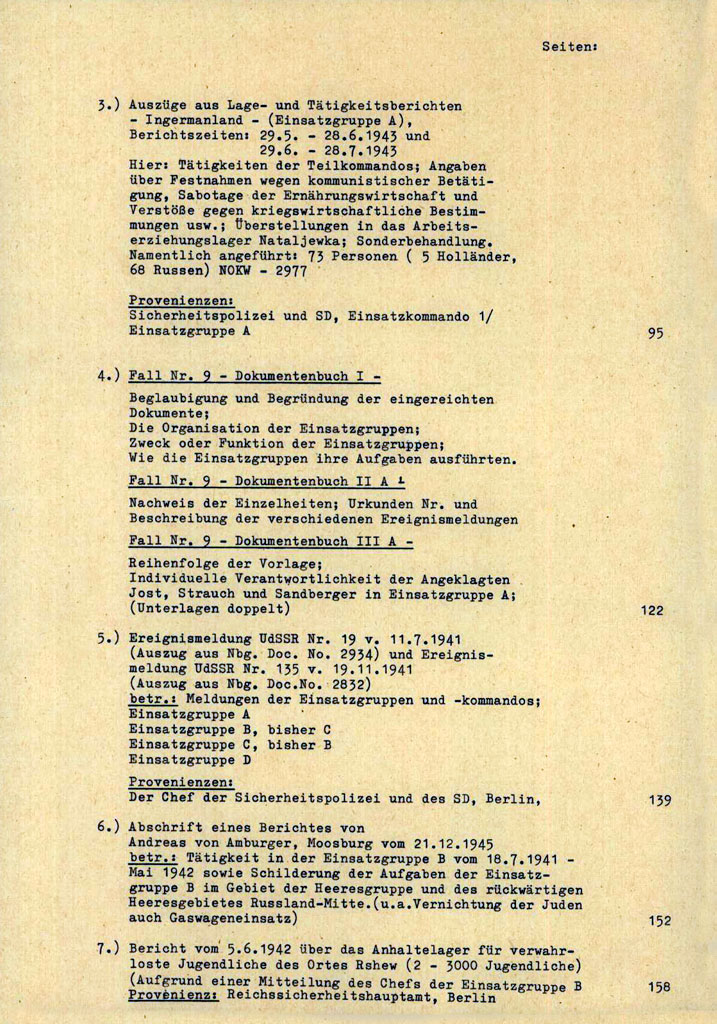
The orders the Einsatzgruppen received for Operation Barbarossa, the invasion of the Soviet Union.
#### Cite this historical page
I aim to provide open-access accurate historical records. If you are using this content for academic research, articles or educational projects, please use the citation below to credit this source. Click the button below to copy the direct URL for your research or citations.

Help to share this page on social media
The stories on my website are meant to educate people about WW2. You can help by sharing them with your family and friends on your social platforms. Thank you so much for your assistance.
More about this topic
[**The Arolsen Archives**](https://arolsen-archives.org/en/) - World’s most comprehensive archive on victims and survivors of Nazi persecution.
[**United States Holocaust Memorial Museum**](https://www.ushmm.org/) - USA's premier institution for documenting, studying, and interpreting Holocaust history
## Schema
```json
{ "@context": "https://schema.org", "@type": "BreadcrumbList", "itemListElement": [ { "@type": "ListItem", "position": 1, "name": "Holocaust", "item": "https://www.normandy1944.info/holocaust" }, { "@type": "ListItem", "position": 2, "name": "Einsatzgruppen", "item": "https://www.normandy1944.info/holocaust/einsatzgruppen" } ] }
```