---
title: "World War 2 | Facts | History | Battles | D-Day | Holocaust"
description: "D-Day on June 6 1944, untold stories of WWII, history of the Holocaust and the Einsatzgruppen and much more to be explored on this comprehensive website"
url: "https://www.normandy1944.info/component/tags/tag/france"
date: "2026-10-25T06:11:03+00:00"
language: "en-GB"
---
## [D-Day Omaha Museum](https://www.normandy1944.info/home/museums/d-day-omaha-museum)
- Museums extra information: Step into history inside a beautifully preserved 1944-era building and immerse yourself in a powerful VR experience. Relive the first waves of the June 6, 1944 assault as if you were truly there, in a striking and unforgettable virtual journey. The museum also offers: Omaha Jeep Tour, Retro Bike Tours and guided tours on Omaha Beach. The museum is dog-friendly!
- Museums URL:
- Openings hours:
- Monday: 10:00 - 18:00, Tuesday: 10:00 - 18:00, Wednesday: 10:00 - 18:00, Thursday: 10:00 - 18:00, Friday: 10:00 - 18:00, Saturday: 10:00 - 18:00, Sunday: 10:00 - 18:00, Closed for winter: Yes, Museum closure text: From November 2nd the museum is closed for the winter.
- Museum specs:
- Museum telephone: +33231217180, Museum address: Omaha Beach, Route de Grandcamp, 14710 , Town: : Vierville-sur-Mer, Museum country: France
- Museum slideshow:
- Museums slideshow images: 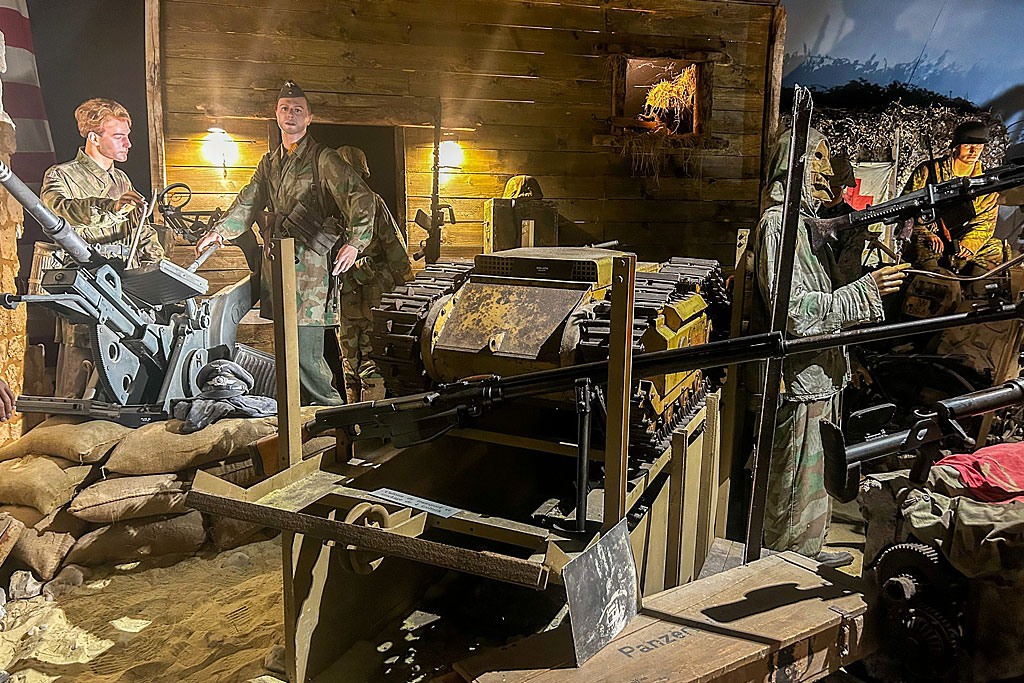
- Museums slideshow images: 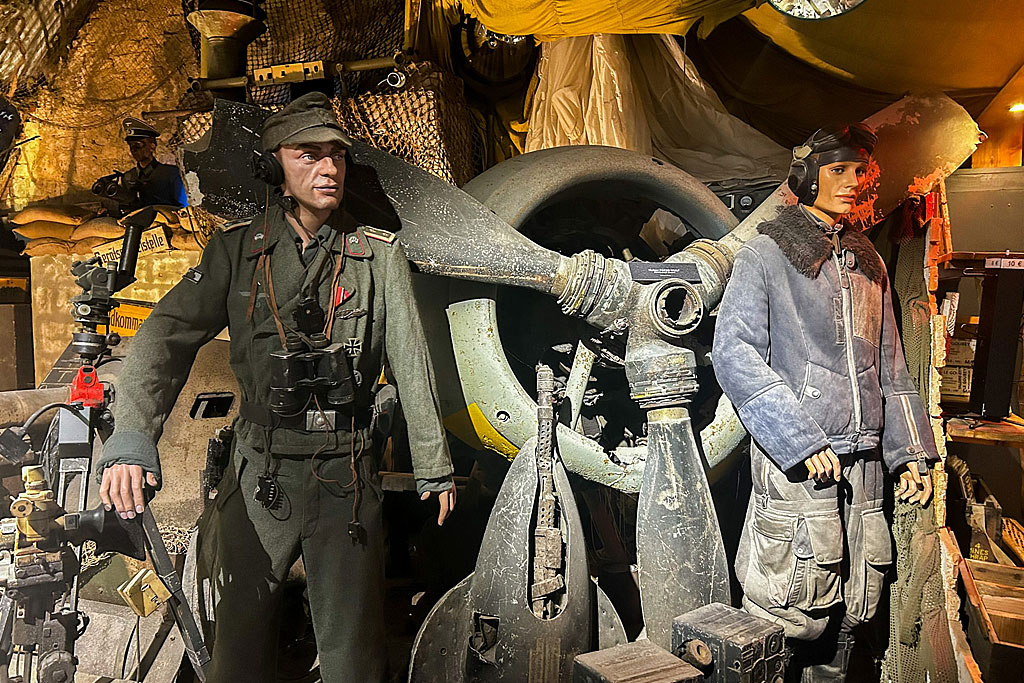
- Museums slideshow images: 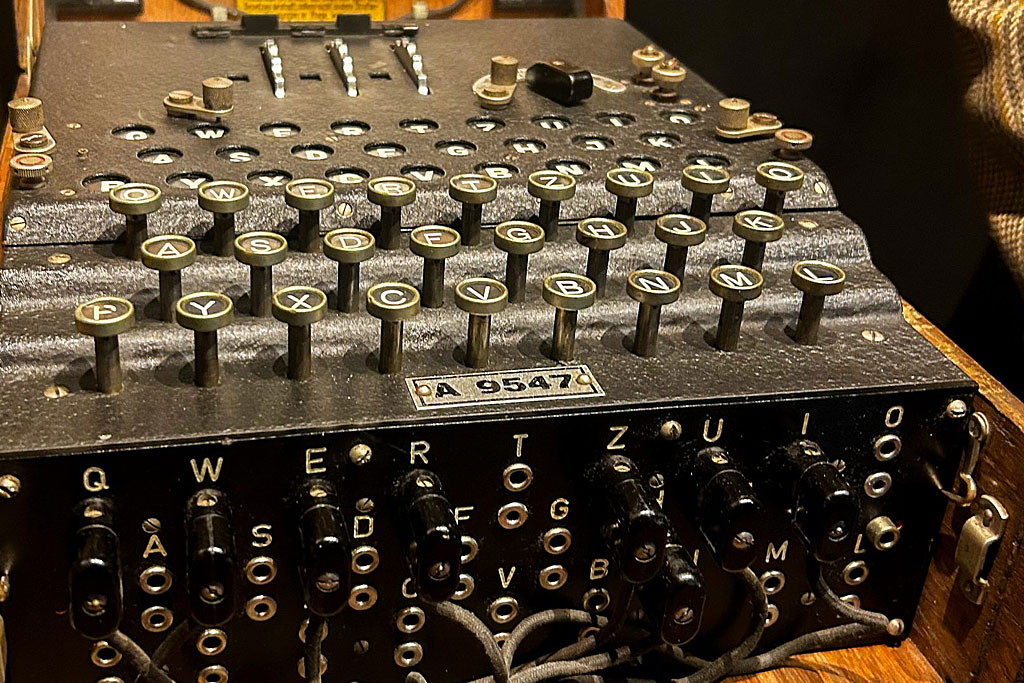
- Location of the museum: 49.3752,-0.9086
For more than half a century, a Michel Brissard and his two sons, driven by a deep passion for history, devoted their lives to uncovering the forgotten traces of the D-Day landings. Through meticulous research and countless excavations across the Normandy countryside, the Brissard family unearthed remarkable treasures: rare weapons, equipment from both Allied and German forces, medical supplies, and even an exceptionally rare Enigma machine.
Today, these authentic discoveries are displayed in the heart of Omaha Beach, inside a genuine 1944 American field hospital. Perfectly situated between the American Cemetery and Pointe du Hoc, the museum offers an extraordinary journey into the past, showcasing artifacts assembled over nearly fifty years.
Step into an atmosphere that is both authentic and emotionally powerful. Each object in this unique collection tells its own story, brought to life through an immersive audio guide in which the museum’s founders share the captivating tales behind their discoveries. Immerse yourself in history where it happened, and experience D-Day through the eyes of those who dedicated their lives to preserving its memory.
## [French Résistance in 1944](https://www.normandy1944.info/photographs/ww2-footage/french-resistance-in-1944)
- Video URL: [Visit Website](https://youtu.be/x5rv3XrC_tQ)
- Video copyright: CHRONOS MEDIA History
- Video description: Color footage of combatants of the french "Resistance" or the "Forces françaises de l’intérieur" (FFI) in 1944, together with US Army divisions.
- Video time: 6:34
- Video date : Autumn 1944
- Video color : Color
- Video poster: 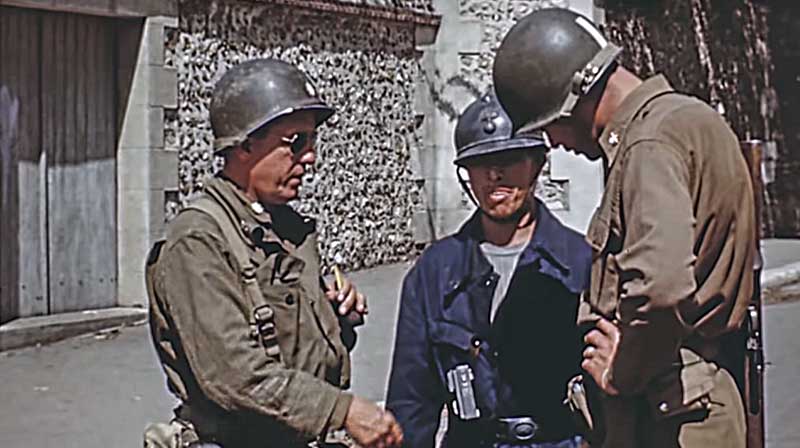
Color footage of combatants of the french "Resistance" or the "Forces françaises de l’intérieur" (FFI) in 1944, together with US Army divisions.
## [From Normandy to Germany in 1944](https://www.normandy1944.info/photographs/ww2-footage/from-normandy-to-germany-in-1944)
- Video URL: [Visit Website](https://youtu.be/LCipbUt-nK4?si=EP3dpLNly9EIKXy3)
- Video copyright: CHRONOS MEDIA History
- Video description: This rare historical footage captures the diverse realities of the European liberation, from the vast columns of german prisoners to the majestic grand' place in Brussels. the footage balances the intensity of signal corps combat recordings in Normandy and St. Malo with intimate moments of humanity, like GI's decorating a Christmas tree and locals offering flowers to their liberators. featuring rare scenes of soldiers sharing Bordeaux wine and a moving connection to the family of the boy on the thumbnail, this film provides a deeply personal look at life on the frontline.
- Video time: 43:57
- Video date : 1944
- Video color : Color
- Video poster: 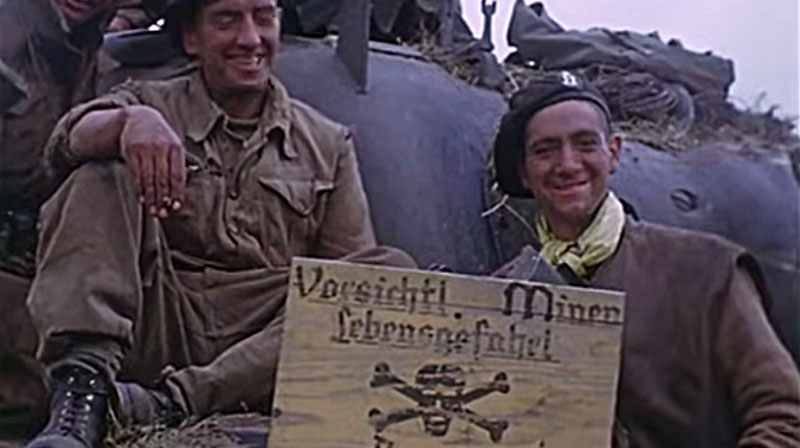
This rare historical footage captures the diverse realities of the European liberation, from the vast columns of german prisoners to the majestic grand' place in Brussels. the footage balances the intensity of signal corps combat recordings in [**Normandy**](https://www.normandy1944.info/home/battles/battle-of-normandy) and St. Malo with intimate moments of humanity, like GI's decorating a Christmas tree and locals offering flowers to their liberators. featuring rare scenes of soldiers sharing Bordeaux wine and a moving connection to the family of the boy on the thumbnail, this film provides a deeply personal look at life on the frontline.
## [Generals in Normandy ](https://www.normandy1944.info/photographs/ww2-footage/generals-in-normandy)
- Video URL: [Visit Website](https://youtu.be/mRLq1vXB7zU)
- Video copyright: CHRONOS MEDIA History
- Video description: This footage was taken on the 7th of July 1944 at the 21st Army Group HQ during the Battle of the Normandy. “Operation Overlord” was a successful invasion of the Normandy, a region in France, which was occupied by the Germans at that time. Three of the most important generals of this battle have gathered here. George S. Patton, Omar Bradley and Bernard Montgomery. Omar Bradley, at this point in time, was a Lieutenant General, as indicated by the 3 stars on his uniform.
- Video time: 1:59
- Video date : July 7th, 1944
- Video color : Color
- Video poster: 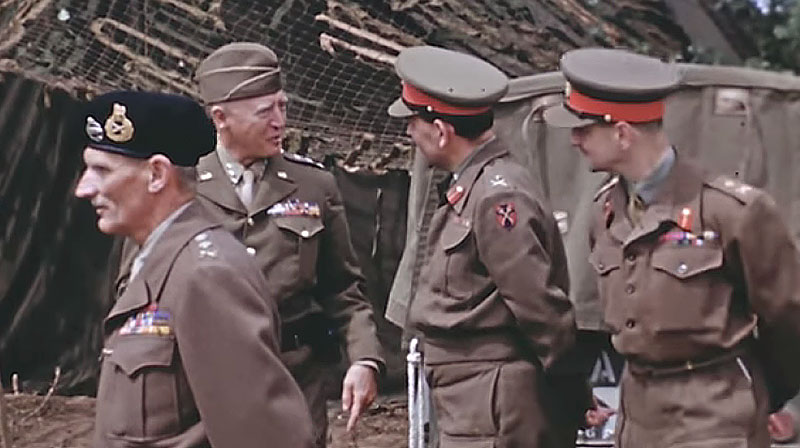
This footage was taken on the 7th of July 1944 at the 21st Army Group HQ during the Battle of the Normandy. “[**Operation Overlord**](https://www.normandy1944.info/home/battles/battle-of-normandy)” was a successful invasion of the Normandy, a region in France, which was occupied by the Germans at that time. Three of the most important generals of this battle have gathered here. [**George S. Patton**](https://www.normandy1944.info/home/commanders/life-and-death-of-george-s-patton-jr), [**Omar Bradley**](https://www.normandy1944.info/home/commanders/life-and-death-of-omar-nelson-bradley) and [**Bernard Montgomery**](https://www.normandy1944.info/home/commanders/life-and-death-of-bernard-montgomery). Omar Bradley, at this point in time, was a Lieutenant General, as indicated by the 3 stars on his uniform.
## [Invasion of Southern France](https://www.normandy1944.info/photographs/ww2-footage/invasion-of-southern-france)
- Video URL: [Visit Website](https://youtu.be/gRTMmpIRUvw)
- Video copyright: CHRONOS MEDIA History
- Video description: Landing of french troops during the allied invasion of Southern France in august 1944. This is on current "plage de la croisette" in Saint-Maxime in the Var department in the Provence-Alpes-Côte d'Azur region.
- Video time: 21:45
- Video date : June 1944
- Video color : Color
- Video poster: 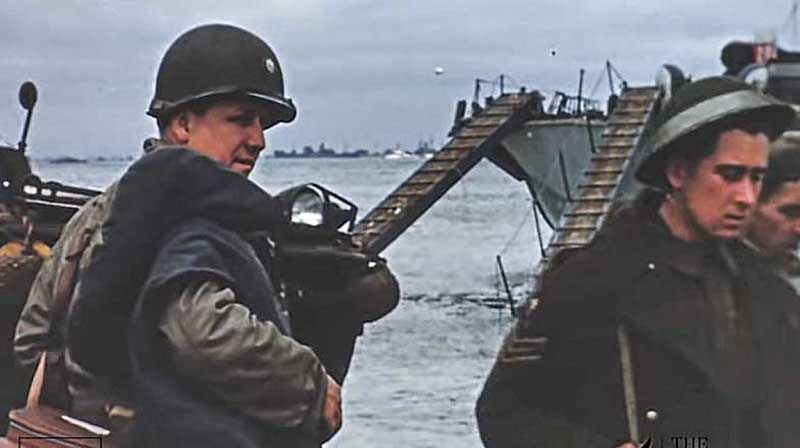
Landing of french troops during the allied invasion of Southern France in august 1944. This is on current "plage de la croisette" in Saint-Maxime in the Var department in the Provence-Alpes-Côte d'Azur region.
## [Liberation Cherbourg](https://www.normandy1944.info/photographs/ww2-footage/liberation-cherbourg)
- Video URL: [Visit Website](https://youtu.be/dRt5ImCF5uU)
- Video copyright: CHRONOS MEDIA History
- Video description: Jack Lieb, war cameraman, comments scenes from Cherbourg after the battle of Cherbourg in 1944. Scenes from the destroyed harbor of Cherbourg, French people welcoming the Americans, American using the picture of Hitler as a pinboard, first official ceremony held in France with General Collin and Mayor of Cherbourg with a tricolor flag made out of parachute cloth etc.
- Video time: 4:47
- Video date : June 30, 1944
- Video color : Color
- Video poster: 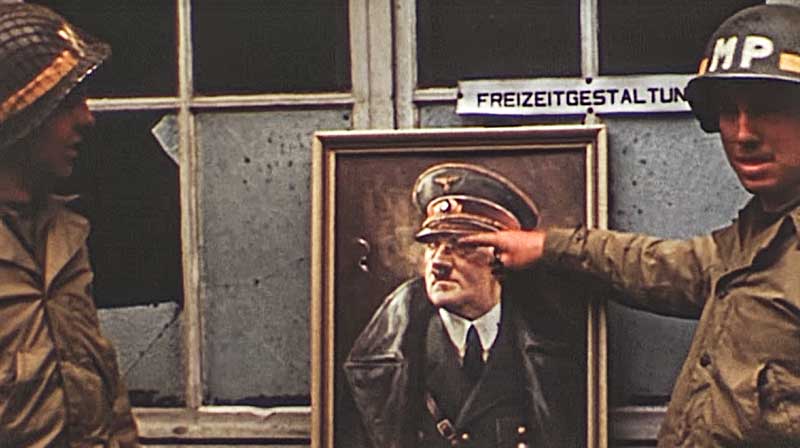
Jack Lieb, war cameraman, comments scenes from Cherbourg after the battle of Cherbourg in 1944. Scenes from the destroyed harbor of Cherbourg, French people welcoming the Americans, American using the picture of Hitler as a pinboard, first official ceremony held in France with General Collin and Mayor of Cherbourg with a tricolor flag made out of parachute cloth etc.
## [Liberation of Paris](https://www.normandy1944.info/photographs/ww2-footage/liberation-of-paris)
- Video URL: [Visit Website](https://youtu.be/k1oVABc12js)
- Video copyright: CHRONOS MEDIA History
- Video description: After the Normandy landings of the American on June 6, 1944 (D-Day) the French Resistance with support of the United States Army liberated Paris in August 24, 1944.
- Video time: 53:25
- Video date : August 24, 1944
- Video color : Color
- Video poster: 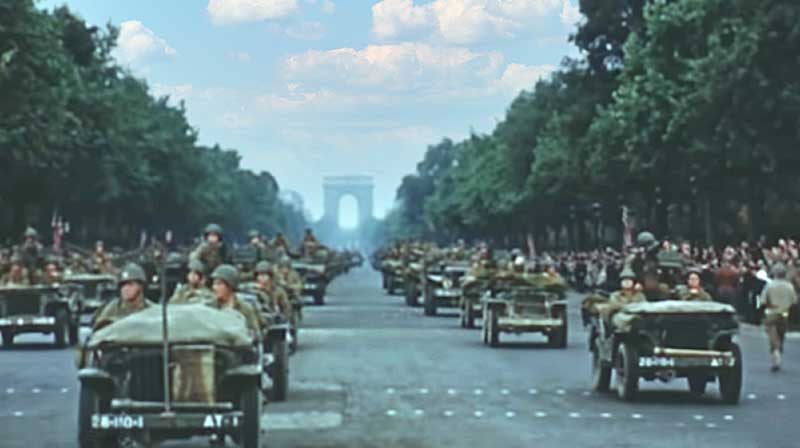
After the Normandy landings of the American on June 6, 1944 (D-Day) the French Resistance with support of the United States Army liberated Paris in August 24, 1944.
## [Natzweiler-Struthof](https://www.normandy1944.info/holocaust/concentrationcamps/natzweiler-struthof)
- Main camp image : 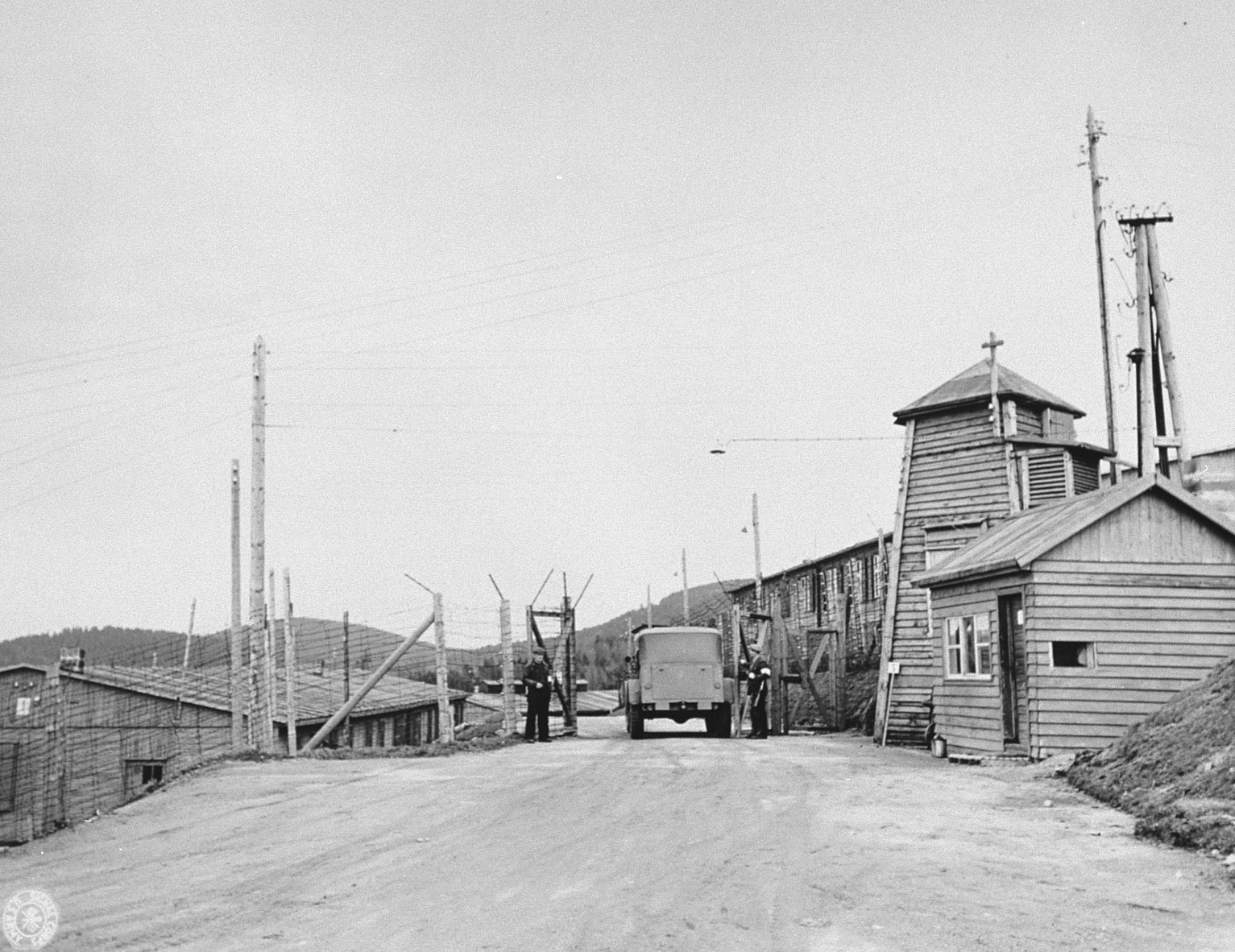
- Intro text: The Natzweiler-Struthof concentration camp was established by the Nazis in May 1941 near the village of Natzwiller, approximately 50 kilometers southwest of Strasbourg in the Alsace region of eastern France. Although smaller than other Nazi camps, it played a significant role in the Holocaust and forced labor system. Before the camp's construction was completed, prisoners were temporarily housed in the former Hotel Struthof, giving the camp its name.
- Background slider: 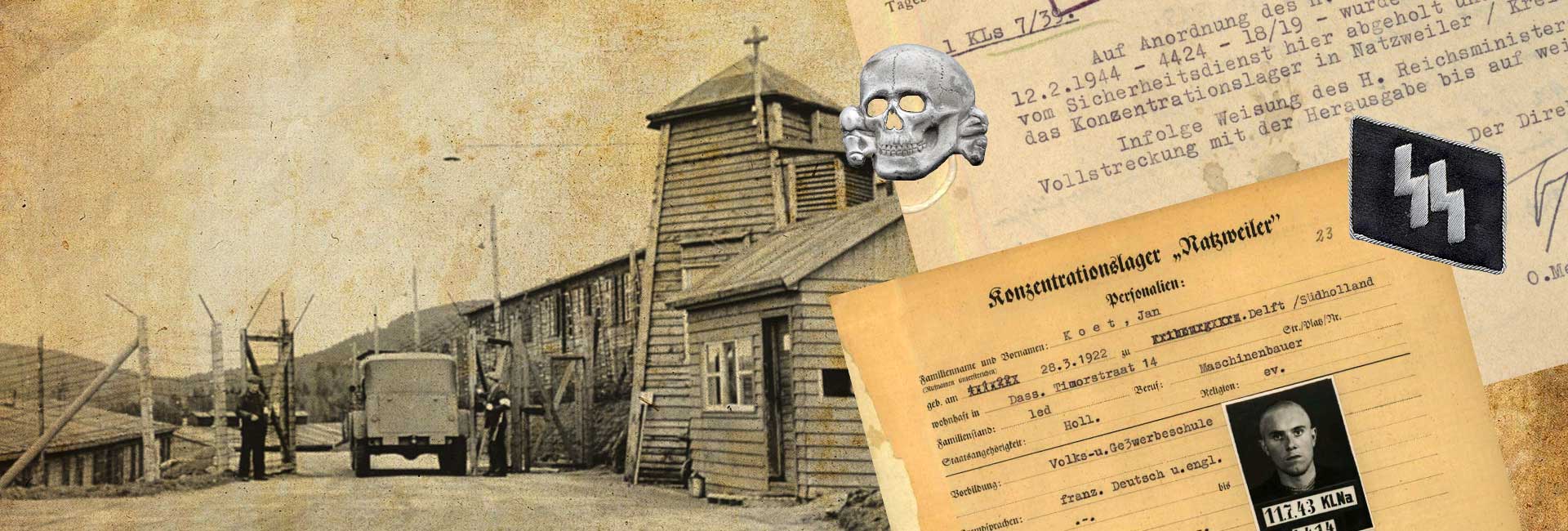
- Location camp: Natzweiler, France
- Location Coordinates: 48.454722, 7.254444
- Operated by: Schutzstaffel (SS)
- Commandants:
- Name: Hans Hüttig, Image: 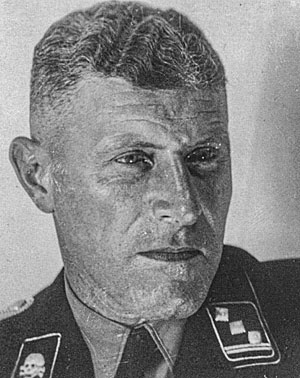, Date: May 1941 – 24 February 1942
- Name: Jozef Kramer, Image: 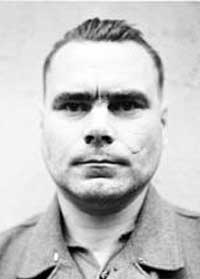, Date: 24 February 1942 – 21 April 1942
- Name: Egon Zill , Image: 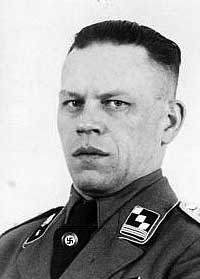, Date: 21 April 1942 – 4 October 1942
- Name: Jozef Kramer, Image: , Date: 4 October 1942 - May 1944
- Name: Fritz Hartjenstein, Image: 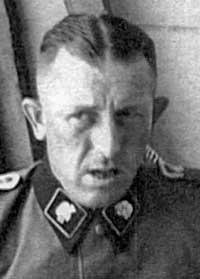, Date: 12 May 1944 – 23 January 1945
- Name: Heinrich Schwarz , Image: 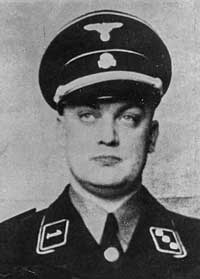, Date: 18 February 1945 - May 1945
- Operational: May 1, 1941 – September 1944
- Number of inmates: ± 50.000
- Killed: 3.000 in main camp and with the subcamps total was 17.000
- Liberated by:
- Unit: French 1st Army, Unit patch: , Date: November 25, 1944
- Unit: US 3rd Battalion, 7th Regiment, 3rd Infantry Division , Unit patch: 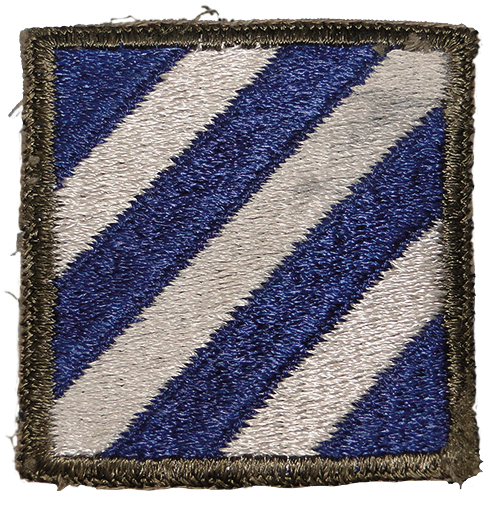, Date: November 25, 1944
- Camp images :
- Camp image: 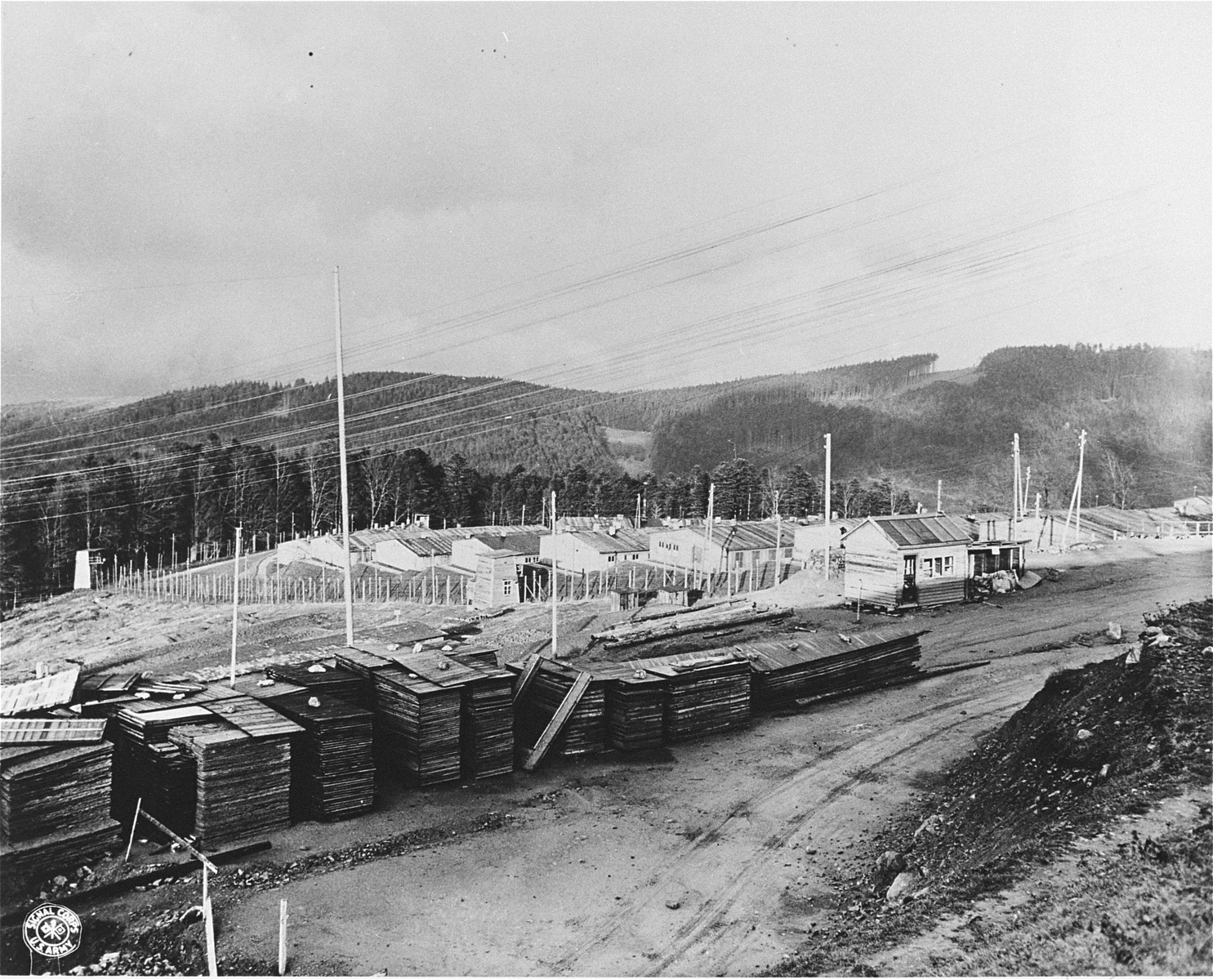, Caption: The Natzweiler-Struthof concentration camp after liberation
- Camp image: 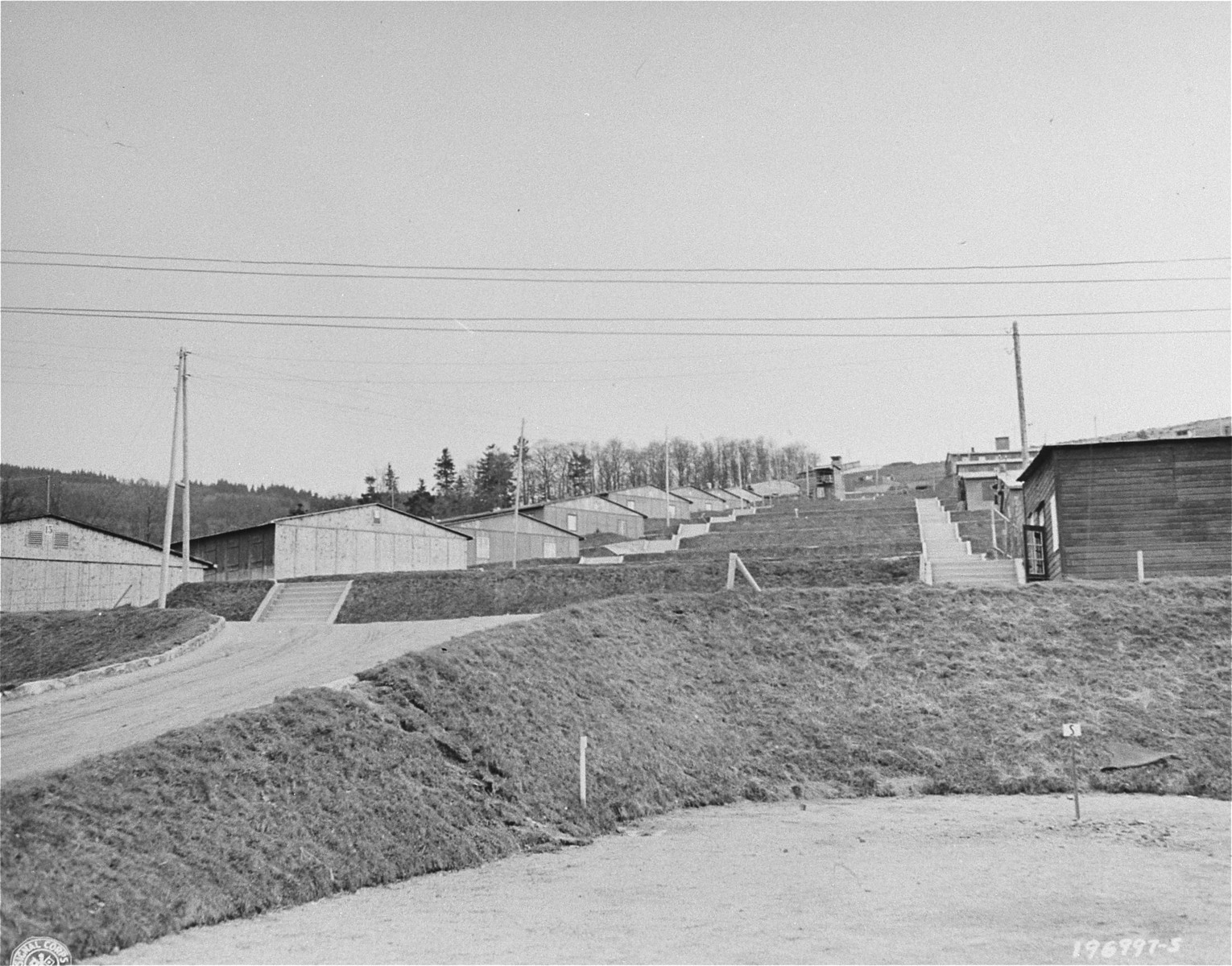, Caption: Overview of the Natzweiler-Struthof concentration camp
- Camp image: 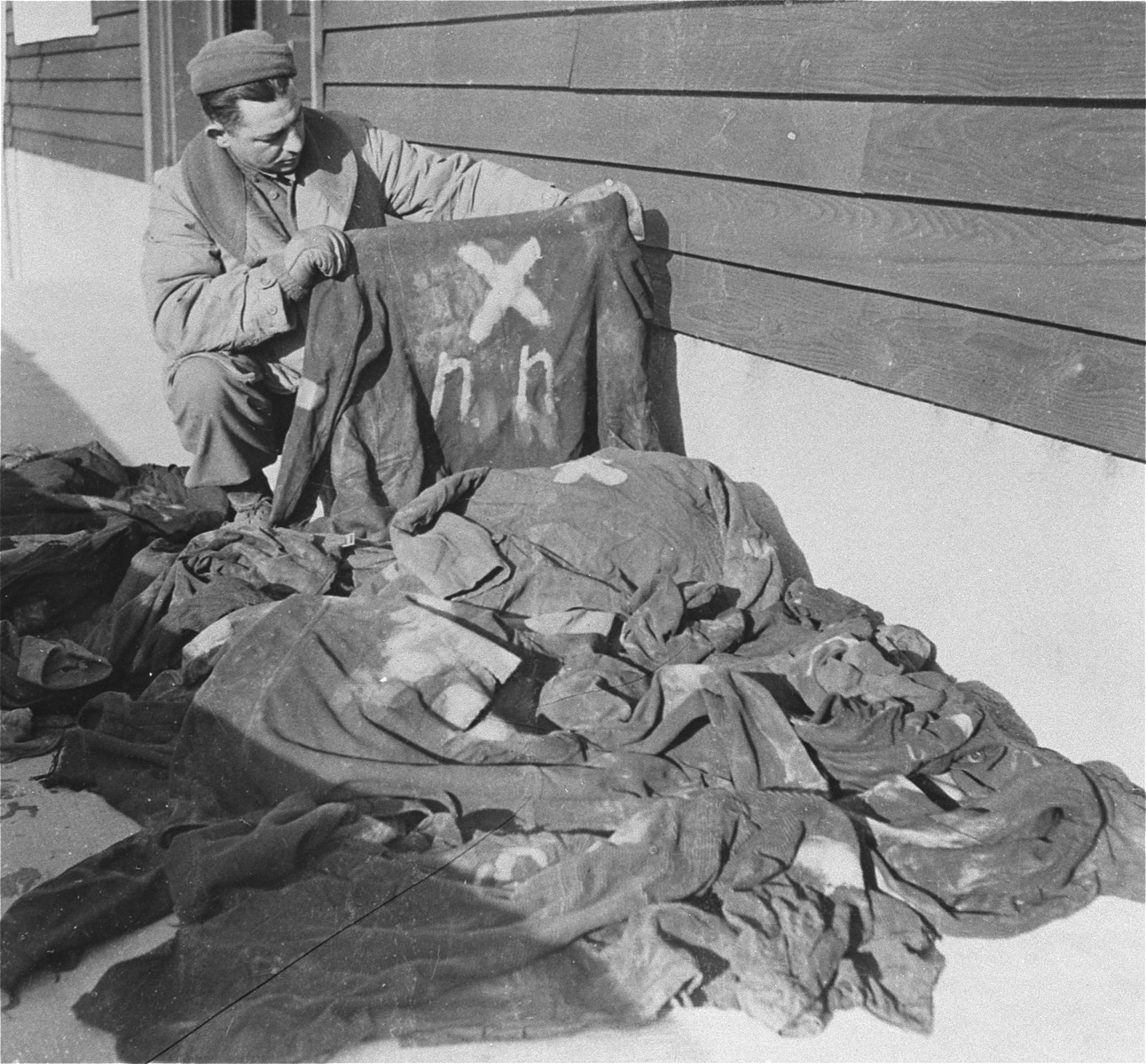, Caption: An American soldier examines markings on prisoners clothing in Natzweiler-Struthof
- Camp image: 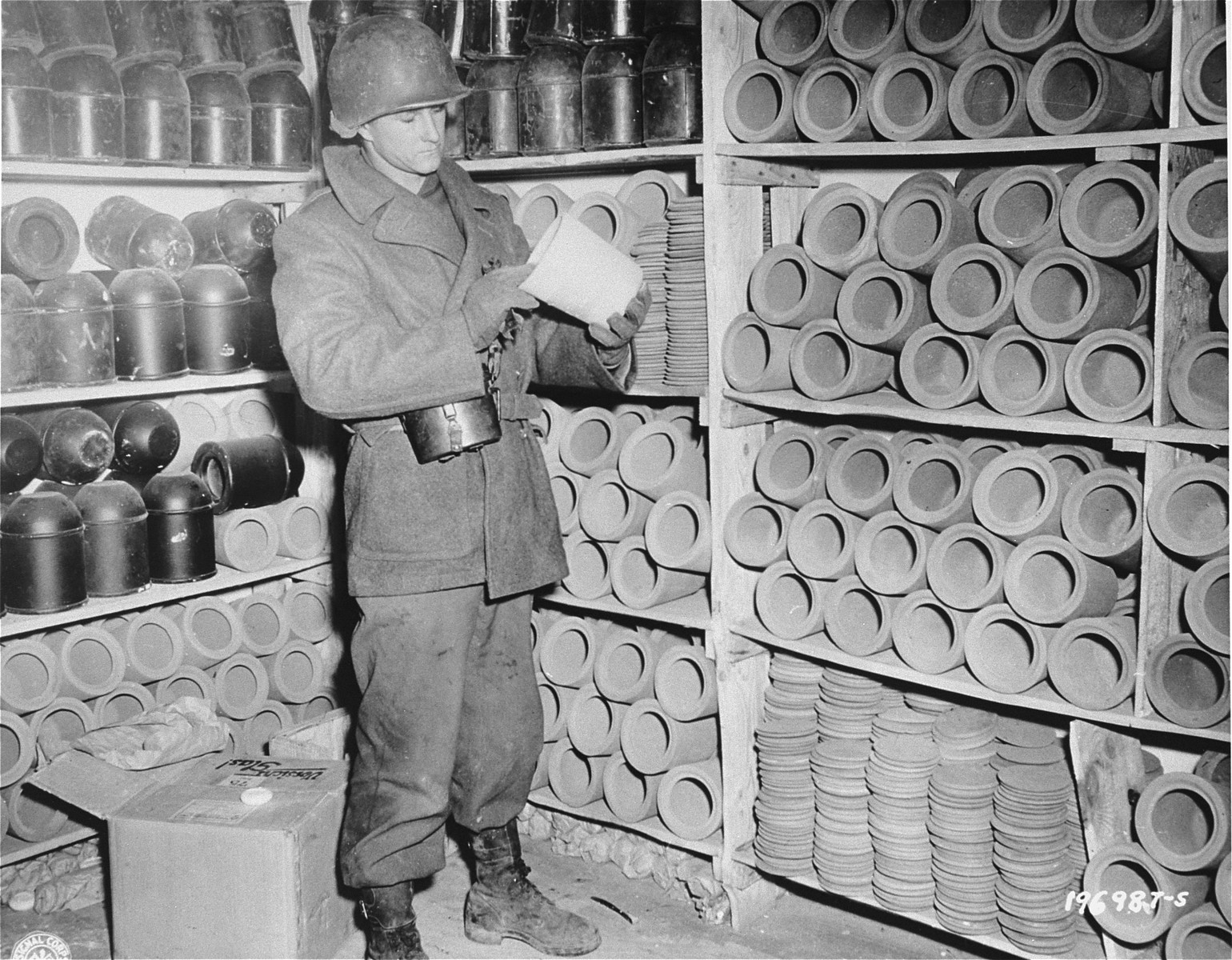, Caption: American soldier examines an urn used to bury the ashes of cremated prisoners
- Camp image: 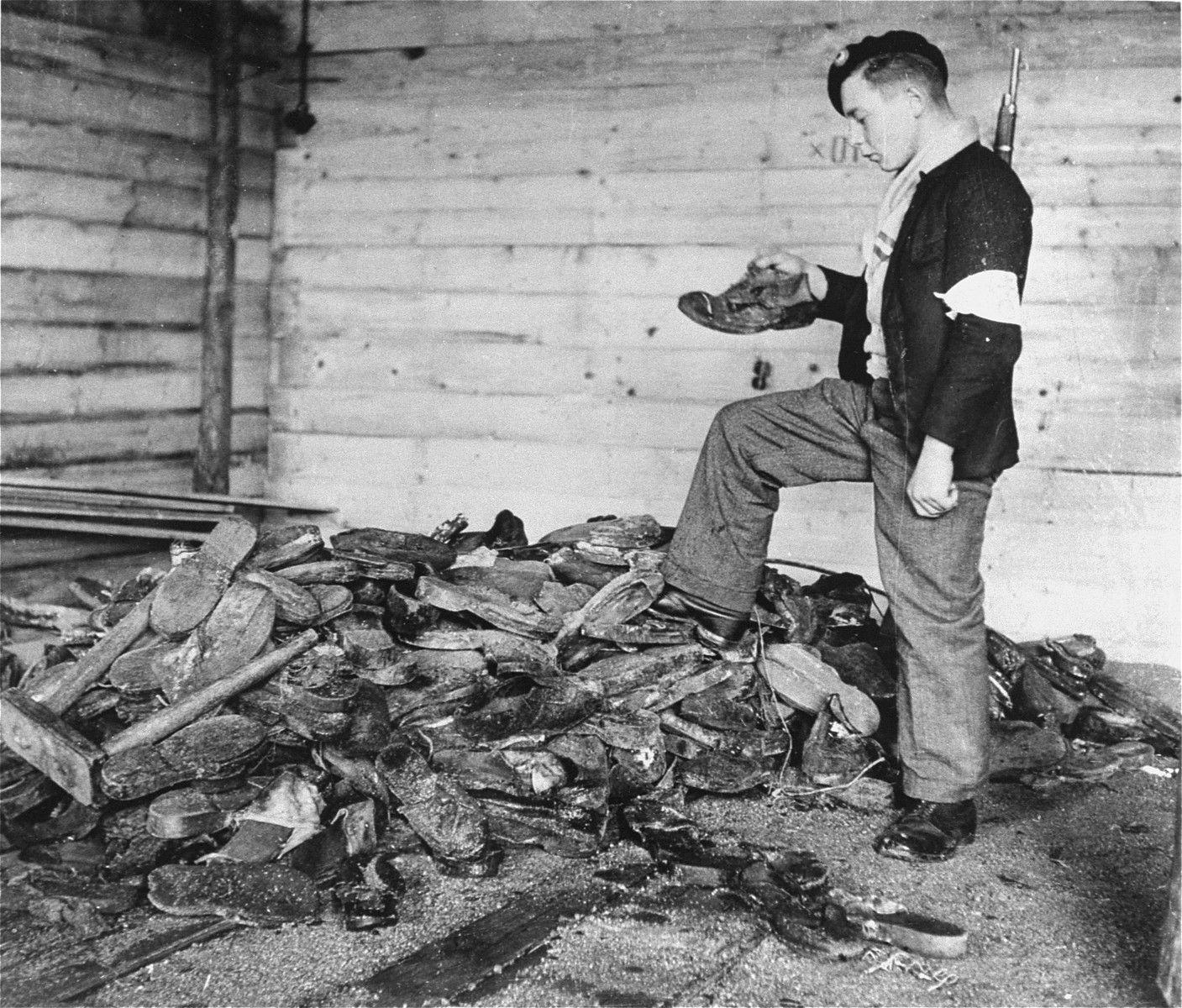, Caption: French resistance examines boots, shoes and wooden clogs piled near a furnace in the crematorium
- Camp image: 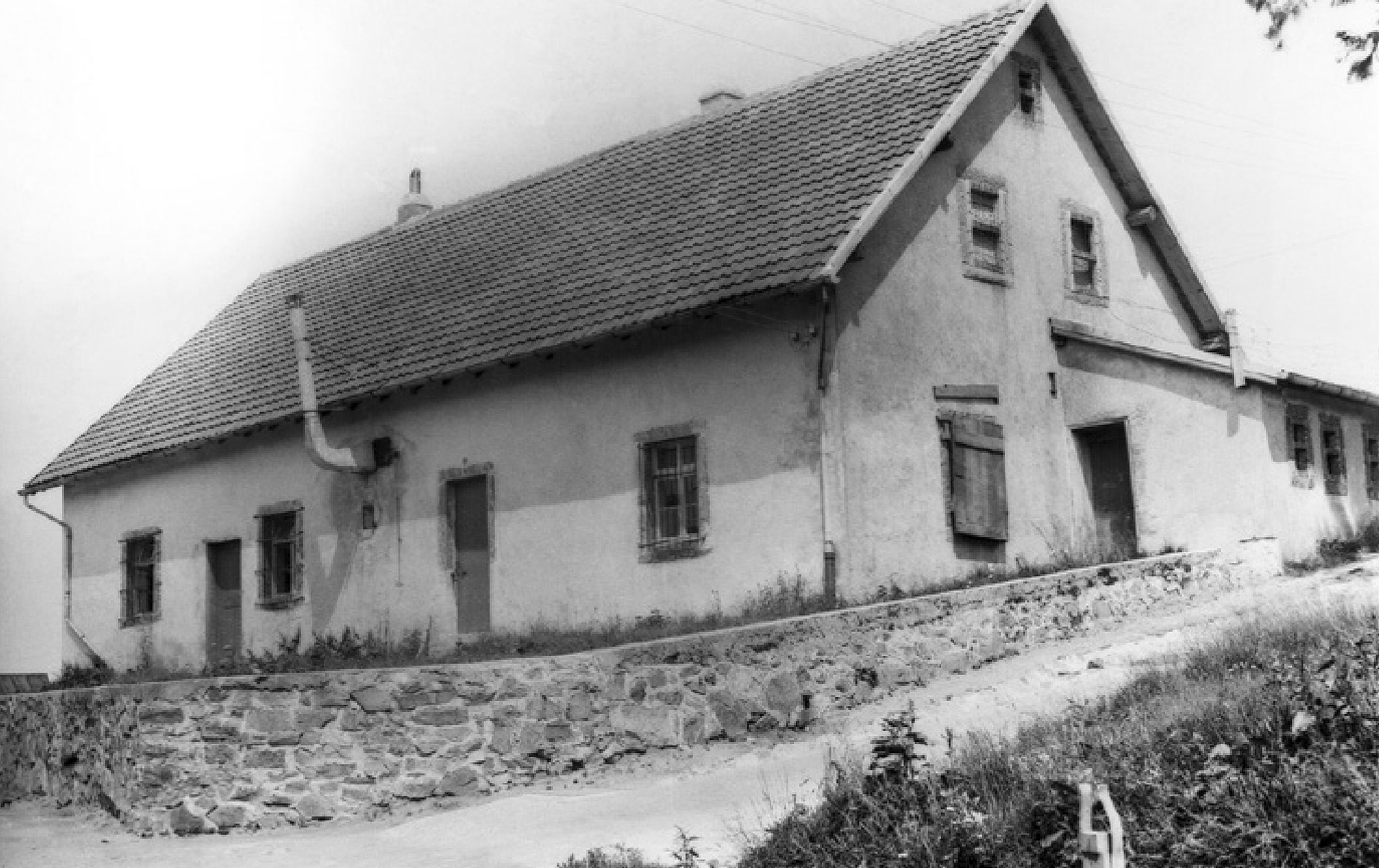, Caption: The gas chamber at Natzweiler-Struthof
- Camp image: 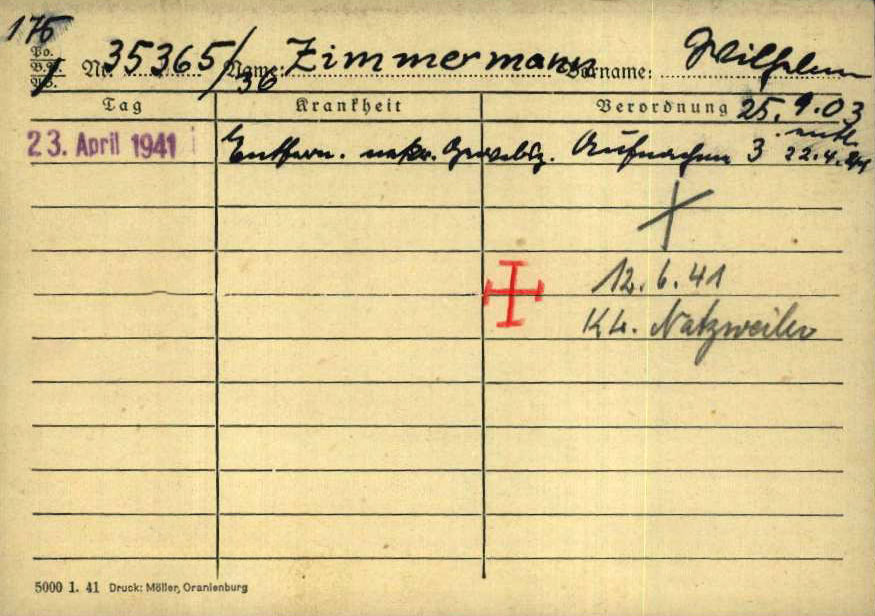, Caption: A Natzweiler-struthof document
- Camp video :
- Video: https://film-assets.ushmm.org/mp4/FV0857\_RG602215.01.01.mp4, Poster: 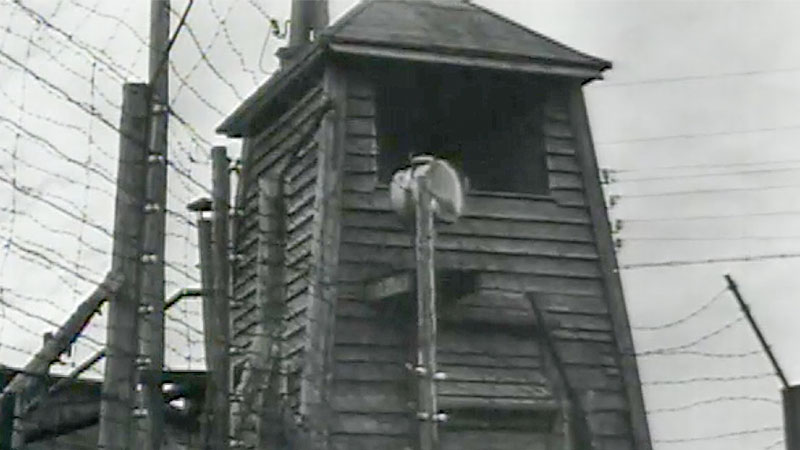, Copyright: United States Holocaust Memorial Museum, courtesy of National Archives & Records Administration
- Camp website: https://www.struthof.fr/en/
- USHHM :
- URL: https://oralhistory-assets.ushmm.org/RG-50.810.0003.01.04.mp3, Poster: 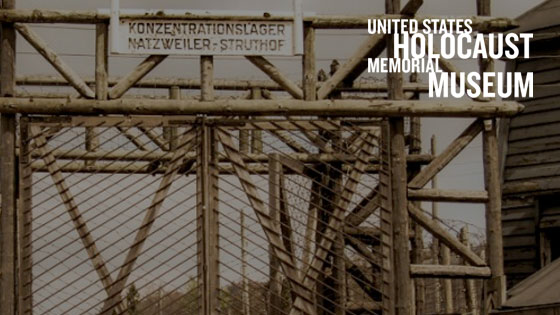, Name: Leon Boutbien, Description: Recordings regarding Natzweiler-Struthof concentration camp, including the memoirs of Leon Boutbien., Copyright: USSHM
Natzweiler-Struthof was a Nazi concentration camp located in the Vosges Mountains, near the villages of Natzweiler and Struthof in the Alsace region. Although geographically in France, the area had been annexed by Nazi Germany in 1940. Operating from May 21, 1941, until September 1944, it was the only concentration camp established by the Nazis on pre-war French territory. Its remote, forested location sat at an elevation of 800 meters (2,600 feet), making it both isolated and difficult to access.
Over 50.000 prisoners passed through Natzweiler-Struthof during its operation. Many were members of resistance movements from across occupied Europe. The camp functioned as a forced labor site, a transit hub, and later, a place of execution. Conditions were brutal, tens of thousands died due to starvation, forced labor, disease, and deliberate killings. An estimated 17.000 prisoners perished in the main camp and its network of subcamps.
As Allied forces advanced in 1944, many prisoners were evacuated to Dachau by order of SS officials. Only a small number of Nazi staff remained when the camp was liberated by the French First Army on November 23, 1944.
One of the camp’s most infamous atrocities involved anatomist **August Hirt**, who orchestrated a so-called “Jewish skeleton collection.” He selected 86 Jewish men and women to be murdered at the camp for the purpose of creating anatomical exhibits intended to support Nazi racial theories. A documentary later brought attention to the victims of this crime.
After World War II, several Nazi officials connected to Natzweiler-Struthof were brought to justice. The camp was preserved as a memorial site and museum, which includes the European Centre of Deported Resistance Members. A monument honors those who suffered or died there. The museum was restored in 1980 after being vandalized by neo-Nazis in 1976.
Among the camp’s most notable survivors was **Boris Pahor**, a Slovenian writer who later authored the acclaimed novel Necropolis, detailing his harrowing experience at Natzweiler-Struthof.
### Operations at Natzweiler-Struthof Concentration Camp
Natzweiler-Struthof, located in the Vosges Mountains of eastern France, was constructed in spring 1941 under the direction of SS officer **Hans Hüttig**. Situated at 800 meters above sea level in a remote, forested area, it operated from May 1941 until September 1944. As Allied forces advanced, the SS evacuated most prisoners on brutal death marches to Dachau, leaving only a small staff behind. The camp was liberated by the French First Army on 23 November 1944, the same day Strasbourg was freed.
Throughout its operation, Natzweiler-Struthof imprisoned around 50.000 individuals from over 30 countries. These included members of resistance movements, political dissidents, and forced laborers. Prisoners were often transferred from here to other camps, making Natzweiler a labor, transit, and eventually a death camp.
### Purpose and Conditions
Originally established to detain Nacht und Nebel(Night and Fog) prisoners, those who had vanished under secret Nazi orders, Natzweiler was known for its harsh conditions. Prisoners faced starvation, overwork, disease, and executions. An estimated 17.000 inmates died in total, including those held in the camp’s 53 subcamps that extended into Germany. Approximately 3.000 of these deaths occurred in the main camp alone.
Inmates performed forced labor for the Nazi war effort, including manufacturing weapons and aircraft parts. Companies such as Daimler-Benz and Messerschmitt relocated operations to subcamps, taking advantage of underground tunnels and mines for protection against Allied bombing. Labor conditions were brutal, with some camps experiencing mortality rates as high as 80%.
### Facilities, war crimes and atrocities
The camp included a crematorium and a makeshift gas chamber used primarily for medical experiments, not mass extermination. Victims were subjected to inhumane tests, especially in attempts to find typhus cures for German troops. Prisoners were also executed by hanging, gunshot, or lethal injection. Only a small number of women were imprisoned at Natzweiler.
Several SS doctors and officials associated with Natzweiler were later prosecuted or executed for war crimes. These include **Otto Bickenbach**, **Helmut Rühl,** and **August Hirt**, who oversaw the infamous "Jewish skull collection." Hirt later died by suicide but was posthumously tried for his crimes.
### Liberation
On November 25, 1944, American troops made a historic discovery, the Natzweiler-Struthof concentration camp in Alsace. It was the first Nazi concentration camp uncovered by U.S. forces during World War II. Surprisingly, the camp was completely deserted, with its buildings still intact. Unlike later camps such as Bergen-Belsen, no mass graves were immediately found, but the evidence of atrocities was undeniable.
The discovery was made possible thanks to guidance from members of the **French Forces of the Interior** (FFI) and four recently escaped prisoners. Just days earlier, on **November 22** the SS guards had abandoned the camp, fleeing as Allied forces advanced. Early photographs taken by the Americans documented the conditions and signaled the beginning of broader revelations about Nazi war crimes.
Although the main camp had been evacuated months earlier, 5.500 prisoners were sent to Dachau between September 2 and 4 and additional transports followed on September 21 and November 22, the Natzweiler camp system remained operational through a network of 53 annex camps. These subcamps continued functioning even after the main camp was emptied.
By mid-September 1944, key administrative functions, including the political division and prisoner records office, were moved to Dachau. By mid-November, remaining administration was relocated to towns like Guttenbach, Binau, and Neunkirchen. As the Allies pressed forward in early 1945, operations dispersed further into Stuttgart, Dürmettingen, Missau, and Scheffau, eventually disintegrating entirely.
Even after the main camp ceased operations, the annex camps remained active. By September 1, 1944, more than 25.000 new prisoners had been registered across these satellite sites. Camps such as Leonberg, Erzingen, and Barbe-Haslach continued to operate under the Natzweiler system, making it a rare example of a concentration camp network surviving without its central facility.
As the Nazi regime collapsed, conditions in these camps deteriorated. Thousands of prisoners died between September 1944 and May 1945, underscoring the ongoing horrors of the Nazi concentration camp system even in its final months.
### Command Structure and Industry Ties at Natzweiler-Struthof
Camp Commanders (SS Commandants)
Throughout its operation, the Natzweiler-Struthof concentration camp was overseen by a series of senior SS officers responsible for its administration and the brutal treatment of prisoners. You will find pictures of them at the bottom of this page.
### SS Doctors Involved at the Camp
A number of SS medical personnel served at Natzweiler-Struthof, many of whom were later implicated in unethical medical experiments and war crimes:
- Kurt aus dem Bruch
- Karl Babor
- Heinz Baumköther
- Max Blancke
- Franz von Bodmann
- Hans Eisele
- Herbert Graefe
- Richard Krieger
- Georg Meyer
- Heinrich Plaza
- Elimar Precht
- Andreas Rett
- Werner Rohde
- Gerhard Schiedlausky
- Siegfried Schwela
These SS doctors held ranks ranging from Untersturmführer (Second Lieutenant) to Sturmbannführer (Major) and played direct roles in the health and medical experimentation systems of the camp.
### Forced labor and industrial exploitation
Natzweiler-Struthof was not only a site of imprisonment and execution, it also served as a forced labor hub for major German industries. Prisoners were compelled to work under harsh, inhumane conditions for private companies that supported the Nazi war effort. These firms included:
- Allgemeine Elektrizitäts Gesellschaft (AEG)
- Adlerwerke AG
- BMW (Bayerische Motorenwerke AG)
- Berger
- Bergwerks Industrie AG
- Daimler-Benz AG
- Friedrich Krupp Ironworks
- Gruen & Bulfinger
- Henkel & Cie
- Heinkel Flugzeugwerke (Aircraft Manufacturing, Zuffenhausen)
- Kessler Factory
- Koch & Mayer
- Messerschmitt AG
- Röchling Group
These companies benefited from the exploitation of inmate labor, producing everything from machinery and chemicals to vehicles and aircraft components. The involvement of such major industrial firms reveals the deep connections between the Nazi regime and private enterprise during World War II.
### The Jewish Skull Collection: A Nazi pseudo-scientific atrocity
The so-called "Jewish Skull Collection" was a horrifying Nazi initiative during World War II aimed at showcasing the supposed racial inferiority of Jews. Conceived by SS anthropologist August Hirt and supported by high-ranking Nazi officials including Heinrich Himmler, the project sought to create an anatomical display comparing Jews to the so-called Aryan "master race."
Eighty-six Jewish men and women were selected from Auschwitz to represent what the Nazis considered “typical” Jewish racial features. These victims were transported to the Natzweiler-Struthof concentration camp in France, where they were kept in relatively good health for several weeks to preserve their physical condition. They were then murdered in a specially designed gas chamber, and their bodies sent to the Anatomy Institute at the Reich University of Strasbourg.
The plan was to use the corpses for anatomical casts and then reduce them to skeletons for museum display. However, as Allied forces advanced in 1944, the Nazis abandoned the project before these final steps could be completed. The remains of the victims were discovered intact in Strasbourg.
Several SS officers and scientists were involved in this atrocity, including Josef Kramer, who personally carried out many of the killings, and Bruno Beger, who helped select victims based on their physical features. August Hirt, the project's architect, took his own life in 1945. Many others involved were later tried for war crimes.
For years, only one victim, Menachem Taffel, was positively identified. In 2003, German researcher Hans-Joachim Lang used prisoner records to identify all 86 victims. They came from eight European countries, including Greece, Poland, France, and Germany. Lang published his findings in The Names of the Numbers, helping to restore the identities and humanity of those murdered.
In 1951, the victims’ remains were reburied in the Jewish cemetery of Cronenbourg-Strasbourg. In 2005, memorial plaques engraved with their names were installed. Another plaque was placed at the University Hospital's Anatomy Institute, acknowledging the crimes committed in the name of science.
In 2022, the gas chamber at Natzweiler-Struthof was reopened to the public. While intended as a historical exhibit, some groups expressed discomfort with its presentation, emphasizing the need for sensitivity when commemorating victims of such atrocities.
This collection remains a stark reminder of how science can be manipulated by ideology, and the importance of remembering victims not as numbers, but as individuals with lives, families, and stories.
### Post-War Trials of Natzweiler-Struthof Commanders and Staff
After World War II, several high-ranking officials connected to the Natzweiler-Struthof concentration camp were tried for war crimes.
**Hans Hüttig**, the camp’s first commandant, was sentenced to life in prison by a French military court in 1954. He was released in 1956 after serving eleven years.
**Josef Kramer**, who commanded the camp during the infamous Jewish skull collection project, was later arrested at Bergen-Belsen. Tried for crimes committed at Auschwitz and Bergen-Belsen, he was convicted and executed in December 1945.
**Fritz Hartjenstein**, commandant during the execution of four female SOE agents, stood trial at Wuppertal with five others in 1946. All were found guilty. Two men, **Franz Berg** and **Peter Straub**, were hanged. Hartjenstein's initial death sentence was commuted to life imprisonment, but he later received additional death sentences in separate trials for other crimes. He died of a heart attack in 1954 before any were carried out.
**Others sentenced at Wuppertal included:**
**Kurt Geigling** – 10 years imprisonment
**Josef Muth** – 15 years imprisonment
**Magnus Wochner** – 10 years imprisonment, also implicated in the Stalag Luft III murders
**Heinrich Ganninger**, Hartjenstein’s deputy, committed suicide in prison before trial. He had been accused of involvement in the murder of four British female agents.
**Heinrich Schwarz**, another camp official, was tried separately for war crimes and executed by firing squad in 1947.
These trials reflect postwar efforts to hold Nazi officials accountable for atrocities committed against prisoners and resistance members in occupied Europe.
**A big thank you to the Memorial of the **Natzweiler-Stuthof concentration** camp for their help in getting the dates correct.**
## [Operation Dragoon](https://www.normandy1944.info/photographs/ww2-footage/operation-dragoon)
- Video URL: [Visit Website](https://youtu.be/BXHfMX0Cj28?feature=shared)
- Video copyright: CHRONOS MEDIA History
- Video description: Operation Dragoon, launched on August 15, 1944, was the massive Allied amphibious and airborne invasion of the French Riviera. Spearheaded by the US Seventh Army and Free French forces, it successfully secured vital Mediterranean ports, trapped the German Nineteenth Army, and pushed rapidly up the Rhône
- Video time: 22:12
- Video date : 15 August - 14 September 1944
- Video color : Color
- Video poster: 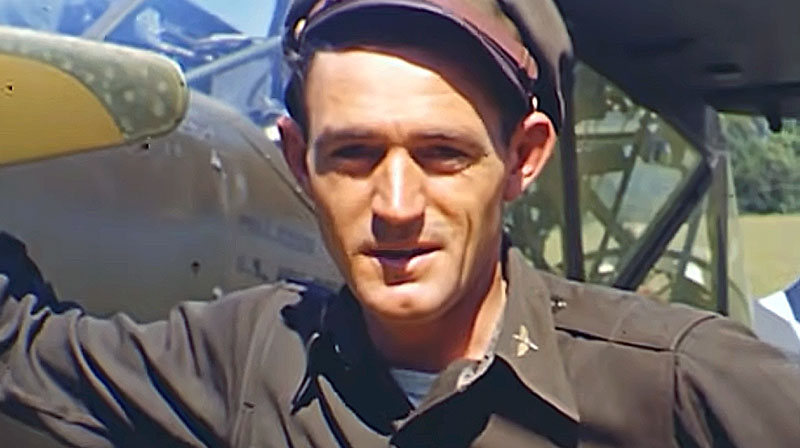
**Operation Dragoon, launched on August 15, 1944**, was the massive Allied amphibious and airborne invasion of the French Riviera. Spearheaded by the US Seventh Army and Free French forces, it successfully secured vital Mediterranean ports, trapped the German Nineteenth Army, and pushed rapidly up the Rhône
## [Oradour-sur-Glane](https://www.normandy1944.info/holocaust/massacres-and-atrocities/oradour-sur-glane)
- Massacre subheading 1: SS Division Das Reich massacred 643 inhabitants on 10 June 1944
- Massacre subheading 2: Haute-Vienne, France
- Perpetrators of massacre:
- Portrait of perpetrator massacre: 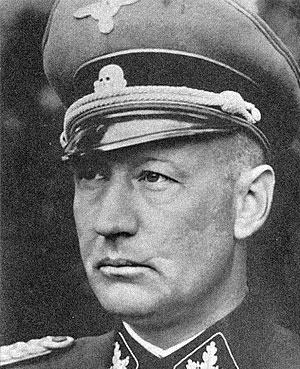, Name of perpetrator massacre: Heinz Lammerding, Rank of perpetrator massacre: SS-Gruppenführer, Born perpetrator massacre: 27 August 1905, Death of perpetrator massacre: 13 January 1971 (aged 65), Convicted for perpetrator massacre: Yes, but never extradited from West Germany and never imprisoned
- Portrait of perpetrator massacre: 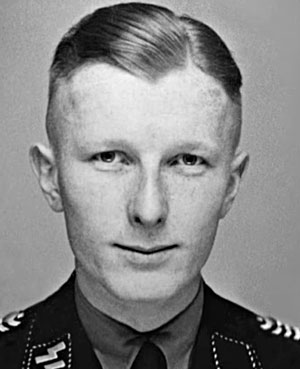, Name of perpetrator massacre: Adolf Diekmann, Rank of perpetrator massacre: SS-Sturmbannführer, Born perpetrator massacre: 8 December 1914, Death of perpetrator massacre: 29 June 1944 (aged 29), Convicted for perpetrator massacre: No, killed in action in Normandy on 29 June 1944
- Portrait of perpetrator massacre: 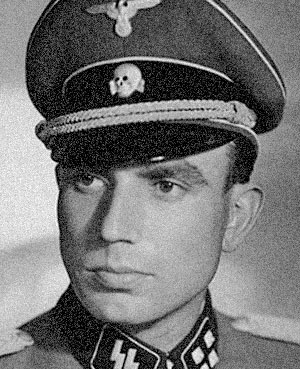, Name of perpetrator massacre: Otto Weidinger, Rank of perpetrator massacre: SS-Sturmbannführer, Born perpetrator massacre: 27 May 1914, Death of perpetrator massacre: 10 January 1990 (aged 75), Convicted for perpetrator massacre: No, never prosecuted
- Portrait of perpetrator massacre: , Name of perpetrator massacre: Otto-Erich Kahn, Rank of perpetrator massacre: SS-Hauptsturmführer, Born perpetrator massacre: 4 March 1908, Death of perpetrator massacre: 16 April 1977, Convicted for perpetrator massacre: No, never prosecuted
- Portrait of perpetrator massacre: 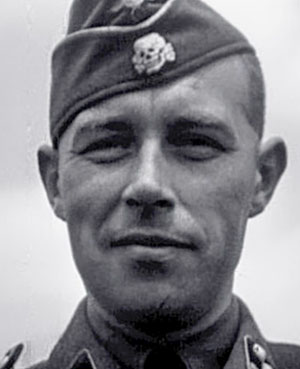, Name of perpetrator massacre: Heinz Barth, Rank of perpetrator massacre: SS-Obersturmführer , Born perpetrator massacre: 15 October 1920, Death of perpetrator massacre: 6 August 2007 (aged 86), Convicted for perpetrator massacre: Yes, sentenced to life imprisonment; released in 1997
- Massacre victims gallery:
- Massacre victims gallery portait: 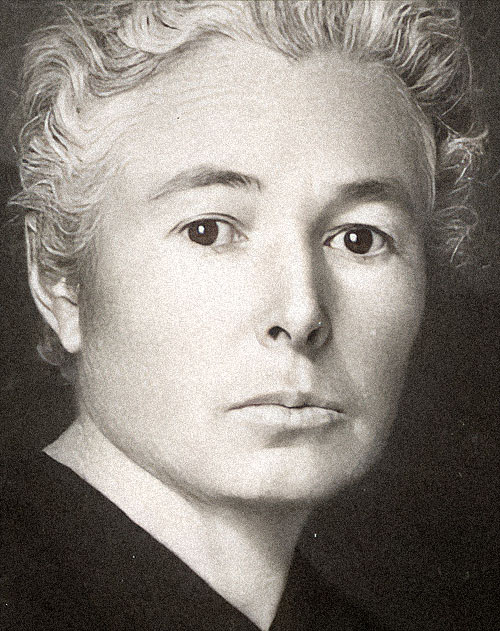, Massacre victims gallery name: Marguerite Rouffanche, Massacre victims gallery story: The only woman to have survived the massacre.
- Massacre victims gallery portait: 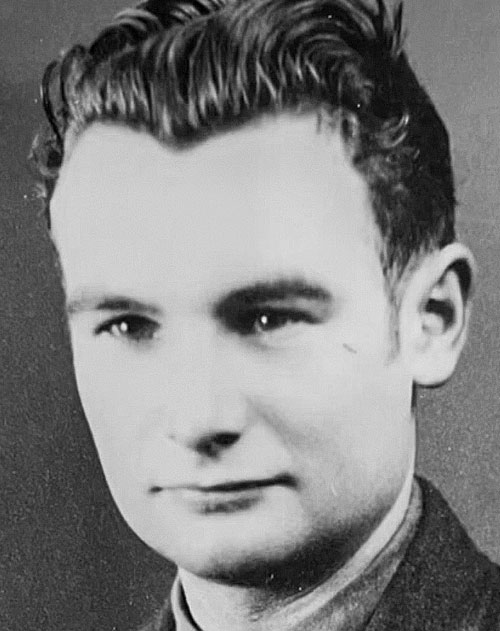, Massacre victims gallery name: Robert Hébras, Massacre victims gallery story: One of the few men to have survived the massacre.
- Massacre deaths : 643
- Date of massacre: 10 June 1944
- Masacre main image: 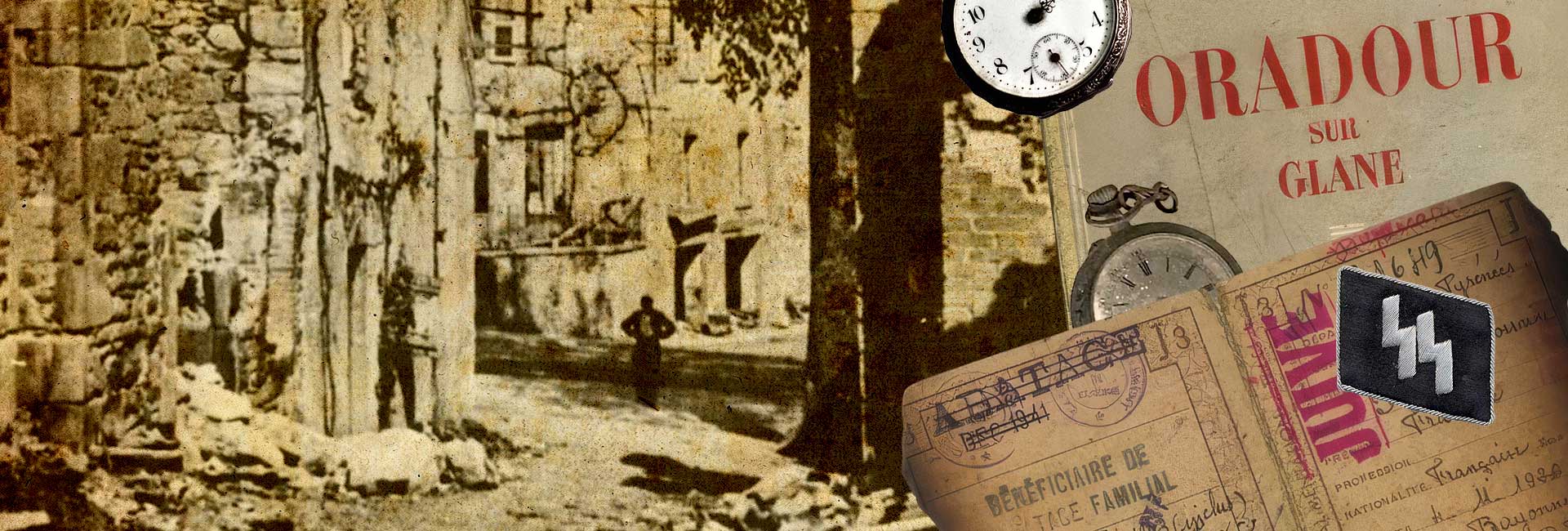
- Organizations involved in the massacre:
- Name massacre organizations : 2nd SS Panzer Division Das Reich
- Name massacre organizations : 4th SS Panzer Grenadier Regiment
- Location of massacre: Oradour-sur-Glane
- Map of massacre: 45.932778,1.0325
- Type of massacre: Civilian massacre
- Massacre images:
- Massacres images: 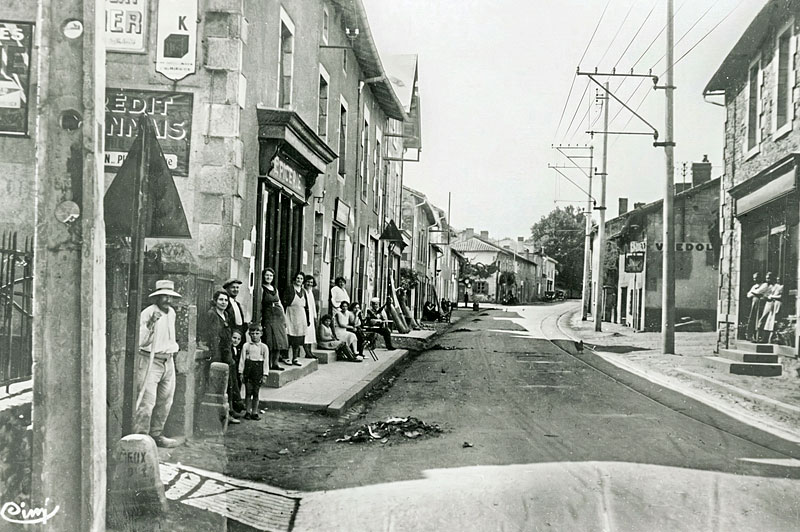, Massacre images photographer or copyright: Early postcard showing the main street of Oradour-sur-Glane before WW2
- Massacres images: 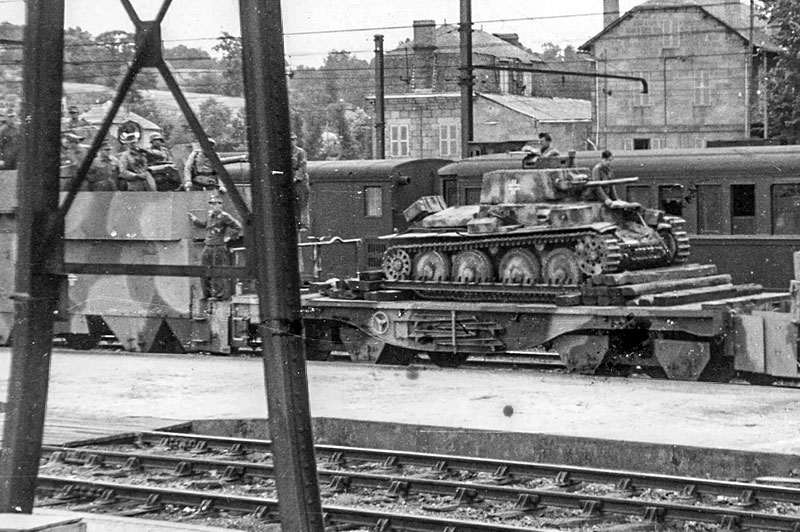, Massacre images photographer or copyright: Elements of the 2nd SS Panzer Division Das Reich travelling north towards Normandy.
- Massacres images: 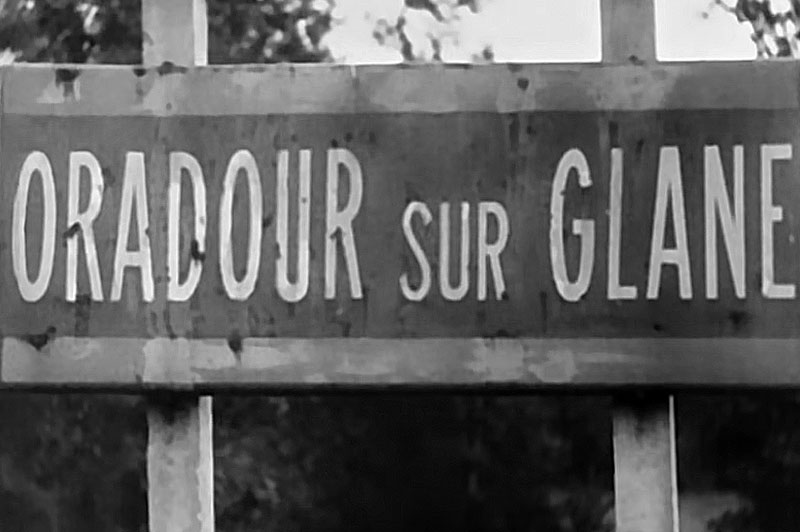, Massacre images photographer or copyright: Entrance to Oradour-sur-Glane, where the massacre of 10 June 1944 took place
- Massacres images: 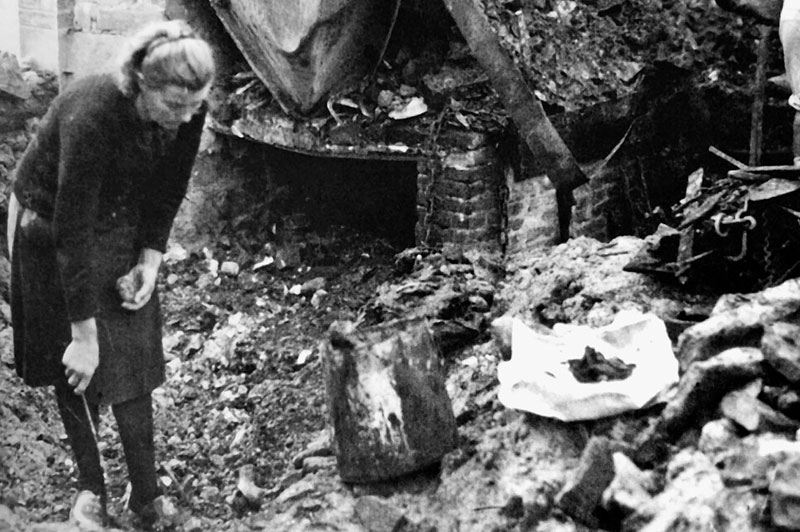, Massacre images photographer or copyright: A resident searches the ruins of Oradour-sur-Glane after the massacre.
- Massacres images: 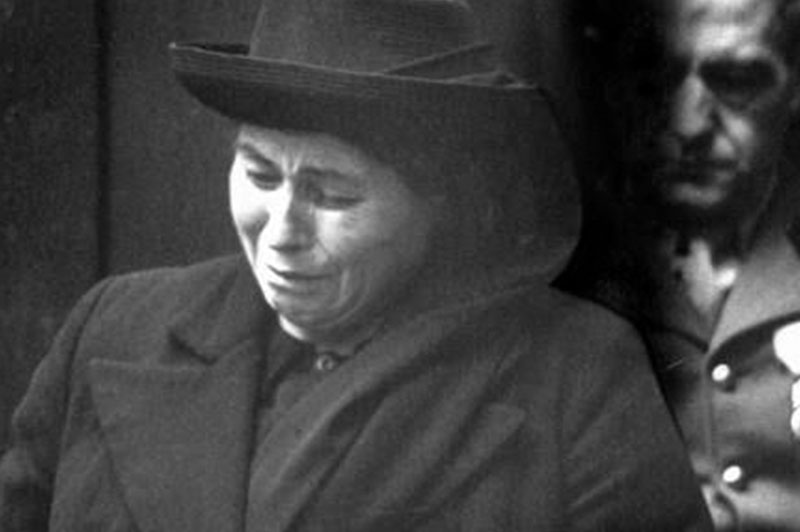, Massacre images photographer or copyright: Marguerite Rouffanche testifies during the Bordeaux Trial in 1953
- Massacres images: 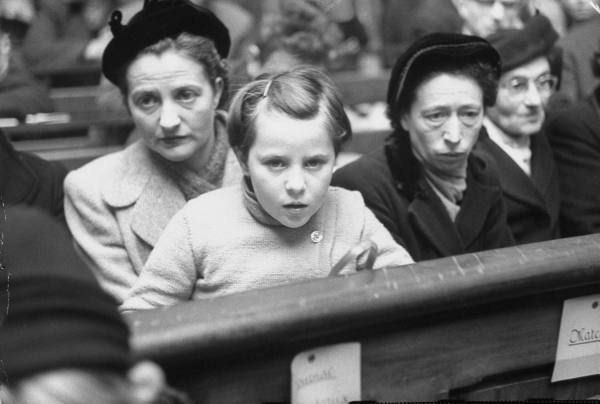, Massacre images photographer or copyright: Paule Tessaud and her mother at the Bordeaux Trial in 1953
- Massacre thank you :
- Massacre Thank you Organization: USHMM, Massacre Thank you website: https://www.ushmm.org/
- Massacre Thank you Organization: Oradour , Massacre Thank you website: https://www.oradour.info/
- Massacre video:
- Massacre video copyright: DW News
- Massacre survivors:
- Massacre survivor portrait: 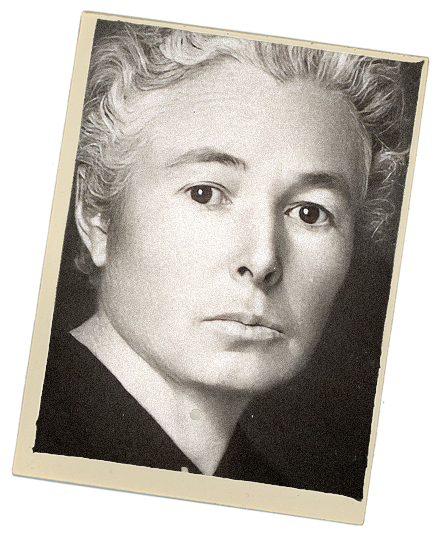, Massacre survivor name: Marguerite Rouffanche, Massacre survivor story: **The only woman to survive the Oradour-sur-Glane massacre.**
At around **2:00 p.m. on June 10, 1944**, German SS soldiers forced Marguerite Rouffanche from her home and ordered her, together with her husband, son and two daughters, to join the other villagers who had been assembled in the village square. As more residents arrived from across the village and children were brought from the local schools, the SS separated the population into two groups. The men were taken to nearby barns and sheds, while the women and children, including mothers carrying babies and pushing prams, were marched to the village church.
Rouffanche was among those imprisoned inside the church when the SS set the building on fire and opened fire on those attempting to escape. Despite being shot **five times**, she miraculously survived by escaping through a rear sacristy window and hiding in a nearby pea garden until after nightfall. She spent more than a year recovering from her severe injuries.
In **1953**, Rouffanche gave powerful testimony during the **Bordeaux trial** of those accused of participating in the massacre. After the war, she returned to the newly built village of Oradour-sur-Glane, where she lived until her death on **13 May 1988**, aged 90. At her funeral on **25 May 1988**, fellow survivor **Robert Hébras** asked those gathered to observe a minute of silence in her memory.
On **10 June 1944**, just four days after the **Allied landings in Normandy (D-Day)**, the quiet French village of **Oradour-sur-Glane** became the scene of one of the worst atrocities committed against civilians in Western Europe during the **Second World War**. Soldiers of the **1st Battalion, 4th SS Panzer Grenadier Regiment "Der Führer"**, part of the **2nd SS Panzer Division Das Reich**, systematically murdered **643 civilians**, including **190 men, 247 women and 206 children**, before looting and destroying the entire village.
The massacre was carried out during the division's movement north toward the Normandy front following the Allied invasion. While the disappearance of **SS-Sturmbannführer Helmut Kämpfe** has often been linked to the events of that day, historians generally agree that the attack formed part of a broader campaign of terror intended to intimidate the French population and discourage resistance activities. Oradour-sur-Glane, a peaceful community with no significant Resistance presence, was selected as the target of an act of collective punishment whose brutality shocked the world.
Unlike many villages destroyed during the war, **Oradour-sur-Glane** was never rebuilt on its original site. On the orders of **General Charles de Gaulle**, the burned-out ruins were preserved as a permanent memorial to the victims.
> Today, the abandoned streets, shattered church, destroyed homes and rusting vehicles remain exactly where they were left in **June 1944**, serving as one of the most powerful reminders of the devastating consequences of war, hatred and totalitarian ideology.
### Quick Facts
**Location:** Oradour-sur-Glane, Haute-Vienne, France
**Date:** 10 June 1944
**Conflict:** Second World War
**Campaign:** German response to the Allied invasion of Normandy
**Perpetrators:** 1st Battalion, 4th SS Panzer Grenadier Regiment "Der Führer"
**Division:** 2nd SS Panzer Division Das Reich
**Commanding Officer:** SS-Sturmbannführer Adolf Diekmann
**Victims:** 643 civilians (190 men, 247 women and 206 children)
**Survivors:** Six men and one woman (Marguerite Rouffanche)
**Village Status:** Preserved as a national memorial after the war
### Background
By the summer of **1944**, German control over occupied France was increasingly threatened. The successful [**Allied landings in Normandy**](https://www.normandy1944.info/home/battles/battle-of-normandy) on **6 June 1944** marked the beginning of the liberation of Western Europe, prompting German commanders to move reinforcements north as quickly as possible. Among the formations ordered to counter the Allied advance was the experienced **2nd SS Panzer Division Das Reich**, which had been refitting in southern France after suffering heavy losses on the **Eastern Front**.
As the division advanced toward Normandy, it encountered growing resistance from the **French Resistance (Maquis)**. Sabotage operations, attacks on supply lines and ambushes delayed the German columns, increasing tensions among the SS leadership. German commanders responded with increasingly harsh reprisals against civilians suspected of supporting the Resistance. These measures reflected official German anti-partisan policy, which often blurred the distinction between armed resistance fighters and the civilian population.
The disappearance of **SS-Sturmbannführer Helmut Kämpfe**, commander of the **2nd SS Panzer Reconnaissance Battalion**, further intensified the atmosphere. Kämpfe was captured by members of the **Maquis du Limousin** on **9 June 1944** while travelling in a German vehicle disguised as an ambulance. Reports concerning his fate varied, and although it has frequently been suggested that the massacre at Oradour-sur-Glane was carried out in retaliation for his capture, historians have found no conclusive evidence that the village itself had any direct connection with the incident.
> Instead, modern historical research indicates that the massacre formed part of a wider campaign of intimidation carried out by elements of the **2nd SS Panzer Division Das Reich**. The objective was not only to punish suspected Resistance activity but also to spread fear among the civilian population as the division fought its way toward the Normandy battlefield.
### The 2nd SS Panzer Division Das Reich
The **2nd SS Panzer Division Das Reich** was one of the most experienced and heavily equipped formations of the **Waffen-SS**. Originally formed from units of the **SS-Verfügungstruppe (SS-VT)**, the division participated in the invasions of **Poland**, **France** and the **Soviet Union**, earning a reputation as an effective fighting force while simultaneously becoming notorious for numerous war crimes committed against civilians and prisoners of war.
After months of heavy fighting on the Eastern Front, Das Reich was transferred to southern France to rest, receive replacement personnel and re-equip with new tanks and vehicles. The Allied invasion of Normandy abruptly ended this period of refitting. On **6 June 1944**, the division received orders to move north and engage the Allied forces. Constant attacks by the French Resistance, combined with Allied air strikes and destroyed infrastructure, significantly delayed its advance.
During this journey, elements of the division carried out a series of brutal reprisals against civilians. The most infamous were the **Tulle massacre** on **9 June 1944**, during which **99 civilians** were publicly hanged and many others deported, and the following day's massacre at **Oradour-sur-Glane**.
> Together, these atrocities became enduring symbols of the extreme violence employed by the Waffen-SS against civilian populations during the final year of the war.
### The 4th SS Panzer Grenadier Regiment "Der Führer"
The massacre at **Oradour-sur-Glane** was carried out by the **1st Battalion** of the **4th SS Panzer Grenadier Regiment "Der Führer"**, one of the infantry regiments of the **2nd SS Panzer Division Das Reich**. At the time, the regiment was commanded by **SS-Standartenführer Sylvester Stadler**, while the 1st Battalion was under the command of **SS-Sturmbannführer Adolf Diekmann**. Also present with the regiment was **SS-Sturmbannführer Otto Weidinger**, who had recently arrived to familiarize himself with the regiment before taking over command from Stadler a few days later.
On the morning of **10 June 1944**, Diekmann informed Weidinger that members of the **Milice**, the Vichy French paramilitary force, had reported that **SS-Sturmbannführer Helmut Kämpfe** was allegedly being held prisoner by the French Resistance near **Oradour-sur-Vayres**. Kämpfe, commander of the **2nd SS Panzer Reconnaissance Battalion**, had disappeared the previous day after being captured by members of the **Maquis du Limousin**.
Whether this intelligence was accurate has never been established. Kämpfe's body was never conclusively identified, and historians continue to debate the extent to which his disappearance influenced the events that followed. Modern research suggests that the massacre was not the result of a carefully planned rescue mission but rather part of a broader campaign of terror designed to intimidate the civilian population and suppress resistance activity throughout the region.
According to several survivors, one German officer, later identified as **SS-Hauptsturmführer Otto Kahn**, informed the villagers that their identity papers would be checked and that searches would be conducted for hidden weapons and ammunition. No mention was made of Helmut Kämpfe during these announcements, reinforcing the belief that the villagers themselves had little understanding of why they had been assembled.
### The Tulle Massacre
Only one day before the events at **Oradour-sur-Glane**, the same division committed another major atrocity in the nearby town of **Tulle**. Following fierce fighting between German troops and units of the French Resistance, soldiers of the **2nd SS Panzer Division Das Reich**, assisted by members of the **Sicherheitsdienst (SD)**, rounded up hundreds of male civilians. On **9 June 1944**, approximately **3.000** men were assembled for identification. From these, **120** were selected for execution. In the end, **99 civilians** were publicly hanged from balconies, lamp posts and other structures throughout the town. The remaining prisoners were deported to **Dachau Concentration Camp**, where many later died. In total, the actions carried out at Tulle resulted in the deaths of more than **200 civilians**.
The massacre demonstrated the methods employed by the Waffen-SS in occupied France during the summer of **1944**. Entire communities could be subjected to collective punishment without evidence that individual civilians had participated in resistance activities.
> The terror inflicted at Tulle foreshadowed the even greater atrocity that would occur at Oradour-sur-Glane less than twenty-four hours later.
### Service on the Eastern Front and War Crimes
Before returning to France in 1944, **Otto-Erich Kahn** served with the **2nd SS Panzer Division "Das Reich"** on the Eastern Front. During the invasion of the [**Soviet Union**](https://www.normandy1944.info/home/battles/operation-barbarossa), Waffen-SS divisions became increasingly involved in anti-partisan operations, reprisals against civilians and other war crimes. These operations formed part of the wider campaign of terror that accompanied the [**Holocaust**](https://www.normandy1944.info/holocaust) and the German occupation of Eastern Europe. The conduct of the **Das Reich Division** during these campaigns showed that many of its personnel had already become accustomed to carrying out brutal actions against civilian populations before being transferred to France in 1944.
> Oradour was not an isolated act of violence.
### The Oradour-sur-Glane Massacre
At approximately **2:00 p.m. on 10 June 1944**, soldiers of the **1st Battalion, 4th SS Panzer Grenadier Regiment "Der Führer"** surrounded the peaceful village of **Oradour-sur-Glane**. Roadblocks were established on all approaches, preventing anyone from entering or leaving. In addition to the villagers, several visitors and people merely passing through were also trapped inside the cordon. The inhabitants were ordered to gather in the village square under the pretext of an identity check. Few suspected that they were about to become victims of one of the most infamous massacres of the war. Once assembled, the German soldiers separated the men from the women and children.
> The men were marched in small groups to six different barns, garages and workshops around the village, while the women and children were forced into the village church.
Machine guns had already been positioned inside the buildings where the men were held. At a pre-arranged signal, the SS opened fire, deliberately aiming at the victims' legs to prevent escape rather than killing them instantly. Once the wounded men lay helpless on the ground, the buildings were covered with straw, wood and fuel before being set ablaze. Those still showing signs of life were shot at close range as the barns burned around them.
> Only a handful of men survived by lying motionless beneath the bodies of the dead. Their eyewitness testimony would later become one of the most important sources for reconstructing the events of that afternoon.
Meanwhile, inside the village church, more than **450 women and children** waited under armed guard. Shortly afterwards, the SS placed an incendiary device inside the building. As thick smoke and flames filled the church, panic spread among those trapped inside. Anyone attempting to escape through the doors or windows was met with machine-gun fire. The church quickly became an inferno, killing almost everyone inside.
> By the end of the afternoon, **643 civilians** had been murdered, including **190 men, 247 women and 206 children**.
The SS then systematically looted the village before setting fire to houses, farms and businesses. When they departed, Oradour-sur-Glane had been transformed into a smouldering ruin, a silent testament to one of the darkest crimes committed in occupied France.
### Timeline of the Massacre
**13:30 – 13:45**
Before entering **Oradour-sur-Glane**, soldiers of the **1st Battalion, 4th SS Panzer Grenadier Regiment "Der Führer"** halted outside the village for a final briefing.
> According to later testimony, **Heinz Barth** remarked that "**Today, you will see blood flow**."
**Approximately 2:00 p.m.**
The SS entered Oradour-sur-Glane and immediately began rounding up the inhabitants. Roads leading into and out of the village were sealed off to prevent anyone from escaping.
**2:00 p.m.**
**Robert Hébras** was standing outside his home on the **Rue Émile Desourteaux**, speaking with his friend **Martial Brissaud**, when he saw the German troops arrive. He later recalled that it was "**2 p.m. German time**", referring to the additional hour imposed by the German occupation authorities.
**2:02 p.m.**
**Clément Broussaudier** was ordered from the barber's shop to report to the **Champ de Foire**. He later remembered looking at his watch, making this one of the few precisely recorded moments of the massacre.
**Approximately 2:45 p.m.**
Young **Roger Godfrin** fled from the infants' school. German soldiers fired at him, but he survived by throwing himself to the ground and pretending to be dead.
**Approximately 3:00 p.m.**
The entire population had assembled on the **Champ de Foire**. The women and children were separated from the men and marched to the village church while German soldiers announced that the village would be searched for "**arms, ammunition and prohibited merchandise**."
**3:15 – 3:30 p.m.**
The men were questioned about the alleged weapons and forbidden goods. When no one admitted any knowledge, they were divided into six groups and escorted to separate barns, garages and workshops throughout the village.
**Approximately 4:00 p.m.**
The signal was given for the executions to begin simultaneously throughout Oradour-sur-Glane.
**Approximately 4:15 p.m.**
**Pierre-Henri Poutaraud** escaped from the **Laudy barn** but was spotted and shot dead. **Robert Hébras**, **Jean-Marcel Darthout**, **Yvon Roby**, **Clément Broussaudier** and **Mathieu Borie** escaped through rabbit hutches behind the barn and eventually reached safety later that evening.
**Approximately 4:15 p.m.**
A scheduled test tram from **Limoges** arrived at the village. After killing assistant engineer **Marcelin Chalard**, the SS ordered the tram to return to Limoges.
**Approximately 4:30 p.m.**
**Marguerite Rouffanche** escaped from the burning church by climbing through a rear sacristy window despite being seriously wounded. She hid in a nearby pea garden until after nightfall.
**Approximately 5:00 p.m.**
**Adolf Diekmann** left Oradour-sur-Glane to report the operation to **Sylvester Stadler** in Limoges.
**Approximately 5:00 p.m.**
The killings at the various execution sites had been completed. German soldiers searched the village for anyone who had escaped the initial massacre.
**5:00 – 6:00 p.m.**
Many of the SS soldiers gathered at the village church, collecting firewood and throwing it onto the flames in an effort to completely destroy the building and conceal the evidence of the crime.
**Approximately 6:00 p.m.**
**Roger Godfrin** reached the **River Glane** and escaped to safety. During his flight, he witnessed the family dog **Bobby** being shot and killed by German soldiers.
**Approximately 6:00 p.m.**
The **Pinède children** escaped from the **Avril Hotel** after being unexpectedly released by an unidentified SS soldier. They found refuge in the nearby hamlet of **La Martinerie**, where they encountered **Robert Hébras** and **Mathieu Borie**. Jacqueline Pinède removed bullet fragments from Hébras' wounds before he received medical treatment the following day in **Cieux**.
**From approximately 6:00 p.m.**
The systematic looting and destruction of Oradour-sur-Glane began. Homes, farms and businesses were plundered before being deliberately set on fire.
**Approximately 7:00 p.m.**
**Adolf Diekmann** returned to Oradour-sur-Glane. No further killings took place after his return.
**Approximately 7:00 p.m.**
The scheduled tram from **Limoges** arrived outside the village and was stopped by the SS. The passengers were ordered to disembark and the tram was sent back. After an anxious wait, the passengers were released and instructed to return home without entering the village.
**From approximately 8:00 p.m.**
Villagers who had successfully hidden throughout the afternoon emerged from their hiding places and escaped. Among them were the surviving men from the **Laudy barn**. Most of the German troops departed, leaving only a small rear guard at the **Dupic House**.
**11 June 1944**
Relatives and local residents entered Oradour-sur-Glane and discovered the full extent of the massacre. **Marguerite Rouffanche** was found alive despite her severe injuries.
**12 June 1944**
Troops from the **Der Führer Regiment** returned to Oradour-sur-Glane to carry out a limited clean-up operation and to bury some of the victims.
**13 June 1944**
The **2nd SS Panzer Division Das Reich** left the Limousin region and continued its advance north towards the **Normandy** front.
**29 June 1944**
**SS-Sturmbannführer Adolf Diekmann** was killed in action near **Noyers, Normandy**, less than three weeks after ordering the massacre at Oradour-sur-Glane.
> **Historical timeline based on research by Michael**, reproduced with permission from Oradour.info.
### The Survivors
Out of the **643 civilians** murdered at **Oradour-sur-Glane**, only a handful survived. Their eyewitness testimony proved invaluable in reconstructing the events of **10 June 1944** and ensured that the massacre could never be dismissed or forgotten. The survivors carried both the physical and emotional scars of that day for the rest of their lives, dedicating themselves to preserving the memory of the victims.
Although six people survived the executions carried out by the SS, dozens of other residents escaped death by successfully hiding before the roundup or by being released after German identity checks. The French government distinguishes between the six direct survivors of the massacre, those who evaded capture, and the passengers of a tram that was stopped but ultimately allowed to continue its journey.
### Robert Hébras
**Robert Hébras** was eighteen years old when German SS troops rounded up the men of Oradour-sur-Glane. Taken to the **Laudy barn**, he was struck by machine-gun fire in the chest, leg and wrist. Falling beneath the bodies of other victims, he remained perfectly still while SS soldiers walked among the wounded, shooting anyone who showed signs of life. When the barn was set on fire, Hébras managed to crawl from beneath the burning bodies and escape with several other survivors. His mother and two sisters were murdered in the massacre, while his father survived because he happened to be working in a neighbouring village that day.
For decades, Hébras devoted his life to educating future generations about the massacre. He welcomed thousands of visitors to the preserved ruins and became one of France's most respected witnesses to the atrocities of the **Second World War**.
> Following the death of the other survivors, he became the last living eyewitness until his own death on **11 February 2023**, aged **97**.
### Marguerite Rouffanche
**Marguerite Rouffanche** was the only woman to survive the massacre. At around **2:00 p.m. on 10 June 1944**, German SS soldiers forced her from her home and ordered her, together with her husband, son and two daughters, to join the other villagers assembled in the village square. As more residents arrived from across the village and children were brought from the local schools, the SS separated the population into two groups. The men were marched to nearby barns and workshops, while the women and children were taken to the village church. Rouffanche was among those imprisoned inside the church when the SS ignited an incendiary device and opened fire on anyone attempting to escape. Despite being shot **five times**, she managed to climb through a rear sacristy window and hide in a nearby pea garden until after nightfall. She spent more than a year recovering from her severe injuries.
In **1953**, Rouffanche gave moving testimony during the **Bordeaux Trial**, helping to establish the events of the massacre. She later returned to the newly built village of Oradour-sur-Glane, where she lived until her death on **13 May 1988**, aged **90**. At her funeral, fellow survivor **Robert Hébras** asked those gathered to observe a minute of silence in her memory.
### The Perpetrators
Responsibility for the massacre rested with members of the **1st Battalion, 4th SS Panzer Grenadier Regiment "Der Führer"**, commanded by **SS-Sturmbannführer Adolf Diekmann**. Acting under the authority of the **2nd SS Panzer Division Das Reich**, the battalion systematically murdered the inhabitants of Oradour-sur-Glane before destroying the village. Several senior officers became closely associated with the atrocity, including **Sylvester Stadler**, commander of the regiment, and **Otto Weidinger**, who assumed command of the regiment only days later. Although some individuals faced investigation or trial after the war, many escaped meaningful punishment. Diekmann himself was killed during the [**Battle of Normandy**](https://www.normandy1944.info/home/battles/battle-of-normandy) on **29 June 1944**, less than three weeks after the massacre.
### The Bordeaux Trial
Between **January and February 1953**, twenty-one men accused of participating in the massacre appeared before a military tribunal in **Bordeaux**. The defendants included German SS personnel as well as several Alsatians who had been forcibly conscripted into the Waffen-SS, commonly known as the **Malgré-nous**. The trial resulted in several convictions, but it also generated considerable controversy within France. Many people in Alsace viewed the conscripts as victims of Nazi occupation rather than willing participants, leading to a political dispute that ultimately resulted in an amnesty for most of the Alsatian defendants. The decision caused lasting resentment among the families of the victims and remains a sensitive subject in French historical memory.
One of the principal officers responsible for the massacre, **Heinz Lammerding**, was sentenced to death in absentia by a French court but was never extradited from **West Germany**, where he lived until his death in **1971**. The failure to bring several senior perpetrators to justice remains one of the most controversial aspects of the post-war investigations.
Survivor testimony identified **SS Captain Otto Erich Kahn** as one of the German officers present in Oradour-sur-Glane on 10 June 1944. According to witnesses, Kahn addressed the villagers and informed them that their homes would be searched for weapons and ammunition. Notably, he made no mention of the alleged capture of **SS-Sturmbannführer Helmut Kämpfe**, the incident later used by the SS as a justification for the massacre.
### Historical Significance
The **Oradour-sur-Glane massacre** remains one of the most notorious atrocities committed against civilians in **Western Europe** during the **Second World War**. The deliberate destruction of an entire community demonstrated the extreme brutality employed by elements of the **Waffen-SS** against civilian populations. Many of those murdered had no connection whatsoever with the French Resistance, making the massacre a stark example of collective punishment and state-sponsored terror.
Unlike many wartime atrocities whose physical evidence disappeared during reconstruction, Oradour-sur-Glane was deliberately preserved. Burned-out homes, abandoned shops, rusting vehicles and the ruined church remain exactly where they stood in **June 1944**, providing visitors with a powerful and deeply moving reminder of the human cost of war.
### Remembering Oradour-sur-Glane Today
Following the war, [**General Charles de Gaulle**](https://www.normandy1944.info/home/commanders/life-and-death-of-charles-de-gaulle) ordered that the original village should remain untouched as a permanent memorial to the victims. A new village was built nearby, while the ruins became one of France's most important sites of remembrance. Today, visitors can walk through the silent streets much as they appeared immediately after the massacre. The adjoining **Centre de la Mémoire d'Oradour** preserves documents, photographs, eyewitness testimony and historical artefacts that explain both the events of **10 June 1944** and the wider context of the German occupation of France. Every year, thousands of visitors from around the world come to Oradour-sur-Glane to honour the victims and ensure that the lessons of history are never forgotten.
### Key Dates
**6 June 1944:** Allied forces land in Normandy during **D-Day**.
**9 June 1944:** The **Tulle Massacre** is carried out by the 2nd SS Panzer Division Das Reich.
**10 June 1944:** The **Oradour-sur-Glane Massacre** claims the lives of 643 civilians.
**29 June 1944:** Adolf Diekmann is killed during the **Battle of Normandy**.
**1945:** Charles de Gaulle orders the original village to be preserved as a memorial.
**1953:** The **Bordeaux Trial** prosecutes members involved in the massacre.
**13 May 1988:** Marguerite Rouffanche, the only female survivor, dies aged 90.
**11 February 2023:** Robert Hébras, the last surviving eyewitness, dies aged 97.
## [The Airborne Museum](https://www.normandy1944.info/home/museums/the-airborne-museum)
- Museums extra information: Closed in December and January except for Christmas vacations. About 2 hours are needed to visit. Last ticket sales one hour before closing. Animals are not allowed (except in closed carrying bag); thank you for your understanding.
- Museums URL:
- Openings hours:
- Monday: 9:00 am – 7:00 pm, Tuesday: 9:00 am – 7:00 pm, Wednesday: 9:00 am – 7:00 pm, Thursday: 9:00 am – 7:00 pm, Friday: 9:00 am – 7:00 pm, Saturday: 9:00 am – 7:00 pm, Sunday: 9:00 am – 7:00 pm, Closed for winter: No, Museum closure text: Opening hours vary: May to August: 9:00 am – 07:00 pm. April and September: 9:30 am – 6:30 pm. and October to March : 10:00 am – 06:00 pm
- Museum specs:
- Museum telephone: +33233414135, Museum address: 14 rue Eisenhower 50480 , Town: : Sainte-Mère-Eglise, Museum country: France
- Museum slideshow:
- Museums slideshow images: 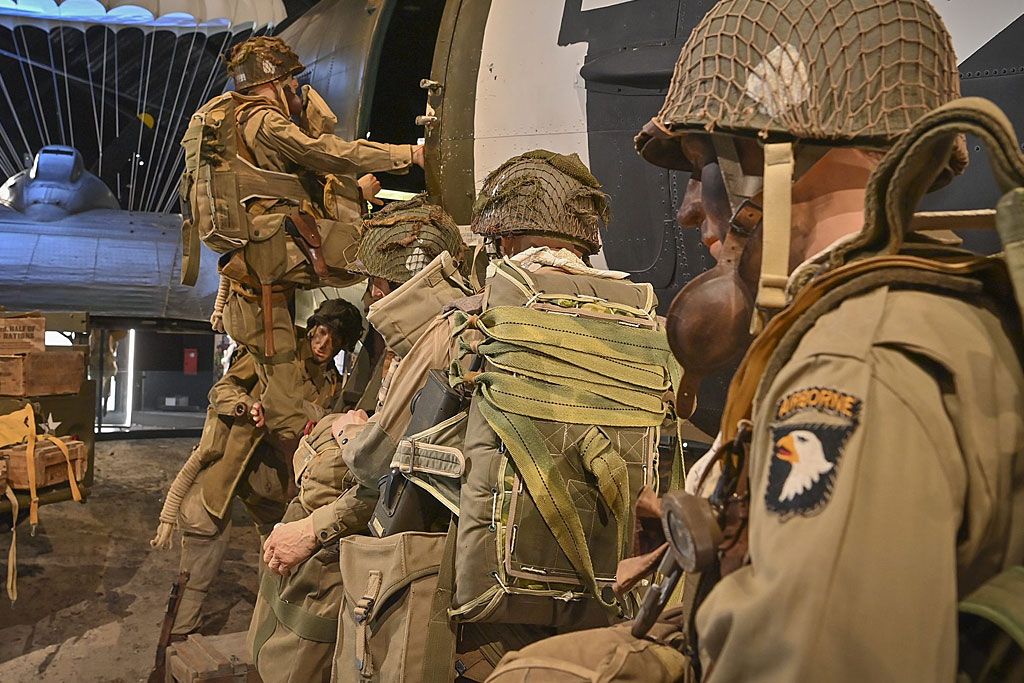
- Museums slideshow images: 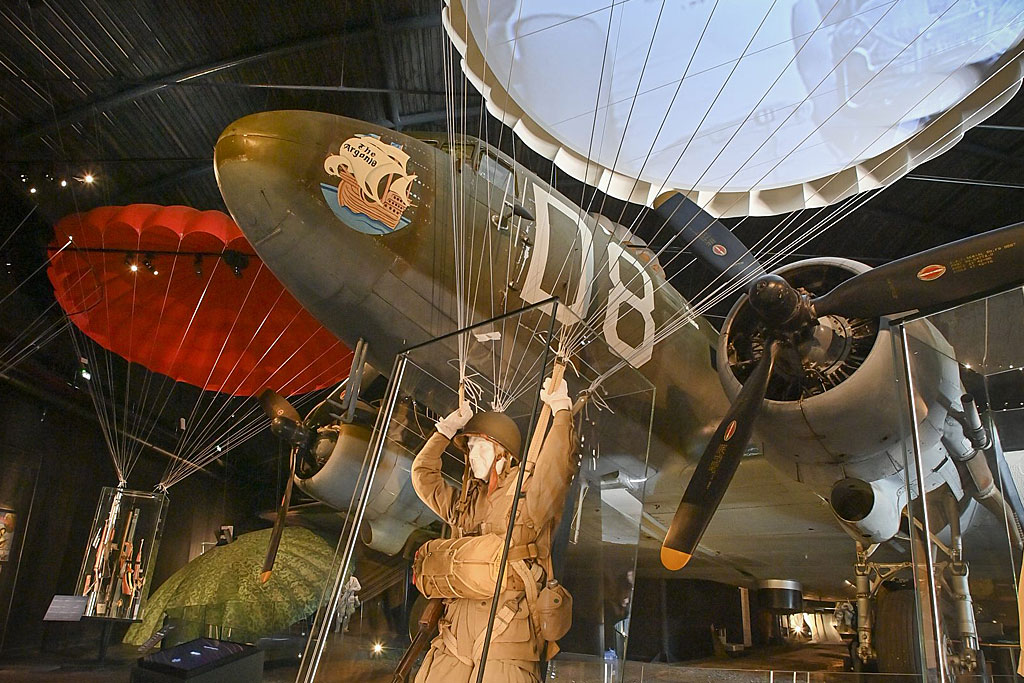
- Museums slideshow images: 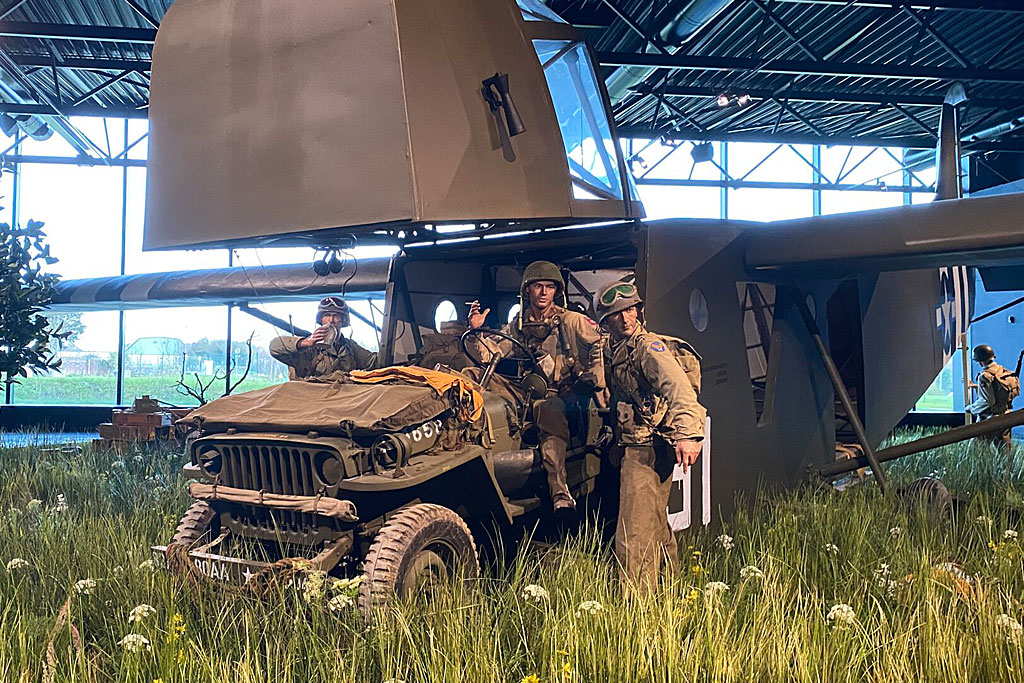
- Museums slideshow images: 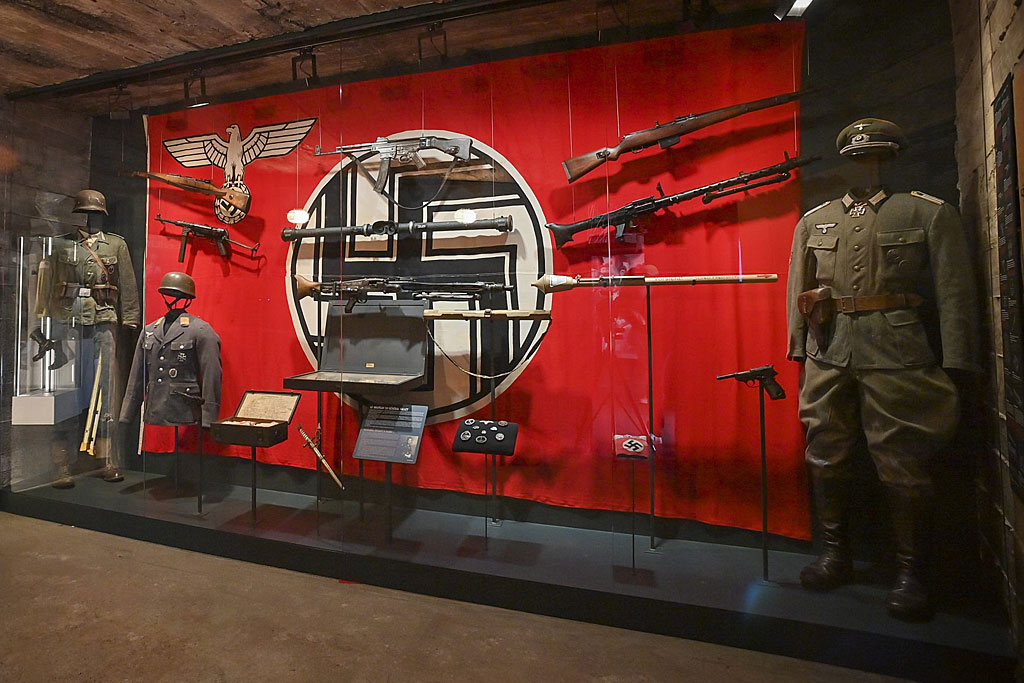
- Location of the museum: 49.4081,-1.3172
The Airborne Museum: Honouring the First American Soldiers of D-Day. Just a few miles from Normandy’s landing beaches, the Airborne Museum stands as the largest museum in Europe dedicated to the American paratroopers of the 82nd and 101st Airborne Divisions. It commemorates their decisive role during the night of 5 – 6 June 1944, on D-Day and throughout the Battle of Normandy in the Second World War.
These paratroopers were the first Allied soldiers to set foot on Norman soil, dropped behind enemy lines hours before the amphibious landings. Their mission was vital: secure key roads, bridges and villages to disrupt German defenses. After liberating Sainte-Mère-Église, they fought fiercely across the Cotentin Peninsula, holding strategic positions and enabling the Allies to establish a secure bridgehead, an essential step toward the liberation of France.
From the very beginning, a deep bond formed between the American paratroopers and the Norman population. This friendship was profoundly strengthened by the creation of three temporary military cemeteries in Sainte-Mère-Église, established to ensure dignified burials for the approximately 13.000 American soldiers who fell during the Battle of Normandy. Between 1944 and 1947, local residents lovingly tended the graves, laid flowers and even wrote to grieving families in the United States. This extraordinary human connection explains why D-Day commemorations became, very early on, an annual tradition deeply rooted in Normandy and why they remain so meaningful today.
This enduring link between Normandy and the United States, along with the lasting gratitude of the Norman people toward those who sacrificed their lives for freedom, forms the very reason for the museum’s existence. The Airborne Museum highlights the unique identity of airborne troops by tracing their origins, training and combat achievements during World War II. More than a museum, it is a place of remembrance, especially vital as time passes and eyewitnesses to these historic events grow ever fewer.
Located in the heart of Sainte-Mère-Église, directly facing the church where paratrooper John Steele famously became entangled on the bell tower, an episode immortalized in The Longest Day, the Airborne Museum allows visitors to experience D-Day from the early preparations in England to the brutal battles of liberation in Normandy.
Visitors can board a WACO glider and a C-47 aircraft, enhanced with sound and lighting effects for full immersion. Thanks to an exceptionally realistic museography, you follow the men of the 82nd and 101st Airborne Divisions through the decisive moments of the Normandy landings.
Upon entering the museum, visitors receive a HistoPad tablet, which transports them back to 1944 through augmented reality. From a glider landing zone to a field hospital, or the church square under German occupation, the tablet reveals powerful and immersive historical scenes throughout the visit.
The museum is spread across four main buildings:
- The WACO Glider Building
- The C-47 Aircraft Building
- The Operation Neptune Building
- The Ronald Reagan Conference Center
Thanks to the authentic WACO glider and C-47 aircraft, history enthusiasts are invited to truly step back in time.
In the Operation Neptune building, prepare to parachute into the night of 6 June 1944. Experience the tense boarding of a C-47 in England, the jump into Sainte-Mère-Église under fire and the crucial operations that followed. Along the way, visitors discover deeply moving personal accounts, many donated by American veterans themselves.
As you leave the Airborne Museum, you carry with you the poignant memory of those dramatic hours that forever shaped Sainte-Mère-Église, its church and its surrounding countryside, places that have become inseparable from the history of D-Day and the fight for freedom.
## Schema
```json
{ "@context": "https://schema.org", "@type": "Organization", "@id": "https://www.normandy1944.info/component/tags/tag/france#organization", "name": "D-Day, Normandy and Beyond", "alternateName": "Normandy1944", "description": "Discover World War II through personal stories, eyewitness accounts, Holocaust history and over 25 years of independent historical research.", "email": "frank@normandy1944.info", "url": "https://www.normandy1944.info", "foundingDate": "2001-01-01", "logo": "https://www.normandy1944.info/images/logo/D-Day-Normandy-1944-WW2-logo.png", "image": "https://www.normandy1944.info/images/logo/D-Day-Normandy-1944-WW2-logo.png", "address": { "@type": "PostalAddress", "streetAddress": "Wethouder A.G. Dekkerlaan 23", "addressCountry": "NL", "addressLocality": "Olst", "addressRegion": "Overijssel", "postalCode": "8121GB" }, "sameAs": [ "https://www.facebook.com/Normandy1944", "https://www.instagram.com/normandy1944/" ] }
```